Introduce Yourself (Example Post)

This is an example post, originally published as part of Blogging University. Enroll in one of our ten programs, and start your blog right.

You’re going to publish a post today. Don’t worry about how your blog looks. Don’t worry if you haven’t given it a name yet, or you’re feeling overwhelmed. Just click the “New Post” button, and tell us why you’re here.

Why do this?

  • Because it gives new readers context. What are you about? Why should they read your blog?
  • Because it will help you focus you own ideas about your blog and what you’d like to do with it.

The post can be short or long, a personal intro to your life or a bloggy mission statement, a manifesto for the future or a simple outline of your the types of things you hope to publish.

To help you get started, here are a few questions:

  • Why are you blogging publicly, rather than keeping a personal journal?
  • What topics do you think you’ll write about?
  • Who would you love to connect with via your blog?
  • If you blog successfully throughout the next year, what would you hope to have accomplished?

You’re not locked into any of this; one of the wonderful things about blogs is how they constantly evolve as we learn, grow, and interact with one another — but it’s good to know where and why you started, and articulating your goals may just give you a few other post ideas.

Can’t think how to get started? Just write the first thing that pops into your head. Anne Lamott, author of a book on writing we love, says that you need to give yourself permission to write a “crappy first draft”. Anne makes a great point — just start writing, and worry about editing it later.

When you’re ready to publish, give your post three to five tags that describe your blog’s focus — writing, photography, fiction, parenting, food, cars, movies, sports, whatever. These tags will help others who care about your topics find you in the Reader. Make sure one of the tags is “zerotohero,” so other new bloggers can find you, too.

Big Boy Piano Lessons

I’ve decided to further my education in piano.  It pertains to my work as a voice teacher and choir director, and I just want to get better for the fun of it.  There are many good teachers in town.  The pianist I work with at church is fantastic but she is beyond capacity, and I didn’t mind the idea of taking piano lessons from another one of my music colleagues.

She’s a rather young lady, 28 or so, and I’ve worked with her as a colleague on and off since 2011.  In fact, we’re working on a recital together…sort of.  We both live busy lives.  But she had enough room in her studio for me, and she agreed that it sounded like fun.

She asked me to prepare something to play for her on the first lesson.  I pulled out my big book of classical piano filled with pieces that easily knock me down and wipe the floor with my thinning hair.  But there was one piece that I could at least play parts of:  Mozart’s Fantasy in D Minor.  I’m not a huge fan of Mozart (gasp!), but there is something about his minor keys that I find really compelling.  So I worked it up.  However, because I’m also not a fan of the emotionally constrained temperament of the Classical Era, I turned it into Chopin which is from the Romantic.  Plenty of rubato and such.  I knew that this would be frowned upon, but I somehow got the notion that this would give her the opportunity for a teachable moment with me right off the bat.  Something to pull the band aid off should there be any unease about her being in a master-student relationship with a middle-aged man. A silly idea to be sure, but I try to spend a little bit of time everyday with a silly idea.

Driving to the studio I got lost, and have every time since, but fortunately I had given myself plenty of time. I walked from my car to a door that had an arrow pointing left that said “Use other door”.  When I found the other door, it also said “Use the other door”.  And when I found the other other door, I could see the waiting room through the glass.

I entered with my big book of humiliatingly difficult music, and looked around a bit.  I walked down the hall.  I’d been there before to practice for the recital, but it is very much a maze.

One time, when I came to rehearse with her on the recital, I walked in on the end of a lesson with a young east Indian child.  I gave her a stern look and said, “Did you practice?”

She did not turn her head to look at me, rather, she slanted her eyes at me and then back at the teacher who laughed and gave her the same mock stern look and asked, “Well?  Did you?”  The child said, humorlessly, “Yes.”

Later, my friend said “I had never seen that girl throw shade at anybody, but she did at you!”  I had to look up “throw shade” in the Urban Dictionary.

When I did find her room, I could hear her working with a student, so I went back to the waiting room and sat down.  There was a small child playing with some sort of toy I cannot recall on the floor.  There was a girl with straight blond hair with barrettes sitting at the edge of her chair with her music in her hands.  She was rocking, perhaps anxiously, with her ankles crossed.  The rest of the people were all mommies….and then there was me, also rocking anxiously a bit with my music.

I felt like Ross in the tv show “Friends” when he waits to see his doctor, who is actually a pediatrician.  He pretends to be a dad so that one of the pretty mommies wouldn’t know the truth, that he’s a full grown adult male at a kiddie doctor’s office.  Then the nurse calls his name and the jig is up…he strikes out.   I sloughed off an impulse to feel embarrassed.  Soon my teacher entered with a young student and she gave her some final practice instructions.  When she was done, she looked my way and laughed a little bit perhaps at the absurdity of the scene.  Then she straightened up and tried to hold a serious face, but she could only hold it for a couple of seconds.

She led me back and we chatted as we walked.

The lesson was a good.  I believe that she is excellent teacher, and I’m learning much from her.  Proprietary stuff.  No need to get into the details.  There are some things in life that aren’t really stories at all.  Sometimes I’ll tell what I think is a story, and then it just ends up being a log of me going to the gas station and saving 15 cents on gas.  That’s not a story, and neither is learning how to play a two octave scale with both hands together.

Addendum to the Coffee Situation

In The Coffee Situation, I described an event where I behaved wretchedly toward a coworker.  He was well within his right to be upset about his coffee maker.  So, today, only 20 minutes ago, this happened.

Occasionally, I step out of my little corner office to stretch my legs and shoot the bull with the coffee maker guy.  We talked about a new delivery service in town that I was curious about.  It will deliver just about any food from any restaurant in town.  Pretty cool.  And there, on his desk, was the infamous coffee pot, pristine and unplugged, sitting right next to mine, less pristine,heating a quarter of a pot of coffee.

I had already made up my mind that I would apologize to him.  People can hold on to wounds even if everything seems fine.  I had decided that apologizing was the right thing to do, and there was always the possibility that I would be releasing him from a wound of some sort.  Or at least I might be repairing a poor impression of myself with him.  We were alone in the office, so I thought it would be a good time.

I stared at the coffee pot and formed my words carefully.  I said, “Hey, so I need to say something.  We don’t need to talk about it or anything, but I just need to say it.  I’m sorry for being such an asshole about your coffee machine.  You had every right to be upset with me about it.”

He turned his chair slightly away from me and looked away, and said, “It’s already forgotten.  Don’t worry about it.”  He waved his hand down at the floor as he said it, a dismissive gesture;  a “don’t worry about it” gesture.

Then we continued our discussion about the delivery business.

I still think The Coffee Situation was a good story, but I needed it to end better.

Star Wars: The Force Awakens Releases New Pics and My Excitement Level Rises

Chewy and SoloTwelve new “Star Wars:  The Force Awakens” pics were released today, and the excitement is building for me.  I have not earned the right to call myself a Star Wars geek, but I’m excited nonetheless.  I’ll leave it to the true geeks to break down the pics for us.

Like many of my generation, I saw “Star Wars” (Episode IV) in the theater.  In fact I saw it in a drive-in theater in the back of a Ford Fairmont station wagon at a very young age.  Also, like many of you, I collected as many Star Wars toys as I could afford…not much.  I often played with Walrus Man in the bathtub.

Unlike many of you, I more or less enjoyed the prequels.  The main parts that I were not happy with were Jar Jar Binks and Hayden Christensen, and I don’t need to get into that.  The pod races were so exciting to me.  When Yoda faced off with Count Dooku, I freaked out.   I got the excited giggles, which I’ve only had a few times in my entire life.  The very last scene of III, when Darth Vader takes is place on the bridge linking all the films together, was thrilling.

So here I am, awaiting the start of what I hope will be a new journey in the Star Wars saga, but it’s a different feeling than the anticipation of Episode I.  Then, it was a fever.  I watched the trailer dozens of times, and that was in the day when watching a video on the internet required 10-15 minutes of download.  I geeked out over the same line every time.  Queen Amidala (Natalie Portman) says ” I will not condone a course of action that will lead us to war.”  She was young, beautiful and fierce.

With this film,  I’m excited and hopeful, but I’ve been around the block a few times, and I know to be a little wary.  I’m hopeful because George Lucas will not be directing or writing.  Star Wars needs better than that now.  We are more sophisticated movie goers, and expect a higher standard than the prequels.  But I’m not pinning all of my hopes on this film.  It’s also different than the anticipation of the prequels because we’ve all been speculating for decades over what would happen after “Return of the Jedi”.  What would happen to Luke and Leiya?  Solo and Chewbacca?  Would Leiya become a Jedi? Would Han and Leiya have a baby? Would Luke, having fulfilled his destiny, rise to the level of a Yoda?   This class reunion is a fantasy that will be fulfilled for millions.

So yeah, I’m not exactly a geek with this.  I have not earned that level of fandom.  I will not likely camp out dressed as a Jedi for the premiere.  I will wait a few days, and I will see it several times.  And you can BET I’ll have something to say about it!

Until then, may the Force be with you.

The Coffee Situation

IMG_2237Preface:  I’m an awful person 2 or 3 times a year.  End Preface.
Ok, so I work in an office with three other men.  Three of us drink coffee.  One of them guzzles Diet Coke by the case load.  We take turns buying a jumbo bucket of Folger’s Classic Garbage Roast.  One of these guys owns the coffee machine and has all these rules:

  1. First one in makes the first pot
  2. Use the empty milk jug to fill the water tank INSTEAD of the carafe
  3. Refill the jug immediately after it is emptied
  4. Last coffee drinker to leave throws away the filter/grounds at the end of the day
  5. And cleans out the carafe
  6. And wipes off the counter

Now did he TELL us these were the rules?  No.  Did he tell us that it was his coffee machine?  No. I didn’t know until there was a coffee situation.

So first off, I don’t even clean my own coffee cup.  I let the coffee residue create a beautiful cake on the inside of the mug.  I call it “seasoning” the mug.  The goal is that if for some reason there were no coffee to be found, I could pour hot water into my mug and have coffee.  Complicated, totally wouldn’t work, but I like to be “fake” prepared.

So anyway,  I followed his unspoken rules for awhile.  But slowly, my resolve evaporated until one week the guy was out of town and neither I nor the other coffee drinker followed the rules.   So when I came in Monday morning, I grabbed my mug and went to fill it and found that there was no coffee machine!!

So I asked, “Where’s the coffee?”

He said, “The machine is broken.”

“Where is it?” I asked.  “Maybe we can fix it?”

I started looking for it, and found it under his desk.

“Ok, so what’s wrong with it?” I asked.

His face screwed up and he pushed his glasses up on his nose and shouted, “It was a fucking mess!  I come in here and there’s grounds and coffee everywhere!  The jug is empty!  A fucking mess!”

Did I apologize?  Nope. Should I have?  Maybe.  But my attitude was that if he wanted us to follow his rigid rules, he should have said so.  Plus he outright lied to me about the machine being broken.  Should the behavior he expected be obvious and a point of common courtesy?  [sheepish maybe]. Without a word, I got in my car and drove 30 minutes to my house, grabbed a coffee maker I wasn’t using, drove back, and set it up right next to his desk.

I stood there and addressed the room.  “Ok, so here are the rules.  Don’t change the filter until you need to except on Fridays. If the mess bothers you then clean it up.  Feel free to use the carafe to refill the water.  Enjoy.”

He just stared at me for awhile…humorless.  Perhaps he was dumbfounded.  Perhaps he was just plain pissed off.  I didn’t really care.  He never said a word and we get along just fine.

And another thing!  His coffee maker SUCKED.

the nicer end of the story 

Sort of…

It’s time for my annual rant on the overuse of the phrase “sort of” on NPR.

Dear Smart People being sort of- interviewed on NPR,

You’re annoying me with your sort of- overuse of “sort of”. I know I’ve said it sort of- before, but it’s time for you to make a sort of choice about whether it is “sort of” something or actually something.

I’m not referring to it’s use to describe a class of something, such as a sort of fish, but rather as wimpy filler, to weaken a statement’s force or meaning.

Be bold! Say precisely what you mean, smart people on NPR!!!! You’ll sound even smarter than the other people who they interview on NPR!

And it’s often followed by very I’m-an-intellectual pause.  That’s why I used the dash a few times above.

Ok, so this has been bothering me for awhile now.  I suppose everyone has their English language pet peeves, but this is it for me.  This is the big one!  I rarely hear it outside of NPR interviews.  I don’t know what it is about academics, scientists, or political science people of the NPR ilk that makes them say it, but it’s kind of like the Valley Girl thing.  When you identify yourself with that persona, then you have to like totally talk like in a certain way…gag me with a chainsaw.

Yeah, so perhaps these guys want to identify themselves with this intellectual crowd, and somehow this mannerism has become a part of that.  The problem is that it weakens everything that they say.  Everything comes out mushy.  You will probably never hear this kind of mannerism on Fox News, which tends to be anti-intellectual.  Where life is simple and definitive.  Obama is bad.  Taxes are bad.  You’re never gonna hear someone on Fox News say that Planned Parent is sort of bad.  NO!  If people who watch Fox know one thing for certain it is that Planned Parenthood is so bad that it is run by Lucifer and his minions.  No doubt about it.  There’s no discussion or moderation to be made!  I respect it.  However, in case you’re wondering I will not depend on any newscast that I perceive to be biased.  No Fox.  No MSNBC.  And I know that many believe NPR programs to be biased, but I’ve never once heard one of the anchors express their own opinion on the news.  I’m sure there are other ways to be biased that I’m unaware of, but the fact checkers put NPR and BBC at the top.  And I trust independent fact checkers.

So please!  NPR people!  Get it together!  Make up your mind!

Introductions

mountain profileI’ve been blogging for at least a decade.  I blog fiction, stories of my artistic endeavors, bipolar issues, and computer programming, but I’ve never written a regular old blog.  No theme.  No particular subject matter.  Just whatever I feel like writing.   I have a lot to say.  I have so much to say, in fact, that I often talk to myself on my commute.  I interview myself, I speculate, I work things out, I entertain myself.

I write tons of Facebook posts, many of which I never publish or if I do, I often delete them.  I just don’t want to overwhelm my friends with my always preaching my preach.

My wife says I’m complicated, and I tend to agree.  The bipolar brain is by nature complicated, but there’s more to it than that.  I’ve always been a heavy thinker.  Nothing I think, say, or do is simple, at least when you compare it to my wonderful wife.  Simple-minded isn’t an appropriate word for her, but things are just more simple for her. I suppose I should envy that, but I wouldn’t know what to do with that kind of brain.  It’s kind of like the idea that if you gave a out-of-shape guy a perfectly fit body, he would likely be out-of-shape again within a year or two.  That’s what I would do with a simple brain.  I would find a way to make things more complicated.

But the truth, as I know it, is that life IS complicated.  Take religion, for example.  Some might say that there’s nothing more to it than to love your neighbor and love your God.  And they might be right.  If you did those two things, then you’d have it.  But the truth is, loving God and loving people are not so simple to me.  And perhaps it’s not so simple in all actuality.  I suppose I won’t really know until I croak!

So…

Tractor Beam Server or Member of the Team

58
Sun Microsystems Enterprise 5000 Server

In 2001, I went to work for the FAA in Oklahoma City.  It was my first permanent job as a programmer.  How I got the job is a little morbid.

I was working for an insurance company on a one year contract.  When I finished the project, one of my contract competitors pointed me to a job at the FAA.  She may have been trying to get rid of me, but I was ready to go so it didn’t matter.

It was for the position of junior developer.  With two years of experience, that was an appropriate position for me.  I remember nothing of the interview, but it must have gone well because they called me.  I fancied myself a good negotiator.  I’d negotiated some good deals for myself since I started my career.  So I was confident that I would be able to do well this time.  My future boss took my first offer, but it seemed like there was a tinge of reticence in his voice.  I thought I was awesome.

When I arrived on my first day, it was to a very somber group of men and a desk that had not been cleared off from the last guy.  I soon learned that the guy I had replaced had died right after my interview in an all terrain vehicle accident.  I was in the senior position now.    Much, much later, I learned that they had been through every resume that they had, and mine was the only one left, hence the easy negotiation.  I didn’t take it hard.  I laughed to myself.  I had gotten the job and I did well in it and that was all that mattered.

But I didn’t start off so hot.  In the first month, the database administrator, the change management system administrator, and the server administrator all resigned leaving just two programmers with no experience with any system administration.

They stepped us through their documentation a few times and then wished us luck.  After a few weeks we were feeling pretty good about it.  We hadn’t had a single real problem.  One of my jobs was to backup the server on tape, replace the tape, and take the old one to a safe.  One day, though, the server, which is the size and shape of a refrigerator, wouldn’t open.  It had a door which opened just like a refrigerator.  Fortunately, I thought, there was a key above the door so I turned it.  Here’s what it sounded like.

It turns out the server wasn’t locked, I had been trying to pull open the door from the side my refrigerator opens. The guys who were taking care of that server before had to come in on the weekend and rebuild it to make it run again.  They said it could have been worse.  Shutting a server down cold can be catastrophic, apparently.   They hid the key from me after that.  I never had to do the backup again.

This team was an all male team, as are most of the teams I’ve worked with, and there’s something that I know about joining a team, especially an all male team.  They need to know that you can handle a good ribbing.  The sooner the better.  So I took this as an opportunity.  I told the story with the server sound being the climactic ending.  I figured out how to make it by vocalizing while I whistle.  Here it is.

They tease me to this day.  I became a member of the team when I shared my story.  I paid my dues, and I laughed at myself.  It’s so important to be able to laugh at yourself when you deserve it.  It’s so much more attractive than being sullen and defensive,  and to this day, if I see any of those guys, the first thing they want is the tractor beam.  It always gets a laugh.


Y2K Boot Camp

programming-language-crisis-7-638

In Negative One Dollar, I described the events which precipitated my move from teaching to software engineering.  I’d like to tell the story of the beginnings of my career.  It’s a success story, and it is not my intention to brag. I could easily write 10k on this time of my life.  With a little time I could write 20k words.  It was an important year.    Consider this the abridged version.  As I’ve written, my wife’s uncle, an IT manager at Citgo in Tulsa, described to me a company that would train me and hire me if I passed a test.  He told me about a huge software problem called Y2K in which an astounding amount of disruption would occur at midnight of 1999 if the code wasn’t fixed, and that there was something like a 400k short fall of workers available to do the work in the U.S.  That number seems high to me, but that’s the way I remember it.  He said that the consulting company, SPR, would train me to learn how to fix this problem.

(if you’re interested)

The problem was simple, by the way.  When mainframe computers were young, there was very little memory for all of the software and huge databases needed to run banks, oil companies, airline booking systems, and the like.  So they shortened dates by leaving off the “19” from the years.  So 05-06-1999 would be 05-06-99.  The problem was that when the year became 2000 the date would be 05-06-00 which all of the date calculations would read as being in the the year 1900.  Imagine the chaos.  Yes, folks.  This was a real problem solved with billions (trillions?) of dollars in consulting fees.

(continue)

I knew nothing about any of this stuff.  In fact, I had lost the notion that I was smart in anyway other than music.  But the salary was so much better than what I was getting and I was eager to provide for my growing family.  We had our first baby that year.  I called the company and set up an interview.  I didn’t know what to say, not knowing anything about computers, but I figured I didn’t have anything to lose.

It was a phone interview, which I’d never done.  I made a plan.  When it came close to the time, I was sure to go to the bathroom first.  No pee breaks in the interview.  Also, I pulled out a notebook and pencil.  I poured a glass of water.  I told Jennifer not to disturb me.  Then I locked myself in the bedroom to take the call.  The interview was with a recruiter and I found that my lack of computer knowledge was actually expected.  She liked me enough to invite me to come to Tulsa to take the test.

I had no idea what to expect so I decided to make a good impression with my clothes.  I already had a suit, but I felt I needed something new to really add some polish so I went to Dillards in Sooner Mall to buy a new pair of shoes.  We didn’t have much money, but I figured I should go all out so I bought a pair of Johnston & Murphy’s at $129.  In truth, I couldn’t afford them, but in my mind I was going to pay for them by nailing the test and getting the job.

I decided to drive up to a Motel 6 outside of Tulsa the night before just as a precaution to make sure I arrived at the testing facility on time.  The motel had no soap or shampoo, but I just wanted to get a good night sleep so I didn’t complain.

cms_upload_bam_1480950640The testing would be held in the Mid-Continent Tower in downtown Tulsa.  It is a stately sky scraper with an ornate green copper top.  When I walked in, I was struck by the beauty and polish of the lobby.  I remember thinking that I could be coming here every day in my Johnston and Murphy’s instead of pushing my music teaching cart back at Moore Public Schools and how posh that would be; how fancy I would be.

5070022276_66381878fa_b

I didn’t grow up in a fancy family.  We lived a modest life.  But there were pockets of our extended family who were wealthier and lived a fancier lifestyle.  I wanted it.  I wanted to look sharp, drive a nice car, live in a fancy house.  That was important to me when I was in my 20s, but I was too embarrassed to admit it to anyone.

The test was entitled something like “Software Engineering Aptitude Test”.  It makes my hands sweat a little bit to remember what it felt like sitting in my suit and fancy shoes in front of an exam that could change the course of my life and not have a single idea if I could answer even one question.  In spite of having no idea what was going to happen, I just knew that I would be working at this company.  I was certain.   And I could answer questions.  It was all about logic and workflows.  No computer programming concepts.  I would need a 50% to pass.  I did the best that I could.  When I finished, they told me that I would get the results on Friday.  I drove home to wait for the results.

I had most of the week to continue to teach.  When Friday came, I put movies on instead of teaching.  I did not have the focus to put together lesson plans.  I had given SPR the school office phone and I was waiting anxiously while the kids watched.

“Mr. Wilson-Burns?” came the secretary’s voice on my class intercom.  “You have a call.”

My heart raced.  I took the call in an empty break room.

“David?  This is Jessica from SPR.  I’m calling to tell you the results of your exam.”

“Ok.” I said, expectantly.

“Are you ready?  You scored a 51%.  Welcome to SPR!  Your boot camp starts next Monday.  Can you make it?”

It was Friday.  I would have to resign that day with no notice.  I wrote my resignation letter on the a Mac in the lounge and printed it out and signed it.  At the end of the day, I found my principal in her office.  I’d never actually been to her office.  It softened her a bit.  I handed the letter to her.

I don’t remember what she said, but she didn’t blink an eye.  She said they would miss me, and the she congratulated me.  I wonder now if she had already suspected that I would leave soon.

And that was that.  My teaching career was over.  I don’t remember feeling anything but relief and excitement.

We were renting a house and so we gave the land lord a month’s notice.  I went ahead to Tulsa and stayed at Jennifer’s aunt and uncle’s house.  I would come home on the weekends.  We would find an apartment in a month.

My experience to come was so intense that it is a blur in my memory.  We were all put into a training room at the SPR offices in the Mid-Continent Tower. There were rows of tables, chairs, and computers facing front.  On the first morning, nearly everyone was early, except for the instructor.  There were somewhere around 30 trainees.  Interestingly, it didn’t feel like I was returning to college.  For some reason, it felt more like high school.  Maybe because there were obvious former cool kids who began to connect with each other, establishing their place,  while the rest of us sat quietly and skimmed through our materials.  The material was like a foreign language to me; in fact, there were parts which were literally a foreign language to me.

I soon learned that the course would be taught by four retired computer science professors.  We were to be in this room for ten hours ever day Monday through Friday and sometimes Saturday for ten weeks.  Approximately 500 hours of instruction.  We were told that 50% of us would drop out before the ten weeks were up.  Boot Camp.

Our supervisor explained that we would receive a substantial raise and be hired permanently if we made it through the program.

Throughout the first day, I learned that many of the trainees had computer and programming experience.  I admit, that this intimidated me at first, but eventually I learned that I was as capable or more than anyone in the room.

I do have a few vivid memories.  Behind, me sat a former high school football star.  He must have been a few years younger than me.  Six foot four and still powerfully muscular.  He was the class clown.  At first I fell back into my old high role as the uncool geek, but as I got to know him I began to realize that that stuff was really a high school thing.  We became friends and he seemed to be having the same realization.  Here were two men who never would have spoken in high school, but were now free of the social structure that we had all quietly agreed to support.  This was a turning point in my life.  I realized that I can be who I wanted to be.  There was no one in the world telling me who I should or shouldn’t be.  This brought me a great sense of freedom and happiness.

After I wrote my first program, I decided to treat myself to Applebee’s.  I decided that I should get a drink.  I’m not sure exactly what it was, but it had milk in it.  Why not just a beer, David?  After I ate and I was nursing my drink, I pulled out a pen and scratched out some pseudo-code.  Secretly, I wanted someone to see me and think I was solving some difficult problem for a big company.

I generally ate lunch alone.  There were many choices downtown.  Coneys were a popular item in that area and I often went to the Coney Islander Hot Weiner Shop for four chili coneys dressed with minced onions and Louisiana Hot Sauce.  There was also a German restaurant that I liked.  I loved to sit up in the balcony and watch the customers and wait staff.  One day, after eating there, I started to write about a character named Daniel.  Daniel was a very honest version of me.  I was a private person at that time….um, not so much anymore.  I was afraid of what people would think of me if they saw my true self.  It was liberating to write.  I wrote a series of  Daniel vignettes.  This is where my love of writing began.  I would later write fifty thousand words on the Daniel character.  The work is unfinished.

One by one, the trainees left.  One guy left because he made the Tulsa paper in a very unfortunate way.  He had been busted by the FBI for downloading pictures of underage teen boys.  He claimed that it was unintentional.  He never returned.  The company didn’t want the bad press.  Sometimes the most likable people do things that you would never expect.

I excelled.  I was starting to believe that I could really do more than music.  In fact, I was starting to believe that I could do anything I wanted.  I had never felt so empowered.

One of the instructors was a crusty old man from Chicago.  He was my favorite instructor.  I found him to be kind and enjoyable to work with.  One day, I was returning to the classroom with a cup of coffee and I heard singing in the library.  The door was ajar so I peaked in.  It was the instructor.  He had what I now know was a prayer shawl and  he was raising his hands.  He was singing to God.  Living in Oklahoma, you don’t meet a lot of people practicing the Jewish faith.  This was my first encounter.  I only watched for a few seconds.  I didn’t want to intrude.  It was beautiful.

I and around 50% of the trainees completed the program.  We had a graduation of sorts and we were all given certificates.  I wish I still had it.  So what next?  Every class preceding us went straight to work in offices all over Tulsa, one of them underground.  But this class didn’t go anywhere.  The work had dried up, so they put us on the bench.  It’s expensive to put someone on the bench in the consulting industry.  Another company might have let us go after a few weeks.

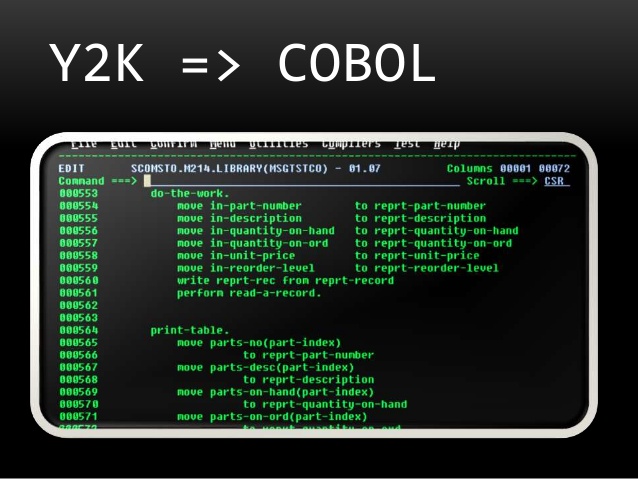
Everyone was trying to get placed.  I befriended a man who eventually took me to Sunoco Oil with him.  There my job was to add lines of comments to the header of a bunch of Cobol programs.  Sitting in that office was the first time I watched a movie trailer on my computer.  It was Star Wars Episode 1.  My office mate and I geeked out of it.

I didn’t understand the code, but I did enjoy looking at the change logs written at the tops of the programs.  I found one program that was written in 1965.  I still marvel at that.  The project ended after a month when the whole force was sent away.  No more Y2k work needed.  That is how so many consulting companies collapsed.

Then one day I was sitting at my computer back in the office and the general manager of the company walked out of his office and shouted “Everybody learn Powerbuilder!”  Who needs email when you can scream from your office?  And so I began to teach myself this new language.  I found that I could learn it pretty quickly.  I liked it a lot.

Soon, the company brought in a couple of Powerbuilder trainers and our training resumed.  This time around I was cockier.  I had conquered Cobol and was ready to conquer Powerbuilder.

One instructor was tall and arrogant.  The other was short and stocky with a light, red beard.  He was not arrogant at all.  He was quite humble and I liked him a lot.

When the course was over, they announced that there were two placements available and that they would interview us to determine who would get them.  I decided that my best move would be super confidence.  I was going to out-arrogance the arrogant one and impress the humble one.

“Tell us why we should place you?” asked the arrogant one.

I worked up a computer analogy and looked him straight in the eye.

I said, “Jake, you see, those other guys are like hard drives.  They may have a lot of information, but I’m like a processor.  I can pick things up and make things happen.

Arrogant broke in and started to say, “I don’t get it. That’s not really how computers-”

But then humble held up his hand and said “No.  Do you see what he’s saying?  He is saying that he’s a fast learner and a fast worker.  He is saying that he’s the best.”

After everyone was done the two of them came out.  Humble pointed at me and asked me to come back into the office.

Arrogant said “I admit it, David, your confidence impressed me.  I think you can do this.”

That job is the first one on my resume.  I worked at Williams Communications for one year before I took a job back in Oklahoma City…coding Powerbuilder.  I went on to learn other languages and I’ve held many more jobs, but I’ve never felt as utterly energized as I did in that first year.  It was the year that I learned how to learn again and believe in myself, and I’ve never quit.

One conversation at a family reunion changed my life forever. Wow.  I am in awe over that.  It might have never happened.  If it weren’t for 4 digit years it would have never happened.  I never would have dreamed of doing what I do.  I never would have believed that I could even do it.  I do miss teaching sometimes, but when I look back over the last nineteen years I see a clear path to the happy place I am right now and I wouldn’t change that.  The Johnston and Murphy shoes?  They became my lucky interview shoes.  I just resoled them.

Kicked Out

I attended college for vocal music education in the early 90s.  In a voice degree, one of the most important figures, if not the most, is your voice teacher.  This is one of the few professors you will see every week for your entire college life.

Learning to sing often requires a rather close relationship between the teacher and the student.  It’s a mentor relationship.   The study of singing more than just singing.  It is the learning of a lifestyle.  It encompasses physical fitness, diet, sleeping habits, how much water to drink, and of course discipline.  Because you want to be the best singer you can be, you look to your voice teacher for everything they give you that might help your chances at success.

When I was a senior in high school my mentor at the time, the director of music at my church, told me that there was a certain voice studio at the college I was planning on attending that was for the more advanced students and she would help me get it.  I’d feel more comfortable not using his name, so I will call him Professor Nelson.  Being advanced was something I valued a lot.  In retrospect, I needed the exact opposite.  I needed a teacher who would teach me as if I knew absolutely nothing.  She managed to get me an informal audition with him in his office.  He expressed his interest in me and when I made my official audition to the school, he chose me.  I was elated.

Nelson was a man of great mystique.  He created a larger than life character.  He was the wise one.  He often intimated that he was connected to celebrity.  He was an accomplished cyclist.  He was an accomplished painter; painting in the wilds of Wyoming.  He fancied himself a bit of a cowboy type, but to my knowledge he never had anything to do with cattle.  And what impressed me the most is that he was a specialist in French music.  This was an interest of mine.  Anything French to me had it’s own mystique.  He studied abroad with a quite famous French singer and recorded an album that I wore out on cassette tape twice.  I idolized this man.  I felt proud to be in his studio, which was almost exclusively graduate students.

He trained me as a tenor, although I was never sure if he actually thought I was one.  He often called me a “baritenor”.  That was a blend between a tenor and a baritone.  It’s not a true voice type, but it’s how he dealt with the limitations of my voice.   I don’t think he really put a lot of importance on what I was because I was just an education major.  My success as a tenor was mixed.  I didn’t want mixed success.  I wanted to be the best.  So after a couple of years, I got it in my head that I might be a baritone (which I am).  I told him I wanted to give it a try.

The first thing he brought out was Valentin’s aria from Faust which has two high G’s, which only experienced baritones could reach.  It was as if he was trying to prove me wrong.  As if to say that singing this would be the only way to prove if I was a baritone.  I failed miserably.

I’d been singing a lot in my falsetto in college in early music performances.  I was well received.  A man who sings in falsetto exclusively is called a countertenor.  Countertenors were on the cusp of being big in the professional world, but otherwise they were was still obscure.  I started talking about it with Professor Nelson.

“Look, David.  I could sing like that all day.”  Nelson was practically a countertenor himself with his very light lyric baritone.  He demonstrated his falsetto. “See?  But there’s nothing to it.  It has no steel.  It has no value.”

A few weeks later, I came into my lesson and said, “Ok.  I think I want to be a tenor again.”

His face reddened and he exploded.  “You come in here, you want to be a tenor, you want to be a baritone, you want to sing like a girl.  What are you?  I don’t know.”

My ears were burning.  I felt like my chest and head were a gong and he had just taken a wack at me.

Then he looked away and began shaking his head and said, “I can’t keep going back and forth.  I don’t know how to teach you.  I’m done with you.”

I knew I was going to cry, so I left his office.  As soon as I was in the hall, the tears came hard.  I made my way down to the other end of the hall to see the head of the voice department.  She was a very maternal figure and I knew that she would be both a comfort and a problem solver.

I knocked on her door.  She was teaching a lesson to a friend of mine whom I didn’t mind seeing me upset.   After I explained what had happened, she first gave me a big hug and patted my back.  When I had pulled myself together she went into chairperson mode.

She explained that her goal was to get me through my senior year and she would get me a teacher.

She did get me a teacher.  None of the other teachers in the department would take me.  She never tried to explain why and I didn’t ask.  I had gained a reputation for being a difficult student by then, and I’m fairly certain that that was a factor.  She convinced a retired professor to take me.  It was a great fit.

Now, though, I no longer idolized Nelson.  I resented him.  I ridiculed his idiosyncrasies to my friends.  I toughened up by tearing him down.

So why do I keep returning to this story?  I loved Professor Nelson.  I wanted to please him.  The few times he expressed displeasure with me were upsetting.  I’m sure my family would say that I was all  “Professor Nelson this” and “Professor Nelson that” every day of my college career.  When he kicked me out of his studio, it hurt me very deeply.  I suppose I’ve told this at times to become the object of pity.  Pity’s not the best gift a person can receive, but it has some value.

When I was a kid, there was this other kid who broke his leg and had to use crutches.  He was the object of everyone’s pity and I wanted it so bad that I found some crutches and walked around with them at home for a little while.   I decided that it wasn’t worth the effort, but I wanted it.  I wanted the attention.  I wanted the girls to ask if it hurt really bad.

I’m pleased to say that I’ve outgrown this desire.  I find pity uncomfortable if anything.  Sometimes when I tell the story, it’s in the context of several stories which illustrate what a pain in the butt I was back then.  I was stubborn, a know-it-all, arrogant, sycophantic, and snobbish.

The last time I saw Professor Nelson before he died a few years ago, his words were, “So, are you still singing like a girl?”

And the last time I saw him, just weeks before he died of cancer, I pretended not to see him.

There have been very few tragedies in my life, but being kicked out of Professor Nelson’s studio is significant to me.  A couple of years ago, I got tired of holding onto my resentment and hurt over this man.  I found a cassette tape of his old album of French song and I had it digitally remastered.  I posted it on YouTube.  Then I found an online library of his paintings and convinced the owner to let me create a Facebook page for his music and paintings.  I was finally able to let go of the hurt and give myself permission to think fondly of him again.  It occurs to me now that he was no more at fault than I was.  He really did not know how to teach me, just as he had said.  It’s hard to find out an idol is just a regular human who can’t give you everything you need.  It’s hard to be rejected by them.  But it’s harder still to hold on to the pain and resentment.

You gotta let

that

shit

go

The Clapping Problem

wpid-wp-1437180753431In the past, I have struggled with clapping for musicians in church.  First off, why should I even care? I imagine it’s the last thing on anyone’s mind today.  It comes down to my deeply held belief that music in church is not a show.  It is simply a form of worship.  When we go to a show, we clap.  When we got to church, we pray, and if we are truly, moved we say amen.  When I  see this in writing I can see my Presbyterian roots coming out; a particular Presbyterian church where intentionality is a core principal of worship.  What that means is that not a thing is done in worship without it being carefully considered and decided upon.  Clapping in church? Does it have a place in worship?  Let’s bring it to the worship committee.
My current church is a clapping church.  The main thing they clap for is wedding anniversaries, more theatrical than normal announcements, but mostly for music.  No clapping for any other piece of worship.  Why is this?  Well isn’t it courteous to clap at a concert?  So then shouldn’t we do this in church?  But there’s really more to it.

In My Thank You Problem, I expressed a discomfort with praise directed to me during worship.  Then my brother, John wrote:

If God enjoys praise so can we!

And I do believe that God loves our praises, not because he has an ego, but because it’s a celebration of a relationship with his children.  And maybe that’s what happens on Sunday morning.  We celebrate each other.

After he wrote this to me, I began shuffling through my old writing on the subject.  I was quite bitter about this at one point.  And I found a quote from a friend.

This is how we lift the music and the musicians up in gratitude.

How can I argue with that? That is such a beautiful way of expressing it.  It’s not perfect though.  Some churches still seem to have a problem with clapping.  I attended a church for many years where the congregation clapped, but only when they were truly moved to do it as a group under no obligation.  When the choir raised the roof, for example.  But when they sang a deeply moving, spiritual song, the congregation would respond with quiet reverence.  This never bothered me.

The problem arises with obligation.  What do you do if one Sunday the choir makes you want to get up and clap and say amen, but the next Sunday it doesn’t happen?  If there is an unspoken obligation to clap, then you clap in a quiet, courteous way…in a let down way?  I don’t really know.  That changes things to me, though.  Then, instead of coming out to worship, which is only measured by God’s pleasure (I believe it’s always his pleasure), we’re getting judged by the congregation’s pleasure.  I usually know when we didn’t accomplish our mission to compel people to worship in their hearts and now I have a clap-o-meter to confirm it.  I’m used to it.  There’s no way we can inspire everybody with every anthem.  Sometimes we fall short of that, but God makes it holy for us.  Our worshipful hearts make it holy.  But the ego in me does notice how loud and long they clap.

It’s really a small thing, this clapping thing.  It’s not something I walk away from on Sunday morning feeling bad about.  I confess there’s a Presbyterian in me who just wants to say “That’s it!  No more clapping! No response, is the only equal response.”  What an awful thing for a church leader to do.  It’s been done.

But maybe that’s not a Presbyterian thing so much.  My brother Paul is a Presbyterian minister, and here’s what he said (paraphrased)

David,  it’s my job to do one of two things.  Get them to tone it up or get them to tone it down.  And you know what, I’ve never had to get them to tone it down.  And so when they clap, I’m excited because they’re toning it up and getting involved.  If you have a church that needs toning down, then I call that a blessing.

I attend two services, a toned down early service, and a very enthusiastic late service.  It’s all we can do to get them to sit down and be quiet.  They love to be with each other.  They love to clap for each other.  They love to be in dialog with our new pastor as she preaches her sermon.  This is GOOD no matter how loud or soft people clap.  Clapping is something that only the living do.  It’s a sign of life.  We have a living congregation in a wonderful and spiritual sense.

Yes, that quiet Presbyterian boy with all the rules sometimes just wants a little peace and quiet.  I’ve never been a good fit for the party crowd, but I certainly don’t want to be the one who spoils it.

When Sunday morning comes, and my choir sings “Triune Blessing” with their beautiful harmonies, the congregation will clap.  And I will say this to myself:

Lord, thank you for friends that care enough about us and our offering to show it.

My Thank You Problem

#mywifesaysimcomplicated

This is one of those posts where I want to have understood a problem I’m having by the time I’m done writing it.

Part One:  What I THINK the Problem Is

When I was a kid, I was taught to say thank you if someone said something nice to me.  To my recollection, I did so as often as you could expect a child to do.  But somewhere along the way, thank you’s became tricky for me.

I got to thinking about this because a friend gave me a compliment ment recently and I added all of this baggage to the backside of the thank you.

So much of this problem stems from the fact that I have a very public-facing job on Sunday morning.  I’m a musician.  I do things in front of people that normally warrant an encouraging response…clapping, compliments.  I’d just as soon avoid all that.  Worship is my goal, not accolades.  (EDIT:  I’m reminded of a friends words, “It is good to lift up the music and the musicians in gratitude.) But there’s something about music that is different than other expressions of worship.  It moves people to want to respond in that way.  I’ll accept that one day.  That’s a whole other post.  Also, let me say that although because of my job I might receive more complements than the average, I’m not showered with compliments everywhere I go so much that I just can’t deal with everyone loving me SO MUCH.  I’ve received two compliments this week, and I screwed one of them up.

I first became aware that I had a thank you problem when I was in college.  I was a soloist in my college choir concert.  I sang  the solo clearly and beautifully and in a manner that only a young voice can .  I was a very inconsistent singer in those days (still am) and it didn’t always come out right, but this time it felt like no one in the world could have sung it better.   After the concert, I was weaving through the crowd to find my parents and I ran into one of the doctoral choral conducting students.  His usually somber face lit up when he saw me.

He said, “David.  Wow!  Your solo!  That was a real golden moment for me.”

To which I responded, “Yeah, it was a real golden moment for me, too.”

That solo was one of the great moments of my life. I felt that I was awesome for once and had no sense of humility in expressing it.  His response was to make an expression like “Geez. THIS kid.”  And then without saying anything turned around and left.  I say I was sincere because I was, but I wasn’t really raised to be humble, or if I was, I never learned to do it.  I had instead developed some serious praise-seeking habits, and when I finally got some praise, I feasted.

I didn’t think anything of it at the time.  But at some point, maybe a year or two later after I gained a little maturity, I remembered that moment and realized that although I was sincere and that’s a good thing, I might have come off like an arrogant prat.  And this is when it occurred to me.  All I needed to have said was “Thank you so much.”

So simple, and it’s really all anyone wants to hear.  If they want more information they will ask.  Some mistakes I’ve made when given a compliment:

them: “Great singing!”
me: “Thanks, but I didn’t feel good about it.”
This insults their opinion.

them: “Hey, I really liked your song.”
me: “Thank you so much.  That was the best I have ever sung it.”
This lacks humility.

them: “Wow.  That was such a wonder recital.”
me: “Thank you so much. I started practicing in June.”
This detracts from the accomplishment.  It’s showing the man behind the curtain, so to speak.  If they want to know, they will ask.

them: “The project was a success.  Everyone says so.”
“Thank you.  You see, I had this vision…”
It’s egotistical to think they want your grand vision in response to a complement.

them: “Good job on the feature update”
me: “Thanks.  At first, I coded it this way, then tried this factory pattern but then I figured out that this was the solution.”
My boss could care less.

them: “You work so well with kids”
me: “Thank you so much.  I used to be a music teacher, but then I started getting physical threats and then I got a negative one dollar raise.  So I quit.”
This story is just sad.  It in no way belongs in a thank you.

This is what I mean by adding baggage to the back side of a thank you.  It’s kind of like saying “I’m sorry, but…” as an apology.  It negates the apology altogether.

What someone really wants to do is shake my hand, tell me how much they loved whatever it was that I did, and go on their merry way.  They don’t want the baggage.

I’ve improved light years on this.  Nine times out of ten, I smile, shake a hand, take a hug, and say “Thank you so much.”  I rarely have a problem.  But it still happens.  I still add baggage on to my thank you’s.

So what’s my problem?  Why do I still struggle with this sometimes?  I have a nearly constant running stream of dialog in my head.  The thank you baggage is just a part of that stream.  So I guess I’m saying that it’s a filter issue.  That’s it!  I have a filter issue, so I just need to learn how to solve it.

When my wife and I are hanging out with friends, and my filter breaks, she kicks me in the leg under the table.  Then I shut up.  If I could only have her with me all of the time!

Part Two:  What the Bigger Picture Problem Is

At the core of this whole thank you thing is me and my rigid social rules. Social anxiety.  I can’t remember who, but I had a mentor somewhere along the way who taught me the thank you rule, and it stuck.  And remember that friend that got me thinking about this in the beginning?  I tried to apologize later in the day for not accepting their compliment properly.  Did they care?  Not one little bit.  It never occurred to them that I had broken any rules or showed any ingratitude.  I’ve developed this anxiety where I want to try to fix history.  I wanted to go back in a time machine using a text and try to set it right.  The truth is that things are well enough left alone nine times out of ten.  But I ignore that instinct.  I fret and I fiddle.

Maybe that choral student didn’t really think poorly about anything I said after all.  Maybe he just needed to go to the bathroom.  But even if I did make a poor impression, it’s likely that he didn’t think about it much if at all.  And so I have the thank you paranoia now.  There is an art to accepting a compliment that everyone should learn, but really, people are awfully forgiving when it comes to this if they even notice at all.    The truth is, if I gave you a compliment and you expressed that you didn’t deserve it, I would probably touch you on the shoulder and say, “Nope.  I know what I’m talking about.  You. Were. Superb.”


Mouthful

saffron-rice-04I have a group of friends from Bangladesh, and they love to party pretty hard.  I don’t see them much anymore.  I used to attend all of their crazy parties.  And I always wanted to leave earlier than they wanted me to.  At Bengali parties, the food isn’t served until after 10 and with this particular group, they drink and dance most of the night.  That’s just not my style.  I would eat then leave ,which is not cool.  You eat.  Then you stay.  And so I don’t go anymore. They know that they’re not going to get all of me that they want.  I’m exhausted just thinking about it.

And so when I was invited to a wedding reception party, I came late, but this time I really was late.  I was the last person to arrive.  It was in a friend’s apartment.  If you’ve never seen a southeast Asian wedding reception, you’re missing out.  It’s beautiful.  The bride and groom are dressed like royalty up on a platform covered with flowers, sweets, and rice dishes.

I walked in and my friend jumped up to say hi and introduce me.  There were many people there I did not know.

“Hey everybody, this-a David!  He speak Bangla!  Go ahead,” and he pounded me on the back.

My face burned.  I’d learned a few Bangla phrases to show that I cared about my friends’ culture. Most of them appreciated my feeble attempts, but at one party, a very drunk fellow heard me say to one of the women how delicious the food was in Bangla.  He mimicked me by saying it back with exaggerated slowness.   After that, I didn’t much care to do it again.  But my friend had put me on the spot so I shouted “Assalamu alaikum!”  and everyone gave their usual cheer.

My friend said, “Ok, here’s what you do.  You go up to the them, offer them a blessing, and they’ll give you some food.”

I was glad to hear this because I was really hungry and was looking forward to some good Bengali cooking.  I came up to the platform and tried to think of something to say.  I thought of all of the corny blessings in American films featuring foreign characters. Something like, “Many blessings be upon your head and upon the heads of your children.”  But that just didn’t seem right, and I’m not sure I could have said it without a phony accent.  I don’t remember what I said, though, but whatever it was, I was going for as normal as possible.

I started looking around for which food I might eat, but I couldn’t see any plates.  Then the next thing I knew there was a plastic spoon in my mouth.  The groom, with a wide grin, had shoved a spoonful of cold rice into my mouth.  He began to nod and grin at me.  I nodded and grinned back, but something was happening.  My body was rejecting this rice.  Something about him putting it into my mouth and it being cold made me start to gag.

Rather than swallow the rice, I ran to the bathroom and spit it out.  I don’t think anybody saw, but I was worried about it nonetheless.  Who knows how old this tradition even was?  Who knows what superstition might come with it?  Maybe by spitting out the rice, I was making the bride barren.  Maybe I was bringing down some sort of curse on their heads and the heads of their children.

I realize now that if I hadn’t have been so late, the rice might not have been cold and I might not have spit it out.

I miss my Bengali friends.  It would probably only take a phone call to be invited to another party or reception.  But I also know what that would mean.   I’d have to be out late on a Saturday night.  And while those guys would be sleeping in the next day, I would be getting up at 7:30 to direct music at church.  And I’d rather have a plastic spoon of rice shoved into my mouth than miss that.

A Bipolar Balancing Act

I’ve written about my struggles with Bipolar Affective Disorder on this blog before, but I know some of you are new readers.  It showed up in the two years before 2011 in rather dramatic ways that I don’t care to relive with you.  Needless to say, it disrupted my life.  It disrupted my family’s life.  I began treatment in 2011.  Treatment consisted of psychotherapy, nutrition, and medicine.  I was taught that my brain chemistry was in constant need of balance through meds, supplements, nutrition, exercise, and what chemicals I put in my body.  Until I achieved balance I was restricted from drinking alcohol, using tobacco products, and drinking caffeine.  I followed to a T.

It took me over a year before I could feel balanced.  It’s funny, it’s hard to tell when you’re balanced until you are.  You look back and see the daily struggle with mania and depression and realize that you were imbalanced all along.  I can tell by reading my blog sometimes if I was imbalanced.  There’s an acceleration, a frequency, a chaos.

Part of the balancing act is in adjusting medications.  My meds might work great for a year, but then stop working, or a side effect becomes unbearable.  I hope to never have a full manic episode again like I did in 2011, but I still have little ones and that’s probably never going to change.

It’s an illness like any other in many ways, but a mental illness is different in other ways.  If I get sick, I don’t have pain or a fever or nausea.  It’s not exactly physical.  Bipolar is listed as a neurological disease as well as a mental illness.  So when I get sick, my brain doesn’t work properly.  And when that happens my behavior changes.  My feelings change.  My personality changes.  My perception of the world changes.  There are social lines that I would never cross while I’m well that I might cross when I’m sick.  This leads to disruption and embarrassment and sometimes hurt, none of which I see until I level out.  But these days I’m so well treated that only the people who are the closest to me would likely notice when I’m off.  I’m glad for this.

This week, I got up to go to work and my wife noticed that my speech was slurred and I had a very flat affect; more so than normal for just having gotten up. This was to the point where I might have gotten a DUI.  She’s noticed that I’m forgetting entire recent conversations.  We went to see a movie, and the next day I couldn’t tell you what we saw.  I didn’t remember that my mom just had knee surgery.  I pretended that I did so that I wouldn’t upset anyone. (Mom! If you are reading, I love you and I hope you’re knee is better!)  I’ve been working on the same problem at work for days in a row.  When my coworkers talk to me about the technical aspects of their work, I don’t always understand what they are saying.  And so it’s time to see the doctor.

My wife came with me this time, as she does once in awhile, because I wasn’t seeing everything that was happening and she was.  And so now I have to stop a  medicine that has saved me from suffering for months because it’s affecting my cognition.  That is frustrating.  I started taking that medicine because a medicine I’d been taking for years just wasn’t cutting it enough.  And the cycle continues.  Fortunately, there are new drugs coming out every year for me to try.

I’ll be starting a new drug tonight, and it’s a gamble.  Will it keep me balanced?  Will it have side effects?  I’m very anxious about it.  I want to be well.  I want to be balanced.

P.S. – Many of you have expressed concern for me after reading this post.  Med changes and side effects can put me in an anxious state, but I’ve been through this many times.  I’m not in a crisis at the moment.  Thanks, though, for your prayers and encouragement.  Perhaps I’ll follow up with the results of the change.

Finding a Place

In Journey to Norman, I described my family’s big move to Norman, Oklahoma.  As I was writing it, it occurred to me that that transition from Lonoke to Norman, from small town to big town, was especially formative for me.  Before I tell you about this transition I’d like to say why I even write this blog.  My Wife Says I’m Complicated is a sharing of the inevitable complications of life, but it’s a little more.  My wife has said for years that I’m a complicated person with complicated problems.  My wife is rarely wrong about things and especially about matters of my character and nature.  She’s come to accept this about me, and I’ve come to accept this about myself.  I say that I’m complicated with no pride or shame.  I am what I am.  Perhaps it’s genetics.  I share because it helps me understand why I am the way I am.  I couldn’t say why you read it, but I’m glad you do.

You first must understand the difference between where I lived and where I moved.  Lonoke had a population of around 3500.  It was a farm town with very few amenities. If you wanted to go out and see a movie or eat you went to  Little Rock just 20 minutes up the road.  For a kid, though, you really didn’t have to go anywhere.  Lonoke was a perfect place for a kid to grow up.  We could ride our bikes anywhere.  We could shoot bee bee guns in the park.  There were lots of trees to climb.  There were high school football games to hang around at.

There was poverty in Lonoke, but most of my friends fit squarely in the middle class.  There was almost nothing above middle class and that seemed to keep society pretty flat, at least in elementary school.  There were only four schools:  a primary school, an elementary school, a junior high, and a high school.

Norman is vastly different.  It has a thriving commerce that is not agriculture based.  I can do almost anything I want without leaving Norman.  Although Norman was not yet a city when I moved there in 1984, it was a large town.  Norman has a lot of wealth which really affects it’s social strata.  Playing in Norman for a kid is more structured.  The sports were organized.  I don’t recall ever playing a pickup game as a kid in Norman like we used to do in Lonoke.  No, our parents had to be involved.  Norman had so many schools.  I really couldn’t count how many schools there are in Norman.  In Lonoke, I could no every kid in my grade for the entire town.  In Norman, I couldn’t even know every kid in my grade for my one school.  Lastly, no more black friends.  I don’t recall more than 3 black students at Whittier at that time.  It was a white school.

When I moved, I was so optimistic about my new life.  I’d never had problems making friends or being successful in school.  I thought I understood the world and how it worked…how it worked for me, but Norman changed that.  Norman was a much wider world.

On the first day, Paul and I arrived with identical jackets and identical home done haircuts.  The only difference between us was that I was wearing a plaster cast on my right leg.  We were given a quick tour of the school which was so perplexing.  It was an open classroom configuration.  After our tour, the math teacher, Mrs. Pierce, took us to her area and tested us.  This test would determine our mathematics path through our entire public school career.  And for the first time, Paul and I took different academic paths.  Paul got into the advanced math class and I didn’t.  I have this vague memory that there must have been a mistake.  I had always been on the enrichment path with Paul, but that had ended.  I was now unsure of myself.  If that had ended, then what else might end?

I’d never been the object of teasing and bullying before.  I’m not saying it didn’t exist in Lonoke, but I’d never encountered it.  On my first day, I was weaving through the crowd to get to my locker and a big 8th grader grabbed me by the neck with both hands and screamed in my face.  In my math class, a girl teased me about my name, Burns.  Kids had tried to tease me about that before, but the best they could ever come up with was “David burns it,” but it never stuck because what does it even mean?  But this girl must have watched M.A.S.H and known about the Burns in that and his relationship with Hot Lips Houlihan.  She called me Hot Lips for a year.  But you know what?  At first, I just thought she was flirting with me.  But then I saw the way she treated other kids and realized that she wasn’t.  I was an innocent kid who assumed the best of people…still am.

But the worst incident in that first year happened in English class.  I’d given up on math, but English was one of my top subjects.  I loved the teacher and she seemed to love me back.  I was the kid who raised his hand with every question.  I didn’t really realize I was making an ass of myself, I just wanted to please the teacher and do well in the class.  I got tagged with a nickname, Mr. Computer, but it wasn’t from friends.  I didn’t have any friends, yet.  After class one day, the biggest kid in the grade came up to me with what I can only describe as cronies. The kid had actual cronies.  He addressed me as Mr. Computer and then grabbed what little meat I had on my chest hard (purple nurple) and said that if I wanted him to let me go I had to whistle.  The problems was, I didn’t know how to whistle.  But this was really hurting and people were staring.  “Whistle!” He shouted again.   In my panic, I did the only thing I could think of to do. I made a wolf whistle with my little 6th grade falsetto voice.  They laughed at me and he let me go.  In retrospect, it was kind of funny, but I wasn’t laughing at the time.  I went home reliving that sense of helplessness and humiliation.


Friends did come eventually. I shared a lab table in science with two boys, let’s call them Robert and Josh.  I’d been at Whittier long enough to know what these kids were.  They were losers.  They were at the bottom, and I believed I was as well.  I had come from a school where everyone liked me.  Perhaps I wasn’t cool, but I was socially fluid.  If there was a social strata, I felt comfortable with all groups.  And now I was at a school where kids called me Hot Lips and Mr. Computer and wouldn’t have anything to do with me except for Robert and Josh.  And why were they losers?  I found out when I went to visit them each in their homes.  They were poor.  At Whittier, to be poor was to be a loser.  These were the kind of friends that always tried to make friends with the new kids like me; the kids who might not realize the nature of their social status.

In the same year I got catfished hard by a girl over the phone.  She pretended to be someone who wanted to be my girlfriend, and for all of a day I thought things were looking up.  I thought this could significantly raise my social status which was something that was becoming very important to me.  Read the whole story if you like! Girlfriend Bamboozle

Then I met Trent, and everything changed.  He sat in front of me in English.  The first thing I noticed about him was that his hair was clearly cut by a professional.  No home cuts.  This kid was living the life.  And he was smart, but kids didn’t hate him for it.  He mostly kept to himself in class.  I struck up a conversation with him after class.  God only knows what was said, but we hit it off.  He soon invited me over to his house.  He wasn’t poor.  He had a nice house, even nicer toys, and an endless supply of Fruit Rollups.  He was not a loser.  After meeting him, I stopped hanging our with Robert and Josh.  I made up excuses not to go to their houses or have them over.  I did not understand at the time that I was contributing to the same social rules that had made the first part of my time at Whittier so miserable, and even if I did, I might not have cared.  I needed to find a place in the world, and making this new friend was the first step.

He was in band, and so was I, and soon I would begin identifying as a band person, a musician.  I wasn’t the most popular kid in band, but I was one of the best musicians.  This was my group until I graduated high school.  I’d found my place in the large world of Norman and I quickly made new friends.  There were other humiliations, damaging rumors, bullying, but I felt secure in my place.  There were people who didn’t care about the rumors.  Even some of the girls liked me.  Especially Jennifer Wilson.


Journey to Norman

We lived in Lonoke, Arkansas from the time I was four-years-old to the time I was eleven.  Our journey to Norman, Oklahoma in 1984 began many days before our move;  the day when my father gathered us into the front living room of our house on Center Street.  I don’t remember exactly what he said, but he broke the news that we would be moving to Oklahoma for him to preach at another church.  There were no tears or complaints.  It was if in spite of our love for Lonoke, we were ready to go.  If my mom wasn’t ready, she did not show it.  Paul and I were up for an adventure and John may have been too young to really comprehend.

Paul and I knew that going away parties were a thing and we decided to throw ourselves one.  I didn’t think this was weird or inappropriate until many years later when Paul pointed out that it was customary for friends to throw the party.  I do also recall that we invited people to bring presents.  I don’t remember who all was in attendance, but I did remember that Todd, the African-American kid who kindly pointed out that my first day of class clothes were for girl, was there.  I point out that he was African-American because I was starting to become more aware of race, and when his mother came to get him, I watched as my mother and his mother had a friendly chat and I realized that my mother was not like other white members of the community who would never have socialized with black neighbors.

I’d become obsessed with kissing a girl ever since my long time crush had a boy-girl birthday party with a dance.  I saw her slow dance with the coolest kid in school and he kissed her on the lips.  I was very much in a devil-may-care mood about it, but I didn’t know how to do anything about it.  I imagined holding a dance myself, but all I got was the party we threw for ourselves and it wasn’t much of a kissing party.  I didn’t get my first kiss until church camp the summer before my freshmen year of high school.

My father had brought a chamber of commerce map back from Norman, and Paul and I studied it hard.  We couldn’t believe we were moving to someplace so cool.  There were restaurants, bowling alleys, a mall, a roller rink, three or four movie theaters, and an enormous public pool.  We bragged to our friends in Lonoke about Norman, and I remember bragging particularly about our new house having wall-to-wall carpeting.  I’d gotten the impression from flooring commercials that this was a luxury.

I remember very little about leaving Lonoke other than taking note as we passed the rice towers (grain elevators) on I-40 that it might be the last time in awhile that I would see them.  They were significant to me because they were always the first and last signs of Lonoke you would see from the interstate.

It was Halloween, but Halloween was the last thing on my mind.  I was eager to see our new house and our new town.  When we reached the border of Oklahoma, there was a welcome sign and we all got out of the yellow Ford Fairmont station wagon to take a picture.  There was trash everywhere.

When we arrived, it was dusk and we were soon greeted by members of our new church with the oddest casserole I had ever seen or smelled.  It was beef and rice baked in a whole pumpkin.  I’ll always associate that house on Leslie Lane with that smell.  I thought we must be lucky to have friends waiting for us.

The woman who brought the casserole also brought her daughter and grandchildren.  They were dressed for trick-or-treating.  The boy was dressed as Satan and after a few stops I thought the costume was appropriate.  Again, I appreciated the welcome.  We would have missed trick-or-treating altogether if it weren’t for them.

School would start very soon for us, perhaps the next day.  We came from a town where school was a very positive thing for us.  We had friends and made good grades.  There were no truly rich kids in Lonoke and social strata had not fully formed in our grade, and so Whittier Middle School was a culture shock to me with it’s cliques and wealth.  I’d like to write more about that transition because it set some things in motion for me that formed my notions about myself for years to come.  Read Finding a Place

I visit Lonoke once in awhile and wonder what my life would have been like if I’d stayed or if I returned to live there, but I ultimately reject that line of thinking because I have been so greatly blessed to live in Norman, Oklahoma.  As I matured here, I developed this sense that God had brought us to Norman and that it was the best possible outcome for me and my family.


Negative One Dollar

It’s important to know your audience.  This is a story that I have told to teachers several times and it never comes off well.  I’ve finally learned over the years not to tell it at all at my wife’s teacher parties.  I think the reason why is because it is a discouraging story and relevant commentary on public education.  Perhaps that’s why I’ve never written about it.  It also does not reflect well on me.  It’s the story of how I went from being a public school music teacher to being a software engineer.

In 1996, I graduated college with a bachelor’s of vocal music education and immediately began looking for jobs as a middle school or high school choir director.  Apparently, those are tough positions to find so I settled for a job as an elementary school music teacher at two schools in Moore, Oklahoma.  I was to split my time between two schools both of which had music teachers and needed someone else to take a few grades.

Although I had strengths in putting together fine choral programs, I wasn’t really good at nor was I interested in the music education curriculum.  I also struggled with classroom discipline.  Overall, I was a pretty mediocre teacher, but it was a job with benefits and our expenses were very low.  It was just Jenny and me and this was the most money I’d ever made.

There were things I liked about the job.  I grew to love my students very much, even ones that raised hell in my classroom.  I say classroom very loosely because most of the time, I only had a cart to wheel from classroom to classroom.  Eventually, one of the schools gave me a prefab classroom which was a great improvement on my life.  I liked teaching songs and playing games with them, and they liked my class as long as that’s what I did.  You may think that that is all there is to a music class, but I was also expected to teach my kids how to read and understand music and maybe even play some instruments.  But remember, all I really cared about in the beginning was directing choir, and so that’s what I often did.  No one complained that I know of.

In my second year, Jenn and I had our first child and things changed.  Suddenly, my salary wasn’t enough for us to live as comfortably as we had been living.  This created a strain for us.  Then I began what became my final year of public school teaching.  It started with a letter from Moore Public Schools.  This letter is the reason I think it’s a good story and part of the reason why it’s not popular with teachers.

Around the time the new school year starts, teachers receive a letter informing them of their annual raise and any changes to their benefits.  My first raise had been modest, but we were getting by; however, this letter was different.  I remember only two things from that letter.  It began with

Dear Mr. Wilson-Burns,

Congratulations!  We are pleased to offer you $-1 raise in your pay.

It was clearly a form letter.  If a person had actually looked at this, they might have changed “congratulations” to “unfortunately”.  I was stunned.  I read and reread the letter until I realized what had happened.  The second thing I noticed is that my healthcare premium had raised enough to eclipse my raise in pay.  I entered my third year feeling the strain of having a new baby and the resentment for not having received a raise.

There was a change of location for me that year that was convenient.  They moved me from one school building a couple of miles away to an annexed building across from the other school.  I got the idea that I could march my kids over to my prefab and teach in my own space.  So one nice early fall day, I took a third grade class across the street to the prefab.  Everything went smoothly until we left the class.  In front of the building, and I’ll never know why, there was a post with a rope mounted on the top of it.  I turned around to get the kids in order and one of them had wrapped the rope around another’s neck and was intentionally choking him.  I shouted at him to let go.  For an uncomfortable two seconds he stared me down before he finally let the kid go.  I don’t remember what I said or did next, but the kid picked up a large rock and aimed it at my head from about six feet.  I tried to keep my cool, but I was really disturbed and seriously afraid he was going to knock me in the head with that rock.   I must have said something to convince him to put the rock down because he did.  And that’s the first time I thought it, “I don’t get paid enough to put up with this shit.” And that was the last time I took them to the prefab.

Soon after, I was in the other third grade class and there was this one problem child.  He had a sweet disposition, but he was prone to bullying.  One day, I was teaching the song John Henry, and the kid got up from his desk and so did the kid in the desk in front of him.  It’s important to note that my little bully was about fifty pounds heavier than any other kid in the class.  A chase ensued. Desks were knocked over.  I managed to catch the big kid from behind, but he was big enough that when he collapsed, he took me down with him.  I would have been in big trouble for doing that today, but things weren’t so tense then.

I took the kid to the principle’s office with one of my collaborative discipline cards.  Collaborative discipline or cooperative discipline, not sure, is when I ask the kid what he thinks the consequence of his behavior in my class should be.  He was very cooperative.  He decided that he should sit out of my class for a couple of days and copy out of a music book.  I consented and we both signed the card.  I asked him to send it home to his parents.

The kid was true to his word.  He never complained about his consequence (let’s get real, it was a punishment).  I was so proud and pleased with myself.  But at the end of the day, the principal called me into her office and this I remember in detail.

She said, “Mr. Wilson-Burns, please have a seat.”  She spoke in very calm and measured words,  “I’ve just received a call from a mother.  She didn’t like the way you disciplined her child.  She thought it was sadistic of you to make him come up with his own punishment.  She’s on her way to school to, and I quote, ‘kick your lily, white ass.”

I was stunned.  I’d met this woman.  She was a big lady that carried a cane.  She had a mean streak and it was easy to see where her son got his violent tendencies.

“She’s probably in the parking lot by now, so there’s no escaping her.  Here’s what I suggest.  The staff bathroom has a lock on it.  Go in there and lock the door and let me take care of her.”

I did not feel good about this, but I was a skinny, lily white kid who did not want to get caned by someone’s scary mama.  By lily white, I don’t think she was referring to my race because she was white herself.  She was referring to the fact that I was an educated, highfalutin music teacher who would probably hide in a bathroom if she came up to see me.

Nowadays, I would have stayed and worked this out with her.  I would have showed her the respect of listening to her concerns, but the principal had scared me.  And then for the second time I thought, “I don’t get paid enough to put up with this shit.”

Soon after, I recalled a conversation I’d had with Jennifer’s uncle at a family reunion that summer.  He told me about a company who would train and hire anyone to be a computer programmer on the Y2K switch if they could pass a test.   They’d start me at 10k higher than I was making as a teacher and would give me a 5k raise once I finished the training.

I didn’t know anything about computer programming, but I figured “What do I have to lose?”

I passed the test, got the job, and resigned my position without notice.

I’ve wondered over the years what would have happened if I’d remained a public school teacher. I supposed I would have toughened up. I figure I’d probably eventually gotten into a high school job.  I dream sometimes of being a high school choir director, but it’s no use.  We couldn’t afford for me to take a public school salary.  I’m contented with being a church choir director.

When I’ve told this story to teachers, they start off enjoying the story, but at some point they see a man who traded the chance to change a child’s life for the big bucks of software engineering.  They see a man who cowered when a mom came to school to see him. Perhaps they see someone who crumbled under the kinds of pressures they endure every.  I hope not.  I hope my teacher friends don’t have to deal with threats of violence on their person from parents and kids.  I don’t know why I think a teacher would think this was a good story.  My intentions are good, though.  I want to show teachers that I used to be one of them even if only for a couple of years, but instead I remind them that they are underpaid and that the good ones often leave.  But I don’t think anyone of them walked away thinking I was one of the good ones.  I know I had potential, but it would have taken a few more years for it to become anything.  I suppose I’ll never know.

But I believe things happen for a reason sometimes.  I believe I’m exactly where I’m meant to be.  There’s no point in regretting anything I did or didn’t do twenty years ago.  I share this story, not as an expression of regret, but to share a pivotal part of my life for whomever will read it.


Third Grade Bully

scut-farkusIn third grade, I developed a little bit of a violent streak.  I popped two people in the eye at recess:  my best friend and the school bully.  Larry, my friend, could be a little annoying and I blew up at him on the playground one day.  I knock him to the ground and I had hoped to give him a solid uppercut like on tv, but instead I popped him in the eye.  And for that moment, we were no longer friends.  I still remember the look of hurt and betrayal on his face.  He went to the office to tell on me, but nothing really happened, and we resumed our friendship by the end of the day.

The school bully looked like a bully.  He was thickly made, had lots of gaps in his teeth, and wore a buzzcut.  He looked mean.  He had been held back a year so he was bigger than average for a third-grader.  We met on the playground one day and he wanted to play.  We played a game called salt and pepper in which we clasped each others hands criss-cross, leaned back, and spun around.  The loser is the first person to fall.   After a few good spins he let go of me and I fell.  As is the case with many children’s games, you just make up the rules as you went along and to me this was foul play.  I climbed up, shoved him to the  ground, got on top of him and, once again, socked somebody in the eye.  But I had no sense of my violence.  I was too busy being disappointed that I didn’t do a perfect upper cut to the jawbone.

I’ve thought over these two incidences in recent years.  I wondered what was so special about that year that I committed the only two acts of violence toward a human being in my entire life.  Today, I was talking about it to my twin brother, Paul, and something occurred to me that had never occurred to me before.  Why did I think that kid was a bully?  He had never bullied me before.  I don’t recall ever seeing him bully someone.  Of course, my memory is a little fuzzy.  The truth is I didn’t know the kid at all.  The truth is that he may have just looked like a bully from tv.   He may not have been a bully at all.

I’m rethinking this fight.  What if it happened this way?   This kid approached me on the playground to play.  He didn’t come over to harass me in any way.  He didn’t have any friends because all of his friends went on to the fourth grade which was five blocks away, and finally he meets somebody who will play with him.   I lost the game and blamed it on him.  He may have let go, he may not have, but if you think about it, it’s not necessarily cheating, it’s just really good strategy and kind of a funny, harmless joke.   Then I shove him to the ground and sock him in the eye.

And then I wonder, has this 45-year-old person been telling the story about how he was bullied by the preacher’s kid in third grade?  Was he the one who slugged his best friend and an innocent playmate?  Had he been a sore loser and thrown a violent fit?  No.   Which raises the question, who was the bully?

Next stop Halloweentown

p21485_d_v8_aaOn the way home from work yesterday, I decided to make beef stroganoff out of some sirloin steak I bought a week previous.  The closer I got to home, the more worried I became about whether the meat was still good.  I nearly called Jennifer to check for me as I drove, but I decided I didn’t want her to worry about it, too.   I thought about the other dishes I could make, but I really wanted the stroganoff.

When I got home I went immediately to the refrigerator.  Sure enough, it was two days after the freeze date.  But what does that mean?  Does that mean it is expired?  I tore open the package and gave it a good sniff.  Not bad.  No rotten egg smell like you get from bacteria consuming meat.  So I rinsed it off and cut it up.  As I did it, I noticed it was too much meat for the three of us:  Chris, Jenny, and myself.  That’s the new reality.  My daughter lives on her own and cooks her own meals.  But I decided to use it all anyway.  I fretted about it as it cooked, tasting ever 10 minutes or so to make sure nothing was funky.

When the beef, onions, and mushrooms where browned and simmering, I went into the living room to watch tv, and as soon as I sat down, I got a text from my daughter Alli.  She was feeling out of sorts so I invited her over for a meal.  I was making plenty.  This made me so happy.  I don’t see her enough these days.

When Alli arrived, I gave her a tour of our fall decorations which included some Halloween stuff.  Halloween is her favorite and I hoped it would cheer her up.  And as we ate, she asked if we could spare some decorations.  I said that we could and so I climbed into the attic and brought down a few boxes.  These were special boxes because they were filled with a collection of Lemax Spooky Town miniatures.  I hadn’t put them out in years because that all had broken pieces.  Each miniature is a building that when you plug it in has moving pieces and makes spooky sounds.  I was really excited by the idea of her having them.  She didn’t seem to care that some of it was broken.  It’s exciting to me, because my family picked them out together several years in a row.  It had become a Wilson-Burns family tradition and now it was being carried on.

After dinner, Chris went to his room and Alli and I sat in the living room to visit.  Somehow, we got to talking about a childhood Halloween favorite, Disney’s Halloweentown.  I found it on Amazon, but I didn’t dare suggest that we watch it.  I had just that evening said that I don’t watch Halloween movies until October.  But Alli persuaded me.

“Please? For nostalia’s sake?”  she said.

I thought about how fewer our moments together had become.  She was an adult now.  How often would I get to do this with her?  Halloween was is in some ways our father-daughter holiday.  We both loved spooky movies more so than Jenn and Chris.  We used to watch them all through the month.  I confess some of them were way too mature for her, but she loved them anyway and endured the nightmares without complaint.

And it was nostalgic.  We had loved those Halloweentown movies.  I love stories which involve magic and monsters.  Chris joined us part way through so we watched it all together.  This first one was made in 1998 before the Harry Potter movie craze which means that it’s witches and warlocks weren’t riding on the coat tails of Harry, Ron, and Hermione like so many did.

We watched the whole film and then she leftp21485_d_v8_aa.  I decided that it was ok that I broke my rule about Halloween movies.  I make these rules because I don’t want to be burned out before Halloween arrives which must have happened at some point, but I can’t remember when.

My heart aches a little to think that those early days are gone and can never return.  I’ll never take my kids treak-or-treating again.  Hopefully, there’ll be grand kids for that.

The strogranoff was perfect, by the way.  No one got sick at all!  And for a rare moment, we were all together for a meal.  We even sat at the table.

Hyphenated

On July 30th, 1994 I married Jennifer Wilson and we became the Wilson-Burnses.  When we were engaged I asked her if she wanted to take my name but I knew even before she answered that that just wasn’t us, so we decided to take each other’s names instead.  We wanted to communicate to the world that we saw our marriage as an equal partnership.  We wanted to say that although we remained ourselves, Wilson and Burns, God created something new with us.  Also, I’ll just say right now that this was never meant to be a criticism of women who take their husband’s names.  We respect people’s choices for their names.

Hyphenated names were becoming common, so I didn’t think it peculiar at all until I went to get a new driver’s license.  A woman with a brusque manner at the tag agency said, “You can’t change your name without a judge.”

I said, “Are you married?  Did you need a judge to change your name?”

She scrutinized my face for a moment and then called to the back, “Can this man change his last name without a judge?  He says he just got married and wants to change his name.”

A younger woman stepped to the counter and assured her that is was no different than a woman changing her name.

The brusque woman sighed as if to say “what is this world coming to?”

Then I legally became David Hill Wilson-Burns.  And Jennifer became Jennifer Nicole Wilson-Burns.

There’s actually another guy in Oklahoma that hyphenated with his wife and he and his wife are both United Methodist ministers.  There are lots of men around the world who have a hyphenated name.  It seems more common especially in Hispanic cultures, but I don’t think it’s the same deal.

One day a coworker and I were driving back from lunch in Oklahoma City and I got pulled over for speeding.  The officer asked for my driver’s license.  He muttered my name to himself and then said, “Hyphenated.  What are you?  Mexican?”  And then he laughed.  I knew what he meant.

It’s so hard to communicate my name to people especially over the phone.  “Williamsburg?  Burns?  Wilson?  Can you spell it?”

I used to really take this personally.  Exasperated I would say, “Listen, it’s two names.  Wilson and Burns.  W-I-L-S-O—”

I’m in databases as Wilson or Burns all of the time.  I’m just used to saying “Can you look me up as Burns? Try Wilson.  Try my birthdate.”

“I’m sorry, we don’t seem to have you Mr. Burns.  Have you filled a prescription with us before?”

Only for eight years.

At some point I stopped taking it so personally.  I started answering to any combination of those two names.  After all, I chose this.  No one is obligated to accommodate my lifestyle choice.  It’s just my legal name.  Who cares?

In 2011 I had a bit of a breakdown and started going by Burns again.  I felt like I wanted my name back.  It confused the hell out of everyone.  So now at church, for example, many know me as David Burns.  I don’t correct any one anymore.  It’s all good.

But I bear this name with pride now.  I’ve been a Wilson-Burns for 23 years.  My kids are proud to be Wilson-Burnses, too.  I honestly don’t know what they will do with their names if they ever get married and have kids.  But our attitude has always been, “Well that’s THERE problem!”

When we stood up before God and our family and friends we made the following vows,

I take you to be my wife/husband, to love and to hold from this day forward, for better or for worse, for richer or for poorer, in sickness and in health, to love and to cherish until death do us part. This is my solemn vow.

And for us, sharing our names has become a symbol of those vows.   It means that we are flesh of each other’s flesh and bone of each other’s bone…and name of each other’s name.

Autumn Journey

autumn-5I don’t have a lot to say today.  Just a few thoughts.  As we enter Autumn, I’m getting a rush of feelings and nostalgia.  Fall for me as a child was a welcome season.  I looked forward to returning to school.  I liked another chance to excel.  I liked to be with my friends.  I have little memory of seeing my friends in the summer other than my baseball team and my twin brother, Paul.

Fall was a time for new things.  New clothes.  New teachers.  Perhaps a new friend.  And new shows on tv.  There were only reruns during the summer.  Reruns and advertisements for new shows or new episodes.

Then there was the knowing that although school might start in the heat, by the end of September, the heat would give way to cool mornings and evenings.  Then Halloween and Thanksgiving.  I won’t even try to tackle those holidays in this piece.

What I do want to tackle is why do I still love fall so much.  My work is steady.  There are no seasons in what I do.  Every day in my office is the same as the next.  And when I do get out,  I no longer play in the leaves.  I don’t dress up for Halloween.  Perhaps it’s the knowing that others are experiencing what I experienced as a child.

In school, kids will make jack-o-lanterns out of cardboard paper.  Thy will make decorations out of autumn leaves.  They will make turkeys by cutting out colored paper around their hand prints.  They will play touch football in the fallen leaves.  They will carefully plan costumes.  Do I want to be a part of that?  Not really.  My day has past.

But there are little things I do.  My wife and I decorate the house.  I like to put out a scarecrow, a bale of hay, and some pumpkins out front.  We take long walks in the cool weather.  I will eat and smell all things pumpkin.  I like to carve one of them into a jack-o-lantern on Halloween Night.  I will watch half a dozen horror flicks in October.  For Thanksgiving morning, I will cook a sausage from Goliad, Texas just like my Papa used to do.  Why is this all so exciting to me?  They seem like such small things.

I’m not sure, to be honest.  What I do know is that they are traditions.  And traditions keep me connected with my past.  And when you have as lovely a past as I do, you want to remember it.  My childhood was a golden thing.  This is something I was fortunate to have had.  I suppose I took it for granted then, but I’m grateful for it now.

But it’s not just about the past.  It’s the possibilities of the present.  There’s always the possibility that I will make new memories.  For some reason, it seems more likely to happen in fall.

And so every year, I look forward to taking this journey that goes all the way to the threshold of Christmas;  a journey I have taken many times and intend to take many times again.  It will start very soon, and I’m no less excited about it then we I was 9-years-old.

Alma Mater

nhsI have two degrees:  a Bachelor’s of Music Education at the University of Oklahoma and a high school diploma from Norman High School.  I’m very proud of my bachelor’s degree and of being an OU grad.  But for a long time I didn’t think much of being a graduate of NHS.  “So I went to high school”, I would think, “big deal”.
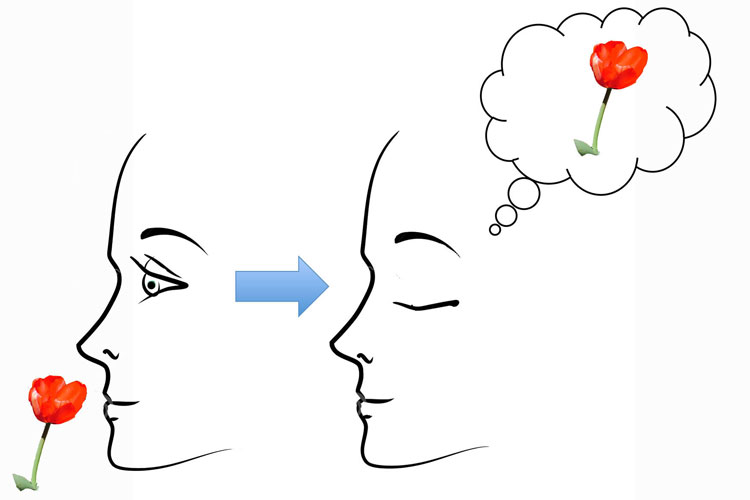
I was never exactly proud to be a Tiger when I was there.  I loved being in the music program, and I was proud of that, but I never really cheered our teams on and isn’t that at the heart of Tiger pride?  Sports?  To many, at least, that is true.  Yes, I played my tuba at the games and flirted with the flute player I eventually married, but I didn’t really care much about the game.  I didn’t really know much about football and still don’t.  I thought of Tiger pride as something reserved for the cool kids;  the kids in the student section getting out of hand while we played “In a Godda Da Vida”.

To be honest, I don’t even know if those were the “cool kids” or not.  I’m not even sure what that means anymore.  All I really knew then, though, was that I wasn’t one of them. But then something happened many years later.  My wife gave birth to two Norman Tigers.  They too joined the band and played at football games.  We became band parents.  I came to games and helped setup and take down.  We watched and cheered and visited with the other parents many of whom were NHS grads as well.  Now the players and the students were just kids to me, hoping to be adults soon.  And I’m a dad who cares about kids and about Norman High.

Now my kids are out of high school and we’re no longer band parents.  But something is different.  I’m proud of my diploma.  Not everyone earned one.   I worked very hard for it.   And I’m proud to be a Tiger.  NHS is a fantastic school with fantastic teachers, administrators, and students.  And now our new phase begins.  My wife and I can be that couple who comes to games and concerts not because we have kids in the program, but simply because we’re Norman Tigers and good Norman citizens.

You see, I love living in Norman.  I intend to live all the rest of my days here.  In Norman, there is so much to be proud of and so much to be a part of.  I have both my alma maters here and all that they offer to the community.  Norman has a great music scene.  And if I ever became a big sports fan, wow, so many sports.  We have a fantastic community theatre for me to see or to perform in.  Great food.  Many wonderful festivals.  It is a vibrant community and always will be.

Last night, my wife and I went to the first NHS football game since our kids left high school.  We saw the first half of the Crosstown Clash with Norman North.  We loved the energy in OU’s stadium where the game was played.  I just don’t think adults get as a excited as kids.  It’s good to be around.  We cheered them on and especially the band.  And then, when it got a little too late for us,  we got to walk through our college campus.  “Of campus beautiful by day and night” so our school song goes.   It was a beautiful night full of love for both my alma maters.

It was a good moment to reflect on what alma mater means to me.  It means that all the work I did, all the friends I made, all of the experiences my class shared, and all of the legacy we inherited has left a permanent print on me that connects me to who I once was and who I’ve become.  It’s my choice whether I’m proud of that, and I have chosen to be a proud Tiger.

These Dreams

As young children, we have our first dreams about what we want our life to be.  We dream of being princesses, fire fighters, and any number of famous kinds of people.  It’s the beginning of the process of discovering and defining who we are.  Some of these dreams come true, but most are childish and unrealistic.  I encouraged my kids, but I never told them they could be successful at everything they wanted to be.   I don’t believe that.  We have our gifts.  And it’s important to nurture your child’s gifts.

My earliest dream for myself was to be a professional artist.  I took art classes.  I set up a make shift studio in a utility closet at home.  I entered and won contests.  I idolized Leonardo Da Vinci and read books about him.  I even dressed like Leo for an event at school.  And I was a pretty good little artist.

Then came music, and I developed a new dream:  to become a professional musician.  I wanted to be an educator and an opera singer.  The problem was, that although I developed into a good singer with a modicum of talent, I was never good enough to be a professional.  It took me many years to accept that even though others around me already knew it.  But I did become an educator after all and I love it.

Then I got into writing.  I dreamed of becoming a professional fiction writer.  Just like art and singing, I loved doing it.  And some people liked reading it.  But it’s not going to happen, and I accept that…not without a lot of formal training which I know I’m never going to get.

What do you do when you realize that your dreams aren’t going to come true?  This is a really important question that applies to just about everyone.  The first most important point is when the truth is revealed that a dream isn’t going to be realized do we accept it or not?  I believe in fighting for dreams.  I believe into striving and giving it a shot, but at some point a person will either succeed or not.

We all know someone who hasn’t accepted the fact that it’s just never going to happen.  We know that person…I’ve been that person…who has some talent, but just not enough.  And it’s sad to see someone we care about kid themselves about their dreams.  But what do you do?  Do you say something?  Probably not.  This is something one has to discover on one’s own.

The second point is, what do you do when you’ve accepted that it’s just not going to happen?  I don’t believe in giving up on something I love.  Not everyone has to be a professional.  In fact, most will not be.  Amateur is a noble status.  Amateurs are people who practice their art because they simply love doing it.  I’m an amateur tuba player, writing, singer, actor, and artist.  I love all of that.  I no longer need or yearn to be a professional.  It’s not sad to me.  I realize I’m only talking about career dreams, but isn’t that what many people mean when they ask about dreams?

Third, for me this is where faith comes in.  I believe in the prayer Thy Will Be Done.  I believe that there is a force in the Universe which has a will which is far greater and wiser than my own.  I believe that if I’m willing to surrender my own dreams for myself in exchange for God’s dreams for me, that I will be at my happiest.  God gave me dreams which are being realized in very satisfying ways.

God gave me a family.  God gave me fatherhood and marriage and a home.  It’s a dream that I never really held for myself, but now that I’m living it I wouldn’t trade it for any of that other stuff.

God gave me a choir.  This is where my dream and God’s dream synced up.  God gave me the tools.  God gave me the dream.  Of all of the things I know how to do, choir directing seems to come the easiest and I’m pretty good at it.  I worked hard to get good at it, but it never felt like work.  It was never a struggle.

I admire people who sacrifice and struggle and strive to achieve their goals.  The world needs them.  The world needs the people who are willing to fail 100 times before they succeed.   So how do you know if you’re one of those people?  I don’t know.

On the one hand, I have this memory.  It was my first clue that I would never be a pro singer.  I was in college and lying awake one night.  I was thinking of the other students who were being courted by grad schools and who were being chosen for important solo positions, who were being encouraged to reach for the stars.  I was not one of those people.  No one had ever told me that I would be a pro.  So did that mean I shouldn’t continue to trying?

On the other hand, one of my friends was an average musician who was striving every day since he was 15 to be a composer.  I didn’t see it in him.  But now he is a very successful composer.  Should he have given up?  Apparently not!

So did he know?  Did he have doubts like I did?  I don’t know.  Only he could have known whether to continue to work at it.

But I knew.  I knew because when God’s dreams came true for me I was happy.   Striving to achieve other dreams never made me happy.  I enjoy them so much more than that. I’m not trying to be something I’m not.

A final thought.  There are some dreams that are achievable, but does that mean you should do it?  There are some sacrifices worth making.  But not all sacrifices are worth making.  Family is not negotiable to me.  If I’d had the chops but it meant not having or caring for a family, I just don’t think I would go for it.  Then it’s a choice.  How much is it worth?  Some dreams are childish.  Some dreams are selfish.

This is not a pity party.  Oh, poor David gave up on his dreams.  I’m sorry, but I don’t see it that way at all.  I’m a very successful software engineer.  Something I never imagined being.  It makes me a good provider, which is something I did dream of being.  I help a group of people to sing together for the glory of God in a way that helps other people worship.  I feed and love my family every day.  I’m happy.  I’m grateful.  I’m accepting of who I am.  This is not a tragic story.  This is a success story.  Dream on that!

First Day Satins

The first day of school is a huge event in a child’s life.  It’s a new start.  Will my best friend be in my class?  Will my school crush be in my class? Is this the year I will finally become popular?  Is this the year I won’t get any spankings?  And it’s also the time for new clothes if you’re privileged enough.

It’s not that I didn’t get new clothes.  I generally got a new pair of sneakers.  New socks.  New underwear.  The kind of Blue jeans that were so blue and stiff and long that when you were old enough to care you begged your mom to wash a dozen times before you had to wear them.  But most of my clothes were hand-me-downs.  Not just any hand-me-downs: the hand-me-downs of the two most popular brothers in town.  We could count on Polo and Izod and OP and whatever else was cool at the time.  Because of this, my twin and I dressed pretty well for poor preacher’s sons, and we always got the clothes in time for the first day.  Like most kids we already had our clothes picked out before the first day.  And I never had to worry if my clothes were cool because I got them from the cool kids.

In my second or third grade year (I’m not sure) I laid out all of my new hand-me-downs on the bed and made some very careful considerations.  I could go the safe route with a polo and some white tennis shorts, or I could take a riskier route.  The thing is, I knew I would be taking a chance with the other option because I had a queasy feeling about it, but I was feeling particularly devil may care and so I went for it.

The outfit that I chose was a red and white satin track suit.  Red satin track shorts with white trim. and a white satin tank top with a red stripe down the front.  This of course went with white knee socks and my knew Nike shoes.  I like the way they felt; soft and silky.  Perhaps that should have been a red flag, but I knew that they were cool or had been because of the last kid to wear them so I put my concerns away and chose them.

On the morning of the first day, no one said a word. No Paul, not my dad.  Oh, perhaps my mom said, “Well, David, that’s an interesting outfit,” but that was before I knew that when my mom said “interesting” she often meant that maybe it wasn’t the best choice; however, she always let knew choose my own clothes by then.  Besides, I was too busy being proud of my uber-stylish new-old clothes to notice.  Before leaving, my mother snapped a shot of us in our new-old outfits and the lunch boxes from the previous year.

We walked to school, which was about six blocks away.  This gave me time to really adjust to the idea that I was really going to wear this.  I was really going to walk into the school with nothing by satin.  I held my head high when I walked to my class, and I was pleased to see that my best friend was in my class.

At some point, my teacher needed a volunteer to run an errand and I was the lucky one.  Running an errand was generally reserved for only the very trusted members of the class and I counted myself one of them even though it was the first day. I set out for the destination.  While I was walking across a breezeway to wherever I was supposed to be going, I encountered another kid in my grade:  Todd.

Second/Third grade boys have been taught manners, but they don’t use them on each other at all.  And they certainly have no tact.  He stopped me as if to say, “Let’s have a little chat,”  and said, “No offense, but those are girls’ clothes.”

Despite being blunt, he said it in such a friendly way.  He was not being rude, nor was he making fun of me.  I looked down at my clothes and I immediately saw what he meant.  On some level, I already knew.  I knew by my stomach ache which happened when I was anxious about something.   I didn’t argue with him about it, and I made up my mind never to wear them again.  In fact, I wished I could have gone home right then and changed.

Todd immediately became my friend after that.  In my own little 2nd/3rd grade little boy way, I really appreciated him.  He saved me some future grief.  It was a kindness.

At some point after that, I realized something about those clothes.  I worked it out on my own.  How could such a cool kid wear girl clothes?  How could such a cool kid wear clothes that were so uncool?  The truth was that they were cool because he wore them.  He could pull them off, and I could not; plain and simple.

p.s. My mother has the picture of me in this outfit before leaving for school.  The one and only time I ever wore it.  I will post it as soon as she sends it to me.


Return to Complications

It’s been a long time since I’ve written My Wife Says I’m Complicated.  My schedule hasn’t allowed it until now.  I’ll start with a grab bag.  Go!

Writing Mood

Me not writing isn’t totally about time, though; it’s about mood.  If you are a regular reader, you know that I have Bipolar Affective Disorder.  The last time I wrote a lot, my mood wasn’t totally level.  I was a teency bit manic.  When that happens, look out!  I will write up a storm.  Ideas come quick and plentiful.  I might write as many as three or four posts in a day.  I’m funnier, edgier, impulsive, more emotional, and pushing the bounds of appropriateness.  All of these makes really interesting blogging, at least I think it does.  After my most recent medication adjustment, my mood leveled out and some of that went away.  I’m calm, thoughtful, even-tempered, and generally lacking in creativity.  That’s why this post is so hard for me.  I’m too damn normal!

Avant Garde MRI

I’ve been having shoulder problems for the last couple of years, and it’s made it painful to swim.  Swimming is my primary exercise.  After putting it off for a couple of years, I finally went in to see an orthopedist who sent me to get an arthrogram MRI.  I’d never had an MRI and I was EXTREMELY anxious about it.  They offered a sedative, but I didn’t want anything in my body that could intoxicate me, so I decided to tough it out.  Before sliding me into the machine, they asked me if I wanted any music.   I said that I would like classical music and that they could find it on 90.1.   I knew that was a risk.  Many people think that all classical music is beautiful chamber music that is relaxing.  But I should know better.  What I was hoping for was some Bach or Dvorak or Mendelssohn.  But what I got was the music of someone being tortured and murdered and buried.  Now don’t get me wrong.  I like modern classical music.  I like the dissonance and erratic rhythm and atonality.  But it was the last thing I wanted while being stuffed and confined in a big metal box being banged on with what I could only imagine were the pick axes of angry, subterranean dwarves.

Civil Rights

Ugh!!!  I can’t write about this without getting people into trouble.   Let’s just say that I never thought I’d personally have to stand up for the Civil Rights Act of 1964.   I stood my ground and justice prevailed.  End of story?  I’d be happy to share the saga offline. You’ll be shocked.

Super Cantata

As fall approaches, I’ve begun teaching my choir this year’s Christmas cantata.  This year, to save money, I didn’t buy a new cantata.  I took bits of the last six cantatas and built a super cantata.  SUPER CANTATA.  I scribbled down an outline of the Christmas story from various Gospels on a sheet of paper and spent several days filling it in with the pieces of the previous cantatas to tell the whole story.  This required choosing pieces which work together cohesively with varying tempos, keys, styles and with a compelling musical and story arc.  None of the cantatas by themselves tell as complete a story, so this is something unique.  We’re calling it “God With Us” and it will be performed December 17th at Goodrich Memorial United Methodist Church.  It’s a funny thing to think so much about Christmas while it’s still August, but choir directors around the world are doing just that.

Hummingbird Addicts

One of the wonderful parts of life in our new house is having a wonderful back porch with a garden and lots of stuff for birds.  There’s a regular seed bird feeder and a water fountain and a hummingbird feeder.

I really enjoy sitting out on the porch listening to an audio book, sipping a La Croix, and watching the birds come to our garden.  I’ve seen a goldfinch, a dove, and may other birds I cannot name, but the most frequent visitors are the hummingbirds.  As far as I can tell there are three hummingbirds who visit.  One of them does its best to keep the other two away, but they always find a way to sneak in a few sips.  And these birds are constantly dipping their long narrow beaks into the little plastic flowers where the sugar water pools.

It’s constant!  These birds will suck that feeder dry into just a few days.  Now, I’ve never fed hummingbirds before, but how can that be good for them?!  It’s nothing but sugar water! So I did what any grown adult would do when they’re worried about something that they know nothing about; I grumbled to my wife.

“Honey, did you feed the hummingbirds?” she would say, pleasantly.

“Well, I guess I will, but I’m pretty sure they’re going to get diabetes,” I would grumble.

Etc. until she said something like “I’m getting sick of your grumbling.  Just look it up.”

So I looked it up.  Sugar water is essentially the same as the nectar they live off of in the wild.  It doesn’t hurt them.  So I refilled and went back to watching them on the porch.  Greedy, little buggers.

Ok, well that’s a good start to my return to blogging.  I’m sure I’ll come up with something interesting to share soon enough.


The Fragrance of Resurrection

barneswilson_pr2I’ve been asked if my book Whiff is autobiographical.  The lead character, Jim Bronson, is a man whose primary way of experiencing the world is through scent.  He tries to resurrect moments, places, and people in his life by “collecting” smells.  It’s kind of creepy on the face, and so I suspect people wonder if I’m creepy in that way as well!

I want to assure you that I am not Jim Bronson!  But I will say that it is based on an experience I had as a child.  When I was four, we moved from Austin, Texas to Lonoke, Arkansas.  On the way out of town, my mother took my twin and I to the post office for a change of address.  While we waited, there was a little girl there.  I became smitten with her in my own little four-year-old way!  At some point after we arrived in Lonoke, we stopped at the post office again.  When we got to the counter, the smell was identical to the one in Texas.  I got a rush of butterflies in my stomach.  For awhile, every time we went, I got the some feelings.  Even at four years old, I was a lovesick romantic!

Since then, I’ve been very aware of smell in my environment and the way it affects me;  the memories they invoke.

In How Smell Works,Sarah Dowdy writes

A smell can bring on a flood of memories, influence people’s moods and even affect their work performance. Because the olfactory bulb is part of the brain’s limbic system, an area so closely associated with memory and feeling it’s sometimes called the “emotional brain,” smell can call up memories and powerful responses almost instantaneously.

After my grandfather’s funeral, we gathered at my aunt’s house for food and comfort.  It was a house that my grandmother had never entered.  As I walked passed the stairs, I got a whiff of something so familiar.  It was my grandmother’s scent.  Chanel #5, Spearmint, cigarette, lipstick, and her own unique scent signature.  I followed it up the stairs half expecting to see a ghost.  Then it disappeared.  I knew is was her.  I wasn’t sure how, but I knew it was her.  She was so present.  For a moment, she was resurrected.

Our olfactory memory is so powerful, the most powerful, that something that is gone or far away can be brought back into being in our minds.  Smell is as intimate a contact we can have with a person, place, time, or thing.  It’s like a time machine.  We are transported immediately when we smell that recipe for cookies that mother used to make.  We smell peanuts and beer and we’re at the ballgame with our grandfather.  We smell the clothes of someone who is not in our lives at the moment or forever and we can feel them close.  We smell fur tree, scotch tape, wrapping paper, wood burning fire, clove, orange, newspaper, coffee and we are seven again on Christmas morning.

sweet-granny-baking-cakes-and-our-positive-olfactory-response-by-daphne-k-knows-1200x675

So, no I’m not Jim Bronson, but we can all relate to this character in some way.  We’ve all collected smells.  We comfort ourselves with the fragrances that mean something to us.  The difference for Jim, though, is that it is his way of life.  He lives in a fog of nostalgia that keeps him from have meaningful relationships in the present day, and nostalgia is a kind of grief.  I’ve done it before.  I’ve tried to recreate a moment with aroma.  It works in a sense, but there really is no resurrecting a moment.  Treasure the moments you have.

Maybe It’s Time

march

On January 21, 2017, my father, mother, wife, son, father-in-law and his wife, and I gathered at the Oklahoma state capitol for the Women’s March.  The stated purpose was

to come together in solidarity to express to the new administration & congress that women’s rights are human rights and our power cannot be ignored.

Based on picket signs I saw, the issues included a response to President Trump’s remarks about his privilege as a celebrity to grab women’s genitals, demands that women receive equal pay for equal work, concerns that President Trump will not take into consideration women’s reproductive rights, and above all that women’s rights are human rights and that women’s power can no longer be ignored.  And then there were signs that were blatantly anti-Trump and pro-Hillary.  I’ve also read that LGBTQ rights, affordable healthcare, environmental concerns were among issues raised, and anything Democrat were a part of this.

Norman, Oklahoma marchers gathered first in the parking lot of the Oklahoma History building for pictures and the beginnings of a rally with the energy of celebrating and empowering women.  We all shivered for awhile.  It was a lot chillier in OKC than in Norman.  I saw the first of many “pink pussy” hats.  One of my first thoughts was of the normalization and ownership of the word “pussy” which is often used in a demeaning way.

On the way to the march, my mother tripped and fell.  I grabbed her purse and put it over my shoulder and she took my arm for awhile.  I’m not unaccustomed to carrying a purse for a woman in my life, but I could just picture the meme that one of my conservative friends would post of a “pussy” or “snowflake” man carrying a women’s purse at the march.  I carried it anyway.

As we gathered on the lawn of the capitol I was struck by the positive energy of a growing crowd which numbered 12 thousand at it’s peak.  Incidentally, there was not a single act of violence reported.    It felt like many more than 12k.  I reflected that this feeling must be one of the reasons the Trump camp may have actually thought their inauguration crowd was the largest in history, though it was factually not.

Smells of food from the food trucks wafted over us, but people were not focused on food at all…well maybe me a little bit.   I would say that a good 75% of the crowd were women and the rest were men and children.  There were speakers and enormous cheers, but we were too far away to hear what was being said.

After about an hour of rallying, we marched.  The march itself was full of positive activity; chanting, cheering, talking, taking pictures of each others’ signs. It wasn’t a long march, but it felt very significant.  I wondered, at one point, if it would translate to any sort of change or if it was simply a way of expressing how we were feeling in light of a Trump presidency.  Time will tell.  My mother remarked that it reminded her of the 60s.  After the march, many rallied again for more speakers, but we decided to get some Vietnamese food instead.

Afterward in the car, my wife asked what I thought the march was for.  I explained that for me it was about supporting the women in my life, that I wanted my daughter to live in an America that respects and honors its women; their bodies, their contributions, their talents, and their rights.  I can’t really say what it means to not be respected and honored in these ways.  I don’t know what it’s like not to have it.  I likely have privileges that I take for granted.  My wife referenced all the times we entered a house or car sale without being acknowledged by the sales person.  She expressed outrage at the notion that President Trump could walk into our home and grope her and our daughter with no consequences.  All he would have to do is deny and denigrate.  It’s been a successful strategy for him.

I think the march was different for my wife.  There’s a difference in standing up for someone you love and standing up for yourself;  making your voice be heard over the din  of disrespect, hatred, privilege, and so-called alternative facts.   She wasn’t just standing up for an idea or a principle, she was standing against the inequalities she personally had experienced which I’m barely aware of.

Perhaps above all, this global event is a starting point for a national discussion.  Women’s issues so often get cast aside for issues which men have historically been more interested in.  It’s true that it’s a different world than the many previous millennia.  Women are just as much a vital part of any of these “men’s” issues, but there’s more.  Many women still feel that their treatment is not equal.  They feel that their voices are not heard even to the point where their cries of rape are dismissed. Their pay is not equal.  They still get passed over for promotions which they have earned. They feel they have to work much harder at their jobs to get any kind of respect and they get criticized for being “ball-busters” or “bitches” when they do.   Their need for women’s health care is threatened with the defunding of programs which support it.

We…I say we because women’s issues are human issues…have come a long way for sure.  But we would be remiss in believing that we have arrived.  You can discount that all you want, but you cannot discount people’s feelings.  Women feel the way they feel.  And it’s such a significant consensus that we all need to take a stronger look at what many women are saying.

So yeah, maybe I’ve never had to think about these issues because I was born with the privilege of being a man, but maybe it’s time that I should.

The ADA and Disclosure

Protection Against Discrimination

The Americans with Disabilities Act (ADA) is a federal law that prohibits discrimination against job applicants and employees with disabilities. This law applies to private employers with more than 15 employees and state and local government employers. To qualify for protections under the ADA, the law states that you must be able to show:

  • That you have a disability that substantially impairs one or more major life activities. This means that you must be able to show that you have a condition that, if left untreated, interferes with daily or work activities such as concentrating, communicating or regulating emotions.
  • That you are able to perform the essential functions of your job with or without reasonable accommodations. In other words, you must be able to show that you can complete the important tasks or core duties of any job that you apply for.

https://www.nami.org

– See more at: https://www.nami.org/Find-Support/Living-with-a-Mental-Health-Condition/Succeeding-at-Work#sthash.HY56M0Bj.dpuf

As of 2008,  Bipolar Disorder is considered to be a disability and therefore covered by ADA.  It feels a little weird to be considered disabled, but when I think of other folks with Bipolar I know of it rings true.  And it could very well be me one day.

I started a new job this summer in the midst of struggles with mania which got worse as the months between then and December passed.  Not a bad episode really, but bad enough to be uncomfortable.  That’s what mania is for me now:  uncomfortable.  I no longer enjoy it.  I associate it with bad times in my life and fear of a return of them.  The main problem is that I get irritable and argumentative with my coworkers.  Secondarily, I push the boundaries of socially acceptable.

In previous jobs, I had a tremendous amount of flexibility.  I could break when I wanted to and as often as I needed to.  I could also surf the net as much as I wanted to as long as I did my job.  But that is not the case at my new job.  We’re allowed a 15 minute break at 9:30, a 45 minute lunch at 11:30, and another 15 minute break at 2:30.  And sometimes I have meetings or have to work through those break times so I don’t get a break time at all.  I really have to take breaks, and sometimes more frequently than that, so I decided to invoke the Americans with Disabilities Act.

I posted about this on a mental health forum and person after person shared stories of getting fired after disclosing.  I said that I just don’t see that happening to me.  I do a good job.  They like me here.  Yes, I can be a little disruptive once in awhile, but people are pretty forgiving of it.

How to Request Accommodations

If you do need an accommodation, the first step is to ask. It’s up to you to request an accommodation. Once you have submitted a request, an employer is required to sit down and talk with you about possible accommodations. Before you get started:

  • Ask your employer’s human resources (HR) personnel how to request accommodation. A request process may already be in place.
  • Decide what types of accommodations you need. Be specific. Be ready to explain how the accommodation will help you to perform your job.
  • Put your request in writing.
  • Talk with your treatment provider and ask if they can provide documentation. Your doctor can write a note, usually in the form of a letter, stating that you have mental illness and need accommodation. It may be helpful to share guidance on workplace accommodations with your provider.
  • Take detailed notes and keep a written record of any conversations you have with the employer. Keep copies of any emails you send and any forms you complete.
  • Negotiate. Be flexible and ready to discuss your options

– See more at: https://www.nami.org/Find-Support/Living-with-a-Mental-Health-Condition/Succeeding-at-Work#sthash.HY56M0Bj.dpuf

I went into the HR director’s office and gave full disclosure of my illness and asked for three accommodations:

  1. Breaks whenever I need them
  2. Use of a mental health support forum
  3. Unscheduled medical leave

She really hopped to.  I could tell that she had never encountered this situation before.  She likely had never even sat face-to-face with someone she knew was mentally ill.  She avoided eye contact, became flustered, and most importantly, became very accommodating toward me.  It was clear to me that she understood the legal ramifications of this and wanted to get it right and wanted me to know that she was cool with it even though she was having a hard to showing it.

I’m not at all self-conscious about my illness.  I’ll tell anyone I have it, but I think people worry that I might be, so they handle me very carefully as if they didn’t want me to feel embarrassed.  It’s very considerate, and very unnecessary.

I just don’t understand how all of these people could have been fired because they have bipolar.  Because they need time off to be in the hospital or to go to the doctor.  Or because they have a meltdown at work.  These are all things covered under the ADA, and I don’t care if I live in a right to work state where I can be fired without cause, I just don’t believe that they can fire me because of a disability.   People get fired because they’re bad at their job.  ADA doesn’t cover that.  I’m not saying that there aren’t tons of abuses and legitimate stigmas, but if you do a bad job, they will find a way to get around it.

But this gets down to the crux of it.  Disclose and take the risk of getting fired or not disclose and not get the accommodations needed to succeed.  Those who are mentally ill have been mistreated by employees for years with no protection.  The ADA does not require disclosure for protection, but it does for accommodation.  There is so much fear and ignorance and stigma that’s hard to know what to do.  But I decided to put my faith in the system and in my employer.

Time will tell. I took an unscheduled break once and I check my forum a few times a day, but nothing big.  It’s nice to know that someone has my back and that my boss understands my needs now.

Do I Still Have It?

220px-carrie_fisher_2013I’ve been thinking a lot about my illness (bipolar affective disorder) since Carrie Fisher died.  She was such a wonderful advocate. She managed to live a meaningful, successful life by fighting the fight.  I take inspiration from that, but something functioning bipolars have to deal with is wondering are we still really bipolar?  This is a curse for many because it means that they cease taking their medications thinking this way.
I share because every time someone with a mental illness shares their story, it becomes more normalized; the stigmas become weaker.

I’ve never quit my meds not even for a day, and although I still struggle, I have this really misguided desire to prove to myself or others that I am actually bipolar.  How messed up is that?  Imagine that I had any number of treatable illnesses and I was able to live healthily because of treatment…say, type 1 diabetes.  Would I ever question if I still had it?  I don’t really know the answer to that, but it seems so very absurd that someone who has to take insulin every day would doubt their illness.  And certainly NO ONE would doubt that they had it.

I make no secret about my illness, but I believe that I might be able to if I wanted, just as an insulin-dependent diabetic might.  Sure, I have occasional mood issues, but doesn’t everybody?  And that is the goal of treatment; to fall within the realm of normal mood fluctuation.  Because I function, I have this feeling that some people are skeptical of my diagnosis.  Maybe they’re someone who has never seen me manic.  I tend to hide out when I am.

And this is a factor.  I worry that they are right.  And you know what?  I resent these quasi-imaginary people.  They have no true understanding of what my journey has been or how it has affected my wife and children.  I’m so grateful for the people who accept me and support me.  Maybe these quasi-imaginary people have seen movies with a fictional depiction of a person with bipolar and think they know what it looks like and I don’t match.  Maybe they even know someone and I don’t match.  But there is no one way to be bipolar.  It’s a complex disorder.  I respond to that excess production of serotonin or lack there of in my own way and it is not always apparent to the onlooker.

Then there are the people who believe that bipolar is an emotional/psychological disorder instead of primarily a neurological disorder.  Very “Church of Scientology”.  If it were simply an emotional issue, then psychotherapy or spirituality would make me well.  I wouldn’t need medicine.  Oh, therapy helps for sure.  It helps me learn how to cope with the disorder.  The problem is that if it is in my head and not in my brain, then I should be able to think my way out of it.  If I can do that, then aren’t I just making myself a victim by not unlocking my emotional issues?  Not meditating enough?  Not eating healthily enough?   All of these things help, but this is not so.

Carrie Fisher said a few things that I would like to highlight.

Without medication I would not be able to function in this world.  Medication has made me a good mother, a good friend, and a good daughter

If you’re manic depressive and you’re functioning in this world and doing at all well, I think, Wow! You should be proud of being able to say, “This is what I’m getting through right now.”

I do need medicine and perhaps I don’t give myself enough credit.  I am functioning.  I’ve made it this far without losing a job, losing my family, or losing my freedom. Isn’t that something I should be proud of?  And yet my response is this silly nonsense that maybe I’m functioning because this is all a sham.  I’ve not been sick, I’m just been an asshole.

But today, to honor Carrie Fisher, I say No!  I do have Bipolar Affective Disorder (3 out of 4 doctors agree. The 4th thought I was just a cokehead) and I’m doing a damn good job at being a successful person in spite of it.

If you know someone fighting to function, give them credit!  If you know someone who has stopped fighting, give them support!

God bless people like Carrie Fisher who live bravely and authentically with their mental illness.

Great Expectations

allspiceThanksgiving is upon us; a time of traditions, family, and expectations.  The Burns’ have a few traditions.  We have tamales and chili on Wednesday night.  We have a special sausage from Goliad for breakfast on Thankgiving morning.  We eat around 1:30.  And at some point, we see a movie.  My vote is Care of Magical Creatures and How to Find Them.  We’ll see how compelling a case I can make.  This year, my brothers and their families will join us at our parents’ house.  I’m never happier than when I’m with my brothers.


But Thanksgiving can be a very difficult time for people, even for people who actually like being around their family.  As I prepare to make my Aunt Pat’s fabulous cornbread stuffing and a sweet potato casserole, I’m mindful of expectations.  Nothing does more damage to a family gathering than expectations.  This is where resentment and disappointment and arguments begin.

Take the sweet potatoes.  I’ve never made this dish.  I couldn’t find the ingredients I expected to use to make precisely the recipe my mom has made since we were children.  I am stressed out about it.  What if people expect it to be exactly the same?  My new motto with cooking has been to take the easy route.  I don’t have time in my life to make everything from scratch the way I used to.  I want to open a can of candied yams, mix in some butter and spice, and cover with marshmallows.  I know for a fact that that will be good.  How can I lose with yams, sugar, spice, butter, and marshmallows?  It’s a sure thing, but it may not be what my mom has been making.  Maybe she uses eggs and evaporated milk.  Maybe I should ask.  But how silly is it that I’m stressed about meeting an expectation that may not even exist? ( By the way, I just called my mom.  Simple.  Mash them with a little brown sugar and cover with marshmallows.)

With an expectation comes the possibility of disappointment.  If you expect a certain interpretation of a tradition, say mom’s sweet potato casserole, and you don’t get it, you might be disappointed, and you might resent me for causing that.  I’ve struggled with this for years.  If all of my many rules and expectations for Thanksgiving and Christmas were not met, I could be a pretty miserable soul and a pain to be around.  Expectations lead to suffering.

So why do we do this to each other and to ourselves?  Why are traditions so important that we would get upset about them?  A tradition is something we did for the very first time once and somebody liked it enough to do it again.  Take fruitcake.  In the old days, this was one of the few ways you could get fruit in the winter, and fruit was a wonderful treat.  And so fruitcake became popular at Christmas.  Fruit, nuts, and cake.  What’s not to like?  Personally, I love it.  But most do not, and yet, it is still a tradition.  And people still buy them. Perhaps you had a favorite relative who always brought them and you hold the tradition to honor them.  Perhaps it makes you think of the many gatherings with the fruitcake and some special punch.  Perhaps it just doesn’t feel like Christmas without one.    Maybe now the tradition is to complain about how awful they are.  This tradition just won’t seem to go away no matter how much people hate it.  But is it really worth it to do a tradition that nobody likes except for crazy Uncle David?  Perhaps I hold the family hostage over it.  Hey!  Don’t forget, crazy Uncle David haaaaass to have his fruitcake.  He will throw a fit.  That’s not a very fun tradition.  What an awful thing to do to a family with that expectation, and yet people do it.

You think fruitcake is too small a thing to get upset about?  Wrong!  For years, my wife’s grandmother gave us all fruitcakes.  She was very poor, and so one year she stopped buying them.  I expressed my disappointment in a really immature way in front of everyone.  “What?  No fruitcake?  Awwwwwwwwwe.”  But the look on her face told me that she felt bad and didn’t appreciate me putting that on her.

This year, we might need to make some allowances for our movie tradition.  This is a great tradition,  but this year is different;  we have 5 little ones who can’t go see a movie.  My kids are grown, but my brothers’ kids are young.  The reality is, that when you have kids, you have to make some sacrifices.  You might not get to go to the movies when you want to.  But people have expectations.  People might be disappointed by a change to this tradition.  I know I will.  I really look forward to seeing a movie with my brothers.  But it might not work out that way.  Our expectations might not be met.

I’m not willing to say that we should throw out our traditions.  I believe in the value of traditions.  What I am suggesting is that we learn to manage our expectations.  With a little forethought, I can anticipate a deviation or I can prepare myself for the possibility.  None of this is worth being bent out of shape over.  Even the expectation of always getting to see your family can be unreasonable.  It just doesn’t always work out.  Not everyone has that.

My motto this Thanksgiving is go with the flow.  The stuffing is too drippy?  Go with the flow.  The sweet potatoes are too bland?  Go with the flow.  We don’t see my movie?  Go with the flow.  Who knows?  Maybe we start a new tradition.  Maybe we stay home and play a board game so everyone can participate.  We actually bought one just in case.

From a Christian stand point, when we get together we are joined by Christ.  We are blessed in some special way;  perhaps in some brand new way.  May we be open to the possibility that God has something better in mind than our own human expectations.

Double Hustle Opera Night

hustler – a person who employs fraudulent or unscrupulous methods to obtain money

12585124234_9c5cbd281a_b

One of my favorite things to do is see the Dallas Opera with someone I love.  There was a new-ish opera based on the novel Moby Dick aptly named Moby Dick.  I’d never seen an opera from this millennium, and so I didn’t know quite what to expect, but it didn’t really matter because I would be seeing it with my twin brother.  We would have fun, no matter what.

Although I love to see the opera, I do not like the journey there, other than stopping for a fried pie in the Arbuckle mountains on the way (apple, raisin, pecan, by the way; a seasonal offering).  It is the most stressful drive I make on a regular basis. Although I’d never been late once, I was always worried that I would miss part of the show.  I left from Oklahoma City at 2:30, which should have gotten me there around 6:30; an hour early.

Mistake #1, I left without a phone charger.  Mistake #2, I left navigation on the entire trip. Mistake #3, I listened to a few hours worth of The Moth story-telling podcast.  My battery was all but drained.  All I’d really needed navigation for was the last 30 minutes of the trip to get from I-35 to the Windspear Opera House in the Arts District of Dallas and I had wasted it on a straight shot down the interstate

I began to panic.  I switched my phone to ultra power savings mode, which would save it from dying but would prevent me from using the navigation app.  I intended to switch it on at the last minute, but as I approached I realized that I would not even have enough power to do that.  I called Paul and asked him to talk me in.

Paul had been a resident of Dallas before and now he lives near Garland.  It was a simple trip to him.  He told me what exit to look for.  By now it was dark and the traffic was slowed to around 10-miles-an-hour because of construction so I was a little disoriented. I didn’t make the exit.  I was on the road to Waco.  Paul told me that I might not make it in time.  I prayed this prayer.

“Lord, grant me the serenity to accept the things that I cannot change.”

I relaxed a little and decided to take the next exit and buy a car charger.  I found a dive of a convenience store.  As I pulled up, I could see that I was about to get hustled.  There was a ragged looking man hanging around the front door.  As I approached he opened the door for me with much aplomb.  He was clearly pretending to be blind.  His eyes were closed, but he would take little fluttering blinks to, presumably, see where he was going.   I knew that he was going to hit me up for something eventually.

When I entered the shop, I could see that it was Pakistani (or some such) mom and pop store.  Minimum credit card charges required, English second language clerk, tons of sketchy energy/potency products, plexy-glass enclosure around the counter, AND a million cheap phone chargers hanging off the front of the enclosure.   There were two guys hanging around the register, not buying anything.  As I searched for the right charger, I said, “You guys go ahead.”  But they didn’t pay me any attention.

I tried to slide the charger under the plexy in the change dish but he already knew the price, or was making up the price.  When I came outside, there was the “blind” man furiously wiping off my perfectly clean windshield with the sleeve of his filthy jacket.  He said,  “I cleaned that for you, mister”   I pushed past him to the door and he said, in a raspy voice,  “Hey man!  I got chargers, too.”

Curtly, I said, “No thanks. Goodbye.”  And I almost said, “I have an opera to attend.”  But really? How bougie would that have been?

These were the lamest attempts at hustles I’d ever seen. There were two poorly constructed hustles.  The concierge/door man and the window-wiper.  In the concierge hustle, a guy pretend’s to be an employee of a business who should be tipped for his service.  He holds the door, carries your bag for you, and gives you directions. And in the window wiper/lawn mower/car watcher/whatever, they perform a service that you might have paid for otherwise and they make you think you should pay them.  But he didn’t have the will to follow through with it.  Honestly, he would have done better with me asking for money for drugs.
I was late to the opera so I had to watch the first half on a screen in a little auditorium off the lobby.  The opera was fantastic, both in the auditorium and in the house.  When I left, I was on cloud nine.  It was past eleven, and I had a three hour drive ahead of me so I stopped at another mom and pop to get some caffeine.  I pulled up next to a beat up old Chevy with an old black woman and a young man.  Already, I was suspicious at anybody hanging out in a convenience story parking lot at midnight.

When I came out, the very typical gas station hustle began, but with a twist.  The woman hung her head out of the window and said with great command, “Young man!  I say young man!”

I made a mental calculation of how much money was in my wallet, three dollars.  There was something about being called young man by a formidable, albeit strung out, black woman that triggered something in me.  I don’t know if it was some sort of latent white guilt, or a respect for the elderly, but I reached for my wallet expecting the typical hustle.

“Young man, my son and I have a long ways to go, and we need some money for gas.  Anything you can give will help.”

“Well, I have a little bit, but not much, ”  I said as I handed her the money.  But without even saying thank you she shoved a clothes iron still in he box in my face.

“See now, it’s still in the box!”

I waved it away, and walked to my car.  I don’t know exactly why I thought so, but my immediate assumption was that she was trying to legitimize herself to me in some bizarre show of affluence.  An hour down the road, the more rational but no less peculiar idea occurred to me that she was luring me in with the need-money-for-gas hustle into the peddling-irons-out-of-her car hustle.

The journey back was more or less uneventful.  I drank Red Bull and coffee, listened to an odd selection of Gloria Estefan and The Bengals all the way home.  The heart wants what the heart wants. When I got home, I took two Benedryls and fell to sleep immediately with the song “I’ll do anything for you” in my final thoughts.

I’ve been hustled in San Francisco, San Diego, Chicago, Jamaica, and at home.  One guy, also black, started his hustle by showing me a tattoo of a swastica scratched on his forehead. Yes, a black man with a swastica.  It still haunts me to think of how it got there.   Here’s a fictionalized account of the real story. Lost and Found Street Hustle. I don’t really smoke Marlboro and wear boots as the character in the story does, by the way.  I just wanted it to be gritty.  He thought I looked like the kind of guy who had a little weed on him.  Once, a guy one tried to grift me with a tuba.  I almost bought it.  But most of them are too strung out to come off as believable.  I feel compassion for people trying to make it on the streets.  I help when I can, but there’s something about the dishonesty of a street hustle that makes me a little less generous.  The most honest panhandler I have met sat on a corner in San Francisco with a sign which read “Too lazy to work.  Need money for weed.”  No hustle, no lies, just straight up begging.  I gave him five bucks and thanked him for his humility and honesty.

The Cool Teacher

Back in the 90s, before I was a software engineer, I was an elementary music teacher in Moore, Oklahoma. I was starting to get into keyboards using an old book I had swiped from my dad which was designed for people who had been taught the classical method but could never just play from a chord chart.  I practiced often on my breaks in a closet which doubled as an office for me.  There, I had a keyboard and a piano with which to practice.  I’d bought a book called a fake book which contained dozens of songs with only the melody and chords.  I learn how to play 20 or so classic pop songs including Bill Whithers’ classic “Just the Two of Us”.

Around that time, Will Smith made a rap using “Just the Two of Us”.  It was a mega hit and all of the kids knew it.  And so, when I gained the confidence to begin wheeling my keyboard around to my classes, I decided to try out the song.

The kids, who were merely tolerating my lessons, lit up with recognition.  Suddenly, I was the cool teacher who could relate to them in ways that their other teachers could not.  They didn’t realize that it was based on an old song for old people.  Every time I came to a third grade class, especially, they demanded the song, and I happily obliged.  After three years, I was finally a hit.

In my last days of being a teacher before taking a job in Tulsa as a software engineer, the school counselor, who had heard through the grapevine of my recent success with the kids, asked me to come up with a song for the kids to chant at the district-wide anti-drug parade. I was hitting the big time now. And this is when I came up with the brilliant idea of using my hit song.

I began crafting anti-drug lyrics to “Just the Two of us”.  “Just the two of us, building big castles in the sky”  became “Every one of us, we don’t need drugs to make us high.”  I was to lead it in the school assembly to get them ready.

I’d already accepted the position in Tulsa, so I knew that it was likely that I would never march in the parade that year, and boy would they miss me, the most popular teacher in school.  The cafeteria was packed from pre-K to 6th grade.  I’d been afraid to teach the 6th graders the song because they didn’t like me.  My manner was more geared for young children.  But I felt that all of that was about to change.

My keyboard was plugged into an amplifier, and I was set up with a microphone waiting for my cue. I was about to become a rock star. The principal turned to me and nodded.  I hit the drum track and I was off.  I would sing through it once and then shout, “Everybody sing!  Everyone of us…”  But it didn’t come out right.  I messed up the words.  I hesitated.  And then it happened.  The big kids on the back row began to laugh.

That’s when I realized who I’d become.

maxresdefault

Around that same time, Will Ferrell and Ana Gasteyer were doing a bit on Saturday Night Live parodying middle school music teachers trying to be cool by playing the top 40 hits of the time on the keyboard in a ridiculously square style.  Of course, they were a joke to the kids at that school who regularly heckled the them.

I finished out the song, deflated.  My big idea had failed and everyone knew it including the principal who said at the end something like “Alright, Mr. Wilson-Burns, thank you for your hard work.  That was truly unique.”

I was comforted only by the fact that I would be leaving at the end of the week; a week in which I showed movies non-stop.

I learned an important lesson that week, kids can spot desperation in adults and they find it very unbecoming.  Being the cool teacher has it’s perils.  Today, when I teach kids in my church I don’t even try to be cool.  I’m much better at goofy.  Kids enjoy an adult who can be silly once in awhile, but what they really love is to feel that they can do great things.  And for kids to do great things, they need a great teacher who doesn’t care about being cool.

Oh, and don’t do drugs!

A Nation of Sheep?

sheep-and-goatsTo be sheep, in common parlance, means to follow blindly and ignorantly and spinelessly.  But Jesus has a different idea about sheep.  He tells a story about what it will be like when the Son of Man (King) comes into his “glory” and sits on his throne with the angels and all that.  He says all the nations will be there and he will separate the people like a shepherd separates the sheep and the goats.  He says to the sheep

‘Come, you who are blessed by my Father; take your inheritance, the kingdom prepared for you since the creation of the world. 35 For I was hungry and you gave me something to eat, I was thirsty and you gave me something to drink, I was a stranger and you invited me in, 36 I needed clothes and you clothed me, I was sick and you looked after me, I was in prison and you came to visit me.’

Then the “righteous” on the left (goats) start whining

‘Lord, when did we see you hungry and feed you, or thirsty and give you something to drink?38 When did we see you a stranger and invite you in, or needing clothes and clothe you? 39 When did we see you sick or in prison and go to visit you?’

They are freaking out!  They’ve been looking for the Son of Man all over the place so they can serve him, but apparently they never found him.  So the king says,

‘Truly I tell you, whatever you did for one of the least of these brothers and sisters of mine, you did for me.’

Then he goes on to put them in their place pretty hard,

‘Depart from me, you who are cursed, into the eternal fire prepared for the devil and his angels. 42 For I was hungry and you gave me nothing to eat, I was thirsty and you gave me nothing to drink, 43 I was a stranger and you did not invite me in, I needed clothes and you did not clothe me, I was sick and in prison and you did not look after me.’

He condemns the goats to eternal punishment and the sheep, whom he now calls “the righteous” get to hang around and be rewarded.

I gotta say, I’m having a hard time reconciling some of the behavior and beliefs of people identifying as Christian and Republican with this scripture. I’ve never seen more uncharitable sentiment and behavior from Christians in my life over the last year.  This turns people away from Christianity! We’re supposed to be making disciples not alienating them!  Many liberals call conservatives hypocrites for preaching their anti-gay gospel at the government level but not supporting a governmental approach to the prime principles of Christianity.  The conservatives say that those principles are  supposed to be personal and not national.  I almost buy this.  I might buy it if they hadn’t been fighting so hard to legislate how we should live our lives according to their religion, particularly with gay folks.  It is incongruous to me that the ‘no no no it’s not the government’s job to feed the poor’ say that it is the government’s job to enforce their personal religious views on everybody.  I don’t buy it.  Nope.  You canNOT have it both ways.  It is categorically indefensible.

But this leaves liberals in a weird place.  We’re making a fuss about this, but many liberals are not even Christian and certainly believe in a firm separation of church and state.  So it’s like, what are you going to do if you finally win this argument that the government should legislate the Christian principles of the goats and the sheep?  It’s a trap!

So where do I stand?  I am a Christian.  I’m a music minister, in fact.  I was brought up in a Christian home with a father who was a minister.  I read the Bible.  I pray. And I’m a left leaning moderate.  Many conservatives do not believe that I exist.  There is no such thing as a liberal Christian!  I could easily say the same thing about conservatives, if you take Jesus’ radical Gospel for ordering the Kingdom of God seriously, where the last shall be first and the first shall be last.  But I won’t say that.  That’s not fair at all.  No one has a perfect faith.  In fact, no one gets to be right about EVERYTHING, including me.  The Democrats don’t get to be right about everything.  The Republicans don’t either.  Libertarians, and such.  What I believe is that the government is the people and is for the people.  It is to serve and protect the people.  From my view, it’s to help make this a great country to live in without the partiality of greed and power and prejudice.  The rich and powerful have a role to play, but someone has to look out for injustice, it certainly won’t be the rich and the powerful who often benefit from it. You don’t become rich and powerful by being a good Christian.

23 Jesus looked around and said to his disciples, “How hard it is for the rich to enter the Kingdom of God!” 24 This amazed them. But Jesus said again, “Dear children, it is very hard[b] to enter the Kingdom of God.25 In fact, it is easier for a camel to go through the eye of a needle than for a rich person to enter the Kingdom of God!”

Hey, we all want to be rich.  That’s fine.  But Jesus is warning us that money complicates righteousness.  The Republican party wants the government to help the rich get richer, but doesn’t want to help the poor pay some bills once and awhile.  So yeah, I believe in public assistance, affordable healthcare, easily available mental healthcare, public education, civil rights, refuge for the refugee, work permits for the immigrant worker, and anything that makes this country a great place to live in for those who are struggling.  It’s already a great place to be for people like me; white, well-to-do, straight, Christian, male.   We pay a lot of taxes so I expect people to get a little back when they need it.

In Jesus’ story, the goats are the people who are doing all of the right things by the law.  They are righteous in that sense.  They go to church.  They pray. They don’t hang out with the sinners.  They follow all of those rules that make the pure stay pure, the holy stay holy.  I see this in my religion. The Baptist General Convention recently passed motions aimed at the removal of churches accepting LGBT people as members.  But what does Jesus say?  He says that what’s really important is taking care of the least of these.  And believe me, I’ve been cared for by gay folks when I was in need.  And as far as I’m concerned if the government can help out with caring for the needy, then please tax me for it.  IF, and I mean IF, we were to be a Christian nation, I believe we would look a lot more like the sheep than the goats. May I we become woolier  and woolier.  May we become a nation of sheep.

It’s Not as Simple as Haters and Lovers

I was among the half of the U.S. population who watched in utter shock and dismay when it became apparent that Donald Trump would be our next president.  But this is something that happens every four years.  And now it was the Democrats’ turn.  Politics as usual.  Right?

Wrong.  This is not politics as usual.  This is a revolution of a sort that hasn’t happened in this country, perhaps since Andrew Jackson, as one Republican bragged.  What it means is that half of this country was at a breaking point.  It means that half of this country, mainly whites, felt so oppressed by a huge and steady wave of liberalism which only a man like Donald Trump could save them.

In the last eight years (from the conservative perspective), they saw marriage redefined in a way that defies God’s natural order of things.  They saw the country take a dangerous step toward socialism in Obamacare (ACA).  They saw executive orders to make it easier for illegals to work in the U.S. and for trans folks to threaten the bathroom privacy of women and children.  They were called homophobic and bigoted because they believe homosexuality is a sin. They were called uneducated for not all getting college degrees. They continued to be dismayed that prayer was unwelcome at school. They counted many thousands of babies murdered in the womb.  They were called racist because they were tired of the illegal immigration of millions of people into the U.S and because they were tired of cops being prevented from doing their jobs.  And they were called Islamophobic for wanting to keep terrorists from entering the U.S.  And lastly, tired of being told what words they can and cannot speak in public.

It would be so easy to be dismissive of these concerns.  I don’t share that perspective, but it is not small enough to dismiss and not a simple and two-sided enough to count myself as righteous over.  I am not willing to paint all Trump supporters with the brush of racist, bigoted misogynists.   This is half of our country who are desperate for change.  Although many of my conservative friends love Trump, many were very reluctant to vote for him, but they wanted change badly enough to do it.  Friends, I’m here to tell you that half of our country is not insane and hateful. Yes there are many hateful people who supported Trump, but I don’t know any of them personally.  My conservative friends are good people. They are fearful for their freedom, their safety, their jobs, and their way of life.

I am in no way changing my stance on Trump.  I find him unfit to be President.  I find him to be indicative of some of the worst qualities of humanity.  But now liberals and moderates have to deal with it, each in their own ways.  Let your voices be heard.  Pray.  Reach out. Protest. Get into politics.  Move to Canada.  Whatever you gotta do to.

I will write.  I will pray.  I will try to understand.  I will try to find a common ground with which to work.  That is not the right way or the wrong, it is simply my way.  I will continue my relationships with my conservative friends and family.  I refuse to unfriend.  Although some of you have, I’ve never found it truly necessary.

A very wise conservative friend of mine shared this on Facebook:

The people took him seriously, not literally.

The media took him literally, not seriously.

This is a part of the new reality of our country.  But hyperbole is nothing new.  Teachers and leaders have been using it forever to inspire whatever they’re trying to inspire.  Those who voted for him know that much of what Trump has said will never happen.  It’s just something that resonates with them in some way.  And what way is that?  It is that they feel like someone is finally listening to them and will champion them.  We all need that so badly.  You can judge about what they are saying, but don’t you listen to people who you love even if you don’t like what they are saying?

Before I write another word, let me make it very clear who I am.  I am white.  I am straight. I am Christian.  I was born in the U.S.  I am male.  I am Trump’s primary demographic.  I have never known discrimination for may sex, my gender identity, my sexuality, my race, my religion, or my citizenship status. The only thing I’ve been discriminated against for was mental illness.  That is not a small thing, but I still consider myself privileged beyond reason.   Perhaps it is my naivety and privilege that allows me to write this piece. One of my first involuntary thoughts when I woke up to find that Trump had won was that at least I was who I was and had nothing to fear for myself, but I do fear for many people in my country given Trump’s many remarks, and his supporters’ responses.

Although it is true that Trump is often merely rhetorical in his speech, there are still dangers.  I don’t like what I’m seeing.  It’s one thing to be validated personally by him, but for him to incite hateful words and behavior is offensive to me.  It is against my Christian values.  I think of Jesus’ stump speech, The Beatitudes, in which he said that we will be blessed for being merciful and for making peace.  Or when he said to return no evil for evil.  And when he said love your enemies and pray for those who persecute you.  Feed the poor.  Clothe the naked.  Take care of the widow.  And when Moses instructed his people on how to welcome the immigrant.

Those are my Christian values.  Those do not appear to be Trump’s values. Being anti-abortion and anti-gay does not make a person a Christian.

Concerning Christians who voted for Trump.  They ARE Christians.  They will continue to do the work of Christ in their communities.  They see those Christian values I listed as critical personal and community values;  just not a way to run a government.  I know that is perplexing to some given their governmental stances on abortion and gay marriage.  It is what it is.

I’m sitting here in a state of disarray, seeking wisdom.  Feeling powerless.  But you know what?  I know the gift of powerlessness.  As an alcoholic, I know that one of the greatest gifts God ever gave me was to be powerless over something.  I have had no choice but to seek a higher power to look after my life;  the good, the bad, and the ugly.  I trust him deeply.

And so I close by sharing that although God may not change Trump’s ways, He can make good out of ALL things.


The McDonald’s Cop

2000px-mcdonalds-90s-logo-svgLast weekend, I drove my wife and son down to Garland, Texas for my niece’s baptism.  We’ve driven south on I-35 enough times to have a tradition.  In Oklahoma, there a few mountain ranges.  Now understand, when I say mountains, I mean a few rocky hills, but we love them for what they are.  As you drive south on I-35 from my hometown of Norman there is a range called the Arbuckle mountains.  There are appealing lakes, waterfalls,  springs, camping, and creeks to enjoy.  But most importantly there is Arbuckle Fried Pies.  We stop there nearly every time we pass.  We get apricot and coconut usually.  The picture says it all.

And so we stopped thinking we might get a meat pie and and a fruit pie and make a meal out of it, but we were in a hurry and the meat pies would take 8 minutes, so Jenn and I ate apricot pies and Chris ate a coconut.  I decided that we would eat burgers to-go at the Denton McDonald’s on down the road.100_6018

When we got there, the drive through line was very long, so I parked the car and went in to order.  When I entered, I was greeted by the cool gaze of a veteran police officer standing to the side of the counter.  He was absolutely classic.  Perfectly trimmed mustache.  Short spikey salt and pepper hair.  Barrel chest.  Uniform in perfect condition.  He was quiet and appeared very calm.

I wondered why he might be guarding a McDonald’s.  What had happened here to warrant law enforcement?  What crazed lunatic had caused a ruckus here, perhaps earlier in the day?

I wanted to know, but I didn’t want to be the guy who sticks his nose in someone else’s business so I just asked, “Everything going ok?  Having a nice evening?”

He turned his gaze to me and nodded, pooching out his lips as if he were thinking it over.  “Yes.  Everything is fine.”  And then he adjusted his belt a little, reminding me of Barney Fife on the Andy Griffith Show.

“It seems very calm to me.  You have a calming presence,” I said only as a friendly observation.

But then he said, “Well,  some people wouldn’t say so,” and then he rolled his eyes just slightly.  I immediately thought of the Dallas cops recently shot at the rally.  Could he have been alluding to the fact that cops were getting a bad rap?  Or was he just a toot.

And this was my opportunity to get the story.  All I had to do is say, “Oh?”  and he might have spilled his guts.  He might have said, “Well, we had a guy in here the other day who got the less calm version of me.  I had to smack him with my night stick and drag his stinking ass out of here.”  Or he might have confessed that he was a member of a rageaholic group.

But I didn’t ask.  I really just wanted to get my food and go.  I’d ordered it and was waiting.  So he turned his focus on a lady in line wearing a t-shirt which said, simply, “California”

He called over to her and said, “Did you just come from California?”

She smile and revealed a missing tooth and called back in a thick Texas accent, “Naw, I just like the shirt.  But I wish I was there right now.  Probably cooler.  It’s been 107 degrees here.”

The cop said, “Was it a 107 today?”

“Well, it was around 98.”

“Is it a 107 right now?”

“Well, it’s not too bad –”

“Well there you go.”  And then he went into expert mode.  “California is cooler.  It’s probably around 85 degrees, but you know what?  I said do you know what?”  Then he prompted her to answer.

“What” she said, losing her good humor.

“It’s humid.  California is very humid, so it feels hotter.”

And then I could see why some might not see him as a calming presence.  I’m not sure what his point was, but it sounded kind of like, “Quit your complaining.  I just wanted you to know that I’m in charge.”

Later that night, I debriefed my brother about the McDonald’s cop.  He was aghast.  “That was a missed opportunity.  Who knows what you might have learned if you’d asked why!”

But I didn’t need to ask why.  I saw enough to give me a pretty good guess.


Hand Greeting Disability

high-five-elbow-pivot-point

Once upon a time, there was one way to greet another person with your hands.  It was called the hand shake.  You reached out together, thumbs on top, clasp hands, and shook 2-4 times.  Simple.  There are variations of course: palm vertical, better, palm up, hand in hand, lingering, the push off, the pull in, the superior, the lesser, the finger cruncher, the bone cruncher, the palm pincher, the twister, and the very unpleasant dead fish.

I know that stuff like…well…the back of my hand.  Come at me with any one of these and I’ll pick it right up.  But that’s where my abilities end.  If it were just a classic high five or low five once in awhile, I could manage just fine.  What about the bro hand shake?  What about all the weird bro hand jive stuff?  Fist bumps?  Fist bops?  I’m afraid it’s all too much for me.

broshakeThe fact that there are dozens of options throws me off.  I’m leaving my current job, so I got a goodbye handshake from a man.  He came in with the thumb extended high.  Hand-shake?  Or bro shake?  I went bro, and he went standard handshake and so I just ended up grab his thumb solo.  Try that out sometime and feel how awkward is.  And it’s not the only time I’ve done it this month.

A good friend of mine, a very COOL good friend of mine ran into me at a farmer’s market.  He lifted his hand up over his head with the palm down, wrist and fingers limp.  I know that that is a huge low five now because my little brother explained it to me, but what I did must have been the most awkward, botched, hand greeting in history.  If someone had gotten it on the phone, it would have gone viral.  We’re both pretty tall, and he’s taller than me.  He went up high with his left hand (right facing me).  I panicked.  The best I could figure was that this was going to be a mirror-facing high five of some sort.  So as I walked his way I put my right hand up high for the five but his left hand didn’t flatten out and so I clasped it.  But that’s not all.  I then used my left hand to bring him in for a weird sort of hug, but because we were mirrored hands up and arms clasping each other our cheeks kind of came together noses toward right each other.  It must have looked like the ugliest two-man tango in history.

And this goes for hugs as well.  I was at a party with a bunch of Bengali men, and we got a little tipsy and as a result we bonded.  We made pledges of lifetime allegiance to each other.  We would be uncles to our future children.  We would be at the weddings.  At the end of the night, one guy came up to me as we were leaving and said. “David, we are cousins now.  That’s how we do it in Bangladesh.”  Then he came at me with a hug, arms wide open.  Now, I’m a real hugger, none of that macho bullshit.  You come for a hug, I’m going to squeeze you for at least four seconds, and so that’s what I tried to give him.  But he stepped back,  and held a wait-and-watch index finger up in front of me.

“We hug like this.  Hug.  Two hard pats on the back.  And step away.  Try.”

Yeah, well I don’t know if this is a Bengali thing or not, but that’s the way manly men hug.  I’m used to it now.  But what happens when it starts with a handshake which ends in a hug?  Well, you’re supposed to do the hard slap or the shoulder bump and break away.  Nope.  Not me.  I do the hand clasp and the tight hug with hands smashed between bellies at least 60% of the time.

I don’t know exactly how this happened to me.  I didn’t have a lot of male friends, for one.  And the ones I had were really sensitive musician types.  But I fear that it is too late for me. Without significant remedial training, I will be strictly a hand shake guy.  If I see a greeting coming on, I set the agenda first.  I initiate a handshake before you have time to do any crazy shit.

The Other Side of Town

WARNING: This piece quotes a racial slur

barrington_hall_northIf you’ve read my blog much at all, you know that I lived my early childhood in a small town in Arkansas.  I don’t really know much about the history of the town.  I know that it was named after a a prominent oak tree.  I know that a good portion of the town is black.  I know that there were plantations worked by slaves there which later gave way to tenant farms.

But I didn’t know much about that as a kid.  I knew that there were a couple  of large antebellum mansions which I enjoyed exploring because I knew the families that lived there.  And I knew that all of my black friends lived in another neighborhood.  But I didn’t think much of it until one summer day.

Every summer, the Yankee grandson of my twin’s first grade teacher visited town for awhile.  He talked differently.  He played a game called soccer.  He used the word “sucks”  a lot, although I thought he was saying “socks” because of his accent.  My brother and I really liked playing with that kid.  We all lived near the park, so we played there often.  And we spent a lot of time playing “two below”, which was the town’s word for touch football, in his grandmother’s yard.  The only fight I ever had with my twin was on that lawn when we had a rough encounter playing two below.

But every kid’s favorite activity in town was bikes.  It was at the height of the BMX racing craze and we all envisioned ourselves as racers and stunt riders.  It was a different time.  We could ride anywhere, even as 7 or 8-year-olds.  I can’t imagine my young nephew riding his bike all over town without supervision.  Child services might take interest.  But we rode from border to border of that town.

One day, the three of us were about to head east on our bikes, and the old school teacher, his grandmother, called after us.  She gave a warning which didn’t really make sense to me at first.  But as it sunk in, I realized that there was more to this town than I had realized.

She called, “You boys stay away from Nigger Town!  You understand me?”

Surely I’d heard the n-word before.  Perhaps someone had used the old rhyme Eenie Meanie Minie Moe with the original rhyme “Catch a n-word by the toe.”  But I never thought anything of it at the time.  I was taught that “tiger by the toe” was the better way of saying it.  I just didn’t know why. But this was the first time I’d ever really heard the n-word.     I know now that what I felt was that #blacklivesmatter.  Each of those precious little boys and girls should have mattered to that teacher;  mattered enough for her grandson to ride his bike through their neighborhood.

I don’t remember if we obeyed her command, but I do know that every time after that when I visited one of my best friends in the all-black neighborhood I wondered.  I wondered why I shouldn’t be there.  I wondered what my brother’s teacher, who taught black kids, who led the 23rd Psalm with them, could be so afraid of.  I felt betrayed in a way.  She had taken something away from me.  I didn’t fully understand it, but I felt insulted on my friends’ behalf.  It didn’t deter me, though.  I always felt welcome in the other side of town.

I sensed no difference between the white kids and the black kids in my school.  I never knew of a white kid refusing to hang out with a black kid because of his skin.  Maybe I was sheltered.  Maybe my friends already knew to stay out of N-word Town.  Maybe they already had been taught to call black people that name.  I’m sure there were some, but I still like to think (or I like to hope) that there is something special about that southern antebellum town;  that it is a town which has since left it’s racist legacy behind when old school teachers passed away.  If it hasn’t, then I pray with all of my heart that it one day will.


Stay Home, Just in Case

BLACK LIVES MATTERYesterday was the #BlackLivesMatter protest in Oklahoma City.  My daughter, who has a flame for social justice, wanted to attend.  My wife agreed, but only if she could join her.  Then my father in law said they could go only if he could join them.  The concern was that it was just that dangerous.  Together, three generations of Wilsons would march for the cause of justice.  I was proud.  My son was away on a church mission trip in Dallas, so he wouldn’t be joining them.  So my wife said to me, “You need to stay home, just in case.  Our son needs a father.”


My wife was dead serious.

She said it in a matter of fact way.  Very nearly cheerfully.  But she said it without a hint of irony.  I’m in a place in my life where I am in complete trust of God.  He has not steered me wrong.  Things have turned out for the best in every possible way.  But who am I to determine what the best is?  My wife and daughter were willing to die for a cause they believe deeply in and it was serious enough that they needed me to stay home just in case.

How many chances does a person have to be willing to die for a cause?  And yet it was a real possibility.  The climate on the #blacklivesmatter / #bluelivesmatter front is stormy with a chance of catastrophe.

Me?  Well I fixed some popcorn and watched my favorite too-hot-to-go-out movie,  Alfred Hitchcock’s “Rear Window”, and enjoyed a rare moment of solitude.  I chose not to worry about it.  There was peace on my heart that day.  I knew that they were in God’s hands and so was I.

They returned in their overheated black clothes with sunburn on their necks and love on their faces.  I hugged them both, and in gratitude, I washed the dishes. Yeah, it was my chore to begin with, but that doesn’t mean I was gonna do it. But I did it knowing that I had played my part by staying home…

just in case.


“With Liberty and Justice For All” – A United Methodist Minster Speaks Out

open_2

WITH LIBERTY AND JUSTICE FOR ALL – Reverend Jim Shepherd – Goodrich United Methodist Church Norman, Oklahoma – July 10 2016

LUKE 10:25-37; AMOS 5:21-24, 7:1-9


Fifty-six delegates to the 2nd Continental Congress in Philadelphia affixed their signatures to the Declaration of Independence and the Thirteen Colonies became a free nation.  We should note that this freedom was yet to be realized because England did not cede these colonies of the crown.  That freedom became a reality when the United States Congress of Confederation ratified the Treaty of Paris on January 14, 1784.  This past Monday we celebrated our great national holiday commemorating the birth of our nation.  I love this holiday, but as I’ve grown older I’ve learned to celebrate the Fourth under air conditioning.  I’ve made it a habit to watched televised celebrations.  As I watched “A Capitol Fourth,” I was struck by our rich treasure of patriotic music; it makes my spirit soar.  I’m proud of my country.


As we celebrated most of us had the occasion to recite, hear, or reflect on the words of our pledge of allegiance.  I first learned the pledge in the first grade, and I recited it along with my classmates to begin each school day.  One lofty phrase captured my imagination a few years ago and it continues to course through my consciousness:  “…with liberty and justice for all.”  To be honest, this phrase really did not register with me, particularly the word “justice.”  Liberty was an easy concept to grasp.  One simple lesson in American history made its meaning clear.  But, as a first grader, I had no frame of reference for justice.  Then I learned about penal justice.  Break the law and pay the penalty.  That makes no sense when applied to the pledge.  Then I learned about justice in the broader sense, social justice, the just treatment of all persons.  We are pledging to participate in a society which seeks justice for all.  Justice is a part of our national ideal.  Is God concerned with the just treatment of all persons?  Should the Church be concerned with it as well?  I hope to answer these questions today.


It seems like July 4, 2016 was a year ago.  Breaking news reports seemed to never end.  Baton Rouge.  Saint Paul.  Missouri.  Georgia.  Dallas.  Civilians and law enforcement officers lay injured and dead in the streets of this free land, reminding us that just as freedom had to be won, so does justice.  Sadly, this is nothing new, but it has captured national attention because of the focus that was on law enforcement officers.  A shroud of anxiety and concern weighs heavily up our nation.


Fear is a constant reality for both law-abiding citizens and law enforcement officers.  An African American friend of mine recently left Oklahoma City to return to the East Coast.  One of his reasons was fear.  He feared being in the wrong place at the wrong time on a dimly-lit street.  He feared making a move that might be misinterpreted.  He feared that he might leave his house one evening to perform his pastoral duties and not return to his wife and young children.  My nephew recently left the Oklahoma Highway Patrol.  He was the top cadet in his academy and was selected by his peers to give the class address at graduation.  His decorated career was a short one.  One of his reasons for leaving was fear.  He feared making the wrong split-second decision.  He feared acting in a responsible fashion yet being convicted for that same action.  He feared being killed in the line of duty.  He feared leaving home to go on patrol and not returning to his wife and young family.

There is an ongoing debate about whether we should take “one nation under God” out of our pledge.  Perhaps it’s time to ask if we want to keep “with liberty and justice for all” in that same pledge.  Random injustice is an inevitable, though unacceptable reality of all societies.  It is an ideal that is capable of unraveling at a moment’s notice.  Systemic injustice, on the other hand, is reprehensible.  Good people must stand up and say “enough.”  Life matters.  All life matters.  All lives matter.  Black.  Native American.  Hispanic.  Asian.  White.  Women.  Men.  Police.  No one should have to be enslaved to fear and subjected to injustice simply because of who they are, what they look like, and what they do to legally earn a living.


It is time to remember those who have been injured or killed in recent days.  Let’s allow the courts to determine guilt and innocence and pray that justice will be served.  Today let’s remember the victims, both guilty and innocent.  That list extends to their families and friends.  Homes are now broken.  There are now single parent households.  A child’s innocence has been ripped away and flung into nothingness.  Let’s pray that God will comfort them in their grief and guide them in their outrage.  Let’s pray that someone who is praying for them will become the answer to that prayer by becoming God’s presence for them.  It’s time to remember and mourn.


It is time for our nation to repent for our failure to create a nation where there is liberty and justice for all.  Last week’s shootings were not birthed from a vacuum.  This climate of fear and violence springs from our nation’s history.  Explain it however you will—racism, well-intentioned social programs which produced adverse, unintended consequences, unequal access to resources which produce the opportunity for success—our nation owns this problem.  We cannot lay this at the foot of a political party.  Beginning with the 60’s, which is the beginning of my awareness, I’ve seen Democrats in control, I’ve seen Republicans in control, and there have been times that I think I’ve seen chaos in control.  It is mistaken to politicize this issue.  We have to admit that our national conversations and solutions have not worked.  It’s time to repent and begin a different conversation which seeks different solutions.


The Old Testament prophet Amos was sent to Israel to announce God’s judgment upon its injustice and to call that nation to repentance for its religious and political sins.  Hear his words.

This is what the Lord God showed me:  he was forming locusts at the time the latter growth began to sprout (it was the latter growth after the king’s mowings). When they had finished eating the grass of the land, I said, “O Lord God, forgive, I beg you!  How can Jacob stand?  He is so small!”  The Lord relented concerning this; “It shall not be,” said the Lord.  This is what the Lord God showed me: the Lord God was calling for a shower of fire, and it devoured the great deep and was eating up the land.  Then I said, “O Lord God, cease, I beg you!  How can Jacob stand?  He is so small!”  The Lord relented concerning this; “This also shall not be,” said the Lord God.  This is what he showed me: the Lord was standing beside a wall built with a plumb line, with a plumb line in his hand.  And the LORD said to me, “Amos, what do you see?”  And I said, “A plumb line.” Then the Lord said, “See, I am setting a plumb line in the midst of my people Israel; I will never again pass them by; the high places of Isaac shall be made desolate, and the sanctuaries of Israel shall be laid waste, and I will rise against the house of Jeroboam with the sword.”  (Amos 7:1-9)

This is the same prophet who delivered these words from God.

I hate, I despise your festivals, and I take no delight in your solemn assemblies.  Even though you offer me your burnt offerings and grain offerings, I will not accept them; and the offerings of well-being of your fatted animals I will not look upon.  Take away from me the noise of your songs; I will not listen to the melody of your harps.  But let justice roll down like waters, and righteousness like a mighty stream.”  (Amos 5:21-24)


It is clear to me that God is concerned with injustice.


I do not know the fear that underlies the news of this week.  A few years ago, I inadvertently let my car tag expire.  When I was pulled over, I did not have an ounce of anxiety as the officer approached my car window.  Because of who I am, I can go where I want to go and do what I want to do without any fear of being considered to be suspicious because of how I look.  I hear the standard response which says don’t be where you aren’t supposed be, don’t do what you aren’t supposed to be doing, and be respectful and compliant.  Sadly, it has become more complicated than that.  I mentioned my nephew earlier.  He said that the only way he could ensure his safety was to treat everyone as though they were guilty of a crime.  He could no longer live with the fear that he might act on a mistaken assumption, an assumption which may have been reinforced by physical characteristics.  I would not want to be [a law enforcement officer in my church].  I cannot imagine what it is like to enter the places he enters, to face the circumstances he faces, and to make the decisions he has to make.  I know that his wife prays for his safety every day.


My heart is broken for both the civilians and the law enforcement officers.  My heart is broken because these stories could be repeated.  Any day.  Every day.  It is time to hear stories that make us uncomfortable and to repent.
It is time for the Church to respond to the tragic realities of our society by being God’s presence in this brokenness.  Yes, respond.  There is a widely-held notion among Christians that our business is strictly a spiritual business.  We should stick to preaching, praying, and studying the Bible.  In response to this, I will defer to one who is infinitely wiser and more spiritual than I—Jesus of Nazareth.  You may remember his parable of the Good Samaritan.  (Luke 10:25-37)  We cannot understand this parable if we rip it from its context.


Jesus was asked, “Teacher,” he said, “what must I do to inherit eternal life?”  He said to him, “What is written in the law? What do you read there?”  He answered, “You shall love the Lord your God with all your heart, and with all your soul, and with all your strength, and with all your mind; and your neighbor as yourself.”  And he said to him, “You have given the right answer; do this, and you will live.”  But wanting to justify himself, he asked Jesus, “And who is my neighbor?”  Allow me to paraphrase Jesus’ answer to that question.  A traveler from Jerusalem to Jericho was set upon by thieves.  They robbed him, beat him, and left him for dead.  Three men, two of them religious leaders, passed him by on the way to perform their religious duties.  The third man, a Samaritan, stopped to help him.  He took him to the inn and instructed the innkeeper to care for him.  He paid for the man’s care.  Jesus then asked, “Which of these three, do you think, was a neighbor to the man who fell into the hands of the robbers?”  [The young man] said, “The one who showed him mercy.”  Jesus said to him, “Go and do likewise.”


Do you know why this parable shocked and offended Jesus’ audience that day?  It was offensive because a Samaritan is the hero of the story.  There was a deep-seated, long-standing animosity between the Jews and the Samaritans.  Technically, Jesus did not call the Samaritan “good,” but, in reality, that is exactly what he did.  That was as offensive to the Jews as it would be to a racist if the hero was a member of another race and to a religious bigot if the hero was a member of another faith.  Jesus employed the social attitudes and tensions of his day to teach us that loving our neighbors is not a spiritual ideal to be contemplated, it is an action which is born from our surpassing love of God and channeled through physical actions which demonstrate that we are neighborly.


Yes, the church must seek to create justice for all if it is intends to be neighborly.


Let me ask two practical questions.  First, what can you do to provide comfort and support for your law enforcement officers?  What can our church do?  Second, what can you do to promote liberty and justice for all?  What can our church do?  Jesus told us “Blessed are the peacemakers: for they shall be called the children of God.”  How can we become peacemakers in today’s world?

Will you pray with me the well-known Prayer of St. Francis of Assisi?

Lord, make me an instrument of thy peace.
Where there is hatred, let me sow love;
Where there is injury, pardon;
Where there is doubt, faith;
Where there is despair, hope;
Where there is darkness, light;
Where there is sadness, joy.

O divine Master, grant that I may not so much seek
To be consoled as to console,
To be understood as to understand,
To be loved as to love;
For it is in giving that we receive;
It is in pardoning that we are pardoned;
It is in dying to self that we are born to eternal life.

Amen.


Leaning into the Fabric

thread-count-600x399I don’t always know what I will write when I begin.  I love observing people, but making a story about people you know who might read it isn’t always wise.  And there are other things happening in my life both good and complicated that I just can’t talk about, yet, and so I’m left to wonder what can I write about today?

I’m tired of forming opinions about presidential politics or fact checking Facebook friends or defending my candidate.  I think people have pretty much made up their minds except for the Bernie or Die folks.  But they’ll come around, and so will the Republicans who have vowed never to vote for Trump.  All Democrats will vote for Hillary, and all Republicans will vote for Trump.  The Independents will decide the next president.

But I’m tired of that.  We live in a nation of rich culture and endless activity.  We’re reading books, watching television and movies, rooting for sports teams, going to church, protesting corporate greed, knitting scarves for winter,  learning music, cooking our grandmother’s pound cake, and on to infinity.  There is so much more to this country than our politics.  So much more to agree on.  So much more to disagree on.  Like do you put beans in your chili.  Texans say chili is not chili if you put beans in it.  Can we are argue about that for a change?

I’ve heard our great society described as a fabric.  In other words, it is many different threads which make up a single thing…a single function.  We often feel that our lives do not matter, but think about that fabric.  Without your thread bound to all of the others, there is a flaw, a weakness.  Let’s dig deeper than our differences and alliances.  The more we are knit together, the stronger our society, our country, becomes, and the more we care for each other.

I have this image of billions of people expending and restoring their energies right now.  It’s a process we must be tethered to in order to live.  It exists between people as well; giving and taking and working together.  We may think we are alone, but there is always someone or something connected with us, engaging us, keeping us from fading into oblivion.  And so this fabric or web is lit with living energy.  It’s far greater than our single thread.  It’s all there for us.  It is a greater consciousness which we can weave our way through.  This has either everything to do with God or nothing to do with God, depending on how you see it; how you envision the great weaving forcing binding us and all life together.

And so, as our country becomes more and more divided over things that may not even affect our daily living, I ask the Great Weaver to inspire us to become aware of our connections to each other which are far greater than our beliefs about each other so that we may create something even greater than fabric; for fabric is only useful when it is sewn for a purpose.  I believe that purpose is love.  I believe that something greater than the cloth itself has a far grander idea of what we may become…together.


Among My People

shutterstock-programmingAt my current job, I’m surrounded by accountants and managers and business people.  I’m one of only two programmers in my division and he’s an Access programmer, which I refuse  label myself as.  I didn’t really know how much I missed being around a team of developers until today.


My supervisor, a Cobol programmer from a neighboring division, and I trekked over to another building to have a meeting with a programmer for a system we are having to interface with.  When I walked in, I saw all the signs of a coder cave.  We made our way to a dimly lit room with 10 workstations scattered around, many  had as much as four monitors, one guy had a stand up desk, and 5 young hipster geeks were rat-tat-tatting away on their keyboards.  I saw Ubuntu Linux operating systems,  Intelli-J integrated development environments, and command line terminals with lines of output scrolling up in stops and starts.  All the signs of programmers were present.  I was among my people.

I wanted to establish myself as one of them in some way.  “Hey, you running Ubuntu?”  “What do you think about Intelli-J?  How does it compare to Netbeans or Eclipse?”  But I didn’t.  That’s not what I was there for.  And does anybody really like that guy?  The guy who wants to demonstrate that he knows.  Oh, I know, but what would be the point?

Perhaps I might get moved over there if they knew I was legit.  They seem to be understaffed.  But that’s not in my plan.  That place is a mess.  Management won’t let them use any modern tools for managing their code.  That’s a disaster waiting to happen.  Everybody at the center hates these guys, and it’s not their fault.  They’re trying to stand up a massive system with poor management and too few developers.  I don’t need that.

I’m just now realizing that I’ve worked in the same proximity as 4 or more developers my whole career; people I can chat tech stuff with; people I can help or be helped by.  A development team, in other words.

I don’t plan to be in this position for long.  It’s hurting my career working with this technology and with so little work to do.  I need to get back into the flow of professional programming.  I’ve asked my company to move me, but I don’t think it’s going to happen.  I’ve told them that I cannot stay in the position, as grateful as I am to have it.

In my last gig, I was working in a company with around a hundred programmers.  I was on a team with 5 programmers, 2 business analysts, a tester, and a project manager.  It is a hard-core software company.  And cool.  Ping pong room, video game area, foosball, no cube farm, huge windows looking out at the OU campus  We wore jeans.  Every Friday was super hero t-shirt day on my team.  I made good friends..  There were managers, business reps, and support staff, but mostly it was people like me, coding until our fingers hurt.  It was a tough job.  The system was enormous and complex.  The coding standards were high.  And the hours were tough.  In the end, I decided that it wasn’t for me.  But I miss the atmosphere.

Coders are different people.  They’re not like business people.  They don’t dress the same, act the same, play the same, work the same, communicate the same, or think the same.   They are creative, quick-minded, collaborative, tech-forward, and geeky.  Geeky is not what it used to be. Yes, there are still those kinds of geeks that dress without consideration for appearance, don’t know how to communicate (especially to girls), and are generally awkward, but then there’s the kind that are heavy into technology, comics, video games, and farming bitcoins…and still dress hip and get the girls.  This is like a new kind of geek.

I am neither.  I’m not into any of those endeavors, neither am I social awkward or poorly dressed.  I don’t know what I am exactly.  I communicate like a business guy.  I organize like a project manager.  I’m not brilliant coder, but I know how to satisfy the customer.  I care more about music than about videos games and comics…and I’m not sure I get bitcoin.

In some ways, I’m never around my people.  I like being around coders.  I like being around musicians.  I like being around business people.  I like being around church people. But there’s always something holding me back from fully fitting in.  I’m an odd duck.  Maybe we all are in some way, but I am in a lot of ways.

That leaves me the question of who are my people?  That is simple.  My family are my people.  My wife, kids, parents, and brothers are my people.  There is nothing holding me back with them.  I guess I’m pretty damn lucky to have that.  Not everybody has that kind of a family or has a people at all.

I consider myself blessed.

Feel Good Grab Bag

Ok, I’ve been getting a little serious lately.  I need to get in touch with my not-so-serious side.  So here’s a grab bag post of less serious stuff.

The Christmas Cantata

chriatmas-choir-slide5It’s that time of year where church choir directors start looking at new Christmas music.  Every year, my choir presents a Christmas Cantata

cantata – a medium-length narrative piece of music for voices with instrumental accompaniment, typically with solos, chorus, and orchestra.

Ours usually last around 30 minutes.  They tell a story with narration and songs with a particular Christmasy focus.  I’ve selected one in record time!  For the last 3 (4?) years we’ve been doing cantatas buy Pepper Choplin.  His music is outstanding, and we’ve hit a home run every time.  But it is time for a change.  I picked something entirely different and I’ve hired 5 or so musicians to join us and that’s all I’ll say.  I predict that it might be the most uplifting cantata we have ever offered, and most importantly, it will be a wonderful moment of worship.  We start work on it at the end of August.  Yes!  It really takes that long for us to prepare it for December!

The Elder Wand

20160622_153659Many of you know that I returned from Harry Potter World in Orlando with a souvenir wand.  It’s modeled after a wand in the Harry Potter movies.  I won’t say who’s wand because that is a spoiler, but most of you already know.  It’s not a toy, but it’s not not a toy.  It’s on display at my desk and when I need to think or relax for awhile, I fiddle with it. There’s something about it that I really like.  I use it to point at my screen and imagine that I can do things on my computer with it (not successful so far).  I also imagine that I can extract thoughts to a pensieve (dish where you can put your thoughts like in Harry Potter) when I’m working through an issue.

I know that this is silly.  Perhaps if someone caught me with it, they might think that I am immature in some way.  And maybe I am!  But it somehow makes my day a little better.  And I think I know why.  This wand represents one of the greatest vacations that I’ve ever taken my family on, and that makes me feel good.

Cheap Date

pnos4aqlixw63hhzu5keThe Evan’s Theatre in Norman is helping my love life!  Jenn and I can now afford to go on a date every week if we like.  It costs $6 or so to get in and $13 or so to get drinks and snacks.  You really can’t beat a $20 date.  I keep an entertainment budget and it comes straight out of that, so it’s built right in.  We just need to make it happen.  Friday nights seem to work.
Last week we caught The Jungle Book.  I don’t think it was Jenn’s first choice, but she knew how much I wanted to see it.  I got a super duper deluxe Freetos chili pie.  So good.  And she got the loaded nachos.  The movie was very good.  It was visually stunning, and there were elements of the animated version woven in, such as a few songs.  With actors like Bill Murray, Scarlett Johansson,  Ben Kingsley, and Christopher Walken, it’s hard to go wrong!  Funny, thrilling, and moving.

The place is special to me.  In the 80s I played arcade games while I waited with my friends, went with my youth group from church to see stuff, and took Jennifer on dates there in high school.  It is full of good feelings for me.

OKC Gay Pride Parade

13522072_10154340499195152_4521492722648175116_nI know I’ve already written a whole post on this, but I just gotta say that I feel very nurtured by that event.  Those few hours represent to me the best of what humanity is.  Other animals have their way of showing some sort of affection and devotion, but human love may go beyond that.  Yes, it’s made complicated but our intellects, traditions, and faiths, but at this event, I felt that it was very pure.  I thought it would be very political, but there was a striking absence of politics.

And it’s something you can feel.  In the presence of pure love and acceptance, it is hard not to feel it.  It triggers something in our limbic systems and then we feel it.  And when we feel it, we spread it.  And when there are 30,000 people exploding with it, it is overwhelming in the best possible way.  I feel very blessed by it even as I’m writing this.

Something to Sink My Teeth Into

java-code-programing-dark-background-31781865

I’ve been mildly unhappy at work for quite awhile because I have so little to do, and none of it has been challenging, but this week I was given a tasty morsel.  I get to rewrite the interface between  one of our systems and the new requisition system.  I do not know how complicated it will be or how much work it will be, but it’s something to do!  Bring it on!

A Tasty Independence Day Treat

FRSTIC-WDB-015-1Most years, my family attends a cookout and pool party at friends of my parents from my old church whom I’ve known for 30 years.  It’s nice to catch up with folks and eat some yummy burgers and dogs.  When it’s time, we carpool out to the Lloyd Noble arena and park our cars on the hot cement.  We set up chairs and prepare for the fireworks show.  And though I love the fireworks, my favorite part is the treat.  Every year, the couple who hosts the party make scratch lemon ice cream.  When I say lemon ice cream, I don’t mean sherbet or sorbet.  I’m talking ice cream with lemons and lemon juice in it.  The lemon slices freeze and soak up the sugar.  It’s uncommonly delicious!  You may say, well then why don’t you learn how to make it?  To which I say, then it wouldn’t be so special!

I’m sure I’ll find something serious to write about soon enough, but it’s good to mix it up!  Have a happy day!


My Issue With Patriotism in Church

dictionary.com  patriotism –  devoted love, support, and defense of one’s country; national loyalty.
wp90103112_05This is not a bad thing.  I love my country.  I feel grateful and privileged to live here.  We should defend and protect it.  And we should celebrate it’s independence this 4th.    If that’s what patriotism is, then sign me up.  But somehow, the part about defense is what people mainly mean by patriotism.  Military patriotism, perhaps.  Do we support our vets?  Do we support our wars?  Do we hate our enemies?  Are we willing to die for the interests of our country?
My response is, what about the public school teachers?  What about our public and civil servants?  What about all of the other people who love and support this country who have a role that doesn’t involve guns, bombs, and fighting?  And what about people who fight for what is wrong about our country?
And then there’s church.  Every year around Independence Day and Veterans day members of my church request acts of patriotism during worship such as patriotic songs and oaths and prayers honoring warriors. And every year it’s a struggle for me.  I’ve deferred to my pastor to run interference on it because he supports my decisions, and besides, he picks the hymns. The only music I pick is the anthem. Whether he agrees with me or not is his information to share.
It’s not just the complications of how to define a patriot, it’s how do we justify it’s place in Christian worship.  Christianity isn’t necessarily anti-country.  After all, God made a nation out of a race of slaves called The Chosen People. That sound patriotic.  That sounds like God and Country.  What you believe about the precedence of the Torah over the prophets (Isaiah, swords into plowshares) and the Gospels (a story of peace not through war,but through Christ) will determine your answer.  But if patriotism is about war, then I ask “What has God got to do with our wars?”
Although there is a history of God and Country sentiments in the Methodist church of old, we have progressed to a difference stance.  Here are the stances of the United Methodist Church:

Social Principles: The Political Community

Military Service

We deplore war and urge the peaceful settlement of all disputes among nations. From the beginning, the Christian conscience has struggled with the harsh realities of violence and war, for these evils clearly frustrate God’s loving purposes for humankind. We yearn for the day when there will be no more war and people will live together in peace and justice. Some of us believe that war, and other acts of violence, are never acceptable to Christians. We also acknowledge that many Christians believe that, when peaceful alternatives have failed, the force of arms may regretfully be preferable to unchecked aggression, tyranny and genocide. We honor the witness of pacifists who will not allow us to become complacent about war and violence. We also respect those who support the use of force, but only in extreme situations and only when the need is clear beyond reasonable doubt, and through appropriate international organizations. We urge the establishment of the rule of law in international affairs as a means of elimination of war, violence, and coercion in these affairs.

We reject national policies of enforced military service as incompatible with the gospel. We acknowledge the agonizing tension created by the demand for military service by national governments. We urge all young adults to seek the counsel of the Church as they reach a conscientious decision concerning the nature of their responsibility as citizens. Pastors are called upon to be available for counseling with all young adults who face conscription or who are considering voluntary enlistment in the armed forces, including those who conscientiously refuse to cooperate with a system of conscription.

We support and extend the ministry of the Church to those persons who conscientiously oppose all war, or any particular war, and who therefore refuse to serve in the armed forces or to cooperate with systems of military conscription. We also support and extend the Church’s ministry to all persons. This includes those who conscientiously choose to serve in the armed forces or to accept alternative service. When persons choose to serve in the armed forces, we support their right to adequate care for injuries suffered, and advocate for sufficient resources to meet their physical and mental health needs, both during and after their service. We are aware that we can become guilty both by military action and by conscientious objection, and that we all are dependent on God’s forgiveness.


Social Principles: The World Community

War and Peace

We believe war is incompatible with the teachings and example of Christ. We therefore reject war as an instrument of national foreign policy. We oppose unilateral first/preemptive strike actions and strategies on the part of any government. As disciples of Christ, we are called to love our enemies, seek justice, and serve as reconcilers of conflict. We insist that the first moral duty of all nations is to work together to resolve by peaceful means every dispute that arises between or among them. We advocate the extension and strengthening of international treaties and institutions that provide a framework within the rule of law for responding to aggression, terrorism, and genocide. We believe that human values must outweigh military claims as governments determine their priorities; that the militarization of society must be challenged and stopped; that the manufacture, sale, and deployment of armaments must be reduced and controlled; and that the production, possession, or use of nuclear weapons be condemned. Consequently, we endorse general and complete disarmament under strict and effective international control.

I suspect that most of the members of my church have never read these statements.  I’m not sure how people respond to such a pacifist view.  Perhaps they would slough it off.  Perhaps they would join a more war-friendly church (if there is such a thing).  Perhaps the national consensus has little bearing on a local church.

And so I have a problem with the glorification of war and warriors in a worship service.  Yes, we should pray for the fallen and for the redemption of vets who are suffering from poverty.  Yes we should thank our vets for making such great sacrifices for our defense and continued freedom from oppressive countries, but I and the United Methodist Church have a problem with honoring anything related to war in worship.

But what do you say?  Although I’m a member of the church and the director of music, does that mean I get to deny the requests of people who do not share my or the UMC’s view on patriotic displays in church?  Well, I say yes.  Both my pastor and I have made a vow to support the United Methodist Church.  I don’t agree with everything in the Social Principles.  There are statements I would like to see changed, but until they change, I have to acknowledge that that is the way the majority of Methodists see things.  We vote through representation on our principles.

It’s hard to say no.  I’ve never been very good at it. It doesn’t upset me when people ask.  I love it when people make requests and get engaged with worship planning, but church leaders have to think about things that congregants do not, like is this language consistent with our theology? I don’t choose music with lyrics that I think are antithetical to the communal faith of the UMC or the teachings of Christ, and so I can’t in good conscience endorse patriotic songs in worship.  When we enter the church, we acknowledge that there is a kingdom greater than our own countries, and that is the Kingdom of God.  In our faith, God is the ruler, and love is the land, and the only just war is the one for our salvation from sin.

But I will belt out the The Star Spangled Banner at the ball game with my hat off and my hand over my patriotic heart.


OKC Gay Pride Parade: A Celebration of Authenticity

oklahoma-city-prideFor fifteen years I was a member of a very progressive United Methodist Church.  It’s what is known as a Reconciling Church which means they reject the rules set by the national conference that gay folks are living in sin, cannot get married, and cannot serve as a pastor; rather, this church has decided to be inclusive and accepting.  They fight against the rules as much as they can without getting their pastor fired.

Every year, a contingent from the church marches in the OKC Gay Pride Parade representing the notion that Christian love has a place in the LGBT community.  I saw three UMC churches and two United Church of Christ churches.  Even though I am no longer a member of this church, my family is, and in light of the Orlando shooting and the heightened hostility toward the LGBT community, I felt that it was important that I march.

As we waited in front of the church to carpool, I admired some of the colorful costumes of the folks who I would be marching with.  I was wearing a Batman shirt and a safari hat.  I expressed a desire to have some rainbow on me and a young lady in bright rainbow suspenders offered to give me a rainbow lei from her car.

Before I put it on, another guy, who was wearing an identical lei, complained of “sensory issues” with it.  I wasn’t sure what he meant.  I wondered if he meant the colors, but when I put it on I understood.  It was very scratchy, and I was very hot.  Scratchy and hot is enough to cause anyone to have sensory issues, but I decided that gay pride was a good enough cause to endure it.  I developed a theory that my uncomfortable nerves would eventual stop sending uncomfortable messages to my brain and I would stop noticing it.  I was right.

I do not know the full number of our group, but 9 of us rode in the church van.  As we were climbing in, the pastor, who was also the driver, warned us that the air conditioner needed freon and would not be working well.  I felt there was a sense of small sacrifice for this cause and nobody complained despite the heat.

I rode in the front seat with the pastor, whom I did not know very well.  She explained to the passengers that she had once totaled a van such as this when a car in front of her spun out of control on the Turner Turnpike.  It didn’t bother me because I knew it wasn’t her fault and I suspected she intended it as levity.  I might have said the same thing under the circumstances.

At some point, on the van or with my wife and son driving to the church, my she explained that there would be a lot of extra security.  It wasn’t until then that I realized there was the slight possibility for violence.  After all, a gunman had killed 49 folks in a gay club in Orlando just a few weeks before.  I knew I had a choice, duck out for safety’s sake or take a stand.  I said a quick pray and turned my life over to the care of God, resolving that I was prepared to die in the remote chance that there was a gunman.  I refused to live in fear.   What an odd thing to have to do on a Sunday afternoon.

It wasn’t a long trip, 25-30 minutes, and when we arrived, the pastor counted as we passed  the parade groups to pull into our #18 slot amongst a few other uncommonly accepting churches.  We had arrived 2 hours early, but there were many celebratory people walking the sidewalk or gathering around their parade vehicles.  I saw many wondrous people in costumes and clothes intended to celebrate the LGBT community.  That means trans women and drag queens in glorious dress and makeup.  Men in little pink Speedo bathing suits.  Hairy biker dudes in black leather.  Men in leather kilts.  Pink ballet tutus.  Fairy wings.  And all manner of bright rainbow color and funkiness.  It was a truly awesome and beautiful sight.

13522072_10154340499195152_4521492722648175116_nWe stood or sat under a shady tree and chatted.  We took pictures with the other churches and of each other.  We passed out bags of lolly pops, Safety Pops to be exact.  We assembled pinwheels to pass out along with the candy.  A man in our group explained that we could not throw candy, but we must hand it directly to a person.  I asked if it would be considered an assault if we threw one, half in jest, and he agreed that it could be, but I don’t think he really cared to entertain my idea.

My son and I volunteered to carry large rainbow flags, and we practiced letting the wind stretch them out above us.  It was very hot, but a drastic weather change occurred with cool, damp air and strong breezes.  The moment it happened, a girl stretched out her arms and praised the sky for the relief.  There cheer among many of our group.

And then it was time.  Our banner carriers and van driver got into place, and our group step in behind the banner.  The group in the two slots in front of us played disco music with a lot of bass.  We lifted our flags and marched to the music.  The further we walked, the more the cheering.  There were people of all walks and ages, from little babies to octogenarians.

We knew that the Westboro Baptist Church would be protesting, and I was a little anxious about it, but I knew they would not violent.  When we reached the corner where they were holding signs and shouting “Shame!” on a megaphone, the crowd was cheering so loud, that we were sheltered from the doomsday warnings.

When we passed them, things picked up.  The mood began to shift to a high energy party feeling.  There were tens of thousand lining up to cheer us and give us cold water.  People thanked us, a church, for standing up for the gay community in a time when churches were condemning LGBT folks.  I began to feel more and more exuberant to the point where I was waving my flag and hooting and yelling and throwing peace signs to encourage the crowd to cheer even more.  What I was experiencing was beyond parties, it was a celebration unlike anything I’d experienced.  As we approached the grand stand, I became deeply moved by the overwhelming sense of love.

Along the way we encountered friends and gave hugs and took pictures.  I never caught what the MC said about us, but our smiles said said enough about us.  As we climbed into the van to leave, the rain began to poor.  We shared our thoughts on the good timing.  In a progressive church, some people struggle with the notion of God blessing through timing like this, because what about all the other groups getting soaked?  But my response to small graces is gratitude.  Perhaps it doesn’t matter if it was a “God Thing”, it doesn’t hurt to express gratitude. And there was so much to be grateful for.  I enjoyed catching up with some of the folks in the back of the van.

13507078_10154305595813799_849221779056893742_nI had known in theory what the parade meant, but experiencing it was enlightening.  This parade is the one day of the year when the LGBT community of Oklahoma is joined by thousands of (attendance was 30,000) people who fully love and accept and celebrate them amidst a year and state which tears them down and seeks to deny them rights.

My daughter, passionate about social justice, said, “Now the straight people are going to start complaining that they need a straight pride parade.”  And I do understand that logical, albeit obtuse, sentiment.  The logic being, why should gay folks get to celebrate they’re identity and straight folks cannot?  That seems unfair!  To which my daughter said,  “Every day is straight pride day.”

I put a picture of myself at the parade up on Facebook before I went to bed, and my wife tagged me in one as well.  My church is not open about LGBT issues.  There are accepting people who would like to be open with their views, but there are folks who would not welcome it, and so I was a little anxious about putting it up.  I don’t want me views of the world to interfere with my ministry, but some things are too important.  It’s not just a cause, it’s my friends.  It’s people who I love who need my support.

There was very little politics other than a few Hillary and Bernie buttons.  Although sexuality and gender identity issues have been greatly politicized, it is not about politics.  It is about people trying to live out their lives in as authentic a way as possible.  And isn’t that what we should all be striving to do?


My Baggage with Clapping in Church

clapping
EDIT: I recant my view on clapping because of this remark:


“This is how we lift the music and the musicians up in gratitude.”

I like that. I don’t know how I didn’t see it that way before.  But I’ll keep this post up so you can understand where I was coming from with this issue.

I was brought up in the Presbyterian church.  It’s a wonderful place.  I feel very much at home in it even though I’ve been a United Methodist for 20 years.  But being a Presbyterian doesn’t come without consequences.

For example, there are nine things that Presbyterians (in my experience) do with their bodies in worship:


  1. Stand up
  2. Sing hymns
  3. Sit down
  4. Pass the offering plate
  5. Pass the communion plates
  6. Shake hands and say “Peace be with you.” “Also with you.”
  7. And once in a blue moon, something called “The Laying on of Hands”.  That’s a whole other post.
  8. Put them or clasp them together for prayer, and bow.
  9. On Palm Sunday, we may wave palms if we feel comfortable doing so to a processional hymn.

Here are a list of sternly frowned upon things you would not do with your body in worship:

  1. Waving or lifting of hands…even a little bit…except with a palm in our hands on Palm Sunday during the processional hymn.
  2. Kneeling
  3. Crying
  4. Shouting “Amen”, “Hallelujah”, or “Praise the Lord” except in a moment of humor or profound poignancy.
  5. Speaking in tongues, which falls in the same category of snake handling.
  6. Aaaaand Clapping, except for anniversaries and graduations.

And so, I struggle with clapping in church.  I have too many hang ups;  theological issues, rhythmic issues, and just plain discomfort.

In clapping churches, people have all sorts of reasons for why they clap, and although I don’t always agree with them, I will never be the worship leader who tells people when or when not to clap.  Everybody hates that leader.  Here are the reasons I imagine people clap in church.  I’m sure I’d be surprised to hear why people actually do it, but this is what my non-clapping tradition brain sees:

  1. “Wooooo hoooo! Holy Spirit! Praise God!”This isn’t my cup of tea, but this is pure worship.  The psalmist said that we should clap our hands!
  2. “Hey, this song has a beat. Are we supposed to clap? Not sure which beats to clap on, but here goes. Oh man, this song is long. Do I keep clapping to the end? Hmmm the lady next to me stopped clapping.  Ok.  I’m gonna go ahead and stop.  Wait.  That guy is still clapping, dammit!  I don’t want the musicians to feel bad.  I’m going to clap most of the rest of this verse.”I get stuck in this all the time.  My rule is, no clapping on the verse.  Clap on the chorus, and only on the last one.   And guess what?  The musicians don’t feel bad if you quit, especially if you’re not any good at clapping.
  3. “The choir really performed a humdinger! That deserves a round of applause.”

    Never mind the fact that the opening prayer, the sermon, and the hymns were also humdingers.  I’m always suspicious of clapping after musical worship offerings.  What are we clapping for?  Are we praising God?  Or are we praising musicians because that’s what you do at a concert?  I can tell when #1 (Wooo hooo!  Holy Spirit!  Praise God!) is happening.  Ecstatic worship.  Wow.  It feels good and we just gotta clap and shout about it, but then there’s #4.
  4. “The choir was totally awesome last week so we clapped. They were pretty mediocre this week, but I don’t want to be rude, so I’m clapping 3 times but with no enthusiasm”

    Oh, the polite clap.  Look, I can tell when the anthem is so-so, but whadya gonna do?  Not clap?  It’s a confusing moment.  You either let people clap every time or ban it altogether.  And I have no interest in doing that.
  5. “The choir’s anthem was very prayerful and contemplative.  I really loved it, but it didn’t really have a big finish so I don’t feel like clapping.  BUT, it will be awkward if we don’t clap our hands together 5 or 6 times very quietly.”Sometimes, the music is just so sacred and poignant, that we know in our hearts that we should say a quiet amen instead of clapping, but there’s always that one guy who doesn’t sense it.  He claps, then 10 or 15 people follow just because they don’t want to leave him hanging out to dry.
  6. “Wow. That announcement was really entertaining; visuals, comedy…do we clap for that? If someone else claps, I’m going to clap, too. Yes!  We’re clapping now!”Announcements aren’t worship.  That’s why they come before the Call to Worship.  So let’s clap away!  I love creative announcements.
  7. “Married 50 years to THAT guy? That deserves some clapping!”We should be celebrating the keeping of a sacred vow.  It’s good for the church, and good for the world.  How can I not clap for that?  Besides, it’s in the Joy and Concerns.  Anything goes. And as you know, Presbyterians clap for anniversaries and graduations.

I know, I know, I’m very judgmental.  I’m rigid.  I’m too picky.  I need to loosen up and not read too much into it.  Seriously, you’d be right to say it.  And if you worship with me, please don’t hold your applause on my account.  It’s my problem, not yours.  But here’s why I can’t feel comfortable doing it.

I grew up in a church whose worship philosophy is founded on intentionality. No word, no musical note, no movement should be performed without a purpose; an intent.  And that intent is worship.  And next to that, it should be liturgical.  Liturgy means “the work of the people”.  There are no stars in this church.  It is the work of the people.  Even the sermon is put into a place that doesn’t make it the climax of the service.  Liturgy is the script by which we can join together as a congregation to profess, confess, praise, pray.  If it’s not in the script, we don’t do it.

If Presbyterians were to wave their hands, it would be in the script.  There would be a liturgy in the Book of Worship called “Service of the Waving of the Hands”, and when that part of the service came, we would  hear this, “Please rise and wave your hands if you feel comfortable doing so” and there would be a litany.  But the worship committee would have realized that you can’t wave your hands and read a litany from the bulletin at the same time.  So the congregational response would be simply “Praise the Lord, Our God.  He is worthy to be praised.”  every time.

Perhaps I’m scarred for life.  I did a little worship therapy once.  I attended a few contemporary services at a mega church.  It was very freeing.  It was dark, so no one could see me. And loud so no one could hear me.  And the expectations were clear.  We should sing out. We should clap when we feel joy and gratitude..  We should raise our hands when we feel the Holy Spirit.  We should shout when we need to praise.  We should pray when we need God to hear us or need to hear God.  It’s a worship free-for-all.  It’s marvelous, but it’s not who I am.  I like liturgical worship.  I like the old hymns that we can actually read out of hymnals.  I like the order.  I like to be intentional.  I like the togetherness of it all.

My name is David Wilson-Burns, and I’m not a clapper.

Did You Just Do Something?

2260152fe706a2d2eedd8940e47fe54fSometime in the 90s, possibly first on the Martin show, the phrase “Oh no you didn’t!” was popularized in black culture along with “Talk to the the hand” and other sassy phrases.  Because early adopters were primarily black, the phrase became a “black thing”;  off limits for white folks.

Like all cool things that were originated by black folks, white folks can’t wait to use them and make them uncool; or worse, cross an invisible line into mild racism or cultural appropriation.  It’s like when a new drug comes on the market and you have to wait ten years for the patent to run out so you can start buying the generic.  Such is the case with cool things black people say.

Enter uncool white guy, David Wilson-Burns.  In the early 2000s, when we were on the cusp of white people being able to use the phrase, “Oh no you didn’t! (di-int)” but not quite (except for maybe Betty White, she can get away with anything), I was in a meeting to plan a Christmas musical program for my division of the FAA.  Just think about that for a moment.  We planned to sing Christmas carols and a couple of emotional songs about Jesus in a federal agency, on federal property, during Christmas,  on federal time.  I don’t know how long this had been going on, but I don’t miss an opportunity to sing in public, so I overlooked my concerns about separation of church and state.  I don’t think they do it anymore, and I don’t think it’s because of religion.

At the meeting were a short white gal with intense control issues, a tone-deaf white gal who consistently sang in the wrong key to karaoke tracks and who insisted on singing the hardest songs and as many songs as possible in the program and who eventually caused the tradition to implode, me a classical singer trying to learn how to sing pop music, and a black guy with an amazing tenor voice who could sing anything.  I’d sung with him before and we were on very friendly terms.  He loved my voice, and I loved his voice;  a mutual respect.

I had been assigned the secret role on the committee to make sure the tone-deaf woman was following the “one solo/one ensemble” rule and that she was singing songs that were easier to sing in tune and to coach her when necessary because people were getting up and leaving when she sang because of how painful it was. I felt a little bad about it, but I knew the show would be problematic if I didn’t set these kinds of parameters.   It was actually a nice voice, but even a nice voice sounds terrible 3 or 4 steps off.  There’s the person who can’t sing well who knows it, but just wants to give it a go, and then there’s the person who can’t sing well, blindly insists that she’s the next Mariah Carey, and wants to dominate any program she’s in.  I can tolerate the former.  I don’t believe you have to be a great singer to sing in programs and churches.  I like everyone to have a chance to share their music.  But this gal was the latter.  Where is Simon Cowell when you need him?

At some point in the meeting, someone talked about someone else doing or saying something that offended the sensibilities of one of the white girls at the table.  I do not remember who or what, but it was the perfect time to say “Oh know she di-in’t” and in the absence of a sassy black woman and before I took time to consider what I was doing, I said it.  I may have even nailed it.  The white ladies laughed, but the black guy didn’t.  Instead, he raised his eyebrows at me across the conference room table and said, “Did you just do something?”

I knew I had just done something, but I played innocent.  I shook my head and said, “Nnnnnope.”

To which he replied, nodding slightly and speaking with calm finality, “You just did something.”

And I knew the time had not yet come for me to use that phrase, even though I had watched the same Martin episode years before.  But that’s just the way it is.  I don’t know exactly why it has to be that way, but I suspect it’s because in the history of America, white folks have taken all of the good stuff, including credit for stuff that black folks came up with first.  Elvis is a prime example.  He did not invent Rock and Roll, and yet he gets so much credit for it. He was just a white early adopter with a mediocre voice, awesome hair, and a few weird dance moves that made 14-year-old girls weep hysterically.

I tell my “Oh no she didn’t” story once and awhile. It gets a laugh.  It was a lesson learned, and it was funny.  The guy was likely not offended by my gaffe. He never said another word about it and we remained friends.  He just wanted to hold my feet over the coals a little bit.  His prerogative, I suppose.

At this point in my life, I don’t pretend to be cool, or appropriate coolness from anybody.  I am who I am, and in some ways that’s kind of funny.  I’m the kind of guy who could easily be a a super white neighbor character in an episode of Martin who says “Youuuu betcha.”

Wally World or Bust: An All-American Family Road Trip Travel Log

20160605_092035.jpg

This is the log of the greatest Wilson-Burns vacation that has ever been or may ever be.  It chronicles 3000 miles of road travel and a week at Disney and Universal parks written by a dad who like, Clark W. Griswold, just wants to create the best good-old fashioned, all-American, family road trip for his family.

Wally World or Bust:  An All-American Family Road Trip Travel Log

The Diplomat

MyWifeSaysImComplicated is primarily a Facebook blog.  If you’re reading this, then you are probably my friend on Facebook and so you know a little bit about how I operate.  I suspect, not everyone agrees with what I do, especially with how I interact with conservatives. I’ve taken some flack for it.   So, I want to share a perspective that I’ve been developing over the last couple of years to help you understand what I’m doing and because I feel strongly that something must be done in response to the Orlando shootings and the direction of our societal landscape in general.  We all have our roles to play.  And this is what I do.

I do a lot of thinking and experimenting with how to get along and even benefit from getting along with people who see the world radically different than I do, especially with politics and religion.  I’ve been criticized for being a little too generous with conservatives on their perspectives; the implication being that I need to learn how to draw the line a little firmer, or that I’m condoning something bad by giving someone’s perspective a little air to breathe…because otherwise, you know, I’m letting Nazi Germany happen again.  And doesn’t it always come down to Nazi Germany in Facebook shootouts?

But I feel that I’ve never benefited from drawing lines between myself and another person.  It’s good to stand up for principles and advocate for those who are suffering.  I’m not arguing against that.  But there are people to do that in more demonstrative ways than me.  We all have our roles to play and I’ve become comfortable with being the learner, the moderator, the diplomat.

One of my goals in my dealings with people is not to prove that I am right or to rally the troops or preach to the choir with statements that only people who agree with me will find compelling; it’s to understand why someone thinks they are right and thinks that I am wrong.  Sometimes the person I am discussing with’s arguments falls apart when held up to logic and fact-checking, but more often, I find that people have very good reasons for believing what they believe.  They don’t all hold up to my standards.  They don’t all reflect my values or arguably good character at all.  But there’s usually something there worth thinking about and talking about.

Honestly, it is usually me who benefits in the end.  I gain greater understanding.  And something else happens, I gain someone’s trust and respect.  I have conservative friends who will freely discuss anything with me because they know that I will not attack them no matter what they say.  They know that although I might not agree with them, I’m on their side.  I know that doesn’t sound logical, but there are many ways of being on someone’s side.    That’s when true dialog begins…life-changing dialog perhaps.

But it’s not all about conservatives.  My most contentious discussions are with people who I’m supposed to agree with.  There is a sense of betrayal with fellow liberals when I talk critically about commonly held liberal perspectives.  The reason I can be critical is that I’ve explored the conservative perspective enough to see that there are problems with both.  I do this, again, not to prove that I’m right or that a conservative is right, but to stimulate or moderate a more balanced discussion in the absence of an actual conservative.  If we choose discussions exclusively with people who agree with us, then it’s really more of a group therapy session or pep rally.  And how will we ever know when we are wrong?

My ultimate goal, over other stated goals, however,  is not to persuade or even to learn, it’s to gain a sense of solidarity with someone.  The country may be going to hell in a handbasket, but I refuse to let that stand in the way of love and friendship.

Wow, David, so that’s your plan for fighting gun violence? Making friends? Friends listen to each other.  Friends support each other.  Friends go to each other for advice.  When you listen to someone with no motives other than listening or supporting, there is the small chance (I would say one in ten) that the other person might return in kind.  That’s a lot better odds than persuading someone with clever memes on Facebook.  When we listen, then we can being solving problems. That is diplomacy.

Ball of Complications

The mass murder in Orlando is one of the most complex events in my history.

  1. We have a Muslim
  2. We have a legal gun owner
  3. The gun is an AR-15 which many believe should be banned.
  4. We have an anti-gay religious guy
  5. We have a man who has been coming to a gay bar for as long as a year
  6. We have a guy who has been flagged by the FBI
  7. We have a guy who is on the no-fly list


  1. We know the guy is a Muslim.  He attended mosque.  But is he an extremist?  If he is, why do the other people in his community not identify him as one?

    And we have conservatives looking to liberals to explain why they do not connect yet another atrocity committed by a Muslim as being not linked to Islam in some way.

    If he is an extremist, then what do we call him?  Here are words we are debating:

    Radical Jihadist
    Radical Islamist
    Radical Islamic Terrorist
    Islamism
    Terrorist
    Mass murderer
    Hate criminal
    Evil

  2. As far as we know he purchased the rifle legally.  That puts the NRA folks in a position to want to protect his rights to own the gun even though it goes against their ideology regarding terrorists and their weapons.
  3. We are debating, and have been debating, whether assault rifles or AR-15s should be legal for private citizens.  Or although AR-15 isn’t technically an assault rifle, should it be considered one.
  4. We assume that this was a religiously motivated hate crime, but could he be a closeted gay who was struggling with a moral conflict with Islam?
  5. Why was he having dating chats with gay men who come to the club.  Why was he spotted at the club dozens of times of a year?  Reconnaissance?

    You have liberals having to defend their belief that terrorism has nothing to do with Islam. What if the guy had been a Christian? When the say it had nothing to do with Christianity?

    And what do that extreme anti-gay Christians do with their belief that gays should be executed. Do they applaud a Muslim for the terrorist attack?

  6. If he was interviewed by the FBI, should he be allowed to buy a gun?  What do you do if he already bought the gun before the FBI investigated him?
  7. Should people on the no-fly list be buying guns?

This is complicated.  NRA people defending a Muslim “terrorist”.  Radical Christians defending an Islamic hate crime against gays.

This is a hard event to process.  One thing that occurs to me is that radical Christians and conservatives have more in common with radical Muslims than they do with the rest of their faith.

The debates are confusing.  We have people who support Trump, defending a man because of his anti-gay, pro-gun positions, but who Trump says should be banned from our country.

I do not know how to debate this issue, because it’s a ball of issues each of which are complex in their own ways.

It feels like something is shifting.  We’re seeing part of the country prioritize gun rights and anti-gay sentiment higher than their dislike of Muslims and terrorists.  What do we do with that?  I don’t know how to interpret that.

I was hoping that in writing this, I would be able to come to some sort of understanding, but all I really understand is that I’m concerned about people who do not see this is more complicated than black and white.

On Harry Potter, Acne, and Being Right

harry-potter-and-the-cursed-child-artwork

When I’m right, I’m right.  When I’m not sure, I say so.  When I’m wrong, I admit it.

This is what I yelled at my daughter the other day.  We’ve had a couple of spats recently on the subject of me correcting her or anybody when I believe they are wrong.  The accusation is that I don’t trust people’s claims to facts, etc.  It’s a fair accusation.  I am a skeptic.  I am an investigator.

But this is not how I see it.  It’s not about me being right.  It’s about doing someone the courtesy of preventing someone from propagating false information and possibly being embarrassed on down the line.  Nobody likes to be corrected, but nobody likes to sound foolish, either. It’s like if you walking out to the lady’s room with your skirt tucked up in your panties.  It’s embarrassing when I tell you so, but you’re grateful that I did. Many of us fact check and correct on a daily basis on Facebook, no matter the motives.  It is true that some people do it because they get off on being right.  That is not my M.O.  But, as you would expect, there is more to the story.

Case in point! A few days ago, my daughter and I took a trip to Barnes & Noble to browse books and sip espresso.  When she found a book, we stepped up to the counter for her to buy it.  The young woman behind the counter was wearing a Harry Potter and the Cursed Child dongle around her neck.

I asked, “So when is the new Harry Potter book coming out?”  She gave me a date and then I added, “So, I’m confused, did J.K. Rowling write this?”

Now at this point I was 99% sure I knew the answer, so asking this is kind of a  (pardon the vulgarity) dick move.  But what I knew was that the story was written by Rowling and then turned into a play which was turned into a book.  The playwright is Jack Thorne.  I didn’t want to sound like an insufferable know-it-all (see Severus Snape about Hermione Granger), so I tried to strike up a casual conversation which would end up with me correcting any falsehood.

She looked at me as if I was so sadly ignorant.  Of course J.K. Rowling wrote the book, it’s Harry Potter after all.  I left her with “Actually, I heard that someone else wrote it, but regardless, I’ll be here to buy my copy!”  It is was a big step forward in maturity for me to walk away, although I very nearly drove back to the store to set her straight after I confirmed my facts.

In the car, my daughter gave me what for for contradicting the woman.  She claimed that I don’t give anyone an credit, and that I always say that I’m right and that no one else is ever right.  Of course, that is hyperbole.  But even still, that is not true.  When I’m 100% certain, I usually confront someone on their bad information very politely.  When I’m not sure, I say “Hey, I’m no 100% sure about this but I seem to recall…you might want to check your facts…(or I just look it up myself).  Or if I’m not sure at all, I say that I don’t know or I don’t say anything at all.  I feel ok about this.  After all my, thing is not being right, it is helping people to not be wrong.  There is a difference.  Isn’t there?  But she is very perceptive;  there was more to the story.  I had a motive for the whole conversation.

The first headline for this “book” was that J.K. Rowling finally wrote another Harry Potter novel, but as I dug a little deeper I was disappointed to find that it wasn’t true.  Since then I’ve been spreading the truth about the “book” here and there because I don’t want others to be let down or misled when the book comes out.  It’s a play, first off, it’s not a novel. I’ve read plays…Shakespeare, for example.  They are not as satisfying as reading a novel, and nothing like reading a Harry Potter book.  Second off, Rowling did not write it, so either Jack Thorne tried to mimic Rowling’s writing or it’s not going to sound like Rowling at all.  It’s really just one degree away from being fan fiction.

And so, when I found out that this girl, who’s job it is to know about the books in B&N, thought wrongly about this monumentally important book, my motive was more than just stopping bad info, it was out of concern for the people who will likely be disappointed when they see Thorne credited as the writer and when they open the “book” to read “Act I, Scene I.  A man with unkempt black hair and a lightning bolt scar on his forehead sits by the fire…”

Even as I write this post, I’m slipping in facts about this silly book, and the book isn’t the point at all!

This example is a special circumstance.  There are other motives for correcting people.  For example, I really hate when someone puts out bogus information which disparages someone else or their beliefs.  In this case, I am coming to the defense.  I could think of other just reasons for correcting someone, but I’ll tell a story which demonstrates how far I’ve come with it.

In college, I dated a girl who believed an old wives’ tail that chocolate causes acne.  I knew her parents, and I knew her decrepit dermatologist and did not consider them valid sources.  There is only a tiny correlation between chocolate and acne and that is that sugary/fatty food can cause an inflammation that might lead to acne.  There was no Google then, so I had asked my doctor, he confirmed that it was a myth.  Then one night, I set out to prove her wrong.  She could not be moved no matter how much data I threw at her.  The end of the story is her parents hiding in a back room, her crying, and me in the front lawn raving and pounding my fists on the lawn over acne and chocolate.  I don’t think it was too long after that that she dumped me.

Compare that with me at the book store.  You’re welcome, America, for me not rolling around on the floor of a Barnes & Noble over who wrote a damn book.


Back To Level

detalleniveldeburbujaFor 3 months, I’ve been struggling with bipolar mania which means I write on another blog.  My doctor is trying out another medicine with me, and yesterday it appeared to kick in.  I’m level, which means my mood is within a normal range.  It feels really good.

At first, the mania feels good.  I’m energetic, but eventually I feel overloaded.  I’m glad for a break, and I hope it’s a long one.

I wrote over 50 posts on my anonymous bipolar blog in that three months, plus 20k words of a memoir.  That’s about 60k words total.  I tend to write a lot when I’m manic.  If the level trend continues, I will be returning to this blog and drifting away from the other.

That means more stories, more searching for meaning in life, more observations, and more rants.

There have been many people in my life, maybe even you, who have supported me through this and have shown me patience.  I am so grateful for these people.  This has been so different than my last major mood event in 2010-2011 when I was not yet diagnosed and no one knew what was wrong with me.  Having a support network and medication has made this tolerable and not destructive.  It wasn’t nearly as bad an episode, but it could’ve been with all of the support.

Thanks guys, and look for Wally World or Bust posts starting next week when we depart for Orlando, Florida!

The Grief of Nostalgia

Christmas candles lit, England

nostalgia (origins) – a return to grief

It’s too early to think about Christmas.  I know that, but I feel myself sinking into a longing for it.  I know where that leads, and I’ve written about this before.

My seventh Christmas was a real sweet spot for me as far as Christmases go.  There was a moment that couldn’t have lasted more than 10 minutes that ranks as one of the greatest memories of my life.  I was in my front living room in our house.  We had a live tree with presents under it.  My mom had just given me permission to light the candles by myself for the first time.  An album was playing on the hi fi.  I believe it was somewhere in the neighborhood of a Fred Waring and the Pennsylvanians Christmas album.  I was by myself.

I can’t tell you exactly what made that moment so perfect, and I’ve tried to recreate it with the smells and the music and the sights of it.  Scotch tape, burning candles, cedar tree, cozy music, low lights.  But ultimately I fail, because that house had a unique smell.  That candle  had a unique smell.  The weather had a unique smell.  That town has a unique smell.  And seven-years-old is irretrievable.  I have ached over this.

Nostalgia is really a kind of suffering.  It triggers depression for me.  It is a rejection of an unsatisfying present moment in exchange for the ghosts of better days.  Those who live in nostalgia are said to live in the past, but the past is dead.  The past does not really exist anymore, so a chronic nostalgia junky doesn’t even live in the past; they live in the present with no awareness of it.  They do not experience it at all.  It’s a longing for something that no longer exists.  It is a grief.  Those of us who suffer from nostalgia are grieving the loss of what we perceive to be better times.

It’s good to have remembrances and traditions.  But I’m talking about obsession.  Have you ever had a family member insist on a tradition that no one else likes?  They get angry at anyone who tries to disrupt it.  This is not happy nostalgia.  This is painful nostalgia.  It is hurting that person and the people around them.

There’s a movie called Cinema Paradiso in which a boy falls in love with a girl in his little Italian village.  She moves away and he does not know to where.  He spends his life trying to find her and living off the memories of her.  There is a theme in the musical score which represents his longing.  He suffers from powerful nostalgia.  When he finally finds her, they are middle-aged.  She is married.  They drive off together and have sex in the car, and that is all.  She must return to her home.  All of his pain and suffering are expressed in an ultimately empty act of lovemaking.  There is no closure for him.  He is empty, and the theme plays on.

I became obsessed with this movie and the song.  I lived off of his nostalgia as if it was my own.  I know that I should never watch the movie again.  It would trigger a depression that could last for weeks.  There are songs and movies and books that I can no longer experience without consequences.

But I have discovered how to battle nostalgia.  I seek out the moment.  I smell, see, hear, taste, and touch what is in front of me.  I make new traditions.  I watch new movies and listen to new music.  The truth is that what I long for in the past are moments in which I was fully present.  Kids know how to do this.  That may have something to do with why our most powerful memories are from our childhood.  We long for grandma’s peach pie, that one Christmas with a rare snow, the songs our parents danced to…because when we kids, we were fully immersed in those moments.  But we are just as capable of experiencing powerful moments in the present which we will one day look back on with happiness.  We will overcome the grief of nostalgia.

No Matter What, You’re Still You. Really?

105497713_1d9d31df3aRecently, due to an elevated level of mania, I cancelled my church choir rehearsal.  For the first time, I told my choir exactly why I had to cancel, and people were supportive.  I’ve decided to be candid from here on out.  I will not be ashamed.  When I finally returned, at the end of the rehearsal, we expressed our joys and concerns.  I thanked the choir for their understanding and assured them that my new meds were helping me be more functional again.  Afterwards, a woman approached me.  She has a brother who is bipolar.  She said, “Just remember that no matter what, you’re still you.”

I was deeply touched, not only because of her concern, but because one of my favorite songs is You’re Still You by Josh Groban.  I don’t really know exactly what the song is about, but I love to sing it aloud frequently.  I attach my own personal meaning to it;

It seems kind of like a love song to someone who is about to die.  Honestly, I’m not sure and I don’t really care.  It’s the phrase “after all, you’re still you” that I focus on when I sing it.  And I’m not applying it to myself really.  I’m offering it to someone else for encouragement and support.  I don’t really know what to do with it for myself.

I’m going to break this down and figure out what this phrase really means.  “You’re still you” implies, first, that there is something called a you or a me. A me is something that must be definable.  It is the qualities that make up who I am.  So when someone says to me “you’re still you”, that means that there is something that makes me unique.  I’m not you, I’m me.  I accept that there is a me.  I think the way I think.  I feel the way I feel.  I behave the way I behave.  I have a unique combination of qualities and abilities all of which make me me.

Then there’s the word “still”.  This is where I get a little hung up.  “Still” implies that there might be another thing that isn’t me; otherwise, you would only have to say “you’re you”.  So there must be something other than the essential qualities which comprise me.

At another moment, the same woman said either ,”You seem yourself again,”  or “You seem back to normal again.”  I can’t remember which.  The first implies that I wasn’t myself while I was manic.  The second implies that I was abnormal when I was manic.  In  the first case, if I wasn’t myself, then who was I?  I can’t be someone else, but I can behave in a way that is not characteristic of myself.  So, in that case, I don’t have another self, but I have another configuration of self.  The configuration where certain qualities like patience change to impatience.  Or a quality like humility changes to braggadocios.  So what she’s really saying is you’ve returned to your normal configuration.

Have you ever messed up the settings (configuration) of your phone?  The ring tone isn’t what you want.  The screen is too bright.  You can’t find your favorite app.  Something in the configuration is changed, and your phone won’t work the way you want it to until you fix it.  That’s what bipolar is.  Our configuration get’s messed up and we need medication to get the settings back right and therapy to learn to deal with the settings that the medicine cannot get back right.

So back to “you’re still you”.  I suppose I could ask her what she meant, but I think I’ve got it.  She’s saying that although I may feel, think, and behave differently, my identity, my self continues on regardless.  She’s saying that I needn’t lose sight of me;  that I should never say that I am a horrible person because of what I’ve done, but that I’m a good person because that’s the way God made me regardless of what havoc my illness may cause.

And this is where I struggle.  I do not feel like myself, think like myself, or behave like myself when I am sick.  That’s the way it seems to me. Even my appearance changes depending on how far gone and how long gone I’ve been.  People look at me, or experience me in some way and say, this is not the guy I know.  This is someone else.

But here’s what I’ve learned over years of treatment.  There is a part of my mind which transcends my self.  Let’s call it the Observer.  When my consciousness is in the Observer, then I can observe what I am thinking, feeling, and doing.  I can look at it and think, “This is a manifestation of bipolar symptoms”;  kind of like a lucid dream.  If I can do that, then there’s a better chance that I can better control the situation.  Maybe that Observer is the true me.  Maybe the other stuff is simply the product of genes, environments, and ego.  Maybe that stuff is the vehicle, and the Observer is the driver, at least when it is awake. These are good maybe’s.  These maybe’s open up the possibility that I can, at least at times, transcend my disorder.  It opens up the possibility that “you’re still you” can be applied to me.

Opossum My Possum

13151443_10154228036930152_5090480380671360651_nYesterday afternoon, I logged into Facebook (professional way of saying I’ve actually been logged into Facebook at work since 2015) and saw this picture on my wife’s wall with the caption “First I smelled it, then I saw it. HOW?!?!?!”
It took me a moment to be sure what it was.  Was it a racoon?  A lemur? A monkey?  ORRRRRR a possum?

The next question was:  are we sure this is dead?  But if it smelled bad then it was undoubtedly dead.

The NEXT question, then, is HOW?!?!?!, as my wife put it.  How did a possum end up seemingly slung over my backyard fence dead?  I’ve seen possums walk across the tops of fences three or four times.  They are very deft creatures to be admired, even though they are extraordinarily repulsive.  Certainly it must have been walking across the top of the fence.  Then what?  It slipped and fell in just the right position to be stuck?  Look how it’s little nasty feet can’t quite reach the cross bar.  That would mean that it slowly died on my fence unbeknownst to me.  I showed my backyard to a realtor on Monday and neither of us noticed this.  Was it there struggling for it’s life?  It certainly wasn’t making any noise, if so.  I’ve never heard a possum make any noise other than a hiss.

A second theory, because possums are so deft, is that it had a little marsupial heart attack and sort of jumped up and around into this position flat dead on the spot.  I prefer this theory to the slow death one.

Another theory seems very far fetched, but is it really? We have new neighbors on the other side of that fence.  I know absolutely nothing about them other than they look like college kids.  What kind of people are they?  Dunno.  Are they the kind of people who would shoot a possum and sling it over our fence?  Dunno.  But it seems nearly as plausible as he other two theories.

Final theory, raccoon assassin.

13178792_1399602410065931_1628885019297005929_n

So it’s about thirty minutes until quitting time and I’m running scenarios in my head about how to deal with this tragic possum situation.  I’ve removed a possum from my backyard before, but it was dead in a garden and mostly decomposed.  Shovel, bag, trash can, done. But this was a radically different scenario.  This was one was fresh.  It would smell foul enough to gag a person. It would be more than bones and fur.  I concocted two plans.

  1. Put on gloves. Put a bag in a utility bucket.  Use a shovel to poke the carcass off the fence onto the ground.  Shovel the carcass into the bag, tie, put in trash bin.  But see, this has a flaw.  That possum is slung exactly half way over the fence.  To poke it over the fence could easily become dragging it over the fence for which the shovel is ill-equipped.
  2. Put on gloves.  Lift the bag up to the back-end of the possum and GRAB the body with the bag until it DROPS into the bottom of the bag.  Put in the trash bin.  Now, I know everybody knows the difference between poking or patting a person and GRABBING them around the waist. I gentle pat is something friends do, but grabbing around the waist is a very intimate gesture reserved for romantic partners or lifting a baby.  So the idea of grabbing this carcass around the waist even with gloves and a bag is a huge barrier for me.

And so I brought in a couple of coworkers to look at the picture and problem-solve with me.  This is how the decision was ultimately made.  One of the guys says this.  “Ok, is the possum bloated?  Because if it is and you handle it, the bloated gas could be released from the body into your face or mouth and you don’t know if that possum is carrying a disease.  You need to call animal control.”  And this next part is what created some insecurity about the whole plan.  “And when you call, tell them you’re afraid for the safety of your kids and pets.”

To which I responded, “But my kids are 16 and 18.”

And this is said emphatically, “They. Don’t.  Need. To know that.”

So, at that point, because of the gas, I resolved to call in the animal control.  But that was not going to be a simple operation for me:  the mywifesaysimcomplicated guy.  I have two things I have to address here.  1.)  Real men remove dead animals from their property, and I have done it before.  2.)  If I have to mention I’m concerned about the safety of my children, then it seems like there’s a possibility that they won’t come out under every circumstance.  Like they might say, “Ok, sir, you’re telling me, that your pets are indoor and your kids are basically adults, and you’re a grown-ass man, and you’re asking us to send a person (who happens to be a woman half your size) to retrieve a smallish possum which is already hanging neatly on the fence for you?

And so I called my wife.  I said, “Hey, so you need to call animal control.”

She says,  “Hmmm.  Can you do that?”

I say, “Weeeellll, I think it would be better if you do.  It would be better if a woman calls.”

She says, “Babe.  I don’t want to.  Please just call.”

Nothin’ doin’.  So I look up “animal control norman” on my Google Maps app and what comes up is “City of Norman Animal Welfare”.  I read about it.  It’s about strays and adoptions.   It says nothing about removing dead animals.  But I call anyway, and I absolutely have to begin the conversation this way.

“Hello, yes, I’ah I am not sure if I’ve dialed the right place, but I’ve got a dead possum situation.  I’ve removed possums before, so…but this one is really peculiar. It’s hanging over the fence…so that’s a little weird, right?  I mean, I just don’t feel like I should be messing with it.”

“Sir, you want the animal control dispatch.  I’ll forward you to the dispatcher.”

She forwards me.

“Yes, animal control dispatch, how can I help you?”

I was out of wind and ego and worry by this point, so I simply said, “Can you pick up a dead possum?”

“Please give me your address.  Will you be at the residence?”

“Well, my wife will.”

“We’ll be right out.”

Simple as that.  None of my fears were realized.  Just “address please, on our way”.  No overt or implied judgement.

I let my wife know that they would be over soon and that she needed to be there to let them into the backyard.  When I got home she explained that the woman who came out speculated that it’s little feet may have gotten stuck on the fence.  She’d seen a cat hanging dead just like that earlier in the week.  I shuddered at the thought.

I enjoy the look on people’s face when I say that I’ve actually eaten possum.  I found it to be delicious, relative to it’s repulsiveness.  And so when my wife said she couldn’t eat the leftover roast chuck roast for dinner thinking about the dead possum, I had enough concern for her not to mention that the texture of chuck roast is very similar to possum roast.  That might have been the last chuck roast I cook in our house.

And now I will leave you with one last image.  My wife said,  “Oh, and when she removed the possum, it left a big wet spot on the fence.”


#MentalHealthAwarenessMonth

mental_health2

Wow.  There are a lot of mental health related months, weeks, and days.  But this is a good thing.  It needs a spotlight.

In 2014, there were an estimated 9.8 million adults aged 18 or older in the United States with SMI (Serious Mental Illness). This number represented 4.2% of all U.S.

adults. http://www.nimh.nih.gov/health/statistics/prevalence/serious-mental-illness-smi-among-us-adults.shtml

And that’s just the folks who have been identified as having SMI.  I suspect that millions more are untreated, undiagnosed.   That means that if you have 500 Facebook friends, at least 21 of them have a mental illness, which means everybody knows somebody whether they know it or not.

SMI is defined by the  National Institute for Mental Health as the following :

  • A mental, behavioral, or emotional disorder (excluding developmental and substance use disorders);
  • Diagnosable currently or within the past year;
  • Of sufficient duration to meet diagnostic criteria specified within the 4th edition of the Diagnostic and Statistical Manual of Mental Disorders (DSM-IV); and,
  • Resulting in serious functional impairment, which substantially interferes with or limits one or more major life activities.

There are so many issues facing people with mental illness.  The availability of treatment is at the top, but so is stigmatization. Here are common myths/stigmas.

Myths about Mental Illness

Ten Common Myths

Here are ten common myths about mental illnesses.

Myth #1: Mental illnesses aren’t real illnesses.

Fact: The words we use to describe mental illnesses have changed greatly over time. What hasn’t changed is the fact that mental illnesses are not the regular ups and downs of life. Mental illnesses create distress, don’t go away on their own, and are real health problems with effective treatments. When someone breaks their arm, we wouldn’t expect them to just “get over it.” Nor would we blame them if they needed a cast, sling, or other help in their daily life while they recovered.

Myth #2: Mental illnesses will never affect me.

Fact: All of us will be affected by mental illnesses. Researchers estimate that as many as one in five Canadians will experience a mental illness at some point in their life. You may not experience a mental illness yourself, but it’s very likely that a family member, friend, or co-worker will experience challenges.

Myth #3: Mental illnesses are just an excuse for poor behaviour.

Fact: It’s true that some people who experience mental illnesses may act in ways that are unexpected or seem strange to others. We need to remember that the illness, not the person, is behind these behaviours. No one chooses to experience a mental illness. People who experience a change in their behaviour due to a mental illness may feel extremely embarrassed or ashamed around others. It’s also true that people with a history of a mental illness are like anyone else: they may make poor choices or do something unexpected for reasons unrelated to symptoms of their illness.

Myth #4: Bad parenting causes mental illnesses.

Fact: No one factor can cause mental illnesses. Mental illnesses are complicated conditions that arise from a combination of genetics, biology, environment, and life experiences. Family members and loved ones do have a big role in support and recovery.

Myth #5: People with mental illnesses are violent and dangerous.

Fact: Some people try to predict violence so they know what to avoid. However, the causes of violence are complicated. Researchers agree that mental illnesses are not a good predictor of violence. In fact, if we look at mental illnesses on their own, people who experience a mental illness are no more violent than people without a mental illness.Excluding people from communities is linked to violence. And people with mental illnesses are often among those who are excluded. It’s also important to note that people who experience mental illnesses are much more likely to be victims of violence than to be violent.

Myth #6: People don’t recover from mental illnesses.

Fact: People can and do recover from mental illnesses. Today, there are many different kinds of treatments, services, and supports that can help. No one should expect to feel unwell forever. The fact is, people who experience mental illnesses can and do lead productive, engaged lives. They work, volunteer, or contribute their unique skills and abilities to their communities. Even when people experience mental illnesses that last for a long time, they can learn how to manage their symptoms so they can get back to their goals. If someone continues to experience many challenges, it may be a sign that different approaches or supports are needed.

Myth #7: People who experience mental illnesses are weak and can’t handle stress.

Fact:  Stress impacts well-being, but this is true for everyone. People who experience mental illnesses may actually be better at managing stress than people who haven’t experienced mental illnesses. Many people who experience mental illnesses learn skills like stress management and problem-solving so they can take care of stress before it affects their well-being. Taking care of yourself and asking for help when you need it are signs of strength, not weakness.

Myth #8: People who experience mental illnesses can’t work.

Fact: Whether you realize it or not, workplaces are filled with people who have experienced mental illnesses. Mental illnesses don’t mean that someone is no longer capable of working. Some people benefit from changes at work to support their goals, but many people work with few supports from their employer. Most people who experience serious mental illnesses want to work but face systemic barriers to finding and keeping meaningful employment.

Myth #9: Kids can’t have a mental illness like depression. Those are adult problems

Fact: Even children can experience mental illnesses. In fact, many mental illnesses first appear when a person is young. Mental illnesses may look different in children than in adults, but they are a real concern. Mental illnesses can impact the way young people learn and build skills, which can lead to challenges in the future. Unfortunately, many children don’t receive the help they need.

Myth #10: Everyone gets depressed as they grow older. It’s just part of the aging process.

Fact: Depression is never an inevitable part of aging. Older adults may have a greater risk of depression because they experience so many changes in roles and social networks. If an older adult experiences depression, they need the same support as anyone else.

These myths—and many more—exclude people with mental illnesses from our communities and create barriers to well-being. If we want to reduce the impact of mental illnesses on our communities, we need to learn the facts and start with our own assumptions and behaviours.

What Are the Effects/Impacts of Stigma

Stigma limits a person’s ability to:

  • get and keep a job
  • fit in at school without being bullied
  • find a safe place to live
  • attend college or university
  • receive adequate health care (including treatment for substance use and mental health problems) and other support
  • be accepted by their family, friends and community
  • find and make friends or have other long-term relationships
  • obtain insurance or loans
  • volunteer within their community
  • take part in social activities

Prejudice and discrimination often become internalized by people with mental health and substance use problems. This may lead us to self-stigmatize, meaning we:

  • believe the negative things that other people and the media say about us
  • have lower self-esteem because we feel guilt and shame

Prejudice and discrimination contribute to people with mental health and substance use problems keeping their problems a secret.

As a result:

  • we avoid getting the help we need
  • our mental health or substance use problems are less likely to get better, and in many cases get worse
  • we may become isolated, depressed and are at an increased risk of suicide
  • youth may experience increased drug abuse, suicide attempts and teen pregnancy
  • we may lose hope in our ability to recover

This myth that we all get depressed eventually is important to consider.  I’ve seen statistics that say that 1 in 4 people experience mental illness at some point.  But I don’t see it that way.  25% of the world is not mentally ill, folks. Yes, we all experience the occasional blues, but that is not clinical depression.  Many of us exhibit some obsessive compulsive tendencies, but that is not obsessive compulsive disorder.   Many of us experience the occasional mood swing, but that is not bipolar affective disorder.  When you say you have any mental illness but don’t meet the diagnostic requirements, you belittle those who do.  You’re saying, look at me, I get a little anal retentive about the dishes and I can still function, why can’t you?  I struggle with anxiety, but I meditated and it went away, you don’t need drugs, just do what I did.  Or I know what you’re going through, I was so happy yesterday, and now I want to eat a lot of ice cream because I had a rough day.  Or, I’ve suffered from mental illness just like you, and it wasn’t so bad, and I got better.  No, you do not know what it’s like.  4.2% is a lot of people, but relatively speaking, it’s almost no people at all.

I’ve been fortunate in that I’m not aware of having been the victim of stigma.  I surround myself with understanding/supportive people.  I’m also a very high functioning bipolar.  If I ever had a breakdown which greatly impacted my job, then perhaps it might be different.  But when things are looking bad, I communicate with my employer.  HR departments understand the law and the protections.  Bipolar is covered under the Americans with Disabilities Act (ADA), just like any other disability.  The law was designed to protect people with disabilities from discrimination in hiring, job assignments, promotions, firing, pay, layoffs, benefits and other employment-related activities.  I can’t say whether this fights stigma directly, but it does prevent a person with a mental illness from being treated unfairly because of it.

I’ve committed myself to fighting stigma over the last year.  I’ve taken a personal risk in doing so, but awareness is key.  Those of you who know me can say you know someone with a mental illness.  You can see that the stigmas are baseless in many cases.  But I acknowledge that I am the beneficiary of  good employment with good insurance.  I might look a lot different without that.  I must ask, would I be looked at the same if I didn’t have it so good?  Would you want me working for you?  Would you feel comfortable with me around your kids?  And if I were single, would you want to be involved with me?  I have nothing but sympathy for those who cannot get the treatment they need to function.  Nearly half of people with a mental illness are untreated.  Many of them are in prison.  Many are drug addicts and alcoholics.  Many are unemployable.

So what can you do?  Make yourself aware is the starting point.


Weathertainers

052512gustnado
GUSTNADO!!! RUN FOR YOUR LIVES!!!

This past week, all kinds of speculation was made about this past Tuesday.  The first I heard about it was from a meteorologist with the National Weather Service in my orchestra.  He said there was severe weather projected for the night of our concert:  Tuesday. Most likely there would be a little hail and some rain.  He said we’ll have a plan in place, but don’t believe all of the weather guys on tv.  They’ll be making a big fuss and show over it, but it’s likely that very little will happen at all.

This seemed like sound advice to me.  As the day approached, I began to look at my regular weather forecasts on The Weather Channel and Accuweather.  Here’s what Accuweather had to say.

accuweather

After midnight, it predicted some severe weather.  Meanwhile our local guys were saying grapefruit-sized hail and numerous tornadoes staring at 6pm. When I came home Tuesday night, my family was watching a particularly histrionic weather person.  Let’s call him Mitch Morland.  He was raising a fuss like only an Oklahoma TV weatherman can.  I yelled at everybody to shut it off.  I was a little miffed that my concert was cancelled because of this nonsense.  But as the storm approached, I could see my family’s anxiety rise and I turned it on, and the show began.

Mitch Morland is impressive.  Truly.  He can hold my attention for hours with his mesmerizing technology and dramatics.  And the words!  In the past, he’s used words like wrapping up, tightening up, hook echo, in flow, rain curtains,lowering, scud, power flashes, multiple vortices, rain-wrapped, but I heard very few of these words.  He didn’t use them because he didn’t need them.  There were no tornadoes. And so he down-shifted into words that we were not used to hearing.   Gustnado, spinning wind, wind event, and F0-Tornado.  The F scale has always been from 1-5 in my experience.  The word for it is Gustnado.  It’s basically high winds that has some spin to it.  These are words used by folks like Mitch Morland to make it seem necessary to continue to broadcast and make a fuss.  It’s a way to cover up the fact that they were dead wrong.  Gustnado isn’t exactly a new word, it turns out.  Accuweather has a definition dated 2011

A gustnado is a short-lived, ground-based swirling wind that can form on the leading edge of a severe thunderstorm. Although the name comes from “gust front of a tornado,” and a gustnado almost looks like a tornado, it is not considered to be one.May 14, 2011

Working for the tech industry and the government I’ve heard my fair share of buzz words, and I know how they start.  A creative person says something in a presentation, and all of the less creative people start using it.  So who invented gustnado?  I’m reminded of a bunch of guys at a bar coming up with new silly names and phrases and trying them out with each other for laughs.  And boy did he try them out.

Wind event.  Ok, guys.  We all know what that is.  That’s what you call the weather when not a single prediction about the tornadoes comes true.  He played it up big time.  He tried to make it news.  He told us to stay away from our windows and move to the center of the house.  He said it about 6 times in 5 minutes, each time making a going-to-the-middle gesture with both hands.

Even as the hail was arriving in Norman, they were calling for baseball-sized hail.  We got penny-sized at the most, much to my relief.  Then I could see the desperation.  Mitch had to try to prove that all of his fancy software and equipment was worth something and that he was interrupting our programs for something.  He pointed to a blob on the map and starting make a right fuss.  Then he said, “That is a tornado.  That is a tornado.  That right there, folks, is a tornado.  I’m telling you right now.”  One minute later a guy off screen said it was a gustnado.  Mitch’s energy dropped a little.  Here they requisitioned this word I’d never heard before to keep us excited when there wasn’t actually a tornado, and now that’s all he could see all night.

And these guys get excited when there finally is a tornado, but it doesn’t seem like it’s for the benefit of safety.  There is a glee.  A zeal.  A mania.  Please excuse me for this explicit language, but it’s the only way to describe the overwhelmingly male phenomena. We’re talking a raging tornado erection.  A torboner.   People who track tornadoes can’t really help it, though.  It’s what they live for.  It’s like finally finding the lion on an African safari.  But never mind the fact that that tornado might mean the death of somebody.  Throw some cold water on it weathertainers.

Look, I know there’s no way to be certain of what will happen.  I know it’s better safe than sorry. I know that tv broadcasts have saved lives.  But I also know that these “wind events” and gustnados boost ratings.  It’s the one time a year when we put down our streaming services and actually watch one of the local networks broadcast live.  This is the big show.  This is what Mitch Morland and Navin Playne get paid the big bucks to do.  It’s good tv.  But is it really necessary?  I think of the time I wasted instead of looking at the national weather forecasts, or this tweet from Gary England.

13061924_10209242432247995_8906036703129018459_n

Then, a weather app could do the rest.  In the end, Norman had some rain and very small hail and then it was over. There was damage around Oklahoma, one guy in Davis lost his roof.  That is what a wind event can do.  And I acknowledge that they’re not always wrong; on the contrary, I’ve seen them be dead on, but does it do any good to make such a fuss and alarm everyone?  They profit in ratings from our fear and hysteria.   Don’t we have enough stress in our lives to have someone manufacture some for us?  It depends on want you want.  Do you want weather updates or weathertainment.


Web Writer

2cf257a

Web fiction is written work of literature available primarily or solely on the Internet. A common type of web fiction is the webserial. The term comes from old serial stories that were once published regularly in newspapers and magazines. – Wikipedia

A number of years ago, I wrote a webserial called The Smell Collector.  The blurb is :

The experience of smell is the closest thing we have to intimate human contact.  A woman’s perfume, a whiff of cigarette smoked, a little bit of diesel fume, and some spearmint gum might come close to someone’s first kiss, for example.  Of course, it’s impossible to create a first kiss without the human element, but for Jim Bronson, it’s the best he can do.

It’s been read through only 132 times.  This is very small for a web serial, but the people who have read it love it, mostly.  Here are some of the reviews and comments.

“The Smell Collector is a story with high originality marks, because it’s something new and offbeat” – author of one of the most successful web serials of all time,  The Worm

“This is a fairly simple story, yet it manages to be funny, original, and ultimately, beautiful. It could easily have gone wrong by being too silly, or getting maudlin, or losing our sympathy for its oddball characters, but instead it hits all the right notes. It’s not often a story makes me smile and giggle, and also makes me cry.” – Fiona Gregory, Editior of The Web Fiction Guide

“Wow, this story is amazingly creepy (thus, awesome). I stumbled upon your blog when I was searching about webfiction. The way you write it is very interesting (the many different POVs), and it really would be perfect as movie! I just finished reading all the chapters you’ve written until now, and I’m amazed at how well I can see everything happening in my mind!”  – Reader Alice

It’s ranked the 4th most popular webserial in the category of modern fiction on topwebfiction.com, which a very small category.  I’m not sure what the problem with this serial is other than the fact that it’s not about super heroes, vampires, science fiction, or One Direction which is the vast majority of web fiction.  The story is creepy or unsettling at times.  The writing is not exactly professional.  Someone wrote that the first few installments were like jumping into ice water because the character’s mind is so foreign.  I do see many people read the first chapter and quit, so I changed it this week.  I started with a little action, which is a good rule.

I speculate endlessly about the prospects of this work.  I can see a film so easily, but I have no idea how to make that happen.  I don’t think the writing and storytelling is consistently at a professional level, but I think the characters and premise are unique and strong.

I plug this serial on Facebook and Twitter from time to time, and have very little luck getting people to read it.  Most of my reads come from other sites promoting it.  The main source of readers comes from The New Devil, which is a web fiction serial about a seventeen-year-old kid who dies and unwillingly becomes the Devil. He writes:

If you’re a sucker for an enigmatic lead character like I am, you might enjoy this clever and captivating serial.  It’s about a guy who is obsessed with learning how to recreate all kinds of smells, including each individual’s personal scent.  He’s creepy but endearing, and the stuff that happens in his life is fun to read.  This story is now complete, too, so you can get the whole story instead of having to check back for updates.

Web serial writers often depend on other writers to help promote their work.  The author of The New Devil will know that I promoted his site because his site will shoot him a notification.

The thing is, despite it’s very modest success, I think The Smell Collector has a greater potential.  I wonder sometimes if I should just let it go.  I have a very well-planned serial/novel which is just waiting to be written.  I’ve written a detailed outline and character sketches, as well as a rough first chapter.  The Belly of the Church.  Premise:  A reporter discovers the truth about his home town when he uncovers its dark secret.  In the process, he deals with his own dark truths.

I’ve also writting 50k words in a novel called Fly By Night.  It leans toward super hero.

Daniel is a 30-something computer programmer whose life has so far been a series of very fortunate events. His friends and family consider him to be lucky. To them, he just seems to sail through life. In fact, his nickname is “Lucky”. Well, Daniel’s luck is beginning to run out. His marriage is falling apart. His career is stalling. He can’t deal with his two children. He feels alone and depressed. Daniel is losing his way…that is, until he encounters a guide. This guide isn’t a therapist, a pastor, or a guru. In fact, Daniel’s not even sure if it is human. And soon, Daniel will a night job and a new direction.

It was my first attempt at fiction, and remains one of my best.  I just haven’t figured out exactly how to finish it.  It was well-received, but remains incomplete.

I think everyone fantasizes about being a professional novelist on some level.  I am not a professional writer, nor am I likely to be.  But I do have ideas that are worthy of professional writing.  My writing is not bad at all, but I know that it’s nothing as good as anything I read.

I write this post, not to promote my work, but to describe what I and many amateur or aspiring writings experience.  We badly want attention and recognition for our work, but we don’t want to pester anybody about it.  We just want someone to read it and enjoy it because it is good.  As you can see from the various comments I’ve quoted, people do like it.  I confess, I didn’t post any of the negative comments, like the review entitled “The Smell Collector Doesn’t Stink” which was a very mixed review by a very prominent web serial author.

So far, mywifesaysimcomplicated is a far more popular blog than any of my fiction blogs.  I don’t know why that is.  It’s still my writing and storytelling.  Maybe the title The Smell Collector is unsettling.   Perhaps I’ll attend some workshops to understand why it is not as popular though critically acclaimed in it’s own small way.  Until then, I’ll continue writing this blog.  Thanks for reading!


A Koan for the Thirsty

Cup-Cold-Waterkoan – a paradoxical anecdote or riddle, used in Zen Buddhism to demonstrate the inadequacy of logical reasoning and to provoke enlightenment.

For quite a few years, I was a part of a meditation group in Norman. It’s still going, but I rarely make it. I learned some valuable skills with that group. I learned how to meditate. I learned how to listen. I learned how to commune with my inner divinity and with God. I learned how to open my eyes in a spiritual way. I felt as if I had been blind in someway until then.

My little brother and I both attended the group. He and I are forever changed by our experiences. We also share a bond over what we learned. When one of us is out of sync with our own divinity, we remind each other of this koan. The notion that humans contain a spark of divinity or that we are a piece of God is nothing new, but it was new to us.

In a way, it solved a theological problem I was having, which is where do I find God? And how do I speak with God? God is within, and we are within God. God is with us because we are a drop in His ocean. But it’s when we forget that that we thirst. We learned ancient techniques to experience the greater ocean of life. All I have to do, is do it. And yet, I became less and less prone to do it. Perhaps out of sheer laziness. So I wrote this koan to help me.

God is often like an untouched cup of water in front of a blind, thirsty man.

Strangely, God is often like an untouched cup of water in front of a seeing, thirsty man.

First we are attached to our blindness, then we are attached to our thirst.

Before I learned how to get into “The Stream” of God’s Energy, God’s Consciousness, or however you want to call it, I was blind and thirsty. But how absurd is it to remain thirsty when I can see the cup of water within my reach? And yet I do that. The paradox is that my blindness made me thirsty, yet my thirstiness made me as good as blind.

You don’t have to be a big meditation person to know what I mean. People of faith, spiritual people, all know what it’s like to be in God’s presence. We all know in our hearts that we are always welcome to enter God’s presence, and yet, we don’t do it! Instead we thirst, wondering where the relief is even though we’ve seen the cup and drunk the water.

Even as I’m writing this, I’m thirsty for God. I’m not blind. I see the cup. I could get up out of my chair, walk to my car, and meditate for 10 or 15 minutes. I would be relieved, at least for awhile, of my worries and sense of separation from the Almighty River of God’s divine energy. Perhaps I’ll do it.

When the Exception becomes the Rule

b00449twkm_img5_lg-_cb365166073_My first blog was in 2005, fathermanseekingpeace.blogspot.com.  It was devoted to bringing peace into the world.   Although the blog is down, it’s content is still accessible to me.  The ideas still hold water, but they are cliche by now.  I found a handful of posts that were not spiritual, though.  I’ve thought of this particular post over the years.  The observation still holds true.

As I was washing my lunch dishes at work, I noticed that some thoughtful person had brought in a new bottle of liquid dishwashing soap. Normally, I might not have noticed, but we have gone without soap for a week, so I was excited enough to notice the label: Non-Ultra Dawn. There was nothing particularly non-ultra about it that I could see. Obviously, the original Dawn product has become the exception to the point that anything that is not Ultra Dawn must be described as Non-Ultra. Then it dawns on me (sorry, it’s not even that good of a pun) that this is absolute craziness. This bizarre way of describing things has gotten totally out of hand!

Let’s start with the smaller issue: Ultra, Super, Premium, Extra, etc.

It’s hard to buy a product that is not Ultra, Super, Premium, Extra, Mega, Double, or Triple. At what point do these words become meaningless? I’d say about 8 seconds after Walmart stops stocking the original product. And what happens when they want to enhance the already enhanced product? Consider L.A. Looks Hair Gel:

There is no regular hold gel, is there? There’s Super Hold, Extra Super Hold, Mega Hold, Mega Mega Hold, Extreme Hold, and Extreme Mega Mega Hold (I’m not sure about the last one, but it seems inevitable). Isn’t a gel that holds your hair in place enough for some people? If Super Hold keeps my hair in place wouldn’t using Extreme Hold mean that my hair will take on the properties of concrete?

Ok, now on to the bigger, more pressing issue: What do you call the rule when it becomes the exception? Why does Dawn feel like it has to call it’s original product Non-Ultra Dawn? Why are we calling coffee in it’s natural state Regular or (even worse) Caff? Whole Milk anyone? Then there’s the large assortment of Unscented products. Long ago, some guy decided that their product ought to be scented. They came up with pine fresh, mountain spring, april fresh, clean breeze, and so on. Now, to get the original product you’re going to have to look for something that’s been through the mythical process known as Unscenting. We unscented it. Geez, we could increase productivity by 20% if we didn’t have to unscent this stuff! Is this what my Aunt Ginger paid the vet to do to her ferret before it could become their household pet? Then there’s Unsalted butter and Unsalted nuts. How ridiculous would the process of Unsalting nuts be? Ok, Joe. You do the salting, then send them over Frank where he…

It doesn’t stop with products. Uncircumcised.  How do you uncircumcise something?

EDIT:  FYI, they don’t make Non-Ultra Dawn anymore.  They make Non-Concentrated Dawn, though.

The Old Hymns

d11dfe5f938729b6f0c33f07632cacf1Sunday morning, I led the congregation in singing Victory in Jesus.My wife grew up singing this hymn in the Free Will Baptist church, as did my pastor.  I grew up singing all the old Presbyterian hymns.  And now we sing the Methodist hymns.  Between the two of us, we know hundreds of old hymns.  And although, this one is a new one to me, it’s one of my favorites.


And so after worship, as I shopped for groceries, I whistled this song heartily.  It’s very catchy.  In line, an older woman asked if I’d sung that in church that morning.

“Yes we did.  I’m the music minister so I had to lead it.  It’s good stuff.”

I’m not sure why I felt compelled to say that I was a music minister.  Maybe I wanted to raise my status as an authority on hymns, for what purpose I do not know why.

She nodded and grimaced a little bit.  “Yes.  It is.”

I’ve been a little manic, so I yammered on a bit until I said.  “Well it’s really stuck in my head, it will probably be stuck in your head by now!”

“No,” she said, “I have another song stuck in my head.”

“Oh yeah?  Which one?”

I expected her to talk about another old hymn:  Blessed Assurance or Rock of Ages.  I assumed because of her age and demeanor that she was an old-timey hymn gal.

She began to sing a phrase from the song.  I did not recognize it.

“It’s a new song,” she said. “I like the new songs now.”

Wow, I thought.  Am I the last one in town to prefer the traditional hymns?

She said that she knew someone from my church. I said that I knew her well.

I said that our church did some new hymns, but mainly old.  “We don’t have a praise band or anything”

She grimaced again and said, “Well, I was thinking about coming to your church, but I really prefer the new songs.”

My heart sunk at the thought of having deterred her from visiting, but I knew it was useless.  “Well, we believe that there is still a place for traditional worship in Norman.  There are plenty of contemporary services.  Perhaps we’re a dying breed.”

But I don’t believe we’re a dying breed.  I’ve read several articles that indicate that the younger folks are not finding meaning in contemporary services and like the idea of worshiping in a way that’s been done for centuries.  Something with history and ritual and character and deep meaning.  They perceive contemporary worship as a form of entertainment. They’ve spent their whole lives being entertained by adults, and they’re tired of it.

Of course, I want to believe that that is true.  I don’t dislike praise services.  They are emotionally satisfying, but liturgy and hymns are satisfying in deep ways as well; ways of praying and confessing and singing together which are as old as Christianity itself.  I don’t think it is likely that many of the songs sung in modern praise services will last centuries or even decades, and perhaps that’s not the point of them.  They come in and out in a matter of a few years, just like any top forty hit.  There are few exceptions, Sanctuary for instance.

I’m willing to admit that I have my biases, in no small part because this kind of music is what I’m trained and paid to lead.  I would not have a professional place in a contemporary service.  I’ve led them as a singer and as a keyboard player, but I definitely wouldn’t hire me.

A praise song is simple for a reason.  It’s not generally about theology, ideas, poetry, or scriptural illumination.  It’s about the act of praising, surrendering, and confessing.  This is good, but  there are old hymns that do this as well, and they don’t stop there.  They teach, they present ideas, and new ways of thinking about the scripture and theology.  There is powerful poetry to meditate on for a lifetime.

The truth is that a lot of these old hymns were contemporary praise songs at one point.  Victory in Jesus has a very simple praise chorus that people love to sing which expresses the notion that with Jesus’ help, we can conquer life’s battle’s.  I feel this deep in my soul.  I know what it is like to struggle and battle.  I know what it’s like to hand it over to God to do the fighting for me.  I know what victory in Jesus feels like.

Perhaps some of these old hymns should be discarded.  I’ve heard very compelling arguments for this; hymns like The Old Rugged Cross who’s treatment of the Cross borders on idolatry.   But I see it a little differently.

I have this kooky idea that human ritual creates power.  The more we do something together the more powerful it becomes.  These are songs which have been sung for so long by so many people that when we sing them, they ring powerfully with the voices of the saints who have passed long before us.  We hear our grandmothers’ voices and through them, their grandmothers’ voices. Can you imagine your great grandmother singing Lord I Lift Your Name On High with its difficult syncopated rhythm?  I can’t, but I can imagine her singing It is Well With My Soul (1873).  It sings so easily.  Straight forward rhythm, easy range.

The song was written after a man’s family drowned at sea.  He returned to the spot and this is what he wrote

When peace, like a river, attendeth my way,
When sorrows like sea billows roll;
Whatever my lot, Thou hast taught me to say,
It is well, it is well with my soul.

It is well with my soul

Think of the power of singing this song on the shoulders of people who grieved and found profound comfort while singing it.  I have done it, not just in church.  I have done it alone at night when I had no words to express my sorrows.   And when I did it, I could hear a chorus of voices singing it with me, because we sing it in church.

I write this not as a rebuke of new songs.  All songs were new once. There are new traditional hymns being written, too.  John Bell’s The Summons is a very fine example.  A few of the contemporary praise songs will probably stick, but let’s not abandon the ones which have proven the test of time. We do sing newer songs at my church, and there are some good ones worth considering, but I want to be connected to the Church of centuries old.  I want to speak the Apostle’s Creed.  I want to partake in the Great Thanksgiving before we take communion.   I want to hear the old benedictions.  And I want to sing A Mighty Fortress is Our God (1529).  New is not necessarily better.  Ask any wine enthusiast.


Republican Educator Explains Exactly Why Journalists and Politicians Are Dead Wrong About Wasteful Spending in Oklahoma Public Schools

o-empty-classroom-facebook

A few months ago, I shared words from a Republican in Oklahoma’s public education system about precisely how our state leaders are defunding public education.  Today, he has definitively refuted accusations that public schools are wasting money.  Here’s what he wrote.

This will be long, and it will be dry. I am not writing it so much as a rant as for educational purposes. I am frustrated with the portrayal of Oklahoma schools as fiscally irresponsible and out of control. Oklahoma school finance is by law an unnecessarily and extremely complicated system. I have written in the past trying to help the laity understand some aspects of it, but I think it is important and ask ALL my Oklahoma friends to share this status.

1. Lawmakers and media claim that Oklahoma schools spend too much on administrative costs. By law, administrative costs are limited to 8% for districts with 500 or fewer students, 7% for districts with 501-1500 students, and 5% for districts with more than 1500 students. The overall spending on administrative costs for ALL schools in Oklahoma is about 3.2%. MOST districts spend somewhere between 3% and 4%. The legislature has set these limits, and they know every year what every school in the state spends (on everything). This is the case in a climate where our reporting requirements for everything–spending, testing, teaching, etc.–grow every year. The new evaluation system alone has created enormous amounts of additional reporting that must be done by principals taking them away from trying to help teachers who may be struggling. Personally, I don’t know any schools who have added principals or assistant principals since this was implemented.

2. Lawmakers and media claim that Oklahoma schools waste money and don’t account well for their spending. All public schools are required to account for EVERY PENNY spent with the Oklahoma Cost Accounting System. The OCAS was based upon the Financial Accounting Standard 3 and was adopted by the State Board of Education in 1992. While there have been updates to the OCAS over the years, it is essentially the same system adopted over 20 years ago and is not, strictly speaking, GASB or GAAP compliant. In addition, its level of complexity is staggering to the uninitiated. Every expenditure is coded with a 27 digit account code made up of 9 elements. Every penny of revenue is coded with a 17 digit account code made up of 6 elements. All of this is audited annually by an independent auditor and reviewed by the State Department of Education. It is all public record. Every penny a school takes in and every penny a school spends is accounted for. On top of this, the expenditures are cross-checked by the Oklahoma Teachers Retirement System, the U.S. Department of Education, the Internal Revenue Service, the Oklahoma Office of Management and Enterprise Services, and third-parties who provide insurance and savings plans. While some fraud does occur, it is rare, and it is inevitably discovered.

These are two areas that have been discussed a lot lately. Working in schools, and working extensively with school finance, I have become frustrated at the level of disinformation supplied by the media and some of our elected officials. I am trying to help share things that will help the public understand why schools are in such dire straits. I am happy to answer questions and will continue to try to educate.

The Coining of “Going Scotch”


You know by now that I am a logophile.  I love words and idioms and etymology.  Occasionally, I try to invent a new idiom.  Most of them fail. For example,

Don’t start this fire unless you want the house to burn down.

niecy-nash-scream-queensThis is what you say when someone is trying to start a fight with you.  You want to convey the idea that you are willing to go down fighting.  You’d be willing to destroy your own house to take your opponent down.  The main problem with the phrase is that I can’t pull it off.   Niecy Nash could though. She has the ferocity to make it work. Let’s face it, I’m not willing to be burn down any houses.

And so, Ms. Niecy Nash, if you are reading this, PLEASE make this happen.

But here’s a phrase within my power to coin.

Going Scotch.

The notion that the Scottish (my heritage) are thrifty is age-old. I really have no idea why.  Thrifty is a nice word for it.  But I’m thrifty and so is my dad and so are many men in my family.  I realize that it has been used pejoratively.  Calling someone Scotch mean calling someone cheap or stingy.  Take Scotch Tape.  Why is it called Scotch Tape?  It is tape with a stingy amount of glue.  Ouch.  Scotsmen, how do you feel about that?

And so, I’m faced with the dilemma of creating a new potentially offensive phrase. Does the world really need that?  I’ll let you decide.  This may be my best chance at coining a phrase.

Consider this scenario:

Me:  Hey babe.  The budget is a little tight.  Do you mind if we go Dutch on this?

Her:  Ya know, the plates are really huge here, why don’t we just go Scotch.  I think one is enough the both of us.

I write this now because, it has been coined to the point that when my wife called me about going out tonight on a shoestring entertainment budget she said,  “Why don’t we go Scotch on some nachos.”

aa032476-couple-sharing-a-plate-of-food-in-a-gettyimages

Bumped Up

lithium-carbonate-extended-releaseOn #WorldBipolarDay, I shared my thoughts on being bipolar.  The response was very positive.  Many people expressed that it was helpful to them.  I keep an anonymous blog dedicated to bipolar because I have been nervous about being public about it, but I’ve decided that my aim is to do my part to fight the stigmas and general lack of understanding of what it means to have a mental illness in a way that puts a human face on it.

I don’t even like the term mental illness.  It’s really just an illness.  We don’t say lung illness, insulin illness, brain illness, stomach illness, flu illness.  We generally say illness.  Also, a mental illness is an illness of the mind.  I’m not so sure that is what bipolar is.  The mind is the active projection of the brain that creates the experience of consciousness, the intellect, our thinking.  The way we think can greatly influence the way we behave and even affect the state of our brain.  So if bipolar is an illness of the mind, then we should be able to think our way out of it.  Right?

And that’s where the misunderstanding begins with mental illness.  “Cheer up.  Think happy thoughts”, we say to someone with clinical depression.  “Meditate to calm your mind.”, we say to someone who is manic.  Do you know what happens when someone in the midst of a manic episode tries to meditate?  They think it’s giving them super powers.  They do it for long periods when they should be sleeping. They talk incessantly about it.

Although there is a growing body of evidence of mind/body dependence, ultimately bipolar begins with the brain, not the mind.  Bipolar is a neurological disorder, not an emotional problem or a mental problem.  Which means that it is actually a brain or neurological illness, not a mental illness…whatever that is.  It’s a illness that does affect our mind, but it is not created by our mind.  At least that’s how I see it.  But to prevent confusion and so as not to have to go on a diatribe every time the word mental is used, I will stick with mental illness.

I saw my doctor today yesterday.  I’m in the habit of saying doctor instead of psychiatrist because it requires no explanation.  I told him I’ve been hypomanic off and on for a few months so he bumped up my lithium another 300 mg. He indicated that it might not be a permanent dose, but I suspect that it will be.  FYI, hypomania is a mild form of mania.  If depression is the downer side of bipolar, mania is the upper side.  Here’s a general list of manic symptoms.  It’s not comprehensive, but it gives the gist of it.

  • Feeling unusually “high” and optimistic or extremely irritable
  • Unrealistic, grandiose beliefs about one’s abilities or powers
  • Sleeping very little, but feeling extremely energetic
  • Talking so rapidly that others can’t keep up
  • Racing thoughts; jumping quickly from one idea to the next
  • Highly distractible, unable to concentrate
  • Impaired judgment and impulsiveness
  • Acting recklessly without thinking about the consequences
  • Delusions and hallucinations (in severe cases)

The thing is, I feel that it is some sort of failure to be bumped up in my meds.  I’ve prided myself on how low my doses have been and how well I’ve done, which is absurd if you think about it.  Although there are lifestyle choices I can make which contribute to my mental health, it feels like it’s mainly out of my control.  It was medicine, particularly lithium, which made me well in the first place

Besides the sense of failure, I wonder what the consequences will be.  The dose I was taking with lamictal, geodon, and lithium (all different kinds of mood stabilizers) was slowing down my cognitive function.  It was affecting my job significantly.   My doctor’s solution was for me to go off gluten and take DHA fish oil.  It worked very well.  So will that be enough this time?  It will take a little while before I know that.

But the question of failure is bothersome.  Why do I feel this way?  My first thought is that there’s a lot of pressure on the mentally ill to stay well.  When we don’t, we worry that we are disappointing someone.  That’s a form of failure, and I do believe it is related to this, but it’s not exactly the same.  Perhaps it is simply that my pride is injured.  I’ve written and spoken about how I’m a model bipolar.  I’m compliant, as professionals say.  And yet and I’m struggling to be healthy lately.

I also wonder if this disorder is progressing.  I don’t think it is something I’m doing.  If anything I’m doing more to support my health.  I don’t drink.  I don’t smoke.  I’m eating healthier.  I started swimming again.  But the signs are there.  I’m getting intense.  I’m getting too chatty.  I’m making mountains out of mole hills.  I’m both obsessed and disinterested.  I’m having trouble sleeping.  It’s definitely happening.

When I mentioned to my daughter, who also has bipolar, that I bumped up my lithium because I felt that I was hypomanic over the last few months she said, “Ya think?!!!”  I never realize how obvious it is.

It’s not just mental health issues that people feel bad about.  We feel bad when we have to up our insulin because it means we didn’t manage our diet well.  We feel bad when we have to up our blood pressure medicine because we didn’t manage it well enough.  We feel bad when we need more pain meds for chronic back pain.  We have a love/hate with medicine.  We’re glad that we have it and we hate that we need it.

My meds have radically changed my life mainly for the best.  This formula has worked for me for several years.  I’m afraid to change it, because I’m afraid of losing control again.  But I trust my doctor.  He’s never steered me wrong.  So bump me up, and level me out.

The Shoulder-Shaking-Emphatic-Nodding-Know-it-all-at-Every-Lecture-You’ve-Ever-Attended Guy

know-it-allI recently went with my dad to see the Dallas Symphony’s production of Act 1 of Wagner’s Die Walkure.  We showed up early enough to catch the tail end of a lecture on the opera.  It was a very good lecture, and it has enticed me to want to see more.  Something caught my eye during the lecture.  Something that you will see in every single lecture you attend:  the person who wants everyone to know that they already know a lot about the topic.

This man or woman generally sits where everyone can see them, and perhaps sits up painfully erect possibly on the edge of their seat.  Every little gesture and sound he makes seems to demonstrate himself as exceedingly erudite.   This particular guy was with a female companion who was an accomplice.  It was clear that they had studied and watched and listened to the opera enough to have inside jokes with each other, for they shook their shoulders as they tittered and whispered to each other at the same points in the lecture.  You might see this person nod emphatically throughout a lecture and say mm-hmm aloud a lot.  They will definitely have impressive questions queued up for the end; questions they already think they know the answer to which they ask for the purpose of appearing to teach the lecturer something.

This person really does know a lot about the topic, and wants some sort of recognition for it.  This person wants to be seen as a colleague of sorts with the lecturer; an expert on the level of the true expert.  This it the same person who name drops.  The same kind of person who would go to L.A. to be an actor, take a bunch of acting classes, get one local commercial, come back home, and start referring to Robert De Nero as “Bobby.”

I understand this person because I’ve been this person. And I hate that.  My judgement of that person begins with judgment of myself.  Throughout my college years, I showed off in every way imaginable in class.  I exasperated my professors and my fellow students.  Since, I’ve done it with professional opera singers, professors of voice,  grad students, my daughter’s high school choir directors.  These are all professions I was interested in, which I either didn’t have what it took or I chose not to pursue for practical reasons.  I want those people to know that I might have been them…if only.  It’s a very unattractive behavior, I confess, and I’ve come a long way in overcoming it.  I’m happy with my life now.

And perhaps that is what it comes down to.  Why aren’t we happy with who we are?  Why do we show off?  Why do we misrepresent ourselves?  Regret?  Envy? Dissatisfaction? Insecurity? Validation?  We all struggle with these in our own ways.  We all wonder “what if”.  We all wonder if we’re smart enough or important enough or respected enough.  The truth may be, that over coffee, I would enjoy the guy .  We have a lot in common, after all.  And maybe I’m simply reading it wrong.  Some people are just so enthusiastic that they can’t help themselves.  But I suspect you know the guy I’m talking about.  And if you’ve known me long enough, you definitely know the guy I’m talking about.

I respect people who are devoted to something that they care about, but it’s important to recognize that the guy who did his doctorate dissertation on Wagner deserves a great deal more respect in their field than I do or the shoulder-shaking guy.  The rest of us are just amateur students who love opera,  who either come to a lecture to learn or come to show off.  Honestly?  It’s far more satisfying to learn.  Learning begins with curiosity.  Curiosity begins with admitting when we  don’t know.  And admitting we don’t know begins with humility, which is a hard-earned lesson for most of us.


Because I’m Happyyyyyy

9-not-need-happyI’ve read many interesting and helpful articles with titles like Ten Ways to be a Happier Person.  Common answers are exercise, practicing gratitude and kindness, healthy eating, and limiting social media.  There’s a whole science around happiness.  There are entire industries focused on happiness.  In fact, you could argue that nearly all industry is focused on happiness or satisfaction, not the least of which involve drugs both prescribed and illegal.

But what does it really mean?  What is happy?

Google simple defines happy as:

feeling or showing pleasure or contentment

Mirriam-Webster says:

feeling pleasure and enjoyment because of your life, situation, etc.

Those are radically different definitions.  The first says nothing about external factors.  It doesn’t suggest at all that happiness has anything to do with “your life, situation, etc.”.  This is a profound difference.  I suspect entire books have been written about this difference.

I lean toward Google’s definition.  In fact, I’ll take it one step further and say that maybe happiness is the feeling of pleasure and enjoyment regardless of circumstances.

This is a spiritual kind of happiness, and it’s a spiritual kind of question:  How can I feel happy with unhappy forces surrounding me?  Again, many books have been written about this including scriptures of several religions.  I have no intention of writing any of those books, or of examining the science.  My study here is a self-study.  The truth may be that all I truly know in the world is that which I’ve experienced.  Although I can reason and study the nature of happiness in the world, I cannot truly know it until I experience it;  empiricism. By the end of this post, I will no precisely how to be happy.

My natural inclination is to attach my happiness to the things and experiences of my day. I’ve lived this day hundreds of times.

  • I wake up and I’m unhappy.  I wish I could go back to sleep.
  • I forget to pray and I feel unhappy that I didn’t do it when I do remember.
  • I take my medicine and I’m unhappy because of the one pill that I frequently choke on.
  • I stop at the 7-11 and buy an apple fritter, which brings me pleasure, but I feel unhappy because it makes me feel guilty because it is not good for me.
  •  I arrive at work and get a bad parking place and I am unhappy to have to walk in the Oklahoma weather to get to my office.
  • Then I feel unhappy have to work for eight hours.
  • I break for lunch and/or swimming.  When I swim, I feel happy, but I become unhappy because I worry that my shoulder hasn’t healed enough for me to swim regularly.  I might then eat at McDonald’s which is neither healthy or economic.  It tastes good, but I feel unhappy about eating there.
  • I drive home and listen to NPR or a book which makes me happy because it satisfies my craving for knowledge and because I feel good about myself, because smart, cultured people read books and listen to NPR.
  •  I come home to my family, and am unhappy to find a mess in the kitchen because my kid didn’t do a load of dishes.  I do dishes, and even though it only takes 10 minutes, it makes me unhappy for longer than ten minutes.
  •  I love to cook, but sometimes I just want to order a pizza and watch tv.  If I order a pizza, I feel unhappy about not cooking my family a healthy, economic meal.
  •  Then I may or may not clean up.  If I clean up, I don’t feel happy doing it.  If I leave it, I feel guilty not doing it.
  •  I truly enjoy watching tv with my family, but I feel unhappy about it because I feel bad for not doing something more interesting.
  •  On Tuesdays I play in orchestra and feel 100% happy.
  •  On Wednesdays, I direct choir and feel happy if they sing well, and feel unhappy if no one comes or they sing poorly.
  •  As I lay down, I feel unhappy because I am anxious about getting to sleep because I struggle with insomnia.
  • Then I realize I haven’t brought our coffee mugs up the bedroom.  I worry that my wife will think I don’t love her as much if I don’t.
  • I pray which makes me happy because it helps me let go of my anxiety.
  • If I’m not asleep by midnight, I take 2 Benedryl and hope for the best.  If I sleep, I am happy the next day.  If I struggle, I feel unhappy that night.

That might be a relatively unhappy life by Mirriam-Webster’s definition.  But we make choices.  I can choose to be happy.  There are reasons to be happy that have nothing to do with the  circumstances of my.

Here is a very self-tailored plan for happiness

  • I wake up being grateful to live another day on earth.
  • I pray, or I don’t pray;  either way, God is with me.
  • I have great health insurance that enables me to buy the medicines that keep me well.
  • If I’m going to buy the apple fritter, I should enjoy it.  If I want to be healthy then I should feel good about not getting it.
  •  If I get a bad parking place, it gives me the opportunity to be outside under the sky, and a chance to be grateful for my legs.
  • I like the work that I do.  I’m good at it.  It’s even easy for me.  And I get paid a very good salary for it.  What is there to complain about?
  • Swimming is one of the great joys of my life.  Any day I can swim without shoulder pain is a day to be grateful for.
  • The food I eat is a blessing no matter what.  If I truly wanted to feel better about it, I would make the effort to eat healthier and cheaper.  Until then, I can enjoy my burger.
  • Reading books and listening to NPR is about satisfying a fundamental human need for knowledge and art.  If I let go of my superficial need to be cultured and smart, I might even enjoy myself more.
  • I have a family to come home to.  I nearly lost that privilege once.  It was grace that brought me back to my home.  I can treasure it if I choose.  Washing dishes is a very small price to pay.
  •  The truth is, there are few greater pleasures for me than cooking a beautiful meal.  I sit all day looking at a screen.  Why is it so attractive, then,  to sit all evening looking at another screen when I could be standing in a kitchen doing something that I enjoy and that I’m good at and brings pleasure and sustenance to my family?  I can choose to do the happy thing.
  •  Doing my share of cleaning the house brings peace to my wife.  When she leaves for work early in the morning, why would I want the first thing for her to see to be chaos?  Cleaning is a way of loving my wife.  I love her very much, so I should love her very much and very often.
  •  Watching tv after a day well-lived is a pleasure.  There are so many amazing and inventive shows these days.  They give me an excuse to get cozy with my three favorite people.  There is no need for guilt there.
  •  On Tuesdays I play in an orchestra and feel 100% happy…end of story.
  •  For years, I prayed for an opportunity to direct choir at a church.  I have that now.  It’s thrilling to get to do something that I am uniquely trained for and gifted with every week.  People come when they can.  They sing the best they can.  What is not to enjoy?  The truth is, I’m not unhappy with them.  I’m worried that I will be perceived as not doing my job well, but I get nothing but positive reviews from my employer.
  • Bringing up coffee mugs is such a small thing that I do to tell my wife that I love her.  It allows her to stay in the bedroom and brew a cup before she’s ready to face the world.  I know she doesn’t need me to do it for her to feel loved, but it’s a way to show my steadfast love for her.  There’s no reason to worry about it.
  •  I cannot really help if I sleep or not.  It either happens, or it doesn’t.  If it doesn’t I feel sick all of the next day.  But you know what?  Some people feel seek EVERY DAY.  Feeling sick a few times a year is not really anything worth complaining about.  It feels good to lie in a bed with the woman I love whether I’m asleep or not.
  • And then I pray.  Sometimes I feel a connection and sometimes I don’t.  Either way, I believe God hears me and cares about me.  Gratitude is a good last thought in a day.

It’s all about choices.  Ultimately, it’s about two choice:  Gratitude and Living in the Moment.  There is happiness to be found in every moment of the day if we would just live it.  There is a reason to be grateful for anything, no matter how terrible. It’s impossible to feel regret, guilt, or worry when you are living in the moment and in a state of gratitude.  Regret is living in the past.  Worry is living in the future.  The possibility for happiness is in one place:  the present.  The surest route to that happiness is one action:  gratitude.  I have every reason to be the happiest man on the planet, why would I choose to be otherwise?  So, here’s a new definition:

Happiness is the state of pleasure and contentment found in any moment or in the result of expressed gratitude.

I leave you with one question:  What would your plan to happiness look like?


Trying to Stay Cool

bipolarIn my bio, I mention that I have bipolar disorder.  Although I think that most people cannot tell that I have any disorder at all, other people with bipolar and people who are close to a bipolar (read “a person with bipolar”) can tell.  Even medicated, I have my giveaways.

We all have this idea of what bipolar looks like.  We’ve read novels and watched movies with bipolars.  We see ecstatic people climbing over rails of bridges screaming they’re king of the world.  We see depressed people who stay in bed for weeks.  And although these are real scenarios, this isn’t everybody.  Many bipolars take their meds and live normal lives. The other folks just make better fictional characters.  I’m saying “bipolars” in this piece because it’s easier.  Maybe I should say “persons who suffers with bipolar”, but I don’t suffer.  I’ve never suffered.  It’s the people around me who have suffered.

I don’t really care to get into all my symptoms because some are harmful and embarrassing. That doesn’t mean that I am a danger to others.  No worries.  But my behavior can be harmful in the context of relationships if unmedicated.   Harmful behavior aside, mainly I just get really intense about things and I don’t sleep, although I’ve also struggled with grandiosity, paranoia, motor-mouth (pressured speech), and a scary level of impulsivity.  You can see it in my writing sometimes. Usually, I take those posts down after my wife clues me in.  Or I listen to depressing music and write depressing poetry until I just want to slip away…at least for awhile.

This is one example of my mania.  I went through a period of hyper religiosity.  I would wake up at 2:30 am, brew a pot of coffee, read the Bible and worship with youtube praise videos until time to go to work, and I’m not even an evangelical  And when I’m manic, I don’t feel sleep deprivation.  I can live on little or no sleep.  It’s great…for awhile.  I can get a lot done when I don’t need to sleep.  But  the problem with unchecked “hypomania” is that when it becomes full blown mania, all of that productivity and creativity  ends in disaster. And yes, my religious mania ended in disaster and public embarrassment.

But because some bipolar behavior can be harmful to relationships, I have a lot riding on my treatment.  I never let up.  I take my meds every day.  If I forget to refill, I jump out of bed and run to the drug store.  I have a family that depends on my sanity, and I don’t ever want to let them down.

This disorder has caused me to embarrass myself and others over the years.  With poor impulse control in combination with grandiosity, paranoia, and worse, I’m capable of creating very embarrassing situations on both small and large scales.  So, if I’m feeling impulsive, I shut up or walk away.  It’s tough.  Facebook’s nice because you can delete stuff when you’ve had a moment to rethink.

I’ve shared my diagnosis on Facebook before and I felt uncomfortable with the response.  It was bipolar awareness week and I wrote about what NOT to say to a bipolar, but no one acknowledged the actual content at all.  It was just a huge thread of congratulations for being open and defying stigmas.  I don’t care about stigmas, mainly because I’ve never been the target of them.  I don’t feel brave when I tell someone because I’ve never had a negative response.  It’s a different world.  People are beginning to understand mental illness. Honestly, I think people who know me best were relieved to find out that my condition had a name and was treatable. So if you’re reading this, please consider not congratulating me.  I felt embarrassed by it on Facebook to the point that I deleted the post.  I just want to raise awareness in my own small way.

Common questions:

  1. Are people with bipolar more creative?  That is my experience. A lot of artists, musicians, actors, dancers, writers, and poets.
  2. Are you better at your art when you don’t take your meds?  Yes, but with some adjustments it is possible to still be able to do it.  Rather than the art coming out of your illness, it comes out of your wellness.
  3. Can bipolars hold jobs, stay married, be a good parent, etc.?  I’m doing all of those things, but many do not.  People with bipolar disorder, because they feel like they are not “themselves” on meds, tend to stop taking their meds.  They also stop taking their meds when they feel better,  thinking that because they are better they don’t need the meds. I don’t understand this because I know for sure that I am better because I stay on the meds.  And, honestly, I feel plenty “myself” medicated.  I didn’t always have active bipolar.  I still remember what it feels like to be well before meds.  I much prefer being well.
  4. Do you need any special accommodations at work?  This article is superb.  Accommodation and Compliance Series: Employees with Bipolar Disorder.  But honestly, the only accommodation I’ve asked for is time off for doctors visits.  Now that I’m reading this, though, perhaps I could benefit from more.
  5. Can you get fired for behavior related to bipolar?  Bipolar is covered under the Americans with Disabilities Act.  The employer would have to prove that the offense was unrelated to bipolar.  I disclose at work just in case.
  6. Are bipolars more likely to have other problems?  Yes.  Substance/Alcohol abuse, sexual issues, smoking. 70% of people with bipolar smoke.  SEVENTY.
  7. Are there terms or words concerning your illness that bother you?  Not a one.  When I’m not well, I’m crazy and insane.  When I’m manic, I’m a maniac.  Loony, lunatic, madman, etc.  All of these words have been apt descriptions for me at some point.  BUT, not everyone feels that way.  Some people with disabilities need us to use certain language in regard to themselves and their disability in order to feel respected, perhaps because of how much they’ve been disrespected.  I’ve been treated well, so call me whatever you like.

I wonder sometimes if given the choice would I choose not to have this disorder.  My conclusion is always the same:  no.  Bipolar isn’t like a separate piece of a person, it’s an integral piece.  They say the person is not the disease, but I don’t buy it with bipolar.  It is a fundamental part of who I am, not as my identity, but in my entire nervous system.  I can do what I do, think how I think, and see the world the way I do in part because of this “feature” of my makeup.  If I did not have it, I would not be the same person.  I couldn’t tell you exactly what would be different, but I suspect it’s a big part of what makes me me.

In my first year of treatment, my dear sister-in-law said.  “I’m glad you’re better, but sometimes I miss the crazy-ass David.”  When she said that, I thought “Yes!  I miss him, too!”  I have realized that there’s a difference between mental wellness and suppressing who you are.  We, the mentally ill, do this so that you won’t worry about us and so that you will feel comfortable around us.  I’m afraid, sometimes, to let the “crazy-ass David” out.  My family’s stability, in large part, depends on “steady David”.

It begs the question, is “crazy-ass” a symptom or is it just a personality trait that no drug will take or should take away?  I’ll let you know when I figure it out.  Until then, I’ll try to stay cool as best I can.


Embracing Diversity…Literally

I’m going to pull my Bernie hat off for a moment and put my amateur social scientist hat on.  I’m a fan of the Free Hugs Project.  I’ve encountered it on the street, and you’d be amazed at what a no-holds-bar hug from a stranger can do for your day. There is a growing body of evidence to show that hugs are actually good for your health.   This video, Make America Love Again, is one in a series of hugs social experiments designed to bring more love into the world.  In this one, you have a black man offering free hugs first at a Trump rally and then at a Bernie rally. Perhaps his skin color is an unimportant detail, but it is part of the experiment whether intended or not, which seems to be to demonstrate or at least insinuate that Trump folks won’t hug a black guy.  The video comments are overwhelmingly about race, so I think it’s fair to discuss it in terms of race.


It runs pretty much how you would expect. He is ill-treated by the Trump folks and embraced by the Bernie folks. But I’m not convinced that it’s a fairly done experiment because there’s a camera rolling the whole time. The Trump folks have been protested at every rally. They’re wondering if he’s another protester.  They’re wondering if he is trying to trick them or trap them into looking bad on camera. And he does make them look pretty bad whether he intends to or not.
The Democrats embrace him.  But why?  Do Dems like hugs more, regardless of color?  Do they embrace the opportunity to look like the party of diversity on camera?  Or do Democrats embrace diversity whenever it presents itself, camera or no?  It’s important to note that the Trump reel was very short and the Bernie reel was very long. Was there footage cut from the Trump rally?  If so, why?
I’m curious if he would be treated poorly if the camera wasn’t there. I’m curious if he would be treated poorly if his shirt said “Free Hugs for Trump”.  We’ll never know.  I suspect his rejection could have more to do with him not looking like a Trump supporter and him refusing to say who he supported.  He also looks a lot like previous protesters. But here’s the subtext. He’s black, so he definitely does not look like a Trump supporter, neither does he look like a Trump supporter to a Bernie supporter.
So what if you swapped it around? What if you took a white Army vet with a rebel flag doo rag, and a shirt that says free hugs and sent him to a Bernie rally? Would he get as many hugs?  I’m sure many would hug him, but I wonder if he’d be identified as a suspicious, unwelcome guest by many.  I wonder if the cops would put a tail on him.
What if you sent a white guy with a free hugs shirt who also wouldn’t identify as a Trump supporter to the Trump rally?  Would the results be different?  Could this just mean that Trump folks are suspicious of free bodily contact with men?  Could it mean that Trump supporters hate anyone who is not a Trump supporter and it has nothing to do with race?
Are there racist Bernie fans? Doubt it. Are there racist Trump fans? Many. But this isn’t an effective way to prove it. In fact, it doesn’t need to be proven. Racism is out and proud among the Trumps. These guys just wanted to show what that actually looks like with a real person. They did a fair job otherwise I would never have seen the video, and the hug guy really touched my heart.  Maybe they simply wanted to show that the Trump supporters are not loving people (Make America Love Again) and the Bernie supporters are, and it only looks like a racial experiment because of my own racial prejudice in writing this.  This video raises many questions for me.
The question you have to ask is how would I view this video if I were a Trump supporter? Would I see bogus elements in it? Would I tell a part of the story that this video doesn’t? Would it be compelling to me at all?  If not, what’s the point?  If it doesn’t change hearts, then why even post it…other than to shame people.  Is shaming people loving?  Depends on who you ask.  There are so many Bernie posts that pander to Bernie supporters and are in no way compelling to anyone else. That’s what I’m seeing here.  It makes me feel good about myself because I voted for Bernie and I would totally hug that guy, but I doubt it would make a Trump supporter feel good…or more loving.  I suppose I could run my own experiment.  I’m pretty darn huggable.

Jesus Christ Superstar: A Holy Week Tradition

tumblr_lhrwv90mgg1qzoaqio1_r1_500
Judas, must you betray me with a kiss?


When I was in high school, I was a member of a youth Sunday school class which consisted of my brother, my two best friends, a Cameroonian girl, and a Venezuelan girl.  The girls tolerated us at best and didn’t come very often.  Our teacher was a very sedate and patient man who nurtured us in quiet ways.  We enjoyed his dry humor, but otherwise ignored everything he said.

One spring, he brought in a tv cart and put in a video called Jesus Christ Superstar.  It’s a 1973 film based on a “rock opera” from 1970 by Andrew Lloyd Weber and Tim Rice.  The film opens with hippies in a middle eastern desert getting ready for the show.  The music is hard-driving rock with full orchestra.  The four of us boys laughed.  They looked so funny to us in their hippy clothes and the music was all so dated to us.  We made fun of Judas, arguably the main character, as he sang his opening song in a crazy costume.  But as the film progressed, although there is humor, we began to take things more seriously.  It was the story of the Passion told in a way that we had never known.

Jesus had never been presented to me as a man.  The focus of my childhood teachings of Jesus was of a perfect divine being who spoke in dulcet tones.  But that’s not how Jesus is portrayed in the film.  He’s a Jesus who is subjected to the whole array of human experience:  anger, frustration, fear, joy, weariness, companionship, remorse, suffocation, and perhaps even romantic love.  The characters and stories of the scriptures came together in a powerful way for me in this film.  It all seemed to make more sense.

The story is told from the perspective of the misunderstood Judas, the disciple who ultimately betrays Jesus.  Judas sings:

I remember when this whole thing began.
No talk of God then, we called you a man.
And believe me, my admiration for you hasn’t died.
But every word you say today
Gets twisted ’round some other way.
And they’ll hurt you if they think you’ve lied.

Judas loves Jesus dearly.  He’s terrified that Jesus is going to be killed and that his cause of social justice will be lost.  He thinks that if he turns him in they will stop him from taking it too far.  He never imagines that he was betraying Jesus to his death.  As the movie progresses, we see a Jesus struggling with his humanity, grappling with doubt, and enduring increasing pressure to shut down his ministry and renounce what people are saying about his royalty and divinity.  It’s a train wreck and the only two people that know it are Jesus and Judas.

Both Judas and Mary Magdalene love Jesus profoundly and in ways that they cannot understand or reconcile with who they are and who they think Jesus is.  They sing “I don’t know how to love him.”; first Mary, late at night feeling conflicted about falling in love with Jesus, and then Judas, before he hangs himself to death out of grief and remorse.  They love him so much that “it scares [them] so”.  They both try to convince themselves that he’s just a man.  In Judas’ version he sings

He’s a man.  He’s just a man.  He is not a king.  He’s just the same as anyone I know.  He scares me so.

This Jesus may not be a true scriptural depiction.  From Judas’ perspective he performs no miracles.  He is no more than a teacher and a friend to the outcast.  A movement forms around him, but it is not his movement.  But the film takes the scriptural notion that Jesus is fully human and fully divine and explores the humanity in a way that no film had ever done.

The emotional centerpiece of the movie is Jesus’ prayer in the Garden of Gethsemane.  This is when the Jesus of the film and the Jesus of the scriptures come together with striking clarity.  He weeps and pleads with God to let “this cup” pass by him.  This is Jesus’ most human moment in the scriptures and most powerful moment in the movie.  He sings

God thy will is hard
But you hold every card
I will drink your cup of poison
Nail me to your cross and break me
Bleed me, beat me
Kill me, take me now
Before I change my mind

I’ve never heard those words without shedding tears.

After Jesus is dead, all of the characters put their streets clothes back on and drive away…except for the actor who played Jesus.  He’s nailed to the cross, a casualty of an authentically told story.  There is no Resurrection in this film; only a shepherd and his flock walking in front of the cross as the sun sets.  I think it leaves the possibility for belief.

I could write volumes about this show;  about Pilate’s struggles, the high priests’ fears, Mary’s romance, Herod’s cowardice, but I’ll leave that to the critics.

Although this is a very secular portrayal of the Passion story, it does something very powerful for me, something very spiritual.  How is it that the portrayal of a man from over 2000 years ago affect me so profoundly every year?  There are lots of films with martyrs and deaths and tragic heroes, but they do not affect me like Jesus Christ Superstar does.  Ultimately, faith is about choices.  What do we choose to conclude from what life brings us?  I mourn Jesus’ death every year in this movie. I mourn him no less than anyone who has ever died in my life.  I conclude from this, that Jesus lives and that he is connected to me in a very real way. I know of no other way to explain this anomaly, nor do I want another way.

Opening Minds: Replacing Arguing with Understanding

istock_000010777463xsmallWhen I write on this blog, I do it often more to help me clarify and develop my own thoughts rather than to preach to anybody.  That is the nature of this post.
If you’re reading this, then you likely spend a good deal of time on Facebook.  There are many good things about Facebook.  I am connected to people more regularly and I am connected with people I would otherwise not be connected to.  I’m not very picky.  If I know you at all, or you’re connected with a lot of my friends then you’re in.  I don’t care what your political and religious views are.  I’ve never unfriended anybody for them, but I’ve seen more arguing than I’d care to see.  I’ve also done it myself.

I grew up in a family of very intense “discussers”.  An outsider might perceive it as arguing, but to me arguing implies a discussion with disagreements that becomes emotional and personal.  I try very hard not to get personal or emotional in a discussion.  I don’t always succeed.

So why do we argue?  Are we hoping to persuade someone to change their mind? Force them to admit that they are wrong?  Changing someone’s mind is a rare thing.  A friend changed my mind about who to vote for in the Presidential primary; not by telling me I’m wrong, but by giving me the information I needed to make a more informed choice.   Perhaps I change my mind too easily, but it’s only because I keep it open and strive to consider things from a logical and rational perspective before considering the emotional.  I fail when I dwell on opinions and speak from my own emotional baggage.

I’m not entirely sure if I’ve ever changed anyone’s mind.  Most people don’t inform you if you have, but I do have a five point method for creating a dialog which could open minds, if only my own.

1.  Understanding

The most important point is to understand the other person’s perspective as well as possible.  You cannot do that if you bring your personal opinions into the discussion immediately.  When you listen dispassionately and carefully, it is disarming.  Nobody is on the defensive.  That may be the end of the dialog; you hearing someone out, but it can also be the beginning of a very honest dialog.

2.  Opening Minds, Not Changing Them

The next important piece is that you relinquish any stake you have in changing the other person’s mind.  The point is not to change a mind, but to open it, which means you have to be the first to open your mind and consider the other person’s position.

3.  Know the Differences Between Your Facts and Your Opinions/Beliefs

I’ve mentioned leaving opinions out at first.  Opinions and beliefs aren’t bad, but it is important to be self-aware enough to know the difference between your opinions/beliefs and the objective truths.  I always preface an opinion with “This is my personal opinion” or “This is my personal belief”.  It’s harder to argue with someone’s  opinion and beliefs when they are not misrepresented as an objective truth or fact.

4.  Speak Their Language

Once you’ve understood someone’s perspective, then you understand their language or their terms.  When you understand their language, then you can speak your perspective in a language they understand.  This is far more persuasive than using your own language and ideas to communicate your position.  And I’m not just talking about words, but their subjective meaning as well.  And also the components which make up their perspective.

5.  Admit When You’re Wrong

And finally, you must be open to the possibility of conceding your position on the merits of the arguments, otherwise it is not a dialog, it is an assault.  This one is the toughest one.

I’ve argued until my face was burning and my emotions were swirling out of control with the single motive of forcing someone to see how wrong they are. I’ve listened to just enough for me to make counter-arguments.  I see this on Facebook all the time.  This is when the unfriending begins.  A dialog requires humility; a willingness to admit that you might be wrong.

The core of what I’m writing about is mutual understanding.  This is where peace and compassion and learning begin.  I’ve found that once people know that they won’t be attacked and that you sincerely want to understand them, they will discuss just about anything with you, and they are more likely to want to understand you.  I’ve had so many meaningful discussions with people who disagree with me over the years; perhaps more meaningful than discussions with people who agree with me.

My impetus for writing this is that I’ve seen hundreds or thousands of posts this year in which arguments are made that only the people who agree with them will find persuasive; preaching to the choir, so to speak…a way of venting.   Good dialogues begin by asking questions with the sincere hope of understanding more often than they do with accusatory or disparaging statement with clever memes.


Bach’s Good Friday

mi0003738578I’m singing something a little unusual for Good Friday this year.  My church is more accustomed to traditional, gospel, spiritual, and contemporary sacred music.  Classical is rarely sung or played.  I sang an aria from Handel’s Messiah a few years ago and it was welcomed very warmly, so I’m going to try an arioso by J.S. Bach.  It requires a little more preparation and thought than my usual music.  I hope you will indulge me writing about it.
Johann Sebastian Bach was a church musician.  He wrote new music every week for his church.  Think about that.  I work hard just to prepare music that’s already been written!  Among his church music he also wrote several oratorios.  An oratorio is defined thusly:

a large-scale musical work for orchestra and voices, typically a narrative on a religious theme, performed without the use of costumes, scenery, or action.

There was a ban on creating operas about Jesus, so they got around it by creating oratorios.  My mind is on an oratorio entitled St. John’s Passion.  The Passion, in scripture, is the story of Jesus’s final days.  The work is specifically an oratorio for Good Friday.  Good Friday is the commemoration of Jesus crucifixion. It is observed the Friday before Easter.  In it is an arioso (less structured than an aria) entitled “Betrachte, meine Seel” – “Consider O my Soul”.

It is an unusual work musically and I lack the musical theory knowledge to say exactly why that is other than to say it is uncommon, harmonically, for Bach and for baroque music in general.  It is full of dissonance and harmonic complexity more characteristic of much later works of romantic composers such as Felix Mendelssohn.  The text is dissonant as well.  It is clear that Bach is trying to reflect that in the music with the reoccurring minor 7th notes (D-flat in an E-flat major key) which occur 4 times.  I interpret this as the suffering of Jesus intermingled with the goodness of the day.  The last few musical phrases resolve the dissonance and it is more recognizable as Bach.  It reflects the last few phrases of the text which show the good in Good Friday and a charge to look to Jesus on the cross.

The text, which is a little archaically written,  can be broken down to a simple idea.

Consider that although it’s a hard fact to accept, Jesus’ suffering is for your highest good;  therefore, raise your eyes to him and don’t look away.

The full literal translation is as follows:

Contemplate, my soul, with anxious pleasure,
with bitter joy and half-constricted heart,
your highest Good in Jesus’ suffering,
how for you, out of the thorns that pierce Him,
the tiny ‘keys of Heaven’ bloom!
You can pluck much sweet fruit
from his wormwood;
therefore gaze without pause upon Him!

The poetic translation that I am singing is not as easy to understand, and you will see that it does not convey the ideas very well

Consider O my soul, in agony and rapture,
Although your heart with tainted joy does languish,
The highest staff is Jesus’ anguish.
For you the thorn crown that did pierce Him,
With heaven-scented flowers will bloom;
You can the sweetest fruit among His wormwood gather
Then look to raise your eyes to Him,
Cease not to raise your eyes to Him.

I will put the words up on the screen to give the congregation a little more time to contemplate the meaning.  The difficulty is exacerbated by the musical phrasing.  It does not follow the punctuation very well.

Here’s the song, sung in the original German.

To me, this song truly exemplifies the meaning of Good Friday.  The “good” of Good Friday is a troubling word for Jesus’ suffering.  It’s also called Holy Friday.  But let’s take it at face value.   “Your highest Good in Jesus’ suffering”.  That’s Good Friday.  From Jesus’ suffering, fragrant flowers and sweet fruit will grow.  God brings goodness out of suffering, both in Jesus’s life and in our own.

It took my pianist and I a little while to grasp the beauty of this song, but now that we do, it’s come together quite well.  The question however remains:  will the congregation grasp the goodness of this Friday song?


Try the Salsa!

Y10041565000682_z3ceears ago, during a family event, we stayed at a Drury Inn which had a free breakfast. It’s been a long time since this happened, so there might be a few embellishments. I would add that salsa was not a standard condiment for eggs, yet.

I first noticed her hovering around the breakfast bar as I struggled with the pump on the coffee dispenser. I was not a fan of chatty food service professionals in the morning before my coffee, and I was already struggling to form a game plan to avoid the chit-chat assault that was fast approaching my vicinity. As I reached the juice dispenser I began to glean bits of what I was up against. She wasn’t just chatting, she had an agenda, and it all seemed to center around a bowl of some diminutive form of salsa. It was just a grade above the hot sauce that comes in packets at fast food Mexican restaurants.

I could see a very disturbing pattern forming. She would step out with an empty tray or cruise the hotel dining area for empty plates, then she’d return to the eggs where the salsa was being very prominently displayed. She was watching for something. But for what, I was not quite sure. Then, to my horror, the full agenda of Chatty Cathy the Drury Inn breakfast bar professional, was fully revealed when a woman cautiously reached for salsa. Cathy pounced.

“Ooo, I see you’re trying the salsa with your eggs,” she said with perverse enthusiasm, blocking the buffet line.

“Oh, yes, I saw it there and thought That sounds interesting. I’m going to give it a try.”

“I’d never heard of it myself before just a few weeks ago. It just doesn’t seemed like it would be good. I don’t usually like real spicy stuff. But I really got hooked on it. I suggested it to the manager myself.”

Myself.

This word really rang out. It hung in the air like a foul odor. I had heard similar words uttered by grocery store baggers, receptionists at doctors’ offices, and interns of any profession. People with no say inappropriately trying out their ideas on customers. This was far worse to me than general chattiness. She meant for me to try this salsa. She likely had a son or a nephew who had visited San Antonio or Santa Fe or El Paso or somewhere in the Southwest and who had spooned Pace Picante sauce on her eggs one visit on Christmas or Thanksgiving or something and she was not going to rest until she had spread the gospel of bad salsa on eggs.

How would I get passed this to get to the sausage and biscuits? How would I reach my fruity yogurt and Corn Pops cereal. Corn Pops for Christ sake! This was not the crappy organic cereal that my wife always bought. This was FREAKING CORN POPS!!

In the distance I heard the cry of a young child, “Mommy! It burns my mouth!”

No, I would not make it passed her without salsa somewhere on my plate.

But just as she began to sidle up to me the voice of a savior rang out. It was the voice of authority and reason.

“Carol. Can I see you for a moment?”

Apparently her name was not Chatty Cathy the Salsa Nazi. It was Carol. Carol attempted one parting shot before she stepped away from the egg station.

“Hey. You oughta try the salsa on your eggs. Just a little, you know. It’s preeeeeetty spicy. But it gives it just a little kick, you know?”

I stared at her, speechless and terrified. I looked at the eggs. I looked at the salsa. Then I looked at the Corn Pops. She was relentless. Merciless. Exuberant. Undeniable.

But the hotel manager was too quick. She touched Carol on the arm and spoke her name once more. She led her out into the hall. The manager spoke in hushed tones. The only piece I could make out was, “Carol. We’ve talked about this. The answer was no. Corporate was very specific.”

The conversation was over. The manager stepped briskly into the dining area grabbed the bowl of salsa off of its decorative stand, and disappeared through the service door.

Carol stood in the hall, deflated. I could just make out the words on her lips as she spoke them to the floor. “I thought it was a good idea. I liked the salsa.”

My heart sank. It was just salsa after all. Did it really hurt to set some salsa out by the eggs? Some people like salsa on there eggs. Even bad salsa.

“Ma’am?” I said to the manager as she reappeared through the service door. “Do you have any salsa? I’d like some with my eggs.”

The manager returned with the salsa. Her face and ears were flush and her smile was forced. She’d been duped, and she knew it. She glared at Carol who was sauntering up to the egg station, revived and triumphant.

“Mmmmm. Ain’t them salsa and eggs good?”

It may not have happened exactly like that, but that’s the way I tell it.  There was definitely a Carol and she definitely wanted me to try the salsa.

Union Square Street Hustle

golddust_121A number of years ago, I was attending a conference in San Francisco with a couple of coworkers.  After our sessions, we made a nightly habit of going to our favorite hangout, the Gold Dust Lounge right off Union Square.  It’s not on the square anymore.  It moved.  It was a tiny bar with an old-timer cover band called Johnny Z and the Cameros.  We got to the know the staff and band for that week, we were regulars.

Every night, we could count on hearing Sweet Caroline at least twice by request.  The band visibly rolled their eyes.  Not again they must have thought.  Who knows how long they’d been doing this and how many times they had played the song?  But it was a crowd pleaser every time.  It’s not easy to get American’s to sing in public, but they sang this at the top of their lungs and even more so as the nights progressed.

As we adjusted to the time change, we would stay out later and later until we finally closed the bar at 2 am.  Union Square is full of people living on the street.  There are men and women with signs, gimmicks, hustles, wares, and music. You get used to it over time.  I gave money every once and awhile, but eventually you do what most of the locals do, you learn to ignore it.

But on this night, I was not in an ignoring mood.  It was 2 am and the bar was emptying out.  We’d all had a few beers and were in very amiable moods. As we turned to walk up the hill past the square to our hotel, someone began calling out to me. I’ll do my best to approximate his dialect without being offensive.

“Hey!  Hey, man.  Slow down.  Lemme aks you somethin’.”

I turned to see a scruffy, street-worn black man of indeterminate age.  His light brown skin was punctuated by dark freckles across his nose and cheeks.

Great, more street hustle” I thought. But there was something about him and about the mood of the night that made me stop.

“Yeah?  What do you want?”  I said, warily.

“Hey hey, man…relax.  I don’t want nothin’…shiiiit.  I just wanna aks you something'”

“Ok, so ask.”

I kicked the gritty sidewalk with my foot watching the tip of my boot and discreetly touching the pocket that contained my wallet wondering if it was racist or a reasonable precaution.

“Come here, man.  I ain’t gonna bite you.  Shiiit.”

My friends stood back laughing and watched me with the man.

Every phrase he uttered broke into a raspy cackle which caused him to bounce and shake his head.  Against may better judgement, I took a few steps toward him.  I wanted to appear relaxed.  I was tired of ignoring and open to the possibility of a meaningful exchange.

“You from around here?” he asked.

I shrugged.

“You got any weed?” the man asked.

I laughed a little and decided to play along.  “Why?  You know where to get some?”  I’d never been asked for pot nor been offered it.  In school, I would be the first guy out of the door of a party where pot showed up.

“Shit, man.  If I knew dat, I wouldn’t be askin you.”  What teeth were remaining in his smile gleamed yellow under the street lamp.

Most of the people had cleared out of the bar, and the night air was becoming calmer.  I knew my friends were ready to leave, but I relaxed my posture a little and smiled.  “Sorry, man.  Got nothing.”

“Das alright.  You just look like the kinda dude who might be able to help a brutha out.”

I chuckled.  “Oh yeah?  Whatever you say.”

“Hey, listen.  Check dis out.  Man, you ain’t gonna believe dis shit.  I’m gonna show you somethin’ you ain’t NE-VAH seen on a brutha.”

I held up my hands and took a step back, still smiling.  “Whoa!  Now hold on!  I don’t need to see nothin’!”

“Nah nah nah…it ain’t like dat.”

The man reached up, and with all the flare of a magician offering his audience a slow reveal, pushed the front of his raggedy toboggan hat up over his forehead.  I squinted and took a step closer as the man pointed with a dirty index finger protruding from his finger-cut glove.

There, on the man’s wrinkled forehead, was a stratched-in homemade tattoo of a symbol that I truly was surprised to find:  a tiny swastika.

“That is messed up!  That is sincerely messed up, man!” I exclaimed.

For a moment, we were just two men on the street laughing at the surprise and oddities of life.  The man laughed and wheezed at his own bizarre joke.

Wanting to know why a black man would have a swastika on his forehead, but not wanting to linger any longer on a lonely street in the middle of the night with this guy, I looked further down the street and then back at him, I said, “Ok, man.  Umm…yeah…thanks for that.  That what truly weird, but I’m smiling, so thanks.  See you around, brother.”

“Ha ha!  Alright, yeah, I will.   Hey, but…maybe spare a few dollars?  Just need to get me a burger or something.”

I obliged, and started the climb up toward the hotel in hopes of catching up with my friends.

He called after me, “Have a blessed night, brutha!”

I still wonder about that man, and how he got his tattoo.  Was he a victim of a hate crime?  Was he so messed up on drugs that didn’t know better?  Or was it simply the strangest street hustle on Union Square.

School Days and Girl-Crazy

boy-kissing-girlMy first school memory was in Austin, Texas.  I attended a preschool with my brother.  I very much enjoyed this school.  We ate peanut butter and banana sandwiches.  We ate celery and peanut butter. Lot of Peter Pan peanut butter.   We sang Singing in the Bathtub and pretended to wash our armpits. We took a walk to the corner store.  There were butter cup flowers along the path.  My teacher taught me how to hold the flower under my chin.  If my chin glowed yellow, then it was conclusive, empirical proof that I liked butter.  She assured me that I did.  I certainly did after that day.

My crushes on girls can be traced back to this class.  I was “girl crazy” from a very young age.  If I’m not mistaken, you can tell if someone is girl or boy crazy if touching the back of their neck makes them ticklish.  I was undeniably girl crazy.  I never went through an “ick girls!” phase.  I have only one recollection of the girl at that school.  I was looking out of the window of the second story classroom into the playground and I saw her in her coat and dress; brown hair and ribbon.  It’s hard to explain how a 3-4 year old crushes on someone.  Perhaps I simply wanted to hold her hand.  Or maybe it was far grander.  Maybe I fantasized about marriage and “playing house”.   All I know for sure is that my tummy felt funny when I saw her.  We moved very soon after.  It would be one of several experiences in childhood unrequited love.

We moved to Lonoke Arkansas when I was four.  There, we attended Ginger Bread Pre-school.  We ate chili mac for lunch. Kids got yelled at for not eating, but I didn’t have to be asked twice.  I steered clear of a kid whose nose was filled to the brim with brown boogers.  I joined the more daring boys on the playground clearing the slide in one broad jump from the very top.

As Christmas approached, a boy who would became my friend throughout elementary school stood before the class.  He was a plump kid.  Adults used the word “husky” for kids like that.  Consequently, his voice was very husky as well. He recited Twas the Night Before Christmas. It was the most impressive feat from a kid my age I had ever witnessed.  I cannot hear that poem without thinking of him.

My crushes continued on through kindergarten, but I lacked the courage or the skill to doing anything about them, and the few attempts that I made were sorely lacking ranging from the ineffective to the humiliating.


My parents could not afford nice clothes for us.  If we got new clothes, they were from the Sears catalog. But we were very fortunate that there were two boys in our church whose father owned the nice clothing store in town.  We got all of their nice hand-me-downs.  It was exciting to us to wear Polo and Izod.  Every kid wishes they were richer, and this helped me create the perception that we were.

On the first day of school (1st/2nd/3rd grade, I cannot remember), I chose some fresh hand-me-downs.  It was a red and white satin track suit (tank top, and shorts).  I was a little anxious about the satin, but I figured if the previous owner could pull them off, I certainly could.  I tucked the shirt in, put on some knee-high tube socks with red racing stripes and proudly strutted to school.

No one said anything at first, but finally a kid who eventually became my friend took me aside.  We were both running errands for our teachers.  As we walked he said something like “Where did you get that shirt?”

I lied and said my mom bought it.

He said, “Some of the kids are saying it’s a girl’s shirt.  I say wear what you want, but I thought you’d like to know.”  Or some little kid version of that.  I felt embarrassed for the rest of the day, and I never wore it again.  I must have wondered if I just wasn’t as cool as the previous owner.  At least not cool enough to make it work.

When I did finally get a girl to like me, she told me that her mother and father had forbid her to have a boyfriend.  I wondered if her parents were some sort of old-fashioned pioneer people.  I’m not sure why pioneer and not puritan or something, but we had a romance none-the-less.  She would not let me kiss her, but she did let me hug her.  That was good enough for me.  It was an ephemeral affair lasting three or four recesses.

My third grade year was the most violent year of my life.  I punched both my best friend and the 3rd grade held-back school bully square in the right eye.  I was disappointed because I was going for an uppercut to the jaw like on tv, but I couldn’t make it happen.  I never hit another person again.

Then came, the most awful, most violent thing I’ve ever done in my life.  I shudder to recall it.  We had a very sprawling playground.  There were several creatures that could be found out in the field.  There were dragonflies, bees, butterflies, and frogs.  There was a disturbing trend going on with the boys.  They were stomping toads to death for sport and for an initiation of sorts.  I did not fancy the idea at all, but there was a pressure to participate.  One day, I gathered the courage to do it.  I do not wish to describe the terrible result of my action.  I’m disturbed to this day by the thought of that poor toad.  Perhaps this is why I feel uncomfortable with toads to this day; guilt.

The bees were of interest to me.  I went through a period of catching bees in jars, and one day I decided to catch one in my hands on the playground.  I’d seen an older kid do it.  Naturally, I was stung.  The on-duty teacher sent me to the librarian.  I thought this was odd, because we had a full-time nurse on staff, but I didn’t mind.  The librarian was one of my favorite people.  I had spent several weeks as the library aid.

It was quiet, dark, and cool in the library, which was a calming change from the heat and noise of the children playing. My life-long love affair with books started in that room with Ivanhoe and a kid’s mystery series called Alfred Hitchcock and the Three Investigators.   I showed her the sting which was already swelling.  She said very little.  She was a very quiet and stately woman.  She pulled out a pack of cigarettes, deftly extracted one, and proceeded to open it up.  She took my hand, pulled out the stinger, and rubbed tobacco on the skin.  It helped.  I don’t remember it bothering me much for the rest of the day.

There was one girl I was crazy about from the time I met her in first grade to the time I left Lonoke in sixth grade.  She was a quiet girl. Smart.  A good athlete.  She lived alone with her mother.  I thought she was extraordinarily pretty.  I began petitioning her in second grade with the standard form;  a note with a check box for like or not like.  At first she declined to answer.  Then she made a very ambiguous response.  Perhaps checking both.  Or adding a third box with friends or something.  But I was persistent.

In third grade, she finally checked yes.  She let me hold her hand on the playground for one day.  Then it was over.  She wanted to just be friends.  That was the first time I heard that line, and I was grateful to at least have that.  It wasn’t the last time in my life it happened to me.

In my final year in Lonoke, she had a boy/girl birthday dance party; the very first of our grade.  There, I learned that she was “going with” the coolest boy in sixth grade.  I watched them slow dance, and I knew it was hopeless. I would never be as good looking, athletic, or suave as he was.  We moved away, and I moved on.

There were many more crushes and girl-crazy moments, and many more cases of unrequited love, but eventually I struck gold.  In 10th grade I asked Jennifer Wilson to dinner and a movie.  She was my first true love, and I’m crazy about her.

Language Geek (Logophile)

words1
id·i·om
noun
  1. a group of words established by usage as having a meaning not deducible from those of the individual words (e.g., rain cats and dogs, see the light ).
et·y·mol·o·gy
noun
  1. the study of the origin of words and the way in which their meanings have changed throughout history.

If you know me well, you know that I have a great interest in words and their origins.   For example,  I love knowing that “making the grade” doesn’t have to do with school grades; rather,

The word grade is short for “gradient” and the idiom derives from railroad construction in nineteenth-century America. Back in the non-high-tech age of the nineteenth century, calculations had to be carefully made to ensure engines didn’t encounter sudden steep gradients and this is how we ended up with “make the grade”. http://list25.com/25-startling-origins-of-popular-idioms/

But why am I so interested in the origins of language?  I’m hoping to know this by the time I finish writing this.

Stories

One reason it is important to me is that I enjoy stories.  I find meaning in writing them, reading them, and especially being told them.  Each word or idiom has a story.  Words have to start somewhere.  Sometimes the origin includes a date and publication where it was first printed, but words often predate printing.  English words often even predate the English itself.  They originate from the Norse or the Germans, or the Galls, or any number of related language cultures.  The idiom might begin with a charismatic person, an historical event, or a trade.  Idioms evolve as well.  No one means anything about railroad engineering when they say making the grade.  As the technology for building railroads became more obscure, so did the original story of the idiom.

Literacy

I read a lot.  A good writer carefully chooses the right word for the idea they are trying to express.  It’s called economy.   A writer will often choose one word over many if there is such a word.  And sometimes writers do the exact opposite.  Instead of using economic language, they use expository language so that we can more fully understand their idea.
And so, I care about how I communicate, and I care about being able to understand what others are saying.

So much of my writing is on Facebook.  I make choices about my language in social media.  I choose whether or not to confine my language to a common vocabulary to be understood by more people or to use richer language to play my part in keeping things interesting, more literate.  I believe that both are worthy ideas. We’ve stopped using punctuation, capitalization,  and good grammar.  Our Facebook vocabulary has become very limited;  limited to a 5th grade vocabulary and lots of slang.  67 percent of Facebook language is at a 5th grade level or lower. I’m not sure if this is bad or not. It is what it is.  My friends are much smarter than the average, but it is still very telling of the literacy of our society.

But why is that?  Are we becoming more populist with our language?  The more common and limited our language, the more likely we are to get our ideas across to a larger, more diverse audience. This is certainly noble, but maybe that’s not it.  Maybe we have simply become lazier, less creative, and less literate. I’d like to think it is the former, but I suspect there is some truth to the latter.  Perhaps it doesn’t matter. Perhaps I’m just a language snoot!

Precise, Original Language Suiting the Context

Although I like the stories behind idioms, I often take the time to express my ideas in original language.  Idioms have their place in my life, but sometimes original language makes brains work a little bit more, creating the possibility for deeper understanding.  An idiom can mean different things to different people. It can add color to speech, but it can also make speech worn out and dull.  Precise, original language can make writing and speaking more personal and more appropriate for the context.

Knowing the original, or broader sense of a word can enrich the use of the language. There are certain words that only get used in certain phrases; otherwise, they wouldn’t be used at all.   For example, “stark naked” or “stark raving mad”.  Other than in older books, this word is confined to nakedness and insanity.  We all know what it means, but we don’t use it.  I ran from the bear in stark terror.  The living room did not yet have furniture or drapes.  It was very stark.  These usages are becoming less and less common in regular parlance.

There are also words that we only use in it’s negative that we could use in the positive.  Unkempt is very common, but kempt is very rare.  It’s a great word for describing someone who is very neatly put together.

I’ve reduced the frequency of hyperbole in my language.  If you ask me how many times I’ve heard a song, I might say a million times.  But when I really think back, even though I’ve heard the song all of my life, I’ve really only heard it fifteen or twenty times. For example, “Horse with No Name” by America.  This is a ubiquitous song.  It’s playing non-stop in the world right now.  But I can’t have heard it more than 30 times.  I didn’t have the album.  I’ve only listened to it on the radio. 30 is really a much more interesting number than a million times.  It’s quantifiable. I can imagine someone sitting down in their living room and listening to it 30 times. It would take about two hours.

Knowing when to use an idiom is of consequence.  For example:  In a meeting at work, I might say “Hey!  You really hit the nail on the head.” Then I’m the folksy, friendly guy.   We all know what the idiom means implicitly, but what if I said, “You are absolutely correct! You have said precisely what needs to be said here.”  There is a difference in tone.  Instead of being the folksy, friendly guy, I’m the professional, smart guy. Companies look for people who have the ability to think creatively, originally, and precisely. 

In government work, more so than anywhere else I’ve worked, I’ve found that management uses so much idiomatic language, “buzz words”, that I wonder if they’re actually robots incapable of original thought.  What about the visionaries who created the idioms?  Which would you rather be?

Conversation Piece

Knowledge of words can lead to interesting conversation.  Not everyone cares about words the way I do, but some people find it engaging.  Of course there’s the tedious windbag, beer drinker in Cheers whose encyclopedic knowledge of the world is unwelcome in conversation over peanuts and beer.  But that’s showing off.  Some people actually share an interest in language, like the men in my family. There are other logophiles both casual and fanatic.

My love of words begins with my father’s sermons.  My father was a preacher and is very much a linguist.  In interpreting the scripture he often started with the Hebraic or Greek origins of words. I’m sure this was tedious to some people, but it wasn’t for me.  It was often my favorite part of the sermon.

I know I’m not like everyone.  Just ask my wife.  I don’t expect everyone to resonate with what I am writing here.  Nor do I think everyone should care about language the way I do, but I know I’m not the only language geek in my large circle of Facebook friends.


Other language posts

The Languages of Respect

Computer Programmer’s Perspective on the Oxford Comma

Fartle: Proposal for a New Word

Kewl:  When Social Boundaries are Challenged

Sort Of…

Tech Support

nerd-bigstock_extreme_computer_nerd_1520708I’m a software developer.  That means that I use programming languages to build apps to use on computers.  And in a small-time operation that makes me the tech support on the software that I develop and maintain.  Bigger organizations have a dedicated tech support staff for their custom software.  It’s interesting to note that no organization that I’ve worked for believes or wants to believe that their systems are small-time.  It’s like the 5-year-old kid that takes offense at being called 4.  The functions the organization may perform may have a large and important scope, but the software doesn’t always reflect it.



hp-v100w-h19-2002-main
A USB Drive just a few years older than my teenage kids

Well, you may say, we have a user base of 300 people with 100 gigabytes of data with 50,000 lines of code.  We’re huge!  When in reality that’s relatively small.  And it is all relative.  I’ve worked on systems that serve several thousand people with terabytes of data and tens of millions of lines of code (medium-scale) and it felt HUGE..  But there are systems that serve many millions of people with an unfathomable amount of data and code.  I am currently working on a system that serves 20 people with 203 megabytes of data. The entire system could fit on a USB thumb drive from 2002.  When they interviewed me, they said that there was a lot of data.   It’s the most small-time system I’ve ever maintained.  It’s function is critical, though, so I treat it with a lot of respect.

power-user-image
Power User


In tech support, I’ve learned a few things.  There are two kinds of users: normal users and power users.  The power users are tech savvy and know how to use the full range of the software.  Sometimes they know more about how to use the software than I do.  They also know how to use office suites like Microsoft Office.  They know how to map their network drives.  They know how to set up network printers. There are only a handful of these people in a typical organization.  Then there’s the rest of them.  The

Worried at Computer
Normal User

normal users.  They may know how to surf the web, check Facebook, and use their email.  That may be it!  It just depends. They may know how to use Word, but not Excel and Powerpoint.  The normal users are the people I support the most.  Power users are mainly self-supporting.  They can figure it out, and take pride in that.  Without sufficient regulation, though, they can be dangerous! 


My experience has taught me that it’s important to understand the level of competence a user has with technology. That takes a little time.  No one likes to feel underestimated or overestimated.  But when I come to your desk the first time, I assume you know absolutely nothing.  I just helped a guy log into my software, run a report, and save it as a PDF on his machine.  From my perspective, this is really basic stuff.   It boggles my mind that you can be a professional anything without knowing how to print to PDF, but people just don’t know how to do it.  But I sometimes forget that I have a 15 year career in IT and I’ve been fooling with computers since the 80s.  This is where my education degree comes in handy.  I know how to teach things on a fundamental level.   I assured him that I would be available if he had trouble in the future.  He probably will.

aaeaaqaaaaaaaaopaaaajdzmzjq0ymm2lte1zjutndhlmc1izgm0ltvhndi0yti2nddmzq
Nick Your Company’s Computer Guy

But the other thing I’ve learned, is that being judgy about it is unprofessional.  Everybody knows that IT guy or that friend who makes you feel stupid about technology.  They use very intimidating, technical language that goes over everybody’s heads.  They make you get up from your seat so that they can do everything themselves out of impatience with you.  I understand that guy, but I will not be that guy.  Everybody wants to feel smart and respected.  The truth is, we are all smart in our own ways.  If everybody was as smart about technical stuff as an IT professional, I’d be out of a job.  And I’ll make a confession.  I call tech support just like everybody else.

More of the 70s?

478_1970s_puzzle2I was born in 1973 which means that seven of my years were spent in the seventies.  My first memory was the summer of 1974.  We lived in a trailer in south Texas.  I remember one night, my parents were hosting a few friends.  My twin and I each had little scoot tractors and were perilously riding them down the gravel driveway.  Even at the age of 1 1/2, I must have been a Batman fan.  My mom made me a Robin mask out of the rubber skin of a toy tom tom drum.  It kept breaking and I kept coming in for her to fix it while the adults sipped coffee and laughed over adult stuff.

Most of my memories, however, occur after 1976 or so.  See, this is the way I try to build a case for being a child of the seventies.  I cite as many memories as I can.  I have a memory of the Bee Gees on the radio.  I got to shake Jimmy Carter while he was the president.  I drank Tang.  I watched Hanna Barbara cartoons on Saturday morning.  I road a banana seat bike.  I played outside for goodness sake!

But the truth is, I’m as much of a child of the 80s as I am the 70s.  I take little pride in this.  I admired the teens who had really lived the 70s.  I’m not saying I want to be older now, but I wanted to be older then.  And so, I have this strong yearning and misplaced nostalgia for teenage life in the seventies.  I feel like I missed something glorious.

This is one of the reasons I like seventies slasher films.  They all center around teenage life.  Life seemed freer then.  When Reagan became the president, the country became more conservative, more repressed.  Girls were hotter in the 70s.

But it’s more than hotter girls.  I’ve wasted hours youtubing commercials from the 70s.  There’s just something about that time that I miss, not just because I was alive then, but because I wish I could’ve lived more of it.

Of course, by the time the 80s came along, we rejected everything about the 70s.  The clothes looked ugly to us.  Tight clothes with earth tones gave way to baggy clothes with primary colors.  Hair got poofy.  Disco was trash.  Music became synthetic.  The 70s didn’t become attractive again until a new generation was coming of age.  Just like the 70s were obsessed with the 50s, the 80s and 90s were obsessed with the 60s, then the 2000s were obsessed with the 70s.  And guess what, the 2010s are obsessed with the 80s.

The hard truth is that there’s no going back.  I can watch old movies, and yes the movies are old now. I can watch old commercials, and listen to old music, but there is no returning. And there is no returning to youth.  I’ve gotten as much of the 70s as I will ever get.  I’ve written about the dangers of nostalgia here before.  It takes you out of the present moment.  It’s a kind of sickness.  I always end up concluding that it is useless.  I’m sure someone who really lived the 70s is thinking that I don’t know what I am talking about.  Why would this guy want to live in that decade?  Yuck!  Now the 60s is when I would live!

My house is very much 90s and 2000s television obsessed.  My wife and I are on our 4th run of Friends.  My son and I have been binge-watching Frasier.  He watches That 70s Show which is a double whammy.  It’s a 2000s show about the 70s.  Freaks and Geeks is popular in my house as well.  It’s a 1999 show about 1980.  It’s getting all mixed up!  We are becoming a society who’s hunger and thirst for nostalgia cannot be sated.

So what are the 2010s?  What is it about now that folks in the future will become obsessed with?  A fashion trend?  So much of the fashion is inspired by 70s and 80s.  A music trend?  There are new ideas, but the musical environment is different now.  We have access to the entire history of music.  Kids are listening to music from the entire last 100 years.  There is very little looking back at previous ages with the disdain that I looked back on 70s.  It’s a wider world.  Perhaps we are becoming healthier, more accepting of ourselves as we pass from decade to decade.

But 2016 is where the now is.  There is nothing more we can truly experience than now.  We live in a truly marvelous age in many ways.  And it’s an age in which there is nothing stopping me from integrating the good things about the 70s into my present life.  There is an entire industry dedicated to bringing us vintage candy, tv, movies, music, clothing, and cars.  But do I really want to be that guy?


The NPR Interview

npr_logo1I’m a thinker and a dreamer, sometimes to my benefit and sometimes for my detriment.  But I’m not very good at just sitting there thinking like a normal person.  I have to work out my ideas and dreams externally.  This blog, for instance, is a tool for me to develop my ideas and examine myself, but I can’t blog all of the time; especially not in the car.  Enter the NPR interview.
I listen to a lot of National Public Radio;  shows like Morning Edition, Here and Now, All Things Considered, This American Life, and Fresh Air.  One thing that all of these shows have in common are interviews.  I’ve listened to every kind of interview imaginable on these programs:  authors, inventors, politicians, civil servants, military personnel, musicians, journalists, scientists, actors.

I suspect it’s not an uncommon fantasy to be interviewed.  We’ve seen regular folks live out these kinds of fantasies in the form of wildly dramatic eye witness reports. People who have been ready for this moment for years.  People who have done absolutely nothing but witness something.  It’s produced it’s superstars:  Sweet Brown (Ain’t nobody got time for that), Hide your kids, hid your wife, Sir John, and many others.

I admit, I have fantasies of being interviewed.  I imagine being interviewed for just about anything: music, programming, writing, viewpoints on any topic, career, and job interviews.  I’ve heard enough NPR interviews that I can simulate one very easily.  Although there is some vanity and narcissism involved in these fantasies, it is primarily for working things out.

I’ll be driving home from work, and I can’t focus on my audiobook, NPR, or music.  My brain is wrestling with something.  So I turn off the radio and begin the interview. I can interview the whole thirty minute commute.  In fact, I will sit in the car in the driveway to finish up an interview if it is important enough.

Often the interview’s focus is on circumstances which haven’t occurred that I wish would occur, or I think I wish.  I won’t know if I really wish it until I’ve worked through the interview.  It is a way of in envisioning and even manifesting the future.  My hope is that by taking the time to imagine what I want, it will become manifest.

I suspect that many people have witnessed me talking to myself at the traffic light.  I hope that they think I’m on a hands free phone call, but I don’t really care all that much.  Actually, I enjoy catching someone doing something odd in their car.  Why would I deny that to someone?

An interview might go like this.

[Before I continue, I must point out that NPR interviewees tend to use the phrase sort of lavishly, and even though I detest it it’s important to be authentic,  so sometimes I do it out of a desire to fit the NPR interviewee mold. The proper way of saying it is beginning with a very brief pause followed by a very quick “sortof” which runs quickly into the subject.  I’ve written a [pause] sortof-web serial.   The purpose of sort of being to avoid making any [pause] sortof-absolutes.]

Interviewer:  I’m speaking to David Wilson-Burns, author of the web serial The Smell Collector which is being made into a major motion picture.  David, it’s good to have you on the show.  First of all, why don’t you explain to our listeners what a web serial is?

Me: A web serial is a novel which is sort of broken into a series of publications; chapters or parts or sort of episodes.  My hope is that it will be a sort of renaissance of the form so powerfully sort of championed by writers like Charles Dickens.  That’s what makes The Smell Collector exciting to me.  Rather than novelize my story and try to sell it, I’ve serialized it for anyone to read for free.  I published it sort of one week at a time.  This creates a sense of suspense with my readers that you just can’t get from a novel.  It becomes a sort of community of readers.

[etc.]

Although this was a fantasy, several readers did express that they thought it was cinematic.  I saw it that way from the beginning, so much so that I even cast it with actors just for fun.  I really wanted this serial to catch on.  Although it was not great writing in a tradition sense due to it’s eccentric form, I felt that it was my most original idea, but it never really gained any traction.  You might say, well of course it didn’t, no one reads web serials.  But that’s not true, Worm has had millions of views. In fact the author of the Worm even reviewed The Smell Collector. He entitled it The Smell Collector Doesn’t Stink.  It was a mixed review at best.

The interviews helped me envision what I wanted for this work.  It was a fantasy, sure, but it was the expression of my desire for it to be successful.  Powerful intent can make things happen.  The Universe has a way of responding to our fervent desires.   But alas, I think some things are simply lost causes.  But I enjoyed the interviews.  I enjoyed the fantasy.  And there’s nothing wrong with that.

Sometimes I have an idea which bears developing.  It may be a spiritual idea, for example.  Through a series of questions and answers I become more able to articulate my idea or I may find that it does or doesn’t have merit.  If it does have merit, I might write about it, or I may just tuck it away for a future conversation with an actual person.  I interviewed myself daily when writing The Eight Fold Path to Beatific Living.

Finally, there is the job interview.  This isn’t the same thing as an NPR interview, and it’s the most important interview I practice.  When I begin to get the sense that I might have to interview for another job, I begin practicing.  I’ve been in enough interviews to know what most of the questions will be.  I practice answering them, especially the ones that might trip me up.  But this is far more than Q&A, this is the practice of a method.  My best interviews have been the ones where I talk the least and they talk the most.  I become a consultant.  I ask questions like “What is the number one challenge that your business is facing today?”  “What technical issues are standing in the way of accomplishing your companies goals?”  These kinds of questions put me in a position to consult instead of interview.  It puts me in a position to propose solutions. When they explain their most complicated, troublesome issues and I listen actively, I suspect that they get the impression that I explicitly understand their issues.  I’m much better at that than answering technical programming questions.

There is an art to any kind of interview; even a fake one.  I don’t really use the “sort of” crutch when I interview.  There are “sort of” gray areas, but I’m not afraid to state a fact outright. I believe in choosing words which are custom fit to my ideas.  I rarely use words like thing, stuff, good, bad, or nice; rather, I’m specific.  I rarely use idioms.  I use illustrations for more complicated ideas. I don’t take it to a negative place.  I don’t ramble.  I know when to let NPR ask another question.

Oddly enough,  I’m not the only member of my family who does this. My twin and my cousin have been doing this all along without knowing that I was doing it.  I don’t know what this has to say about my genes, but it does suggest that it is my nature. I’m a born interviewee, and I look forward to the day when NPR finally calls me.


Anxieties and Small Graces: A Travel Log

broken-glassesIn To the Opera, I anticipated a trip to the Dallas Opera with my daughter.  I will log the trip in this post.

On my dad’s advice, we decided to leave at 2:30 pm. I had intended to leave much later, but I decided to trust my dad on it.   I picked up Alli from school at 12:37 pm to get ready.  I get really anxious about trips, and especially around trips to the opera.  I don’t get to the opera very much, and I want it to be perfect.  I want to make sure I get the time and date right.  I missed an opera I had tickets to once.  I want to be able to see the supertitles and the performers as clearly as possible.  I want to make it to my seat in plenty of time to get settled.  I give special attention to my digestion.  Digestion problems due to anxiety have put dampers on trips for me.  I want to make sure I have whatever funds I need, especially cash for the parking.  It’s hard for me not to sweat it.

2:30 seemed early to me, I’d left later before, but I decided that I would be more relaxed if I got there early.  Perhaps we would have enough time to go to our favorite daddy daughter restaurant:  Si Tapas.  Two big things went wrong.  The first thing was that I broke my glasses.  I forgot to order contacts. I immediately had visions of watching a nearly 4 hour opera without being able to read the English translations.  Then I remembered that I still had my old glasses somewhere.  I tried to super glue my new ones in case the old ones weren’t strong enough, but it was no use.  I couldn’t get them together.

We departed at 2:15 dressed as fancy as we were able.  I let Alli dj the ride.  I’ve grown to like her very eclectic tastes. We listened to rap, jazz singers, Crazy Frog, The Gourds’ blue grass cover of Gin and Juice, and Neil Young’s Harvest Moon album.  On my suggestion, we also listened to a few big numbers from the opera.

We stopped at the fried pies place in the Arbuckles.  She got coconut and I got apricot.  I get apricot because my Grannie used to make apricot fried pies, and my mother remembered them fondly.  Grannie never made them for me, but my mom made them for me once.  I like traditions and struggle to break from them.  I love apricot pies as much for the taste as for the tradition.  Even though I am gluten free, I make exceptions for a few things and these pies are one of them.  On the road, the pie broke apart and became too messy to eat while driving, but I managed to get a few good bites before it did.

In south Oklahoma, I realized that I had not picked up cash for parking.  I stopped at an ATM and pulled it out.  I imagined what would have happened if I pulled up to the parking garage without cash. I’d have to leave and find an ATM and we would have been late.  I checked my wallet just to be sure before getting in the car.  I decided it was going to be ok.

Google navigated us through some traffic and construction in Dallas and got us to Si Tapas at 6:15.  Tapas are Spanish finger food.  It is a similar set up to dim sum in that you order several small dishes and share them with the table.  We’d had a late lunch and snacked on the way, so we decide to get two tapas, creme brulee, and two cups of their amazing, frothy coffee.  We mused on how fancy we were to be dressed up so nicely and eating such fine food.

I had one gaffe at the restaurant.  I tried to convince my daughter that she might like liver.  She said that she’d probably throw it up.  I told her that she would like the taste but dislike the aftertaste. Comically, I pretended to be her enjoying a bite of pate and then immediately throwing up.  I made a much louder throwing up sound than I’d planned.  It echo’d through the dining area.  We laughed.

The bill was unusual.  They wanted me to designate a tip before they ran my card.  I penciled in a good tip and we left.  We made it to the Winspear Opera House at 7.  I had one last thing to worry about:  would they have my tickets at will call.  I was, in fact, not on the will call list at all.  I tried not to panic.  The other attendant looked into the system and found me.  I have no idea why he had my tickets, but the lady did not, but I was terribly relieved.

As we sat down, my daughter discovered that she had left her glasses in the car.  She, being much less anxious than I, declined my offer to get them from the car.  My final hurdle was would my old glasses be sufficient for our nose bleed seats?  They were and her natural eyesight was sufficient if she squinted a little.  I finally relaxed.

Before the opera began, there were dancers on the stage.  The curtain was already open.  They were all behaving very oddly, and we tried to understand what was happening.  My best guess was that we were getting a trailer for the 5 act show.  We’ll never know.  We agreed that it was pretty lame.  I worried that this would be indicative of the concept of the rest of the show.

I won’t go into a full review of the show, but I’ll say that it was one of the best live performances I’d ever witnessed.  The cast was phenomenally good.  The music was very beautiful and the story was compelling.  The dancers and the chorus were weird the whole show; lurking about in every scene, but they were easy enough to ignore.  My daughter told me that it had been better than the three Broadway shows and any of the operas we’d seen.  She was very taken by the beauty and skill of the lead soprano, and she was right to be.

And that was that!  It was a total success.  All we had to do is drive home.  Our ETA was 2:05 am.  We were so amped from the show and the Spanish coffee that we were in a good condition to travel.  I looked for a gas station north of Dallas and soon pulled off I-35E, and the second big thing went wrong.  As I opened my wallet, I realized that my card was gone.  I soon deduced that I’d left the card at Si Tapas.  The order of the tipping had messed me up.  I had written in the tip and we had walked out.  Writing the tip and signing is generally the last thing you do in a restaurant.

I panicked.  We did not have enough gas to get home.  I thumbed through my extensive collection of insurance cards, rewards cards, business cards, and a corporate credit card.  The corporate card would have worked, but there would be repercussions for using it.  Then I saw bank visa which had not been activated.  I’d never used it and had forgotten about it. I wasn’t sure if there was any credit on it.  I swiped it.  It worked. We were saved.

We talked and listened to music the remainder of the trip.  We agreed that it was a perfect trip, made even more perfect by grace;  the grace of leaving earlier than it seemed necessary, of remembering parking cash, of sufficient vision, and of a forgotten extra credit card.  As I lay in bed before drifting off to sleep, I wondered why in the world I’d been so anxious and I gave thanks for small graces.


To the Opera

960
The Windspear Opera House in Dallas, Texas


For past few years, I’ve taken my daughter (and once my son) to the opera.  We’ve seen the OU Opera twice and we’re about to see the Dallas for a second time.  I’ve been an opera fan since high school while at Midwestern Music Camp at the KU in Lawrence, Kansas.

I came to play tuba and baritone.  We played a medley of Umberto Giordano’s Andrea Chenier.  I was mesmerized by the melodies to the point that I sought out recordings of the opera in the KU music library.  There, I found the CD release (a big deal in the 80s) of the Carreras, Marton, Zancanara production of Chenier.  I listened to it straight through three times that week.  Upon return to Norman, I discovered that OU had a very large music library itself with many records, cds, and videos of opera and opera singers.  I could be found there nearly every weekend in high school and through college where I studied music.

My hope was that my wife, a wonderful coloratura soprano, would join me in being an opera buff.  But she was not interested in it like I was.  But many years later came my daughter.  At an early age, she found her voice and has sung nearly incessantly at school since.  She is talented and she is interested in opera, perhaps not interested to the level that I am, but enough to want to see operas with me.  I’ve taken her to The Marriage of Figaro, The Coronation of Poppea, La Boheme, and tonight we will see Manon.

I’ve been to the Dallas opera only four times, but I’ve become accustomed to the trip.  We knock off early on a Friday and get gussied up.  Depending on how early we can leave we might eat in the Dallas Arts District or we might pick up McDonald’s on the way.  We always stop at the Fried Pies place at Turner Falls.  I like to get to our nose-bleed seats in time to read through the play bill and settle in.

The experience of live opera is not like what you’d expect.  When you hear an opera singer on tv or radio, it can be off putting.  It can sound shrill and very loud.  People complain that it hurts their ears.  But live opera is easy on the ears because it is entirely acoustic. Often, the first question people ask when they hear that I like to go to operas is “Are they miked?”  The answer is not traditionally.  I’m sure it happens, but it is very controversial.  I explain that much of the opera singers training is learning how to make their body the resonator instead of a mic/speakers.  It’s truly remarkable to think that something as small as a human larynx can be heard in such a large hall over an orchestra.

The house is big with 5 levels:  orchestra, box, mezzanine, dress circle, and grand tier on the very top.  The Winspear Opera House in Dallas has 2300 seats.   There are no bad seats in any of the houses I’ve been to.  The acoustics make it possible to enjoy the opera from the highest tier.

The second question is “How do you know what they’re singing?”  For most of history, you either knew the language, or you just figured our what was happening.  In Europe, though, most people would have known the language.  Operas are generally in Italian, French, German, Russian, and English and were often sung in the language of the locale. But now, we get supertitles.  They put the English translations on a screen above the stage.  Before going to the show, I generally read a synopsis, listen to the arias, and listen to the leads in the cast to orient myself to the performance.

When the lights go down, there is nothing but the orchestra and the stage.  Sets and costumes are often stunning to see.  So much so that spontaneous applause may break out when the curtain goes up.  As the show progresses and you become invested in the characters and story, feelings intensify and if the performer is up to the task it is not uncommon for people to gasp, sigh, laugh (there are comedies), and weep.  The human voice when expressed passionately and beautifully enough can be powerfully mood altering. Seeing an opera can be a very emotionally fulfilling experience.

The trip back from Dallas to Norman is the not-so-fun part.  We usually leave the parking garage around 11pm.  This gets us home at 2am.  When we saw La Boheme, there was a lane shut down for a few miles.  We got home at 3:30am.  Tonight, we will likely get home at 3, but it will be worth it.  There are few things I like to do more than seeing an opera and spending time with my daughter.


Walmart Class

maxresdefaultI’ve never liked shopping at Walmart.   I’ve said many times that I’d rather pay more to shop at Target than Walmart.  I’ve said that Walmart treats it’s employees poorly, both foreign and domestic.  I’ve said that it’s too big.  I’ve said that it’s not a very happy place and it sucks the life out of me.  Whereas, I feel good at Target.  It’s a more enjoyable place to shop.

I expressed this to my dad once and he challenged me hard on it.  He said, “Those may not be the actual reasons you prefer Target over Walmart.  The reason you prefer Target is because of the people who shop there.  Target attracts people like you,  middle-upper class people, and Walmart attracts working class people who can’t afford to care whether Walmart treats its employees poorly.  Walmart is the cheapest, and that has value”

I bristled at this at first.  I’m not a classist, am I?  I rooted for Molly Ringwald in Pretty in Pink.  But the more I examined myself on the issue, the more I found that he was right.  At Target, people dress nicer.  They treat their children the way I treat my children.  They have a Starbucks.  People are well-groomed and more attractive to me.  Whereas, at Walmart, I’m likely to see people dressed in pajamas, yelling at and swatting their kids, people who are morbidly obese wearing spandex, and people who you might call rednecks.  I was forced to admit it, my choice for Target was based on an unconscious classism.

This was a turning point in my life.  I did not like what I was seeing in myself.  I began to open my mind to the fact that I was prejudiced against working class folks.  My first strategy was to speak differently around working class folks. I did what many politicians in Oklahoma do, I mimicked rural speech.  I don’t know if this helped or hurt my cause, but I never felt totally right about it.

Then, two things happened.

First, I got a job in the logistics center at the FAA.  I was now working at a forty-five acre warehouse and factory dedicated to building, repairing, and distributing National Airspace Systems (NAS) equipment.  I had been accustomed to working with electrical and software engineers and all manner of white-collar workers.  Now I was working with machinists and warehouse workers.

I identified strongly with Michael Keaton’s character in Mr. Mom.  He is an engineer for a car maker.  He walks down to the factory floor and tries to have a conversation with a few of the workers.  He wants to give a pep talk because there might be a layoff, but he can never get his ideas across.  He doesn’t really understand their struggles, and they don’t understand his Rocky illustration.  They know that he never even saw Rocky.

Working at a logistics center was disorienting to me at first.  I wondered what I could possibly have in common with blue collar workers.  I’m a liberal, college-educated, man with what some may call hoity toity, refined tastes.  I’m not a flag waving, gun-toting, beer guzzling, football watching conservative Christian.  I’m an opera listening, book reading, herbal tea sipping, progressive United Methodist.  For a while, I didn’t even know what to say to any of the working men, but over time I took the chance to strike up conversations in the break area.

What I discovered was that although some of my assumptions were correct, many of them were way off.  The working men were mainly as highly intelligent and highly skilled as any of my white-collar chums.  Perhaps we talked more about fishing and jimmy-rigging truck trailers than I would care to, but the more I interacted the more I found that my prejudices had warped my perception of the working class.  I even found the political talk to be stimulating and intelligent. At some point I realized how demeaning it had been for me to change my manners around working class folks, and how important it was for me to be myself.  Demeaning in the sense that I was not giving anybody enough credit to be able to understand and respect me for who I am.  The subtext is that you’re not smart enough to have an authentic conversation with me.  I let it go.

Secondly, I joined AA.  I know I’ve mentioned AA before on my blog, and I worry about what some of you might think of me, but I’m not ashamed of it.  We know now that addiction is not a moral failing, it is a genetic condition.  The people who go to AA are bravely fighting for their family, job, marriage, and their very life.

My sponsor is part of the Moore community and encouraged me to attend meetings with him in Moore.  Moore appears to be very different than Norman to me when it comes to class.  I’ve attended meetings in both Moore and Norman and I can tell you that they are very different.  I cannot give many details because it is an anonymous organization, but I can say that my Moore folks are solidly blue collar and often very poor.  I can also say that there are many felons, folks who have lost everything, and folks who have been homeless.

I worried, at first, that I would not be accepted because of my class, but I was dead wrong from the beginning.  I was warmly embraced in every way.  I learned that there was so much profound, hard-earned wisdom in that meeting.  I’ve learned as much or more from these men and women as I’ve learned just about anywhere else.

I write this not as a self congratulation but as a witness to the subtle class warfare going on in many of our hearts.  I confess that I still feel a little self-conscious.  I wonder if my language is a little too bookish for me to get my ideas across to folks who didn’t go to college.  Many folks in my meetings struggle to read.  But I think that is a different consideration that what I was doing before.  The truth of it is that humans are humans. We’re all struggling.  We all have something to offer.  There are prejudices among the classes and it goes both ways.  We think that all rich people are greedy and selfish.  We think that poor people are stupid and lazy.  We think that college-educated people are elitist.  There are certainly people who prove those points, but I’ve met very few of them.  I’m still not shopping at Walmart, but for just reasons.  I’m also not shopping at Target, because it’s not worth the money to be able to sip lattes with people who look more like me.

Superscience, Tolsoy and Medicine, and Empiricism

The good thing about a blog, is that I get to treat it like a pensieve (see Harry Potter).  I can unload my thoughts and examine them later.   I no longer have to fill Facebook with the constant stream of half-baked thoughts.  I can bake them a little bit more without you feeling like you have to read it or have to scroll a little more than you care to.

Superscience

In springtime, I become very spiritual.  It’s been that way for many years.  Perhaps it is because of the season of Lent.  I participate in the forums at The Center for Progressive Christianity (TCPC) to work out my experiences and ideas.  The forum is made up of Christian humanists, atheists, mystics, science junkies, the occasional conservative troll, seekers, and me.  My viewpoints regarding the supernatural (miracles, communication with God/Jesus, divine intervention, healing) is often in the minority.  I don’t fit squarely in any sect of Christianity, although I feel somewhat comfortable in any.  I say somewhat because there’s always some bit of any sect which I am in conflict with.

A recurring debate on TCPC is on the term supernatural.  Whether it is real.  Whether or not it’s the right word.  Whether or not I’m mentally unstable for believing in spiritual phenomena which cannot be explained with science .  Here was my statement:

I believe that the concept of supernatural is an illusion.  Scientific knowledge continues to evolve.  If scientists had it all figured out, then they could go and be professors or chemists or something.  There is a gap between the ultimate reality of nature and what we’ve observed scientifically.  Of that, there can be little doubt.  The word supernatural should properly be superscience because what I’m experiencing is natural.

What we generally agree on at TCPC is that there is nothing in our Universe that is not natural or superseding what is natural, though many outside of the forum would disagree. Some mean to say that nothing which science has not observed can be real.  Some mean to say that occurrences outside of scientific knowledge are in fact natural, but not understood in scientific terms. Enter my new word, superscience (outside of science).  It is natural, but it stands outside of the scope of science. But perhaps superscience as a term is superfluous.  Google defines supernatural this way.

Supernatural:

(of a manifestation or event) attributed to some force beyond scientific understanding or the laws of nature.

Hey.  That is precisely the idea I was trying to convey with my new word superscience.  Case closed.

Tolstoy and Medicine

I’m reading War and Peace by Leo Tolstoy.  The story takes place in the early 1800s in Russia during the Napoleonic wars.  It was written in 1863.  On occasion, Tolstoy writes of someone who is ill and must be attended to by a doctor.  He makes a point of explaining the choices his characters must make regarding medicine.

He puts medicine in the category of belief.  Whether pharmaceuticals and other medical treatments work is a matter of belief.  And the more one believes, the more likely the medicine is to be effective.  The doctors insist that the success of the patient’s treatment depends greatly on their willingness to be positive about it.

I don’t really know anything about 19th century medicine or if this stems from Tolstoy’s personal opinions which may be subject to bias.  But I’m thinking of how far we’ve come in such a short period of time with medicine.  We accept that drugs work, surgery works, and more because they do.  Ultimately, it is not the science which compels us, it is the result.  However, there are some areas which we are still in the 1800s about.  We doubt homeopathy, some nutritional treatments, chiropractics, and most alarmingly, vaccination.  But what is that?  Is it because of the lack of compelling scientific evidence or is it because it doesn’t work for us?

Vaccination is a known quantity.  We know that it works beyond a shadow of a doubt, but many are concerned about unwanted effects.  I think polio, however is an unwanted effect of not taking the vaccine.  But the other stuff.  How much does belief play a role in the success of herbs, cutting gluten and dairy, and spinal alignment?  Perhaps it’s just as quacky as whatever Tolstoy’s doctors were prescribing.  Or perhaps we need to do a little more work on it.  I don’t know.  What I do know is that I’ve had tremendous results with saw palmetto and going gluten-free and I’m a huge skeptic with herbs and nutritional treatments.  I don’t think it works because I believe in it.  I believe in it because it works for me.   In a loose sense of the word, I’m an empiricist.  My experience forms my beliefs when it comes to subjective matters especially.  I believe in God because I’ve experienced God.  I believe in nutritional treatments for medical problems because they’ve worked for me.

Empiricist

The most controversial subject in my entire belief system is that eliminating gluten from my diet even though I do not have Celiac’s Disease has solved a problem for me. I’ve written about it before, but I write about it again to illustrate the way I work.  I have friends who wouldn’t dream of harassing me about spiritual matters or political matters who would write an entire book about gluten and how bogus a threat it is to prove me wrong about this.

The truth is, I’m very much a skeptic of natural solutions to medical problems.  I trust pharmaceuticals.  But I was out of ideas for a problem I was having. I take several heavy-duty meds for bipolar disorder.  They dull my senses.  My functional IQ dropped 15-20 points according to the most rigorous online IQ tests I could find.  My career as a software engineer requires a very high intellect, and I was getting very bad at my job. So I went to my psychiatrist with the problem.  We agreed that any shift in my drugs could destabilized my continued wellness.   I knew what I thought he’d say.  He’s a DO (Doctor of Osteopathy), not an MD.  A DO can do anything an MD can do, but they tend to have a more holistic approach.  My doctor prescribes drugs, but only at the minimum.  He prescribes supplements, nutrition, sunshine, and exercise with his patients.  He sees himself on the cutting edge of psychiatry, and I viewed him as a quack.  But I don’t any more.

What I thought he would say was, “No dairy, no gluten”.  Because that’s the trend.  I tend to lean toward Dr. Zorba Paster (On Your Health) on NPR.  He says, skeptically but politely, “Sure, it’s perfectly fine to try x. It will not harm you in any way.  There is no scientific evidence to support that it helps, but if it works for you then go ahead and try it.”

But my doc did not mention dairy.  He explained that wheat had been perfectly fine until the 50s when some guy got the Nobel Prize for inventing dwarf wheat, because dwarf wheat grows very fast.  The idea is that it would solve the hunger problem, and it certainly has helped.  But the problem with dwarf wheat, he says, is that it contains a much higher gluten content to the point that it is affecting some people in a negative way, gluten-sensitive people.  He rattled off a list of possible gluten-sensitive symptoms, and I certainly had a lot of them.  But the most important one was brain fog.  And this is why I was there asking him for help.

Although I was skeptical, I was willing to try it because this was a serious problem and I saw no other alternatives.  Within a short period of time, I was getting significant results.  My performance at work picked up.  The same IQ tests I took before, were showing a return of my mental functioning.

You can show me any scientific material that shows that gluten has no negative effects on people who do not have Celiac’s Disease, but all I really trust is my experience.  It works for me.  When I try to introduce gluten in my diet again, the problem comes back.  I’ve tried three times with the same result. Perhaps I wouldn’t need to cut gluten if I weren’t on such heavy meds, but that’s not going to change.

So how much of an empiricist am I?  Well the truth is, I accept most things as fact because I trust the people who are saying them either because they are in the majority or I trust their expertise.  But there are gray areas, subjective areas,  where it comes down to my own experience.  I acknowledge that  my personal experience contributes very little to the fact of a thing, but it makes all the difference in the world for me.

I understand the non-theist’s skepticism to my experience of the superscience, Tolstoy’s skepticism of medicine, and my well-meaning friends’ skepticism of my gluten-free lifestyle.  But what they might not understand is if they experienced what I’ve experienced they might see it differently.


Million Dollar Steak

cotton_field_west_texasEvery time we went to San Antonio to stay with my father’s sister’s family, we would take a tour of the older generation.  We visited Grannie Floss and Big Nanny in Goliad, Grannie Mac in the nursing home in Corpus Christi (which sounds like Carpus when my dad’s family says it) , and Uncle Billy and Aunt Doris in Portland (near Corpus).   That we did this, I learned later, was evidence of my father’s loyalty to family because he was the only one who really wanted to go. I suspect that my mother simply endured it.  She was prone to car sickness.  My brothers and I were awful about it every time.  We made it stridently clear that we were perfectly comfortable remaining with our cousins in San Antonio.  I was never comfortable as a kid being around the 85 and up crowd.  Too many unsolicited kisses, and too many manners to mind.  Plus, it was a three our drive on which we had nothing to do but count the little windmills up and down the highway.

My great uncle Billy lived on a cotton farm in a little house with his wife, Doris.  I learned from my father that he was in fact a millionaire.  He had found oil on his land.  But he was a very quiet, very humble Baptist man who must not have seen the value of living a millionaire’s life.  I felt a misplaced pride over his millions.  I bragged to friends about my rich, but humble Uncle Billy.  The response was nearly always the same.  “Are you going to inherit a lot of money?” “No,” I would say, and then they would frown, unimpressed.  In fact, I believe he left his fortune to Texas A&M and his church.

Uncle Billy said no more than twenty words to me my entire life, and most of it had to do with his loofah vine out back. He mainly watched pro wrestling or the Atlanta Braves.   It was Aunt Doris who made things interesting.  She doted on us more than any relative.  She was a gift giver; an unusual gift giver.  We could always count on a two dollar bill wrapped in a red ribbon.  She would often send us home with some unusual object lying around her house.  I remember, in particular, a letter opener with a peacock handle, which I treasured.  On at least one occasion, she sent my father some odd possession of hers in the mail; just something random and perplexing.  I could tell that my parents thought she was a bit of a kook.  She had no less than twenty paintings of windmills in her house.  I loved this peculiarity.  I was very interested in painting and she knew it. She would tell me about a few of them when I visited. I also made a game out of counting them all.

While we were there, we would often drive down the road toward Corpus until we would find a shrimper on the side of the road selling fresh-caught jumbo Gulf shrimp by the pound.  I came to love boiled shrimp on those visits.  On one occasion, I was shown how to prepare, boil and peel the fresh shrimp myself.

The one luxury they allowed themselves was membership to “the club”.  We only visited the club once for lunch.  Everybody there knew Uncle Billy.  They treated him like royalty.  It was clear to me at my young age, maybe 12, that he spent a lot of time at the club because he moved with such familiarity around the dining room and was greeted by all of the staff as Mr. Stark, and now I suspect that he must have tipped very generously.  He showed it off to us, mostly with gestures.  He directed us to a chef stir-frying scallops and pasta at a little station in the dining room.  This was the fanciest place I’d ever been.

At the table, my dad carried the conversation.  Being a minister, he knew how to do this.  I’d seen him make a conversation out of absolutely nothing with people who didn’t appear to know how to speak, all of my life.  Dad made it clear that this was Uncle Billy’s treat and that he had instructed us to order what we liked.  This was an important distinction for him to have made.  On a preacher’s salary, we rarely went out to eat and when we did it was clear that we were to eat on the cheap. I’d become very accustomed to ordering burgers, sandwiches, pasta, and chicken.

I looked at this menu in a brand new way. I allowed my eyes to peruse every item on the menu regardless of price.  The waiter came to me first.  I ordered the most expensive item on the menu, the blackened rib-eye well done as I had heard it ordered in movies.   Then my brother ordered cheap.  My mother ordered cheap.  My dad ordered cheap.  But Bill and Doris took my bet and ordered something equally as expensive.  I was grateful for that.

The details here are fuzzy, but I do seem to recall my twin brother casting me very disapproving looks as I ordered and perhaps whispering “David!”.  My mom might have said “Are you sure you want that?”  I sweated it out.  The lunch felt very tense to me from the moment I ordered, but I also held my head up high.  I began to imagine myself as a “club” person.  Perhaps the staff would think I was a millionaire myself.  I wouldn’t be surprised if my twin recalled me using some sort of affected speech with the waiter.

When the server finally put the steak in front of me, he asked me to cut into it.  I examined it and saw that the steak was indeed blackened, but not in the way I expected.  I merely thought it would be heavily rubbed with spices and seared.  I cut into it, not really knowing what was expected of me and indicated my approval.  It was a very tough piece of meat.

I hoped, in that moment, that the blackness of the steak was not an indication that it was heavily burnt, but as I took my first bite I was sorely disappointed.  It was indeed burnt.  I chewed, but it was no use.  I never swallowed the first bite.  I discreetly spit it out into the cloth napkin.  I dug into the potatoes and green beans instead, hoping that no one would notice.

But my dad noticed.  I don’t remember what he said, but there was something in his tone that suggested that if I was going to order something so expensive, I’d darn well better eat it.  But Billy understood.  He understood that it wasn’t what I had expected.  In as few words as possible, he indicated that he wanted to know if I’d like something else and that I need not feel obligated to eat it.  I declined to order something else.  I knew that I’d already pressed my luck beyond the pale.

On the car ride home, my twin gave me what for in the backseat, or at least that’s the way I remember it.  I suspect that he was a little jealous that I had grabbed the golden ring which had been out of his grasp due to his humility, and not for the first time.  My twin is a decent person.  He recognized the expectations made of us at the club.  We were guests.  We were not the millionaires.  We were still the preacher’s kids.  And although I recognized these expectations as well, I also recognized that Uncle Billy, the millionaire cotton farmer, could afford the blackened ribeye.

Fragmented Mind


1329180204987I’ve made quite a few posts which I felt were pret-ty pret-ty good.  But when I went back and reread them, I could see that my thoughts were fragmented in some way.  They were broken into pieces and not all the pieces were communicated.  Ideas which were fairly simple were made very complex because of the way my brain was functioning at the time.  Perhaps you have read something like that from me, but most likely it was deleted before you had the chance.

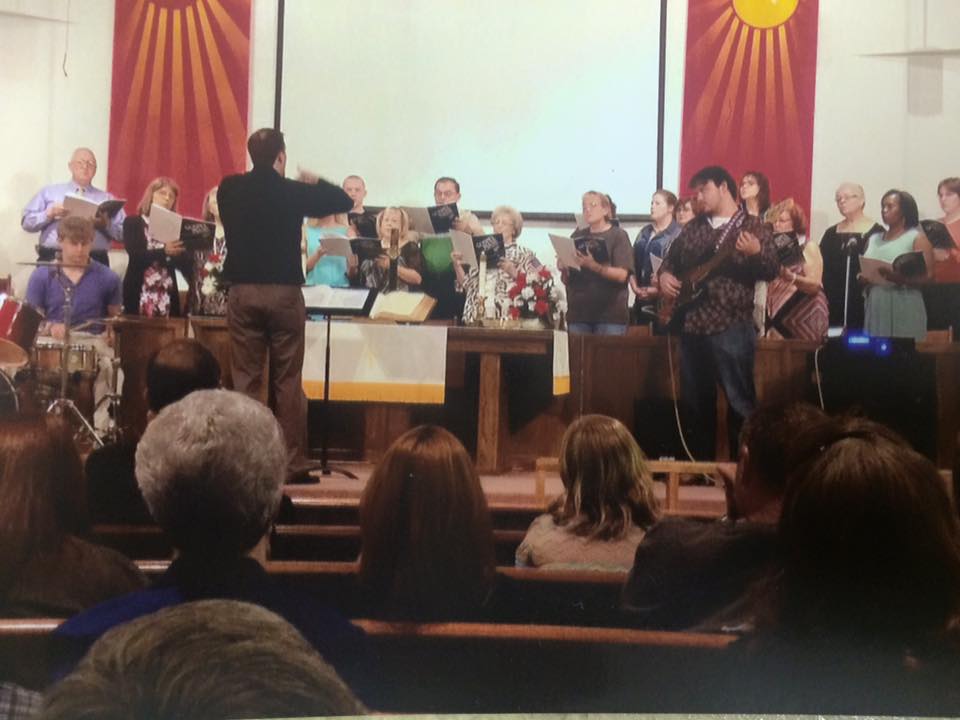
I can see that there is some level of inspiration and intelligence going on in these kinds of posts either on this blog or on facebook, but when my mind settles down again I can see that something was off.  There was an uncomfortable intensity and some level of incoherence.

What this likely means, is that my writing was the product of bipolar affective disorder (manic-depression).  In mania, my mind sparks with creativity but lacks the coherence to effectively present it.  When my mood gets elevated high enough, you might call this kind of writing ravings.

I have raved quite a few times over the last half-decade or so.  I’ll think that what I’m doing is brilliant,  but it is really gibberish.  Perhaps one day I’ll start a new blog mywifesaysitscrazy to publish this archive fragmented writing.  The train of my thoughts skip ahead or even jump off the track; creating a fragmented piece of my thoughts.  I’ll have a thought which results in a conclusion which result in another thought which results in another conclusion, but you might only get the first thought and the last conclusion.  This may also be the product of Attention Deficit Disorder. I don’t know.

It also means that there is a certain level of delusion.  I’ve gone back and reread things that I’ve written when manic and once in a while I can see where I thought I had struck gold, but what I found was  fool’s gold.

I’ve taken down dozens, perhaps hundreds, of these kinds of posts over the years because I felt embarrassed when I reread them.  I checked, and I’ve written twenty-two posts on this blog alone (I have a dozen blogs) that I either pulled down or didn’t ever publish.  I’m no great artist or writer, but many of the best artists and writers have had bipolar affective disorder and we get a sense of the exhilaration and suffering which goes into their work.  It’s ok to enjoy it and find meaning in it.  Many of these people refuse treatment because they don’t want to lose their abilities.  It’s a sacrifice they are making for their art

What you don’t know is that when I behave this way, people who know me best send me messages asking if I’m ok; telling me that they’re concerned.  People who know me best can tell.  I need this sometimes, because it’s hard for me to tell. Even now, when I look at some of my posts I can’t tell if they’re mad or not, nor can I tell if this post is.  I depend on my wife for this.  She is looking for  mean-spirited or arrogant/superior or incoherent or inappropriate or overly intense.  I’ve been a little tight-lipped about it because I don’t want to make people uncomfortable.    But I’m going to trust that you guys love me and don’t care that I get a little fragmented sometimes.  If you’ve never noticed this in me, then you might want to consider that you’re a little fragmented, too.

Launching New Site: The Eight Fold Path To Beatific Living

I published a series on The Beatitudes here on mywifesaysimcomplicated, but it’s hard to read it in order on this blog.  I’ve created another site devoted to this series.

The Eight-Fold Path to Beatific Living is an eight week study of the The Beatitudes from the perspective of spiritual growth.  It is designed for either a personal devotional or a group study.  My prayer is that you will develop a beatific life through Jesus’ teachings of virtue and blessing.

The Eight Fold Path To Beatific Living

The God User Interface

firefox-everywhere

NOTE:  I took this post down soon after I posted it because I thought it was rubbish, but I also put it on  a progressive Christian forum and it sparked a marvelous conversations.  So, I’m putting back up

In the book, The Power of Now, by Eckhart Tolle, the author states that he rarely uses the word “God” because it is a broken word.  It has been used and abused in so many ways that it is no longer useful or helpful when discussing the infinite being in which our Universe lives.  I would like to explore this idea; why it is the case and how we can move passed it.

We all know what a user interface to a computer is.  It’s the part of a computer system that we can see, touch, click, type, swipe, and speak to.  Every computer has an operating system that we can interact with through various apps;  on our phones, tablets, laptops, and desktops.

So why do we need a user interface (UI)?  Well, a computer thinks with zeros and ones.  Those are on’s and off’s.  It’s called binary.  Think “bi” as in bicycle. A pair of things.  UI software translates something that humans understand into something computers understand (one’s and zero’s) and vice versa.

Although the UI is part of the software, it’s really only the part by which we tell the software what we want it to do and by which the computer can tell us what it needs to tell us, but now how it is done.  Under the hood is where most of the computing happens.  Stay with me now!  What this means is that we can only use the computer in ways that the software’s UI allows us to.  And we can only use the computer in ways that the software is programmed to use it.  There are millions of interfaces out there which all serve different functions to meet our needs.

Are you still with me?  We’re getting very close.  This is where my computer science becomes a little inexact so that I can make my point.  There are infinite combinations of one’s and zero’s strung together, but a very finite combinations of the uses of a UI.  We will never fully realize the entire capability of a computer because it is limited to what humans can conceive.  There will never be a moment in which a software engineers says “Ok guys, we’re done!  There is nothing left that the computers cannot do!”  Perhaps you are already guessing what I’m about to say.  In my analogy, God is the computer.  God’s abilities, knowledge, qualities, forms, and interfaces are infinite and vastly incomprehensible.

I was born into a Presbyterian family.  I was given a particular interface to God; particular theology, particular beliefs, particular hymns, particular symbols,  particular names, particular buildings.  In college, I became a United Methodist and my UI shifted a bit.  In my 30s,  I began to meditate and study other spiritual paths.  I acquired and developed different interfaces in which to relate to God.  As an example, I learned that quieting my mind, I could experience God in a way in which I could not through worship and prayer. Meditation is an interface to God.

I hear people say that they can’t believe in God because they don’t believe in Jesus or Christianity.  They say it just doesn’t make sense to them.  It doesn’t work for them.  I also hear people say that God is so much greater than our way of relating to him/it/she; therefore, we should shed all of our names and traditional understanding of God, as perhaps Tolle is suggesting.

But the truth as I see it is that although we might glimpse the one’s and zero’s of God through spiritual/mystical experiences, in general we need a human construct, a user interface, to have a relationship with God.  And this is where we get stuck.

Think about the apps on your phone which you have deleted.  Why did you delete the app?  Perhaps it didn’t do what you wanted it to do.  Perhaps the interface was not user friendly. Now, because of this, did you ever throw away your phone?  No, you found another app which made sense to you.  You found a different interface into the same computer.

Over the years, my understanding of God and my needs of God have changed.  And over the years, my interface with God has adjusted given the changes in me, the old way of interacting with God doesn’t make as much sense to me.  God did not change, but I did.  God is still one’s and zero’s.

This idea will be rejected by many religious people; people who believe that there can be only one interface to God.  But the idea that there is only one way is losing traction, at least in America.  The SBNR (Spiritual But Not Religious) crowd it growing, and the diverse interface idea with it. The one size fits all God User Interface concept is shrinking.

If I believed that there was only one way of interacting with God, then I might not be a Christian today, because Christians can’t even agree with which God User Interface to use.  Do we go through Jesus?  Do we got through the Father?  Do we go through the God of Grace?  Do we go through the God of Judgment?  The God of Purity?  That’s just not the way I work.  I name God in the way in which I need God.  Did I need the guiding hand of a father.  The friendly companionship of a brother.  The comforting arms of a mother.  The infinite mystery.  A God of forgiveness.  These are interfaces to the same thing. And then there are those powerful moments in which God interfaces with me in ways I do not understand or would not have expected.

Also, I think that the world has fallen into the trap of thinking that God is the interface.  Remember how I said that the UI is just the part of the software we can interact with and that under the hood is where all of the real computing is happening?  God is infinitely greater than our understanding of him.  Just the word him here is a limited way of referring to God;   mainly limited by a lack of gender-neutral pronouns for another being in the English language.  And so we make God a male or a female.  God is not the interface we use to relate to him.  It is just the part of God that we can grasp with our human hands.

As limitless as God is, I do not believe he will be everything we want him to be.  He is not a random collection of stuff at our disposal.  God has some sort of fundamental character, the nature of which is subject to endless debate.  Just because I want a God who does my bidding, doesn’t mean I get it.  Ultimately, this is a poor interface which will eventually fail.  Where the God as a computer analogy fails is that the computer is a human tool designed to do what we want it to.  I do not believe God is a tool nor do I believe he is human designed.  That is my personal belief.

If the multiple God User Interface principle were  commonly accepted, I believe that there would be far fewer people who feel separated from God, or who cannot believe in a God at all based on God User Interfaces which did not work for them.  I will continue to play with this idea this Lent.  I will be examining my interfaces with God to see if there is a way to adjust my GUI (God User Interface) in a way that allows me to have a greater understanding and a fuller relationship with the infinite being which I call God for lack of a better term.

When the Choir Sings

11403010_10153087920979426_3626023014104883982_nI am a music minister at a United Methodist Church.  My duties include directing an adult choir.  I am very intentional with my choir leadership.  The first rule of my training as a church musician is that church music is not a performance, it is an act of worship.  Sometimes I wish that this wasn’t so ingrained in me.  I get a little too serious about it.  After all, it’s just choir. It’s 5 minutes a week.  I don’t expect everyone to feel about it the way I do.

I confess, that I do get bent out of shape when I feel that my choir’s musical offering is received as nothing more than a musical performance, like we went and had a little concert in the middle of a worship service. When that happens, I wonder if I’ve done my job as a worship leader poorly.  And I also wonder if there is a little confusion about what we’re actually trying to do.

So if the choir’s anthem is not a musical performance, then what is it?

This comes down to my church music philosophy.  Let me break it down.  This is my intention for choral offerings on Sunday mornings.

Instrument of Worship

I intend for the choir to be an instrument of worship.  I teach multiple stages of singing.  Learn the notes and rhythms.  Learn the musical expression.  Learn to express the text.  And finally and most importantly, learn to worship with the music.  If we only get one of those things right, it must be the worship.  Have you ever been moved to tears by a musician of humble ability, and bored to tears by a brilliant musician?  Music is a form of expression.  Without expression, it’s not really music, and your brain understands this.  Our business is to move people, not just with our skills but with our worship expression. We actually take time in rehearsal to worship with our song so that when we stand up on Sunday morning, we can let go and worship.

Worship Leaders

Not only are the singers worshiping, they are intending to lead everybody else in worship. We pray about this every rehearsal.  We pray that as we sing, someone’s heart might be turned to God in an act of worship.  If this isn’t happening, then we’re doing something wrong.  I would need to rethink my selections or do a better job inspiring my choir to be filled up with worshipful energy when they sing. We could be singing Mozart’s Requiem like the Robert Shaw Chorale, but if worship did not occur, it is absolutely worthless.

And there’s more to worship than praising.  There is surrender, mourning, praying, confessing, professing, repenting.  If the choir can help you do those things, then we did our job.

Witness to the Word

The anthem is a witness to the Word.  In worship, there are many ways of witnessing to the Word of God.  Our hymns develop around the themes of scriptures.  The liturgists reads the scripture.  The pastor preaches on the scripture.  And the musicians sing the scripture.

Musical Excellence, but not for it’s own sake

That the singing will be excellent in a way that most effectively presents the offering of music.  We work very hard at the technical aspects of singing and musicianship, but I never put it higher than the worshipful aspects.

Offering

The anthem is an offering to God, not to the congregation.  This is when my seventeen singers offer music as a gift to God.

These are my intentions.   Some may not see it that way.  Perhaps some folks are just music fans and like the performance aspect and don’t need all the worship mumbo jumbo.  Or perhaps you’re not a fan of choral music and prefer a band .  No matter.  Choirs and bands are going for the same result.  My hope is that when your music leaders stand up to sing or sit down to play this Sunday, that you will become a part of the offering.  Open yourself up to the possibility of having a moment with God.

For more of my thoughts on choral music in church:

Are Choirs Relevant to the Modern Church?

Preparing a Song for Worship


Spiritual Switch

Light Switch OnI’ve had a number of spiritual experiences over the years.  You might call them mystical experiences.  As a part of Lent 2016, I’ve been digging into my archive of spiritual writings to reexamine them.  This comes from 2009.

I believe that all life has both a physical and a spiritual nature. When you become in tune with the spiritual nature of life, you are having a mystical experience. Some are quite ordinary, while some are extraordinary. They are real, but when they are over, they feel like the memory of a dream. They are over when you place your consciousness back on the physical nature of life, which is necessary in order to function. I believe it’s possible to be simultaneously aware of both physical and spiritual nature. This is a state of enlightenment.

So, how do we become “in tune”? Many different ways.

Most of the time it’s out of our control. It seems random. It just happens. Something powerful throws our spiritual switch (so to speak).

1.) A powerful event. A trauma. A tremendous act of love. A death. A birth. A musical performance. I call these a sacrament.
2.) A powerful place. Undisturbed nature. A church. A place where a powerful event occurred. I call this a sanctuary.
3.) In the company of highly spiritual people. When your switch is thrown, my switch might respond. These people are teachers, prophets, healers, or just friends. It’s communion.

With practice, you can throw the switch yourself. Certain activities engage the spiritual self deeply enough that the switch will occur. I would break these into two categories: sympathetically spiritual and directly spiritual.

1.) Sympathetic. The activity is physical, but it often sparks a spiritual response. Singing, gardening, painting, dance, yoga, sex. These are things that don’t just happen to you. These are activities you choose to do. Do them often!

2.) Direct. This is a primarily spiritual activity. Prayer. Meditation. Yoga. Being in the moment. The lines are a little blurry, but some activities are entirely spiritual in nature. You are directly engaging the spiritual self as a means unto itself. Once you are there, you might have a more specific intent….insight, wisdom, peace, love, or simply being.

When your switch is thrown, to fully experience it awareness is important. How do you know when you’re having a spiritual/mystical experience?

  1. Time becomes relative.  If an hour feels like 20 minutes, then you may have been in a highly spiritual state.  This happens when I meditate, swim, and when I drive long distances; anytime I become engrossed in the moment.
  2. When I experience any form of ecstasy. “an overwhelming feeling of great happiness or joyful excitement.”  Many people take mind-altering drugs to experience this, but I can witness to the fact that they are not necessary.
  3. A powerful experience of connectedness.  When you cease to experience the boundaries between yourself and creation.
  4. When you experience direct contact with God (whatever that may mean to you);  visions, words, intuitions, nudgings;
  5. Your perception of your environment is altered.  When your surroundings are transformed in some beautiful way or cease to exist at all.
  6. When you feel detached from your body.  When all you experience is pure consciousness to the point that you feel unaware of your body or that you have come out of your body.

I’m sure there are many more, but these are the ones I’ve experienced.

And finally, what do we do when we have become aware of our spiritual experience?  This is where drugs and true mysticism split.  Ecstatic experiences precipitated by drugs are less likely to lead to action other than using more drugs.  A spiritual experience can transform our way of thinking, our behavior, our perspective in a positive way which could lead to positive changes in our lives.

A mystical experience should not be wasted.  Yes, they are novel to think about and talk about and become enamored with, but ultimately, we must ask the question, what good can I make of this?  What can I bring down from the mountain top into the valley when the switch is thrown?

Conclusion

Beatific living does not mean that we will receive some sort of spiritual easy street.  The blessings we receive come with responsibility.  They come with righteousness.  Righteousness and blessing are intertwined.  We can earn neither.  They are both gifts from God which require a willingness to receive and to share.

This path is not a self-help path.  The help comes from God, and the result is that we  become helpers.  In that way, it is the opposite of self-help.  This will not make you rich in monetary wealth.  In fact, it may do the opposite if your money is standing in the way of righteousness.  But it will give you comfort, satisfaction, mercy, a vision of God, peace, a new parent, and the kingdom of heaven.

Jesus spoke this message to thousands. He was calling for a revolution; not the revolt that was expected of a Messiah.  He did not ride into Jerusalem with an army as many wished he would.  He came in on a donkey, poor in spirit.  He called us to turn the world upside down, beginning with our own lives.

By reading this study, you may be becoming open to the first steps toward beatific living.  I’ve offered you ideas out of my own study and inspiration.  When an idea takes hold of your mind, transformation becomes possible.  But the Beatitudes are more than ideas to ponder, they are a radical way of living; living into the blessings of God.

Although I have presented the Beatitudes as ordered and enfolding, there is nothing to stop God from transforming you and blessing you in any way and in any order he chooses.  But I do believe it all starts with the first.  When you empty your spirit of the riches of ego and self-fulfillment to become poor in spirit, then the journey stops being an idea and starts becoming a new life.

May God bless you and transform you.

The Beatitudes: The Eight-Fold Path – Transforming Persecution

brooklyn_museum_-_jesus_tempted_in_the_wilderness_jc3a9sus_tentc3a9_dans_le_dc3a9sert_-_james_tissot_-_overall

Blessed are those who are persecuted because of righteousness, for theirs is the kingdom of heaven.

When you are called a child of God, you can withstand all manner of pressures to swerve from the path of righteousness,  you will experience beatitude.

I do not believe this beatitude is about being persecuted for professing your belief in Jesus.  It is about righteousness living.  It’s about the seven virtues which we’ve studied so far which add up to righteousness.  People who live in profound righteousness become agents of change for any injustice which is causing suffering because they are hungering and thirsting for it.  The unjust are not fans of the righteous.  Perhaps this is the litmus for righteous action.  Does it oppress people, causing them to suffer, or does it free people, releasing them from suffering?

But righteousness has scale.  We may not all be called to unseat oppressive regimes.  We are all called, however, to attend to those who are suffering injustice in our midst.  And we may or may not be persecuted by people for it.

So what happens when we are not persecuted by people?  Does it mean that we are not righteous enough?  Does it mean that we will not receive the blessings of heaven?  That would seem awfully stingy of God.  Can we help it if we are not persecuted by external forces?

I propose that in the absence of external persecution, we consider anything which might compromise our faith to be a persecution.  Some of you might call it Satan, the adversary. Just to name a few persecutions which come to mind:  addiction, temptation, hatred, greed, selfishness, fear.  These can be adversarial agents in our lives.  These can destabilize our purity (single-minded devotion).  When Jesus faced Satan in the wilderness, he was tested and tempted.  He was persecuted by Satan.  And yet he remained pure.

But we have been given blessings.  We have been given virtues.  We have been filled with righteousness.  In our becoming peacemakers in the world, we have become children of God.  And when we are children of God, we will withstand persecution, whether it is external or internal.

When we’ve emptied our spirit in exchange for righteousness, something is formed in us, let’s say it’s like a bubble.  This bubble is under threat.  It doesn’t matter if a terrorist is threatening to chop off our heads over our righteousness or we are struggling with addiction, the result is the same.  It is a threat to that bubble.  But when we become children of God we will withstand any persecution.  And when we do that we will be given the Kingdom of Heaven.

Kingdom of Heaven or Kingdom of God is something which John the Baptist says “is at hand”.  It is something so close to us that we could touch it; at hand.  Jesus is not preaching about an afterlife paradise.   He is not saying that if you are persecuted, you will go to an eternal land of reward.  He is talking about a kingdom which is ruled by God here and now in which we are rewarded by blessings which beget virtues.  We become God’s subjects with all of the privileges and responsibilities that come with that moniker. We experience beatitude; supreme blessedness and happiness.

As I’m writing this, it is Lent.  I’ve given up a bad habit and so has my twin brother. This bad habit has become a lesser god to me. We’ve been supporting each other.  I broke my Lent and sent him a text to tell him about it.  His response was “You have another chance to choose.”  I had been under persecution by temptation and I would be again.  My brother’s point was that just because I crumbled once, doesn’t mean I have to in the future.  It is a choice.  I let my bubble be disturbed, but it doesn’t need to be broken.

My response was this, “My meditation is that when I choose not to reward myself, it opens up the possibility that God can reward me with something far better.”  In the case of being persecuted for my attempts at righteousness, my reward is greater than the reward of giving into persecution.  Jesus says that I will be rewarded with the kingdom of heaven.

It is right to deny ourselves pleasures when we recognize that we have an unhealthy dependence on them.  This takes us back to the very first kind of righteousness: Blessed be the poor in spirit.   When we reward ourselves richly, we will not experience the blessed poverty of righteousness.  Can God reward us if we’ve already rewarded ourselves?

When Jesus was persecuted by Satan in the wilderness, he had the opportunity to reward himself with food, power, and privilege, but in his resistance he received God’s favor and blessing in the form of a baptismal dove.  When Jesus warned us about making a display of our giving, fasting, and prayer, in Matthew 6, he said that these people have had their reward, but if we do these things in private, then God will reward us.  God will reward us when we are persecuted for righteousness sake, I believe because we have not rewarded ourselves.

The world does not necessarily want us to be righteous.  It wants us to conform to its standards whether they are righteous or not.  There is a systematic persecution, a pressure, to be like the world.  The Apostle Paul wrote in Romans 12:2 “And do not be conformed to this world, but be transformed by the renewing of your mind, that you may prove what is that good and acceptable and perfect will of God.”

When we become persecuted, it is an opportunity to be transformed, and in transformation we receive the kingdom.  When we endure persecution, we have put our trust in God’s goodness.  We know that we will have it no matter what happens to us.  Saints have been made from this process.  If Jesus had not been persecuted by Satan in the wilderness, perhaps he never could have fulfilled his destiny.  When the moment arrived, could he have endured the persecution which led to his death?

Questions:

  1. When have we felt persecuted?  For what?
  2. If you withstood persecution, how did you do it?  If you didn’t, why?

Prayer:

God of Heaven, give us the blessings of righteousness that we might withstand persecution both from within and without.  Amen.

The Beatitudes: The Eight-Fold Path – Restoring Brokenness into Wholeness

broken-pottery

Blessed are the peacemakers, for they will be called children of God.

When you experience the true nature of God, you will have peace and will share it with the world, then you will be called a child of God.

In the previous beatitude, in our purity, we experienced God.  And in this one, when we experience God, we find peace.  When I think of peace, I think of a prayer, “The Peace Prayer” or “The Prayer of St. Francis”.   Although it is was not written by St. Francis, I believe it carries some weight.  It was originally published in French, and this is one of several translations.

Lord, make me an instrument of thy peace.
Where there is hatred, let me sow love;
Where there is injury, pardon;
Where there is doubt, faith;
Where there is despair, hope;
Where there is darkness, light;
Where there is sadness, joy.

O divine Master, grant that I may not so much seek
To be consoled as to console,
To be understood as to understand,
To be loved as to love;
For it is in giving that we receive;
It is in pardoning that we are pardoned;
It is in dying to self that we are born to eternal life

It expresses the idea that peace is not only something we feel, it is something we do, and it expresses a desire to become an “instrument of Thy peace”.  It describes a series of peacemaking actions as the response to a series of sufferings.  The writer is asking God to equip him/her to make whole the brokenness of hatred, injury, doubt, despair, darkness, and sadness.  When we see the face of God, or experience God in any way, we will experience God’s peace.  And with God’s peace we are deeply compelled to spread it.  The Peace Prayer is a powerful expression of the desire to spread God’s peace.

When we think of peace, any number of ideas come to mind.  We may have heard one of our parents yell Give me some peace and quiet!  In this case, peace means to be left alone.  There is peace which is the lack of war.  There is a peace of mind.  This is when we are assured that everything will be ok.  Peaceful can mean that an environment is quiet. There is inner peace.  This is a state of mind in which strife, anxiety, resentments, worries suffering, are all relinquished so that the mind is able to be quiet and content.

But the word that Jesus uses is shalom.  Shalom can be interpreted as “wholeness”, “completeness”, or “healing”.  It is not simply the absence of strife.   Jesus is referred to as the Prince of Peace, which could mean Prince of Wholeness, Prince of Completeness, or the Prince of Healing.  Jesus is a peacemaker.

Another word for peace is reconciliation.  In order to be made whole, the parts that have broken from each other must be reconciled to each other.  To be made whole.  When we experience God we are reconciled to him.  Our separateness has been destroyed.  The missing piece of us which can only be filled by God has been replaced. This is shalom. Then we feel compassion for those who are not whole, who do not have shalom.  We look to bring love, pardon, faith, hope, light, understanding, and consolation to a broken world because peacemaking is about brokenness.  It’s true that becoming whole will bring you inner peace, but peace is not only an internal thing.  It is a very active thing.  It is the process of restoring brokenness into wholeness.

It had been a month since Joseph had walked out on his wife and two kids. He was living in a back room of an old, poorly maintained house.  He believed that the differences with his wife were irreconcilable and that his poor behavior had cinched the deal.  He was sitting in the den in front of the tv eating a solitary dinner when the owner of the house walked in and handed him an envelop.  After she left he opened it.

It was a card from his church with a picture of a recent wildflower altar arrangement.  The card’s message was very simple:  We are praying for you.  He knew that it was sent by the Prayer Team, because he had been on the prayer team for the last three years.  He laid the card down and continued watching a PBS broadcast of the 20th anniversary of Les Miserables.   He was pondering the words of the musical and of Hugo, “To love another person is to see the face of God.”

Soon after, he received an inspiration; a loving feeling toward his wife.  On an impulse, he sent her a brief text asking how see was doing.  She responded amiably.  He called her, and as they spoke the beginnings of reconciliation arose.  What he didn’t know is that she had called his brother for counsel on whether to fight for her marriage or move on. Joseph’s brother prayed with her, and instructed her to pray for a sign.   Three minutes before Joseph’s text, his wife had been on her knees praying for a sign.  Later, he and all who heard the story would marvel over the miraculous synchronicity of that day.

He returned home very soon after and he began the process of become whole with her.  Peace had returned to their house. The arguing had ceased.  He found that he still loved her very much, and that she did as well.

Joseph’s church and his brother were peacemakers.  I believe God spoke to him through them and the musical.  The beatitudes suggest to me that when we see the face of God, we will become peacemakers.  God revealed himself to Joseph through the prayers and the words of Victor Hugo, and he become a peacemaker himself.

When we assist God in the process of restoring a broken world, we will be called children of God.  I believe we are all the children of God no matter what we do, but this is something different.  Jesus is trying to teach us that when we are doing as God does, we are akin to him in a new way. We have inherited his traits just as a daughter inherits traits from her mother.  Being a child of God means doing the work of God.

Questions:

1.  Where is there brokenness in my life?  Is there hatred, injury, doubt, despair, darkness, sadness?

2.  How can I help restore what is broken into wholeness, shalom? With love, pardon, faith, hope, light, love?  Talk about what that would look like.

Prayer:

God of Peace, make me an instrument of your peace in a broken world.  Amen.

The Beatitudes: The Eight-Fold Path – A Refined Heart

refining-02-42ad5ca7243478fa8ea29ae857aa95ba

Blessed are the pure in heart, for they will see God.

When you receive mercy, your heart will be made pure and free from judgment and selfish intent, then you will experience the true nature of God.

As you’ve already figured out, when I study anything, I begin with definitions and origins of words.  And the words I want to explore are pure and heart.

Google:

not mixed or adulterated with any other substance or material.

From the latin purus:

clean, clear; unmixed; unadorned; chaste, undefiled

www.hebrew2christians.com

In Hebraic thinking, the heart includes the mind, emotions, will, and inner life of the self.  The heart is the whole person…  The pure hearted person has no desire for falsehood (Psalm 24:4) and expresses “singleness of heart” in their devotion to God (Col. 3:22).  King David furthermore wrote, “the commandments of the Lord are pure, enlightening the eyes”.  Jesus told us that submitting ourselves to God yields inward purity that will result in a face-to-face experience of God Himself (1 Cor. 13:12, Rev. 22:44): “and they will see his face”.

My assertion is that having been given the blessing of mercy, our hearts become pure.  In literal definitions, our heart becomes unmixed, unadulterated.  Perhaps, it becomes , as the psalmist said, “singleness of heart”.  But what is our heart’s single purpose?  Hebrew4Christians suggests “devotion to God” and that also we become that way by submitting ourselves to God.

I agree with this assessment.  I have practiced submission and have found purity to be the result.   My interpretation of the Beatitudes is that when we experience mercy, we will develop purity.  If devotion to God is the single thing in a pure heart, then what may adulterate it is devotion to self.  When I think only of my needs and desires, then I cannot be devoted to God, and cannot be pure.  In a strict sense, pure doesn’t necessarily mean good.  It just means unmixed, singular.  I can be purely selfish, but that is not what Jesus is talking about here.

Our first step was to become poor in spirit.  I suggested that this meant to surrender all elements of ourselves to the care of God.  When we’ve done that, we will inherit the kingdom, which makes us stewards of it.  When we are stewards of the kingdom, then we see the state of the kingdom, we will mourn.  When we are comforted in our mourning, we will seek to comfort those who are suffering, and we will inherit the desire to help end earthly suffering.  When we desire that, we will see that injustice leads to suffering and we will seek justice until God’s justice prevails and we are filled.  When we are filled with justice, we will see that the suffering need mercy.  When we experience mercy, we will be purified.  Purification is more than surrender.  God purifies us through our virtues and our blessings.

“For he is like a refiner’s fire.” Malachi 3:2.  Gold is rarely found pure in it’s natural state.  It is found deep in the rock.  It must be dug out.  It must be refined with fire before it can be made pure.  It is the same with us.  Our selfishness is our natural state, and yes, we must surrender our selfishness, but that is just the first step.  That is when the refinement begins.  Our mercy will lead us to purity because in mercy, all thought of self is removed.  All of our selfish desires and hangups are burned away.

And then we will see the face of God.  Seeing the face of God is not simply about have a mystical vision of a supreme being.  Victor Hugo wrote in Les Miserables “to love another person is to see the face of God.”  Hugo is suggesting that experiencing God is something we initiate by loving another person.  Love is certainly a pure thing.  To incorporate Hugo’s revelation further, I would say that loving puts us into a state of purity.  It is absent of selfish desires, grudges, resentments, regrets, and pain.  It is something we do which transcends all of those things.

The face of God is not simply a mystical vision of a supreme being.  It is an experience of the reality of God.  The face of something is the part we can see plainly.  In a person, it is the part we most interface with.  When our heart is pure, we can see the face of other pure things, God things.  We see God everywhere we turn in the faces of the children of God.  There is purity in all living things, but we will never see nor will we experience our own purity until we become purely devoted to serving God in the world and in our hearts.

The Corndog Angel

inspired by a true event

This wasn’t the most extravagant corporate party I’d attended, but it was no small event either.  We were entertained and amused by a live, tiki-carving, alternative surfer band.  We were perplexed and somewhat titillated by a gaggle of  seventies-inspired rollerskating girls.  Beer and wine were flowing freely.  And food…the food was everywhere; more food than we could possibly consume that night.

There were tables and tables of chinese food, chili dogs, mexican food, fresh fruit, and my personal favorite, corndogs; hundreds , possibly thousands, of piping hot corndogs stacked up in massive heated metal pans.  It was a little nippy that night, so the corndogs also had a very pleasant warming effect.  We drank beer and filled our guts until we were loud, laughing, and stuffed.

The party, however, was not exactly taking off the way we were.  It’s difficult to throw thousands of software developers and database administrators together with weird surf rock and beautiful skating girls and prevent them from spending the entire time carefully documenting everything with their iPhones.  No one danced and many were too shy (and too busy documenting) to even speak to each other.  So, we decided to make our exit.

That’s when my buddy Doug was struck by a bolt of inspiration.  He picked up a couple of paper baskets and boldly shoveled a pile of corndogs into them.

“Hey guys!  Let’s give out corndogs on the street!”

Yes!  Why should we let all of this good food go to waste when the streets of San Francisco are full of hungry people?  I decided to follow suit.  I admit that I felt a little anxious about it.  What if someone questioned me?  Is it rude to take so much food and then just leave?   I cautiously eyed the corndog tray and the two servers who were working the buffet.  Would they stop me?

But it was time to leave and I wanted this to happen.  I  grabbed two paper baskets, just as Doug had done, and scooped up about ten huge corndogs and walked away.  When we got to the street, I began looking for people who might be hungry.  We were loud and bold as we made our way to our favorite little pub on Powell.   It wasn’t long before we came upon a man sitting on the sidewalk leaning up against a building.  He held out a cup,  his head hung, and his spirit low.  I was first up.  I squatted down and held out the basket.  I spoke softly and cheerfully, “Hey.  Wanna corndog?”  He looked up at me and laughed with a street-roughened voice.  “Thanks!”  he replied and grabbed one from the top.

We moved on up the street with our little gang, handing out corndogs as we walked.  I wondered how someone who might not be homeless might react if I offered one.  I mean, a corndog’s a corndog, no matter who you are and what your circumstances may be.  A guy on a skateboard stopped beside me at the cross walk.  I uncovered my pile of corny gold and held it out to him, “Dude!  Wanna corndog?”

“No way!  Are you serious?  For free?”

“Hell yeah! Take one!  They’re still warm!”

“Right on!  That’s awesome!”

He grabbed one and skated off with the changing light.

As we turned onto Powell, I only had one dog left.  The five of us were nearing the zenith of our evening revelry, which we would most certainly reach after a few hot irish coffees at the pub.  I nearly tripped over a man sitting on the street corner.  He was very nearly invisible.  He wasn’t speaking, playing drums, holding a cup or a sign.  He had a blanket around him.  He was holding himself, trying to keep warm in the chilly night.  It would only get colder.  I squatted down as I had done before.  I uncovered the last corndog.

It had been fun and games up till this point.  Weren’t we clever, and oh so compassionate, handing out corndogs that would get a hungry man through only a few hours on the cold, hard street.   Yes, we felt great.  And it truly did lift our eyes to some of the harsher realities of this city that we were being given only the best of.  But this was real now.  This was a real man, with a real problem, on a real street.  We would soon be in a warm, friendly place and would make new friends and have a few laughs, then we would crash in warm, comfortable, luxury hotel room beds for the night.  But he wouldn’t, he would be sitting right here where he was right now, alone, cold, and hungry.

I picked up the corn dog by its stick and spoke to him through the haze of beer and joviality, “Hey, brother.  Have a corndog.”

“Corndog Angel” – David Wilson-Burns 2010

Something happened in that moment.  Maybe it was just a trick of the street lights, maybe it was the beer.  But I wasn’t the only one who saw it.  The man lifted his head slowly until his eyes met mine, nothing but a corndog between us.  His face melted into a smile.  His eyes glistened.  There was something happening in that moment that cannot be described.  There was a pure light or an energy…a glow.  It wasn’t coming from me.  It emanated between us, in our brief contact.  I don’t remember if he spoke, but his eyes expressed his gratitude as he accepted my humble gift, a warm corndog. 

“Dude!  You were like the corndog angel or something.  That was weird!  Did you see that?!” exclaimed one of my buddies with a tinge of awe in his slurred state.

No, I thought, I’m not the angel here.  I thought of a story that I’d heard recently in church.  A guest preacher, Shane Claiborne,  spoke of a woman who lived on the street who said,

“I used to shine!!

I used to SHINE!!!!

but it’s a COLD

dark

world.”

For just a moment, on a cold, dark, night on the streets of San Francisco, I wondered if I had seen an angel, who’s light was all but extinguished by our cold, dark, world.

In this story, as they passed out the corn dogs, his heart began to change until he reached the last corndog and the last man.  In that moment, his heart became pure.  All of his self-congratulations and cleverness were burned away.  His heart was filled with mercy.  And in the homeless man’s poverty he had been made pure as well.  Between them arose the face of God in a mystical light.  He understood something about God in that moment.  He understood that God can find us in the meanest of street corners in the humblest of faces.

Questions:

  1. What is it that adulterates our devotion to God?
  2. When have I seen the face of God?  What were the circumstances?

Prayer;

God Who Reveals His Face, Create in me a pure heart, and renew a steadfast spirit within me.  Amen.

The Beatitudes: The Eight-Fold Path – Mercy for the Suffering

prodigal20son201
The Prodigal Son

Blessed are the merciful, for they will be shown mercy.

In being filled with righteousness and meekness, you will temper your zeal for righteousness with mercy, and in turn will be shown mercy.

Google:

compassion or forgiveness shown toward someone whom it is within one’s power to punish or harm.

Merriam-Webster:

kind or forgiving treatment of someone who could be treated harshly

hebrew4christians.com:

“Whoever shuts his ears to the cry of the poor will also cry himself and not be heard”  (Prov. 21:13). The merciful show rachamim, a word that comes from the word “rechem”, the Hebrew word for “womb.”  To have compassion then means to express pity as we have for the love of an unborn child.  The quality of compassion is called rachamanut.  Beyond this, mercy involves empathy and love expressed for the miserable.  “The righteous shows mercy and gives” (Psalm 37:21).  Sacrificial love is the practice of mercy.

I have some hangups with mercy.  I struggle with a paradox.  When I think of God’s mercy to me, I think of the dictionary definitions.  God’s mercy is not something I’ve earned or deserve.  I deserve a karmic response from the Universe.  I deserve the full consequences for my actions, and yet when I reach out to God for mercy I receive it.  It doesn’t mean that there is no consequence, but it does mean that God will make something merciful out of it.

But when I think of mercy which I give, I think of the compassion, the rachamim, which hebrew4christians.com describes.  I see someone who is in suffering, who is in need of mercy, and my heart goes out to them.  I don’t think they deserve punishment.  They need mercy.

But do you see the relationship between the two?.  In giving mercy, I do not see that the recipient deserves to be punished, all I see is the suffering.  Yet, when it comes to receiving mercy, I do not see myself as suffering in need of mercy.  I see myself as deserving my suffering.  What I want to suggest is when God sees us suffering, he does not see someone who deserves punishment, he sees someone in need of mercy.

But are we always merciful?  Not if we are not hungering and thirsting for righteousness. When we receive the blessing of having been filled or satisfied in justice, we will become merciful.  Remember, we are not seeking righteousness to further a moral code, we are seeking it on behalf of those who are suffering from injustice, which is an act of mercy.  And when we show mercy, we set in motion a new karma;  a new cause and effect.  In showing mercy, we will receive it.

Teapot

His ears and face were burning red. Why was he on the verge of tears? Was it fear or shame? Was it the thought of bearing his father’s disappointment? Poor kid. But the teapot…

The teapot had always been in my life. It was a great loss. I couldn’t even speak to him about it yet. It wasn’t that I was angry with him. Loss is just…loss. I could still see the bright green, ceramic teapot sitting on my grandmother’s stove. I could see her pouring out the afternoon tea. Feel the steam on my young face.

It didn’t matter whether or not he’d been careless. I just needed to look at it for a moment trying to imagine how it could be repaired. He would have my forgiveness soon, but first the loss. What would my mother say if she saw it lying here in pieces? That it didn’t matter? That Grannie didn’t really like this teapot that much anyway? That accidents happen? Probably.

“Dustin.”
“Yes?”
“Come help me clean this up, ok?”

He didn’t look at me. I could tell he was trying to hide his reddened cheeks and teary eyes from me.

As we collected the broken pieces, I put my hand on his shoulder and smiled his face up to mine.

“Hey, accidents happen. Don’t take it so hard.”

In my own voice, I could hear my mother’s and her mother’s. It was ok.

The father in this story was not angry at the son for his carelessness, but he was upset about the loss of an important object.  The son was suffering.  Perhaps he feared retribution.  Perhaps he simply understood that his carelessness had upset his father.  Either way, the father may have rightfully yelled at him; punished him.  But the father did not see a guilty child needing punishment.  He saw a suffering child needing mercy.  He showed mercy when he placed his hand on his shoulder and said “Hey, accidents happen.  Don’t take it so hard.”

And isn’t God a good father?  Don’t you think that God sees us suffering from our mistakes just as the father in this story saw his son suffering?  The son was remorseful.  He was open to mercy.  Perhaps if he’d been willful and unrepentant the father might have withheld the mercy.  I do not know.  I cannot say with certainty if God’s mercy is dependent on our repentance.  I’ve received untold mercies which sustained me through reckless and unrepentant periods of my life, but I can say that I have never regretted showing mercy to someone.  Well, you may say, some people deserve what they get, and that is true on the surface, but if you look a little deeper, if you look for the righteousness in that person’s life you will find the suffering.  Suffering may not excuse poor behavior, but that suffering is the part of a person that needs rachamima compassion that we feel for an innocent.

And in experiencing mercy, we will find another virtue:  purity.

Questions:

  1. When and why have I withheld mercy?
  2. When have I received mercy?
  3. What is standing in the way of mercy in my life?

Prayer:

Merciful God, fill me with a desire for righteousness for the suffering that I might show mercy to them.  Amen.

The Beatitudes: The Eight-Fold Path – A Hunger to Soothe the Suffering

hunger-and-thirst-for-righteousness
Blessed are those who hunger and thirst for righteousness, for they will be filled.

When you are comforted in your mourning, seek to advocate for those who suffer and not for yourself, then you will receive the benefits and responsibilities of the earth.

In godly mourning, we understand our suffering and are comforted, we become gentle (meek) to those around us who are suffering.

The word meek evokes images of weakness and a negative sort of submissiveness;  people who do not speak up for themselves and others.  Another translation of the Hebrew is humble or lowly.  When we become poor in spirit which leads us to godly mourning we then become humbled.  Meek has other meanings, of course.  Google defines it this way:

quiet, gentle, and easily imposed on; submissive

etymoline.com defines it as:

gentle, quiet, unaggressive; benevolent, kind; courteous, humble, unassuming;

So, the opposite of meek would be loud, harsh, aggressive, malevolent, rude, self-asserting, and presumptuous.  In other words, selfish.  If we are the opposite of meek, then we act only in the interests of ourselves.  But when we empty out the riches of our selfishness for the poverty of selflessness, and when we grieve for a suffering world then we can only be meek.

There is another kind of submissiveness.  When we submit ourselves to a high power, we become servants of the higher good.  This is not a weakness.  This brings strength into our lives.  This is the submission of a righteous person.

And then we inherit the earth.  But what is the earth?  Earth the planet?  Earth the wealth? Earth the power?  Earth the property?  I do not believe Jesus is meaning these earthly elements.  I believe Jesus may be echoing a common theme in his ministry:  abundant life.  Earth represents the good things which God has created in the earthly realm, including the people.

This is a touchy subject theologically.  There are those who would suggest that if we are righteous and submissive, we will receive abundance in the form of earthly, monetary blessings; whereas the truth may be that we are just as likely to receive poverty.  In our poverty, the blessings we receive are in an inheritance of gifts of the spirit, an earthly expression of a God-centered life.

And when we have inherited abundance, we are invited to share it.  Our gifts of gentleness, quiet, benevolence, kindness, courteousness, and humility (the sum of meekness) mean absolutely nothing unless they are shared.   We become, therefore, advocates for God’s gifts.  When we are void of selfish desires, the only fulfillment of desires remaining are of those in need whom we encounter in our daily lives.

In the Journal of Social Psychology, a study was published:  Acts of Kinds and Acts of Novelty Affects Life Satisfaction which concludes the following:

The groups that practiced kindness and engaged in novel acts both experienced a significant—and roughly equal—boost in happiness; the third group [those who didn’t practice acts of kindness] didn’t get any happier. The findings suggest that good deeds do in fact make people feel good—even when performed over as little as 10 days—and there may be particular benefits to varying our acts of kindness, as novelty seems linked to happiness as well.

Further studies have suggested that our brains are rewarded with feel-good chemicals when we are kind.  This all suggests that we have been designed for kindness.

In my Educational Psychology class in college, the professor asserted that there is no such thing as selflessness.  We are kind because of what it does for us.  I argued with her on the matter.  My argument was that although there are personal benefits to kindness, that does not mean that our motivations are to gain them.

As an illustration, I invite you to consider a scenario in which you have to deny your own desires to act kindly to someone.  Perhaps you are binge-watching your favorite tv show and a friend calls.  His car is broken down outside of town, and it is cold and rainy.  What benefit are you seeking to leave your cozy abode to brave weather and interrupt your evening?  Do you do it out of obligation?  Do you do it in case you are stuck with the same scenario and might need his assistance;  a quid pro quo?  Perhaps.  But perhaps you feel compassion or godly sorrow for him.  You deny your personal desires to consider his needs.  This is kindness without thought of reward.  Yes, you may feel better.  Yes, you may be returned the kindness.  But these are not guarantees.

Jesus was meek throughout his ministry.  One story comes to mind.  On the night before his execution, Jesus served a Passover meal to his disciples at which he washed their feet as a servant would do.  He humbled himself.  He submitted himself.  He relinquished his rights as the master to become a servant.  He became meek even as he suffered and died.  He did not advocate for his own needs but considered only the suffering of the world.

Giving as Jesus gave begins with meekness, which all begins with being comforted in our godly mourning (a form of compassion), which all begins with emptying oneself.  A wise friend once said to me:

Tread gently on this good Earth.

When I feel quite the opposite of meek, sometimes, in order to change my state of mind, I I become conscious of my feet.  I walk very gently.  And that gentleness in the soles of my feet spreads to my hands and to my tongue.  When you walk through your house late at night, do you walk gently out of consideration for others or do you stomp around and slam doors?  Blessed are the meek, for they shall inherit the earth.

Questions:
1.  When have I acted out of pure kindness with no thought of reward?
2.  When has judgement and selfishness prevented me from having compassion and acting in kindness?
Prayer:
Gentle God, as I empty myself, fill me with an inheritance of meekness so that I may be an agent of kindness in your world.

The Beatitudes: The Eight-Fold Path – Kindness of the Meek

004-jesus-washes-feet
Blessed are the meek, for they will inherit the earth

When you are comforted in your mourning, seek to advocate for those who suffer and not for yourself, then you will receive the benefits and responsibilities of the earth.

In godly mourning, we understand our suffering and are comforted, we become gentle (meek) to those around us who are suffering.

The word meek evokes images of weakness and a negative sort of submissiveness;  people who do not speak up for themselves and others.  Another translation of the Hebrew is humble or lowly.  When we become poor in spirit which leads us to godly mourning we then become humbled.  Meek has other meanings, of course.  Google defines it this way:

quiet, gentle, and easily imposed on; submissive

etymoline.com defines it as:

gentle, quiet, unaggressive; benevolent, kind; courteous, humble, unassuming;

So, the opposite of meek would be loud, harsh, aggressive, malevolent, rude, self-asserting, and presumptuous.  In other words, selfish.  If we are the opposite of meek, then we act only in the interests of ourselves.  But when we empty out the riches of our selfishness for the poverty of selflessness, and when we grieve for a suffering world then we can only be meek.

There is another kind of submissiveness.  When we submit ourselves to a high power, we become servants of the higher good.  This is not a weakness.  This brings strength into our lives.  This is the submission of a righteous person.

And then we inherit the earth.  But what is the earth?  Earth the planet?  Earth the wealth? Earth the power?  Earth the property?  I do not believe Jesus is meaning these earthly elements.  I believe Jesus may be echoing a common theme in his ministry:  abundant life.  Earth represents the good things which God has created in the earthly realm, including the people.

This is a touchy subject theologically.  There are those who would suggest that if we are righteous and submissive, we will receive abundance in the form of earthly, monetary blessings; whereas the truth may be that we are just as likely to receive poverty.  In our poverty, the blessings we receive are in an inheritance of gifts of the spirit, an earthly expression of a God-centered life.

And when we have inherited abundance, we are invited to share it.  Our gifts of gentleness, quiet, benevolence, kindness, courteousness, and humility (the sum of meekness) mean absolutely nothing unless they are shared.   We become, therefore, advocates for God’s gifts.  When we are void of selfish desires, the only fulfillment of desires remaining are of those in need whom we encounter in our daily lives.

In the Journal of Social Psychology, a study was published:  Acts of Kinds and Acts of Novelty Affects Life Satisfaction which concludes the following:

The groups that practiced kindness and engaged in novel acts both experienced a significant—and roughly equal—boost in happiness; the third group [those who didn’t practice acts of kindness] didn’t get any happier. The findings suggest that good deeds do in fact make people feel good—even when performed over as little as 10 days—and there may be particular benefits to varying our acts of kindness, as novelty seems linked to happiness as well.

Further studies have suggested that our brains are rewarded with feel-good chemicals when we are kind.  This all suggests that we have been designed for kindness.

In my Educational Psychology class in college, the professor asserted that there is no such thing as selflessness.  We are kind because of what it does for us.  I argued with her on the matter.  My argument was that although there are personal benefits to kindness, that does not mean that our motivations are to gain them.

As an illustration, I invite you to consider a scenario in which you have to deny your own desires to act kindly to someone.  Perhaps you are binge-watching your favorite tv show and a friend calls.  His car is broken down outside of town, and it is cold and rainy.  What benefit are you seeking to leave your cozy abode to brave weather and interrupt your evening?  Do you do it out of obligation?  Do you do it in case you are stuck with the same scenario and might need his assistance;  a quid pro quo?  Perhaps.  But perhaps you feel compassion or godly sorrow for him.  You deny your personal desires to consider his needs.  This is kindness without thought of reward.  Yes, you may feel better.  Yes, you may be returned the kindness.  But these are not guarantees.

Jesus was meek throughout his ministry.  One story comes to mind.  On the night before his execution, Jesus served a Passover meal to his disciples at which he washed their feet as a servant would do.  He humbled himself.  He submitted himself.  He relinquished his rights as the master to become a servant.  He became meek even as he suffered and died.  He did not advocate for his own needs but considered only the suffering of the world.

Giving as Jesus gave begins with meekness, which all begins with being comforted in our godly mourning (a form of compassion), which all begins with emptying oneself.  A wise friend once said to me:

Tread gently on this good Earth.

When I feel quite the opposite of meek, sometimes, in order to change my state of mind, I I become conscious of my feet.  I walk very gently.  And that gentleness in the soles of my feet spreads to my hands and to my tongue.  When you walk through your house late at night, do you walk gently out of consideration for others or do you stomp around and slam doors?  Blessed are the meek, for they shall inherit the earth.

Questions:
1.  When have I acted out of pure kindness with no thought of reward?
2.  When has judgement and selfishness prevented me from having compassion and acting in kindness?
Prayer:
Gentle God, as I empty myself, fill me with an inheritance of meekness so that I may be an agent of kindness in your world.

Beatitudes: The Eight-Fold Path – Godly Sorrow

praying-crying-woman
Blessed are those who mourn, for they will be comforted.

Out of care for God’s world, mourn for the suffering of others and you will find comfort for your suffering.

I’ve been meditating on sorrow today; thinking about my sorrows and the painful situations which precipitated them.  This is a universal condition.  In trying to understand how sorrow could be a good things, I tried to get a better understanding of the fuller meanings of the word.

Google defines sorrow as:

a feeling of deep distress caused by loss, disappointment, or other misfortune suffered by oneself or others.

That did not bring me any closer to understanding the goodness of sorrow.  How could deep distress be a welcome step on a spiritual journey?  Of course we can grow through our pain, but I don’t think that is all Jesus had in mind in this sermon.

I looked to the origins of the word sorrow on Etymology Online. It points to an Old English word sorg, which means the same as Google’s definition.  It relates to the Lithuanian and Old Slavonic words for sickness.  It brings to mind the phrases I am just sick over it, of I am sick with grief over this.

But then I found something very enlightening.  On the site www.hebrew4christians.com, there is a Hebrew lesson on the Beatitudes. It refers to the second beatitude as The Blessing of the Heartache.  It uses the term “godly sorrow”.  This is something I can hang my hat on.

We all know human sorrow.  We’ve all experienced sorrow at the loss of a person who is dear to us, the pain of a broken heart, or any number of human causes for pain.  These are sorrows which are born in our hurt and brokenness.  But what sorrow does God experience?  Can God be hurt?  Can God be broken?  I do not know.  But I want to suggest that God feels sorrow for us.  When we are hurting, God weeps with us.  When we make choices which hurt ourselves or others, God feels sorrow for us.  He does not wish us to suffer.  This is Godly sorrow.

When we have emptied ourselves in order to make ourselves poor in spirit, humble, it clears the way for us to see ourselves and others the way God does.  We see that we are all children of God who suffer.  We become filled with Godly compassion and we may weep in the way that our God weeps, not out of our own pain, but out of love for the world.  We gain compassion for ourselves.  We can acknowledge our and others’ struggles without the selfishness and worry that once distorted our vision.

And we will be comforted.  God is with us in mourning the suffering of the world.  The Greek word here for comforting literally translates to “to call along side.”  We will be “called along side with God for encouragement and strength”  (hebrew4christians.com)

Brian received a text one day from his teenage son that he had made several attempts on his own life.  He immediately picked his son up from school and brought him to the ER to be evaluated for hospitalization.  On the way, his son described the circumstances of his suicide attempts, each one getting closer to success.  Determined to attend to the task at hand, Brian shoved the images out of his mind.

After his son was safe in the hands of mental healthcare professionals, Brian and his wife drove home late in the night.  As his wife slept in bed, he went to his son’s room to look for a note.  He found it on the desk.  It expressed an anguish which he did not know his son was experiencing.  It expressed the meaningless of his small life in the vastness of a cold Universe.  Despite having raised him in the church, his son did not believe in God which, it seemed to Brian, made it all the easier to end his life.

Brian went to bed hoping for sleep.  But he was now suffering with images of his son’s as he may have struggled, as it may have ended.   He was angry that this had happened to himself.  He was plagued by the “what if’s”.  He tortured himself with desperate ponderings of how he could have raised his son differently.  His pain and guilt were all he could see.

But then a quiet came over him.  He imagined how very lonely the experience must have been for his son in those dark moments.  His heart filled with compassion for him and the many months of suffering he must have endured, and in that moment his pain and guilt and anger were transformed into sorrow.  He stopped thinking of his own suffering and started thinking of his son’s suffering, and for the first time, he wept.

As he laid awake, he sought God in prayer, and God said, “Life is pain.  And I am Love.”  And Brian was comforted.  God’s sorrow was expressed to him in the form of love.  God had given Brian a choice, not a choice to stop feeling pain, but to feel that he had been “called along side with God.”  And Brian found that he loved his son more than ever from that moment on.

Holy sorrow.  Sorrow which transforms pain, guilt, and suffering into Love.

Questions:

  1. In my moments of great distress or in witnessing the distress of others, what has kept me from feeling godly sorrow?  Guilt? Resentment? Anger? Pain? Judgment?
  2. Which of those can I entrust to the care of God?

Prayer:

Comforting God, in my suffering and in the suffering around me, bring me along side of you to share in your sorrow and to receive your comfort.  Amen.praying-crying-woman

Beatitudes: The Eight-Fold Path – Spirit of the Poor

paupers-2“Blessed are the poor in spirit, for theirs is the kingdom of heaven.”

Empty yourself and become humble, then receive a share in the responsibility for God’s kingdom.

I chose the title “The Eight-Fold Path” because of how popular the eight-fold path of Buddhism has become in America.  Spiritual seekers want a clearly defined manual for attaining spiritual blessedness.  One blog explores a comparison of the two.

The Beatitudes Compared to the Eight-Fold Path of Buddhism

The conclusion of the post can be summarized in it’s final paragraph.

Of course there are similarities, which frequently would be the case with ethical thinkers. However, the entirety of the eight-fold path is based on self improvement. The beatitudes, however, are almost exclusively concerned with righteousness before God. There is no self-improvement in evidence.

Thus, the fundamental premise of each is strikingly different. And that’s what sets apart Jesus from Buddha.

I think there is some validity to his point.  The Bible is not a self-help book.  It is quite the opposite.  Jesus says “Whoever finds their life will lose it, and whoever loses their life for my sake will find it.”  In the context of this discussion, I would say that this is an indication that Jesus asserted that when we give up the idea that we can improve ourselves, then God can improve us.  I would further say that when we give ourselves up for others, then our lives will become bless-ed, which certainly is an improvement, but not just for us.

So my intention is to explore each Beatitude in the context of losing our lives in order to gain them.  “It” meaning to gain a life of beatitude.  The first Beatitude is:

Blessed are the poor in spirit, for theirs is the kingdom of heaven.

Empty yourself and become humble, then receive a share in the responsibility for God’s kingdom.

These words seemed so abstract to me for many years, until I found that my life was headed toward ruin with alcohol at the center of it.  I was living life for myself, on my terms, to satisfy my desires no matter the cost.  I felt that I was living just as I wanted and yet the people around me were suffering for it.  I was suffering as well, but I did not realized it.  Empty myself?  What would be left?

If I emptied who I was would I still be a musician?  Would I still have all of my quirks?  Would I still be a writer?  Would I still be able to indulge my guilty pleasures?  Would I still be able to do whatever I wanted to do?  Would I still be ME?  And yet, my life had become unmanageable.  What I was going was not working.

I had to take a chance on another way.  I joined AA.  Over the course of months of morning and evening prayer, “I surrender my will to you” and “Thank you for the life you are giving me.” (or some such), something began to break up in me.  As my life began to improve, I began to trust that God might have a far better will for me than my own.

One limb at a time, God began to tear down the dam that was holding me from a vast stream of beatitude; from bless-ed living.  When I got out of the way.  When I emptied a space in my life.  When I surrendered all of my suffering, all my burdens, and finally, all that I held dear into the hands of someone far greater than me, I became humbled.  And in my humility, I found a great desire to take care of my family.  I inherited a share in the care of my realm of the God’s Kingdom.  All that was holding me down was lifted when I lowered myself.  When I lowered myself, then the order of God’s Kingdom became manifested in my life.  As Isaiah put it ages before Jesus was born, “Every valley shall be raised.  Every hill made low.  And the rough places will be made plain.”

I’m writing this as much for my sake.  It’s easy to lose focus.  It’s easy to begin taking credit for beatitude.  That is a sure way to lose it.  The virtue begets the blessing. The blessing begets the virtue. Living with the spirit of poverty, humility, is the beginning of the journey.  Spiritual journeys are not linear.  They bring us back and back to go forward and forward.  Returning to humility is not a failure.  It is a nurturing of our spirit.  But most importantly it is a nurturing of our relationships, with both God and our neighbor.

Questions:

  1. What in my life is standing in the way of my humility and therefore God’s blessings?  Resentment?  Anxiety?  Addiction?
  2. Surrender in this context doesn’t mean quitting something.  It means handing it over the the care of God.  What part of me can I empty in an act of surrender?  My love for food?  My desire to be right?  My children?  My job?
  3. What blessings are already in my life?

Prayer:

God of Blessing, I offer [this part of me] to your care.  I am open to the possibility that you have better plans for [this part of me] than I have for it myself.  Make me poor in spirit.  Amen

Remember, this is a path of blessing which we receive when we become open to a virtue, and virtue which grows out of blessing.  God is the source of all virtue, not we ourselves.  Once one is given, it unlocks the door to the next.  With the desire to care for others, which is the result of humility, then we may mourn with God over the suffering of the world.


The Beatitudes: The Eight Fold Path

sermon

I believe that one of the reasons there is a rise in the Spiritual But No Religious (SBNR) demographic and the diminishing of traditional Christianity is because so often the focus of Christianity is not on what to do but what not to do. Whereas, what people really want is a clear path to spiritual fulfillment.  This makes programs like the eight-fold path of Buddhism and the 12 steps of AA so appealing to folks.  There is a clearly defined path to spiritual fulfillment which has been tried and proven millions of times.

So where is the step path in Christianity?  I want to suggest to you, as have many, that the Beatitudes is such a path;  a path to beatitude, which means supreme blessedness or happiness.

Happiness, in American culture, is a very shallow thing.  It’s the name of a kid’s meal at McDonald’s.   It’s the word that really means that our life is going the way we want it to.  But Jesus is proposing a different kind of happiness;  one that orders society and our lives in such a way that brings about something far greater than our small ideas for what will make us happy.

When we talk about the teachings of Jesus, we think of the parables and his various sayings, but Jesus had a stump speech that represents the culmination of his teaching.  I say stump speech because Jesus went about teaching all over the place and this may have been his go to sermon.  It’s most associated with a large gathering on a hill which is known as The Sermon on the Mount.  Many would have heard it, and I’ve certainly heard it or read it many times.  But it has always perplexed me a bit.  Is it Jesus rewarding the people he is describing?  Is it a social justice movement?  Is it about socio-economics?

Have a look at it.

Matthew 5 New International Version (NIV)

The Beatitudes

He said:

“Blessed are the poor in spirit,
    for theirs is the kingdom of heaven.
Blessed are those who mourn,
    for they will be comforted.
Blessed are the meek,
    for they will inherit the earth.
Blessed are those who hunger and thirst for righteousness,
    for they will be filled.
Blessed are the merciful,
    for they will be shown mercy.
Blessed are the pure in heart,
    for they will see God.
Blessed are the peacemakers,
    for they will be called children of God.
10 Blessed are those who are persecuted because of righteousness,
    for theirs is the kingdom of heaven.

On the surface, it is a description of the social order of the Kingdom of Heaven in which the last shall be first.  All of the people at the bottom of society will rise to the top.  It is a charge to recognize this order by how we see people and treat people.  But I think there is more to it than social justice.  It is, I believe, a personal spiritual path which culminates in a beatific life.

Jesus’ Beatitudes provide for us eight steps to beatitude.  I believe that they are ordered and build one upon the other.  It is an unfolding path, from virtue to blessing, from blessing to virtue.

The journey can be interpreted as:

  1. “Blessed are the poor in spirit, for theirs is the kingdom of heaven.”
    Empty yourself and become humble, then receive a share in the responsibility for God’s kingdom.
  2. “Blessed are those who mourn, for they will be comforted.”
    Out of care for God’s world, mourn for the suffering of others and you will find comfort for your suffering.
  3. “Blessed are the meek, for they will inherit the earth.”
    When you are comforted, become comforting to those who are suffering in your midst and you will inherit a share responsibility with God for those who are suffering.
  4. “Blessed are those who hunger and thirst for righteousness, for they will be filled.”
    When you inherit responsibility for those who suffer, you recognize when suffering is unjust.  You will not be satisfied with what is unrighteous in the world until righteousness wins and God satisfies you with it.
  5.   “Blessed are the merciful, for they will be shown mercy.”
    In being filled with righteousness and meekness, you will temper your zeal for righteousness with mercy, and in turn will be shown mercy.
  6. “Blessed are the pure in heart, for they will see God.”
    When you receive mercy, your heart will be made pure and free from judgment and selfish intent, then you will experience the true nature of God.
  7. “Blessed are the peacemakers, for they will be called children of God.”
    When you experience the true nature of God, you will have peace and will share it with the world, then you will be called a child of God.
  8. “Blessed are those who are persecuted because of righteousness, for theirs is the kingdom of heaven.”
    When you are called a child of God, you can withstand all manner of pressures to swerve from the path of righteousness,  you will experience beatitude.

The culmination of these blessings is a state of supreme blessedness and happiness.  We will be given the King of Heaven.  And the Kingdom of Heaven is something which is “at hand”.  It is happening.  It is within reach of our hand through this path.  And with our blessing will play our part in furthering the kingdom that Jesus has described.  Beatitude is the relationship between virtues and blessings.  In our virtue, God will bless us.  And in our blessing we will become virtuous.

Jesus’ Way (as in the Way, the Truth, and the Life, or as in the original title of Christianity, The Way) teaches us that we are to become perfected in this way, but not on our own.  It requires a relationship with God and a relationship with the world.  Virtue and blessing flow from God, and do not exist outside of relationships.

The Beatitudes, like the Commandments, are the principles for ordering a new way of living for a new society (the Kingdom of God).  Just as the Commandments ordered the Chosen People, the Beatitudes order the Kingdom of God.  I invite you to consider joining me in this eight part study which explores a Christian approach to spiritual growth.

Sounding Brass or a Clanging Cymbal

noise_music-5_opt_original

This Sunday, my pastor preached on the love scriptures in Corinthians.  And something struck me.  The pastor paraphrased a very famous verse, 1 CORINTHIANS 13:1, which is:

If I speak with the tongues of men and of angels, but have not love, I am become sounding brass, or a clanging cymbal.

My pastor said:

You can do all of the right things, but without Love it’s nothin’ but NOISE.

As I pondered this verse, I began to wonder about noise and music.  Certainly the sounding brass and cymbals is more than noise.  But is it?  And although it was a great sermon, I confess that I daydreamed about this for a minute or two. I posed these questions:

When are musical instruments just noise?

Is it a foregone conclusion that if a musical instrument is played or a voice is sung that it is music?

Ultimately, I want to use Paul’s formula to solve the question of music:

If I have sound, but have not X, I am making noise.

These are questions which dominated music of all genres in the 20th century.  Music that is now accepted as such sounded like noise at first.  Modern classical, jazz, and rock and roll in the 20th century were all criticized as being noise at some point.  This raises another question:

Is “sound” music when the composer says it is, when the musician says it is, or when the listener says it is?

Of course, this is a highly subjective and speculative subject.  I’ll start with a few definitions.

  1. Google – “vocal or instrumental sounds (or both) combined in such a way as to produce beauty of form, harmony, and expression of emotion.”
  2. Merriam-Webster – “the science or art of ordering tones or sounds in succession, in combination, and in temporal relationships to produce a composition having unity and continuity”
  3. Me – Sounds, other than plain speech and cries, which express ideas, emotions, form, stories, texture, or patterns.

Google is very conservative.  They say that three components have to be present in order for it to be music: form, harmony, and expression of emotion.  If you interpret this strictly, then sound which is emotionless or lacking harmony or lacking form is not music. Which means that it is something else:  noise.

Merriam-Webster is decidedly different.  It defines music as either a science or an art.  It says nothing about emotion.  It alludes to harmony and form.  So what is music as a science?

In my Music Theory courses in college, we learned that composers in the 20th century experimented with numeric sequences in the form of music notes.  To be honest, it did not sound like a human expression.  It sounded like what a computer might produce as music.  And yet, it expressed a human idea.  Science is ideas proven with experiments.  These pieces were musical experiments which resulted in music theories.  The process by which sounds are organized into music is grounded in science.

Music theory is the study of the practices and possibilities of music. It generally derives from observation of, and involves hypothetical speculation about how musicians and composers make music

My definition for music, is very broad.  I used an “or” instead of the “and” , which means that any one or any combination of the components can qualify as music.  The key that holds it all together is “expression”.

So, back to my questions. Of the six components I’ve defined music as, where do the components exist?  Within the mind of the composer? With the performance of the music? Or in the mind of the listener?

When the composer writes, they have an idea or feeling which they want to express.  And then the musician uses that idea or feeling to make sounds.  And then the listener must interpret the sounds as an idea or feeling.  You might postulate that this circuit of the three is where music lies.

But what happens when the circuit doesn’t close?  What happens when the sounds do not register in the mind of the listener as ideas or feelings?  Is it noise?  Or what happens when the musician fails to convey the music?  Think of the beginning violinist in elementary school practicing at home.  It sounds awful.  It might not even sound like anything but chicken scratch.  Is it still music?

Silence is a very important element of music.  Without silence there is no beginning or end to the music.  Without silence you have a wall of sound, which although it is music,  lacks the punctuation of phrases or the dramatic effects which only the stopping and starting of sound can create.

But what happens when there is nothing but silence in a composition?  John Cage, a classical composer of the 20th century wrote 4’33”.  To perform this piece, a pianist walks on stage, opens the lid of a grand piano, sits down at it, and then lowers the lid. With a stopwatch set for exactly four minutes and thirty-three seconds, he sits in complete silence, occasionally opening and closing the keyboard to indicate the various “movements” of the piece.

There is certainly a performance element to this, but what would it sound like on a CD?  Is it music?  Perhaps when you see the violinist and the piano, you might experience something related to sound, which is silence.  Sound is nothing without silence. They are fundamentally related.  By my three definitions, this is not music at all.  I use an idiom based on the old tale “The Emporer’s New Clothes” from time to time.  Everybody fusses over the king’s new clothes, which is actually nothing at all.  He is naked.  He was scammed.  That is how I feel about 4’33”:  The Emperor’s New Music.  But someone out there loves this music.  It is still performed in big halls to this day.

I would also add that when I hear a train running through town in the middle of the night, it is music to me, but to the person living near the tracks, it may be noise.  It’s just the racket that is keeping them up.  Birds and whales and wolves all make organized sound which might express feelings and information.  Is it music? And haven’t studies showed that both animals and plants respond to human music in remarkable ways?

The Apostle Paul says that the good things we say are nothing but noise without the presence of love.  So what is the component which must be present to make noise into music? Love must make the speech of men and angels into something other than noise.   The allusion to musical instruments may just be a random expression of his dislike of noisy music, but maybe he had a sweeter idea in mind.  Paul, whether intentionally or not, has expressed that when we speak with Love then we are making something akin to Music.


If you recall, it is this formula I want to solve for.

If I have sound, but have not X, I am making noise.

When I first started writing this, I thought the missing word would be humanity because music exists in the minds of humans.  But what of the animals?  Are their calls simply a form of speech and only music in the minds of humans? Are their responses to music unintelligent?  I do not know.  My second thought was expression.  And that is certainly true for the making of music.  But what of the hearing of music?   The reason why the 20th century music was received by some as noise, was their lack of knowledge.  Without a frame of reference in one’s mind, stimuli is meaningless.  Meaningless sound, is noise.

And so I conclude:

If I have sound, but have not meaning, I am making noise.


And meaning exists in the mind and in the heart. And so, I revise my definition.

Music is the expression of sound, beyond that of speech both articulate and inarticulate, which has meaning in the heart or in the mind of it’s creator, performer, or listener.

And if music is such, then it is far more than entertainment. It is a sound we make to express meaning when speech and noise cannot.


A Story of Integrity

4018734c6bfe99ec737ac189752baaebIn a time of relentless presidential campaigning, the word “integrity” often enters the discussion.  It’s not really a word that I grew up with.  When I first heard it, it was in reference to men.  Men of integrity.  And I still didn’t understand exactly what that meant.

My first given definition was “someone who says what he means and means what he says.” For some reason, in my mind, this sentence was always spat out of the mouth of a grizzled, old cowboy. I also came to know it as a synonym for “honest”.  Someone who tells the truth.  Not that my family of origin lacks integrity, but I married into a family of impeccable integrity.  My wife, in particular.  But it’s as natural as breathing for her.  Not for me.  It is a hard-learned behavior.

WARNING:  YOU WILL SEE A WHITE MAN SQUIRM THROUGHOUT THE FOLLOWING PASSAGE

My definition for integrity didn’t truly crystallize until well into adulthood.  Before I tell the story, I must confess something.  I’ve never revealed my race to you because it hasn’t been relevant, but I am in fact very white. Like, I bought the soundtrack to Juno. I practically had Reality Bites on a loop during college. I eat cream-on-top, organic, grass-fed, yoghurt as a treat WITH the “h”. I researched Oklahoma’s laws on the selling and purchasing of raw milk because I really thought it might help me.  I’m gluten-free as a life-style choice. Ok, continuing.  So, I was working in a predominantly white organization (wow, that sounds bad). By “white organization”, I do not mean I was the IT guy for the KKK headquarters.  I mean I was working in a field dominated by white folks (still sounds bad).  There were only a few black co-

Stop.  Let me first pause to go through the litany that runs through my head EVERY TIME I have to describe someone when their race is an essential component of the story.   As a white person, I don’t know how to respectfully identify the race of someone with African descent. I say “as a white person” because, in a way, it’s easier for black people to speak about their race in terms of labels without upsetting anybody (not easy, but easier).   If I say “African American”, then it doesn’t apply to African Canadians.  If I say “black”, although people know what I mean, it doesn’t seem to fit very well given that no one really has black skin.  If I choose not to identify the person’s race, then this story will not make as much sense.  #WhitePeopleProblems.  Am I right?

(litany continues, because now we have to talk about labels)

All of this struggle with labels in our world!  Our brains need labels.  They are shorthand for creating meaning and understanding of a complex environment.  We’d be in a constant state of confusion (or wonderment) without them.   The problem is that our understanding of our environment is finite. If we depend solely on labels for people, places, and things then we might miss the finer, more essential elements of the object them.

It’s tough to speak in a way that offends nobody and respects everybody.  And as someone who possesses every kind of privilege the world affords, it seems incumbent on me to get it right. My policy, when I can make it work, is to call you what ever you feel most respected by, and for some people that’s simply “Bob” or “Mary” or whatever your name is.  Simplifies things. So, litany over. Whew! (every time folks. e-v-e-r-y time with this litany)

So, this black woman.  She was enjoyable to be around, professional, smart, funny, and kind.  I liked her.  Then, one day I overheard her talking to another black coworker.  It was like seeing her for the first time.  She was expressive and hilarious and free in her speech.  She seemed more at ease in her body.  And in that moment, I felt short changed.  I wanted THAT version of her.

But, for people of color, it’s not that simple, is it.  Over centuries, minorities have been conditioned to speak and act within the confines of a very white environment.  So, I certainly wouldn’t have expected her to do me any favors.

But that is when an idea struck me.  Have I been short changing anyone?  If white people can feel shortchanged, then do black people feel that way as well?  If I’m around a black person, and I change me behavior and speech based on what I think it should be around a black person, would they feel shortchanged?  If I started adding “girrrl!” to then end of my sentences instead of “I know, right?”, perhaps it would even be insulting.  Based on the black comedy trends of the last 30 years, black folks think white folks are hilarious when they’re not being terrible to black folks.  Why would I want to stand in the way of someone’s comedic enjoyment?  When you see those posts that say Stuff White People Like, I ace it EVERY TIME.  I’m a living stereotype.  And I’m cool with that.

I live in a very rural state.  There are many folks around me that you would call “rednecks”.  We all have an idea of what a redneck is.  Blue collar worker.  High school education. White. Guns.  Trucks. Rebel Flag, Heavy accents. Republican/Libertarian.  For many years, I changed my speech around “rednecks”.  I literally dumbed down my speech.  I used poor grammar.  Heavier accent.  Simpler words.  Politicians do it ALL THE TIME.  But how insulting is that?

I’ve been attending AA for awhile now.  Many of the meetings I attend are full of rednecks.  But I am astonished to learn that many of these folks are highly intelligent and very wise.  That’s when I realized how atrocious my behavior had been. By doing what I did, I was calling them all stupid!

But it’s not just that.  I also want people to like me.  There was a time when I would do just about anything to be liked.  And so, given the anti-intellectual climate of my home state, I kept my intellectual range tucked away.  I didn’t want to be pegged as a rich, intellectual prick…especially around a redneck.

But I’ve come ’round.  I can’t really help who I am.  I can’t help that I’m a white, upper middle-class, college-educated, straight, liberal, Christian, intellectual who loves the music of the incomparable Barry Manilow.  Now, understand.  NONE of these things are a point of pride with me.  And if you think that you know me based on these labels, then you’re getting shortchanged by your own limited view of me.  But I am trying to develop integrity now.  Not the kind where if I say I’ll do the dishes, and do them 100% of the time.  That is worth something, but not as much as this.   I’m talking about giving of my honest self, regardless of who you are and what the circumstance.  This is what I’m striving for.  But please continue to like me.

If You Were To Give Me A Penny

I really want to write a blog post today, but I have very few whole thoughts.  Instead, I will attempt to tell you what is on my mind, no matter how fragmented.

Harry Potter

harry-potter-audible-audiobooks

For years, my friends have told me that I needed to listen to the audio rendition of the Harry Potter series as narrated by Jim Dale.  I have read the first four books twice, and the rest once, but I’ve never read all seven back-to-back.  I listen to a lot of audio books using Audible during my one hour commute, which means I can listen to a book every two weeks.

Harry Potter wasn’t released until last November 2015.  So from November to January, I listened to the entire series without interruption.  Jim Dale does an excellent job.  I don’t like all of his voice characterizations, but his Dumbledore is stupendous.

Listening to the books, I was able to break away from the movie actors a little bit and get closer to what JK Rowling was trying to convey.  It really gave me a fresh perspective.  Also, having listened to it all in such a short time span, I was able to appreciate her world-building and story arcs.  There were very few holes, unlike the movies, and the tone was a lot more consistent than in the movies.  I will likely read or listen to the series again and again, but now I’m moving on to something else.

War and Peace

2769211423_33999bc152_bThe epic novel “War and Peace” by Leo Tolstoy has been on my bucket list for years.  It is hailed by some as the greatest novel in human history.  However, I confess, I’ve been dreading reading it.  Greatness does not always mean enjoyability.  But I’ve been very pleasantly surprised to find that this book is, in fact, delightful.

Tolstoy’s writing is even humorous at times.  He strikes a tone similar to Dickens.  The biggest complaint I’ve heard of the book is that there are too many characters to keep up with, but having read The Song of Ice and Fire books (Game of Thrones to you non-readers), which also have a crazy number of characters, I feel enough at ease with it.  Besides, the book really only centers around a handful of characters.  I am listening, reading, and studying this work because there are many layers and many foreign elements including period style, French language, and historical events.  I’m using the classic Cliff’s Notes to help me stay on track with the story and characters, and Google searches for the rest.  I’m dedicated to reading this, but I’m also enjoying it immensely.

My Thing With Books

booksOk, I have this thing with reading books.  I feel a sense of misplaced pride when I finish a book, as if this is some great accomplishment that someone would want to hear about.  As if I, in fact, wrote the book myself.  I realize that this is absurd.   Now, some people do enjoy discussing books with people who have read them or people who might read them, but this is different.  It’s like I want some sort of congratulations for reading a damn book.  I don’t really do this with any other form of entertainment, not movies, tv shows, or concerts.  I think it’s that people who read books tend to be very intelligent people, and being intelligent has always kind of been my thing. So it’s really the thing with intelligence.

Intelligence is like money.  We all want more of it. But most of us will not get it.  Which makes it a tricky subject to talk about.  Saying that you have money or intelligence is a big no no.  I feel terribly uncomfortable even writing about it.  It feels immodest.  We can’t help how intelligent we are, and it feels terrible to think that we are not as smart as the people around us.  I know what it’s like to be the dumbest person in the room given my career choice as a software engineer.   And when I started treatment for bipolar disorder, I noticed that the medicine dulled my brain.  I felt like I lost 15 or so IQ points.  A test confirmed that I actually had.  It was miserable.  It was an identity crisis. I felt very defeated by my work.  But with some nutritional tweaking, I’m back to normal…whatever that is.

I come from smart parents (a teacher and a physicist turned preacher) and I’m not even the smartest child of the three Burns boys.  We are the product of smart genes.  And genes really aren’t something a person can be proud of.   A problem with intelligence is that when it is shown off, it is very obnoxious and sometimes hurtful, so I’m working on it in the sense that I don’t want to make intelligence such an issue that it is a central part of my identity.  I do not want to continue being an insufferable know-it-all (as Professor Snape says to Hermione). I’d like to think I have much better traits than that. For instance, I’d much prefer to be thought of as a kind person.  One of the things that helps me gain a perspective on human intelligence is Howard Gardener’s theory of multiple intelligences which identifies seven different kinds of ways of being smart.  If you study it, you’ll see that each person you meet is highly intelligent in one way or another.  So why should anyone be even a little prideful of it?  It makes about as much sense as being prideful about reading a book.  And yet I have struggled.  I blame my mother’s constant praise.  Thanks, Mom!

This picture expands on Gardner’s theory, breaking intelligence down even further into nine.

9-types-of-intelligence-infographic_29626

Talent Show

antelephant300This Sunday is my church’s annual Chili Cookoff and Talent Show.  My choir is responsible for organizing the event.  I confess that I’m not the best at organizing events, but I’ve learned to delegate.  I participated in the talent show last year.  I played a difficult and awesome tuba etude.  I had only played solo tuba in front of an audience one other time.  I thoroughly enjoyed it, so I did not hesitate to accept an offer to play a duet with a young flutist this year.  We will play The Ant and the Elephant.  It is a very idiosyncratic work that I think people will enjoy for it’s unique instrumental pairing, and it’s fun to imagine a relationship between an ant and an elephant!
barry-manilow-manilow-magic-t-348632-290x300But what has occupied my brain is the song I will sing.  Barry Manilow is one of my very favorite artists.  He sings so effortlessly that it’s easy to underestimate his songs.  The tessitura (median range of a song) is high for me and the phrasing requires some mastery of breath support, head voice, and evenness of tone.  There are only a few of his songs that I can actually sing.  I will be singing Weekend in New England, which is a personal favorite.  With a few modifications, I can sing it, but it will take the best of what I can do to really pull it off.  So I practice every day at the piano, in the shower, in the choir.

I don’t sing very often these days, and if I do, it is sacred music.  My church has never heard me sing a love song before.  I wonder how they will respond to watching their music minister sing the words “When will our eyes meet? When can I touch you?  When will this strong yearning end?  And when will I hold you again?”

Technology

logo2I started a new job recently, using a technology that I’ve never used before.  It’s a technology I’ve sneered at over the ages:  Microsoft Access.  For fourteen years, I’ve programmed for the enterprise with Oracle, Java, Web, etc.  Access is really a personal database (to be used by a handful of people), as opposed to an enterprise database (to be used by many people).

When I interviewed for the job, I proposed that they move to Oracle and the web.  They indulged my ideas for the interview, but when it came down to actually maintaining the system, I learned that it actually is an appropriate technology for what they are doing.  First off, it does a lot more than I thought it did. Second off, there are fewer than twenty users, and only two or three signed on at any given moment.  Finally, if I made it an enterprise app, the Information Systems Group would want to take it over and I’d be out of a job.

I enjoy working with this technology, but I’m embarrassed when other programmers ask me what I’m working on.  I’m also concerned that having it at the top of my resume timeline could hurt my chances of getting a job in the future.  It’s an inner struggle.  I would not have even taken the job a year ago, but I’m learning to let things go and keep an open mind.  This is a good job.  It pays well.  I’m good at it.  And it is a low stress environment.  Isn’t that all that really matters?

Of course, there are a million other things on my mind most of which are either too personal or too uninteresting to mention.  So I’ll leave you here.


On The Threshing Floor

Quite a few years, I was reading straight through the Bible when I ran across the story of Ruth.  My wife and I chose a verse from the book of Ruth for our wedding.  I’ve been fond of the book ever since.  It is told from the point of view of Ruth.  Ruth was a Moabite woman who married one of Naomi, an Israelite’s, two sons.  When both sons died, Naomi released the daughters-in-law to return to their home countries.  Naomi was a widow and would be left alone, and so Ruth pledged to stay to care for her.  When they returned to Bethlehem during barley season, Ruth worked the fields of a man named Boaz.  When he saw that she was taking care of his cousin Naomi, he admired her.  Naomi, seeing an opportunity, sent Ruth to Boaz late at night with a plan.  This is where Boaz’s part of the story begins.  SPOILER ALERT: they later bore a son named  Obed who became the grandfather of none other than King David, and you know who came from the lineage of David in Bethlehem  (ok, it’s Jesus if you haven’t guessed).  I’ve rewritten this part of the story from the point of view of Boaz using excerpts from the English Standard Version Bible.  I’ve done my best to keep in the style of ESV’s translation while shifting to Boaz’s first person narrative.

On The Threshing Floor

maxresdefaultIt had been a long day of winnowing barley.  I was well pleased with the harvest, well-fed, and had had my fill of wine from my vineyard.  I drifted to sleep with thoughts of the woman I’d met in the fields.   What a noble woman she was, and lovely.  She had done such a kindness for my kinswoman Naomi.  Rarely had I witnessed such faithfulness, and in a Moabite woman no less!  I couldn’t help to think that she would certainly make as faithful a wife.

Deep in the night, I was awoken.  During winnowing time, I sleep on the threshing room floor along with my servants.  But this was not one of my servants.   I was awoken by a sweet fragrance, something sweeter than the barley grain.  Sleeping at my feet was a woman wrapped in my cloak.  I sat up and touched her softly and whispered, “Who are you?”

My heart raced when the woman replied, “I am Ruth, your servant.”

It was the Moabite woman.  She had come to me in my slumber to lay herself before my feet!

She continued on; her words as sweet as the honey I had supped on the evening before!

“Spread your wings over your servant, for you are a redeemer.”

Though it was true, being very closely related to her mother-in-law, Naomi, but I was not the closest redeemer.  So I spoke words to honor her and let her know how I felt about her, and made also a proposition that was good and proper.

“May you be blessed by the Lord, my daughter. You have made this last kindness greater than the first in that you have not gone after young men, whether poor or rich.”  Her eyes, which shown in the harvest moonlight, met mine for just a moment, but being a modest woman she bowed them quickly.  “And now, my daughter,” I continued, “do not fear. I will do for you all that you ask, for all my fellow townsmen know that you are a worthy woman.  And now it is true that I am a redeemer. Yet there is a redeemer nearer than I.   Remain tonight, and in the morning, if he will redeem you, good; let him do it. But if he is not willing to redeem you, then, as the Lord lives, I will redeem you. Lie down until the morning.”

This astonishing woman nodded her consent and lay back down at my feet.  And I, taken with love and compassion for her, could hardly sleep,  for she had redeemed our dear Naomi.  She, a Moabite, chose to live here in Bethlehem to care for an Israelite out of no legal obligation.  She must truly be a good woman, a woman of God.   And I prayed to the Lord until morning that my cousin, the closest possible redeemer, would pass her to me, if it be the Lord’s will.

Oh my sweet Ruth!  Let it be that I would redeem you and your husband’s line.  It is certain to be a noble one!

What a 90-year-old Said to Me About His Birthday

blog_small_airplaneI used to attend an early morning all men’s Bible study.  It’s humbling to study the Bible with men of such wide-ranging age and experience.  There was one man in particular who captured my interest.  He had just turned ninety, but he was so spry and mentally sharp.  He was also an active aviator.  Imagine that.  A man who had flown in WWII who was still flying!  After the study, we munched donuts and sipped a second cup of coffee.  I asked him if he had flown on his birthday as he had planned to do.  This is what he said.

People have asked me what it’s like to turn ninety, and all I can say is that it just doesn’t seem like it.  In my mind, I’m not really any particular age at all.  I’ve been a lot of ages, ya know? I guess I’m still all of those ages.  The only time I realize that I’m ninety is in the morning when I shave.  And there it is:  ninety, looking back at me.

Oh, I’ve been flying planes since World War II and it’s not really that big of a deal, ya know?  People ask me what it’s like to be a ninety-year-old flying a plane.   And I just laugh.  It’s not any different than it ever was.  You take off.  You fly around.  You land.  It’s flying.   I don’t do it as often, I guess.  Yes, I did fly on my ninetieth birthday.  I suppose it’s something you can raise a glass to if you like, but it’s just something I enjoy.

Someone made a joke about lust and women and aging the other day.  He said, “Sure, Joe has lustful feelings about women, he just can’t remember what to do with them!”  I suppose it was pretty funny, but I just wish I had thought of something to say in response.  I wish I would have said, “Ya know?  You think you young guys have a struggle with lust?  But see, to a ninety-year-old, ALL women are beautiful and sexy!  All the way from eighteen to ninety-five!  Talk about a struggle!”  But, I’m not as quick as I used be, so I didn’t say anything.

We’re really fortunate, ya know?  My wife and I.  Oh, in four or five years, I suppose one of us will become incapacitated.  That’s just life.  But today, we’re not.  We’re doing just fine.  We really don’t have any worries…or I should say we shouldn’t have any worries.  We wake up and look at each other in the morning, and although we may not always say it, I know that she and I are both thinking the same thing.  Well!  We pulled it off again!  We woke up to another day! And so we live it.

Republican Explains How Oklahoma is Destroying Public Education

o-empty-classroom-facebook

I found this headline and many like it on Facebook recently and was appalled and alarmed.

Superintendent announces midyear cuts to Oklahoma schools

It prompted me to share it with this comment,

I wonder if some elected, irresponsible official(s) bled the schools dry to give someone or something massive tax breaks. I honestly don’t know. Anyone wanna explain why this is happening?

And a Republican friend of mine did just that.  He wrote:

1. Gross Production Taxes–The legislature had the option to allow the ridiculously low 1% tax on gross production from horizontal drilling to expire. It would have then reverted to its normal 7% tax. Instead, the O&G companies said there would be massive lay-offs and no production in Oklahoma, so instead of compromising at something like 4% (which was the rumored target before “negotiations” started), they lowered ALL gross production taxes to 2%. This hut every school because gross production is a chargeable. So the schools that got less revenue suffered and then were due more state aid and the other schools suffered because the factor for foundation aid was reduced.

2. The recent income tax reductions–over the last several years, the state has lowered income taxes more than once. Most recently JUST 7 days ago. While I am generally against taxes, in this case the real result is that average Oklahomans will see a savings of $30-$90 over the course of a year and all state agencies will see further cuts. Since the largest cost for state government is common education, guess who will suffer the most? They keep telling you that they held education harmless last year and are trying to do so now. Not true on the first count. They manipulated the way funds were sent to districts, lowered the gross production tax (which hurt all schools), and counted the supplemental monies for the increase in health insurance. In the long run, schools actually received less money last year from state sources even though they called it a flat budget.

3. One little known issue has to do with the Ad Valorem Reimbursement Fund. This fund was formed to attract manufacturing to Oklahoma. IF it had been applied lawfully, it could have been fine. It worked thus: 1% of income tax revenues were to be placed in a fund. The STATE could offer up to a 5 year tax credit (no local ad valorem taxes) to a MANUFACTURER that produced at least 50 permanent jobs. A couple of years ago, suddenly Wind Energy Turbines were allowed to claim this credit. It means the Company receiving the credit does not pay their property taxes. The state is obligated to REIMBURSE the schools, counties, and hospitals for the lost tax revenue. When the Wind Turbines came online, the obligations on the fund began to exceed the monies available. This means the legislature has to appropriate extra money to cover the reimbursement. They generally do this last and schools get their money in the last week of the current fiscal year (which reimburses them for money they should have received 6 months earlier). The estimate for NEEDED supplemental appropriations this year is around $60,000,000. The district I serve will be owed between $8M and $9M from the reimbursement fund. According to our attorney, the legislature is constitutionally obligated to pay us. However, if they pay us late or just decide to default on their obligation, we will be in serious trouble.

There are other things I could discuss, but suffice it to say that the extremists on the right are hell-bent on ending public education.  (And this is coming from a registered Republican.)

I do not like where this is headed.  Education has already been cut to the bone.  How will our schools survive this?

The Languages of Respect

respectWe all have our gifts, and I and everyone in my family have always had a natural knack for getting along with folks who many people find difficult to get along with.  Every work environment has a person who is difficult to work with.  It’s interesting that when you arrive at a new job, folks usually give you fair warning about who that person is, but even if they don’t, it will become very apparent very quickly.

But I’ve always found a way to work well with my coworkers, and I’ve made very good friends with many of these sorts of people over the years.  Recently, I began reflecting on how I do this, and I’ve come to a conclusion: it comes down to respect.

A number of years ago, a book was published which became wildly popular:  The Five Languages of Love by Gary D. Chapman.

It outlines five ways to express and experience love that Chapman calls “love languages”: gifts, quality time, words of affirmation, acts of service (devotion), and physical touch (intimacy).

https://en.wikipedia.org/wiki/The_Five_Love_Languages

I realized that Respect could fit a similar formula.  Just like Love, most of us need to feel respected, and we all have particular ways by which we feel respected.  What I’ve found is that people who feel frustrated at work and who may be difficult to work with, feel that they are not getting the respect they deserve.

We’ve all encountered a person who is territorial, defensive, constantly complaining about they way they are treated, or constantly trying to prove that they deserve respect.  You try to be respectful, but it just doesn’t seem to help.  My assertion is that you have not taken the time to understand that person’s language of respect.

In one particular case, a person’s language is that they wish their competence to be acknowledged.  They feel that people, for whatever reason, have not given them credit for being competent at their job.  If the person is truly incompetent, then perhaps you’ll have to take another approach in order to form an effective working relationship with them.  But if they truly are competent, then say so!  Look for opportunities to praise their excellent work.

Once a person knows that you respect them, then much of their prickly behavior may subside with you.  And if it doesn’t, because the relationship is built on respect, then a word or two about the behavior can be given without a meltdown.

Other “languages” which come to mind are:

  • Territory.  Acknowledge the parameters of someone’s assigned duties.
  • Opinions being valued and heard.  Some people need to be sincerely listened to and acknowledged that their opinions are valued.
  • Humor being appreciated.  It’s remarkable the effect of giving people a good laugh when they use humor.  Everybody wants to feel that they have a good sense of humor.  Never let someone’s attempt at humor go unacknowledged.
  • Appreciation for service.  Some folks are particularly in need of being appreciated.  Most of us do not enjoy being taken for granted.  Say thank you and say how much you appreciate their service.

These languages can apply to nearly everyone, not just difficult to get along with folks.  Getting along with people you work with or members of your family and social groups is an important life skill.  You may take the attitude that “people are going to like me or they aren’t. it’s not my problem.”  And there’s some truth to that.  I’m not saying that you should change who you are in order to get along with them.  Or suck up to people in an ingenuous way.  I’m saying that respect is a cornerstone of relationships and everybody has a way by which they feel respected.

Then, of course, there are those few people who do not need to feel respected at all in order to manage.  People who are exceptionally self-respecting to the point that they can be happy and amiable regardless of how they are treated.  I know people like this, but they are a rare breed.  But they deserve respect nonetheless!

I’ve yet to meet a person who will not come around eventually.  It may take weeks, months, or years, but in the end, respect will win!

POST SCRIPT:  In looking for an image to head this post, I found a lot of pictures which assert that Respect is something earned, not something given.  Perhaps this is the natural order, but so is violence and territorialism and poverty.  In a loving society (a Christian society, if you wish), respect is acknowledged as a basic human need just as love.  I don’t have to agree with you in order for you to earn my respect.  Do we really have the God given right to judge who deserves our respect?  When we respect someone whom we disagree with or someone who’s behavior is abhorrent to us, we open a door by which understanding and perhaps even change can occur.  I believe that makes the world a better place.

Poppa Thanksgiving

image

Thanksgiving has always been a wonderful time for me.  I know that that is not the case for many people but for me, it is a time of reunion, warmth, and celebration.  As a child, it was a time for re-establishing relationships with cousins whom I only saw once or twice a year.  It was a time for grandparents and all of the special ways they helped shape the holiday.  I associate Thanksgiving with my father’s side of the family in south Texas most of all.  Perhaps there were Thanksgivings with my mother’s side, but I don’t recall any.

One of the primary figures of my Thanksgivings was my Poppa, James Martin Burns, Sr.  He was a sharp looking guy, with tan skin, probably from golf and fishing. I was told he had Cajun blood and it seemed to come out once and awhile.  I think of him when I hear the Cajun cook Justin Wilson, whom he loved.  He had a very dry, sarcastic wit that usually escaped me as a child.  I didn’t think of him as funny then.  Instead, he seemed irritable, and maybe he was, but in old pictures and films, I can see that he was very affectionate with me.  He was an important figure in my life, and as I got older I developed a deep, unspoken desire for him to know me.  I’m not sure he ever really did, but I know that he loved me.  It’s difficult to recollect a Thanksgiving memory without him, at least until he passed from our lives.

There are foods and smells which I associate so strongly with him at Thanksgiving.  I come from a line of men who cook, which may have begun with Papa, or may go further back.  Men tend to specialize with their cooking.  Usually outdoor cooking or breakfast.  Papa, at least in my experience, specialized in breakfast.  There is a simple breakfast which originates with him.  We honor that breakfast every Thanksgiving.

There is a tiny, old town in south Texas called, Goliad.  It has some historical significance because it was the site of the Battle of Goliad of which I know little other than the fact that there is a really cool fort .  It’s a beautiful little southern town with ancient oaks growing in the middle of it’s streets.  My Big Nanny and my Grannie Floss lived there so we visited once a year around Thanksgiving.  There, you will find a little grocery store which sells local mesquite-smoked link sausage. We call it Grannie Floss or Goliad sausage. On Thanksgiving morning, Poppa would simmer it in a covered pan of water until it was juicy and had a little sizzle on it. The smoky smell would permeate the house.  With it, he served scrambled eggs.

Papa’s eggs were unlike any I had eaten when I was a kid.  I really didn’t like any other scrambled eggs except for his (sorry Mom!).  Before cooking them, he whisked them until the eggs were fully blended along with a little milk to give them a bit of body.  He melted a generous portion of butter in a low heated pan and poured the eggs.  He would move the eggs slowly across the pan as he sipped a Bloody Mary or a Screwdriver and chatted with whomever was hanging out in the kitchen until plump pillows of eggs emerged in the pan the size of pecans or larger.  He served the sausage and eggs with buttered toast and more breakfast cocktails for the adults. The smell of that sausage brings me close to his memory every year. Add the smell of a Bloody Mary to that and he’d be close enough to take a sip.  I have a link of that sausage in my refrigerator special for Thanksgiving morning.

daramieguayaberaAt Thanksgiving, he nearly always wore Guayaberas Mexican shirts.  I don’t know how he felt about Hispanics, but he had a little bit of a flare with the language.  He spoke the English words which had Spanish origins with the proper Spanish pronunciation.  I especially remember the way he pronounced machete and patio.  I’m not sure if he was aware he was doing it or if it was common among all older south Texans. I liked it, and I do it once in awhile just to remember him.

He served Cold Duck, a sparkling sweet wine you can buy at a gas station, to the adults and sparkling juice for the kids, which made me feel included.

buttermilk-pie-101Poppa taught us about buttermilk.  I’d never seen it, tasted it, or heard of it until the Thanksgiving he made buttermilk pie.  Buttermilk pie is a Southern specialty made from buttermilk, sugar, butter, and eggs.  It is not unlike chess pie or creme brulee in richness. I’m told he picked the recipe up from the back of a buttermilk carton. It tastes especially good the next morning out of the icebox with a dollup of Coolwhip.  The first time I tasted straight buttermilk, I was repulsed.  I thought it had gone bad.  But I eventually developed a liking for it.  I married a woman who grew up drinking buttermilk so we keep it in the house once in awhile.  My daughter makes as good a buttermilk pie as any I’ve tasted.  Papa might not have shown it, but he would have been proud of her.

My children met Poppa once.  I believe it was Thanksgiving and he was in the VA hospital.  He could no longer speak, and I wasn’t sure if he knew who we were.  I hadn’t seen him in years because there had been a bit of an estrangement.  He was as handsome as I’d ever seen him.  His hair was pure silver.  He did something which led me to believe he knew exactly who I was and who my children were in relationship to him.  Something which I never consciously noticed him doing as a child until he did it with my kids.  He made a little kissy sound out of the corner of his mouth, the kind you might make to attract the attention of a cat.  In that moment I felt that perhaps this little mannerism had been the embodiment of his affection for me as a kid.   He would do it while the other adults were talking, just a quick gesture to let me know that I was on his radar.  That was the last time I ever saw him.  He died soon after.

Tomorrow, the first thing I will eat will be Goliad sausage and Poppa’s eggs,  and the last thing I will eat is buttermilk pie; a fitting beginning and a fitting ending to a holiday over which my Poppa once presided.

Thanksgiving Folklore: The Cat Thermometer

75406741Every family has it’s folklore; those stories which get told over and over at family gatherings.  Cat Thermometer is told nearly every Thanksgiving, and usually from several perspectives.  My brother, Paul, has told his version in sermons.  My aunt Pat tells a version at family gatherings upon request.  My version includes a scene that no one else witnessed but me.

During my late childhood, my family had a wonderful tradition of travelling to San Antonio to stay with my Aunt Pat’s family for Thanksgiving.  I have so many vivid memories from this time in my life.  We developed traditions which I looked forward to every year, and which I now cherish in my memories.

The ride from Oklahoma is still so fresh in my mind.  For much of my childhood, we traveled in a Ford Fairmont station wagon; first a yellow, and then a powder blue.  My brothers and I rode in the back on comfy palettes of blankets.  We listened to cassette tapes on our Walkman knock offs, and played road games such as the alphabet game and the car game.  The car game was when each of us picked a color and we counted cars with our color to see who could spot the most.  It really wasn’t a great game because we knew which colors would probably win from the very beginning, but we didn’t really care.

The windows of the car were generally cold to the touch in the autumn air and it was almost always cloudy.  My dad would try to time our departure to avoid the traffic in Dallas and Austin, but there were many times when we were bumper to bumper due to accidents and construction.

Upon arrival, we could expect a chili and tamale dinner.  It’s easy to get homemade tamales in south Texas, but these were special.  I believe an Hispanic woman named Rosa made them fresh for us.  The adults drank cocktails and played cards late into the night while we slept.  There was something marvelous to me about the fact that my parents had a social life that didn’t involve me.

We watched the lights turn on at the River Parade on Friday after Thanksgiving, and ate an awesome meal at cousin Tammy’s on Saturday.  Sometimes we attended church on Sunday morning at St. George’s Episcopal before we returned home.

But, of course, Thanksgiving Day was the main event.  Parades, football, the smell of turkey drifting out of the kitchen, special family recipes being prepared.  One year, when I must have been in high school, I was sitting at the breakfast bar off the kitchen eating the traditional Goliad (Grannie Floss) sausage.  Grannie Floss, my great-grandmother, lived in Goliad, TX.  There is a store in Goliad which sells excellent, locally crafted, mesquite-smoked sausage.  My grandfather used to cook it for us, and we adopted it for Thanksgiving mornings along with cheese grits or buttery scrambled eggs.  When Grannie Floss died, I began to feel uncomfortable calling it Grannie Floss sausage because it brought to mind horrific images of cannibalism.  So I call it Goliad sausage.

My dad sauntered up to me, unshaven, in his robe and slippers.He had a very anxious energy about him, but I could see that he was trying to appear cool.

He said, ever so casually, wiggling his jaw with his hand.  “How do you know if you have lock jaw?” He said it as if he was just curious, like if he’d asked, “What’s the capital of Angola?”

I shrugged.  “Maybe your jaw locks up?  Why?”  I asked.

“Well, I stepped on a nail last night and it may have been a little rusty.”

My dad is a bit of a worrier.  There are many tales of his hypochondriac worries, all of which I loved to hear.

“Dad, I’m sure it’s nothing.  Did you have a tetanus shot?”

“Well.  It’s been a few years.”  He held his jaw with his hand again and wiggled it around.  “It feels just a little stiff.”

“Dad, it is nothing.  It’s all in your head.  I promise.”

“Hmm.  You’re probably right.  No biggie.” With that, he shuffled away.

That was the last I heard about it until after dinner.  We were all sitting in the living room visiting and eating pie when my dad walked up and casually leaned against the entry way.  He had a long thermometer in his mouth, and once again he was trying to appear calm and cool.

Then my aunt Pat noticed him.  “Jack? What’s the matter?”

“Oh, I just wanted to check my temperature.  I stepped on a nail earlier.”

“Where did you get that thermometer?” she said, her voice rising.

“I got it from the cabinet by the kitchen.”

“Jack! That’s the cat thermometer!” she exclaimed.

He shrugged, leaving it in his mouth.

“Do you know what part of the cat that goes in?”

He shrugged again.

“Jack!!  It goes in it’s… it’s…it’s…anus!”

He pulled the thermometer out so quickly that he nearly dropped it on the floor, which was a big deal then because thermometers used to contain mercury.

The room exploded with laughter.  It was classic Jack. He grinned sheepishly and let us enjoy the moment.  We loved collecting these kinds of stories about him, and we knew immediately that this one would be one of the greats.

I don’t know how he feels about being the butt of these stories.  He seems to take it all with a humble sense of humor.  We’ve told it many times over the years, perhaps even to the exclusion of other stories.  Maybe it’s because this story represents every element of the other stories in one neat package. He never did contract lock jaw.

I call it folklore, but it won’t truly be folklore until my children tell it to their children on Thanksgiving one day.  I’ve been hesitant to write this down because folklore is passed down orally, but I think the thermometer stands alone as oral enough.


Does God Care How We Worship?

I’ve read several thought-provoking articles this year about worship, all of which were from the perspective of proponents for liturgical worship.  The subtext of all of these articles is that the traditional church is dying, and that the razzmatazz of the contemporary mega churches is the reason for it.  Let me start by sharing with you my understanding of what liturgical worship is.

“Liturgy” comes from the Greek, meaning “work of the people”.  This means that in liturgical worship, the congregation, led by the liturgist, plays a prominent or even primary role.  The congregation stands to say corporate prayers (prayers which the whole body of the congregation prays in unison), statements of faith and confession, litanies, and  hymns.  There is generally no band to sing the hymns.  The worship follows an “order of worship” which varies from denomination to denomination, but they all pretty much follow the same pattern.  (e.g. Gathering (prelude), greeting, entrance of the light, call to worship,hymn of praise, call to confession, confession of sin, assurance of pardon, response, passing of the peace, prayer for illumination, scripture, anthem, sermon, etc, etc, ending with a postlude).  Liturgical worship follows a liturgical year:  Lent, Holy Week, Easter, Pentecost, Ordinary, Advent, Christmas, Epiphany, and so on.

Liturgy has it’s roots in the Catholic church, and so many Protestant church goers have a resistance to it.  The evangelical churches reject nearly any ritual.  They have just reasons and I respect them.  But liturgical worship has been adopted by many mainline denominations including Presbyterian, Methodist, Episcopal, Lutheran, and Disciples of Christ.  Being a Presbymethodist, this is what I’m used to.

All of the articles seek to justify the validity or perhaps even superiority of liturgical worship, while the rest of the world seems less and less interested in it.  Contemporary worship people cite meaningless ritual and outdated music at the top of the list of reasons they do not worship at a liturgical church….it’s boring, they say.

So what is contemporary worship?  I’ve attended a handful and found them very engaging on an emotional level.  It’s a free form.  A band leads songs of praise and devotion for about thirty minutes with prayers sprinkled in.  The last song of the first set might involve an offering.  Then there is a scripture/sermon followed by a high energy song of praise.  There is often a video about one of the church’s projects somewhere in there, too.  The space is not a sanctuary, generally, it’s a worship space with a stage and lights.

The idea is that worship not be encumbered by rigid ritual.  It should be free, spirited, and emotionally engaging.  I think the ideal here is that it be as close to pure surrender and praise to God as possible, and secondarily, it should make you feel good.

These aren’t the only kinds of worship.  The Pentecostals are all about outward signs of the Holy Spirit and the Baptists are traditional in the sense there that there are often still traditional hymns accompanied by an organ, but non-liturgical.  My experience ends there.

So who is right? And does God care?

Perhaps a good place to start is with a definition of worship:

Dictionary.com

worship – reverent honor and homage paid to God or a sacred personage, or to any object regarded as sacred.

The first word that pops out of this definition is “reverent”.  When I think of reverence in worship, I think of heads bowed, hats off, quietude, solemnity.  That sounds a lot like what Presbyterians and Episcopalians do.

Dictionary.com

reverence – a feeling or attitude of deep respect tinged with awe; veneration

Nowhere in this definition does it say anything about solemnity or quiet.  When I saw AC/DC a few years ago, I felt a deep sense of reverence in the true sense of the word.  There was nothing quiet about it!  My sense of awe toward the gods of rock was, at times, infinite.  So the use of the word “reverence” in the definition of worship doesn’t eliminate any kind of worship as valid.

In liturgical worship, there is an order and a form that enables the congregation to speak as one.  We can worship on our own of course, but there is something powerful about corporate worship.  That is the goal of liturgical worship.  It engages the heart, spirit, and mind in the context of the whole congregation, and it covers all the bases. You get every element of worship ever time.

In contemporary worship it is both corporate and personal.  They sing and pray together, but there’s plenty of room for your personal praise and prayer.  It’s likely, because of the lighting, that you will barely see anyone else around you to interfere with your personal expression of worship, if that’s what you care about. But I confess, there is an intense shared energy in a service like that.   It’s something much less formal and defined, but there is corporate worship happening.  The emphasis is far less on intellect, and much more on the heart and spirit.  I don’t feel intellectually stimulated by these services at all.  But is that bad?  I am so highly intellectual that it is beneficial for me to be free of that for one hour a week so that my heart and spirit can reign free.

So which is better?  Our worship decisions are so often based on our own consumeristic desires.  We have to have this music, this preaching style, this sanctuary, and this vibe in order for us to feel able to worship God.   All styles of worship seek to do the same thing:  provide a platform for worship and transformation.  It’s not really fair to say one is all about entertainment and the other is boring as hell.  That one is right and one is wrong.  Because ultimately it’s not about that at all.  It’s not about our preferences, it’s about God’s desires.

So then what does God desire?  My belief is that God desires our wholeness.  So what does worship have to do with wholeness?  Isn’t it about praise and reverence and the sacred?  Yes, yes, and yes.  But do you really think that God needs these things from us?  Does God really have any needs that we can provide Him?  That seems very unlikely to me.  I would say that God has desires for us.  What I think is that God has designed us to need to worship.  In order to become whole, we must surrender all, we must live in reverent awe,  we must recognize the sacred around us and within us and within each other, and we must express our gratitude for it.   If that is what worship is, then it has far more to do with every moment of our lives than what we do for one hour on Sunday morning.  The worship service is important, no matter how we do it.  It’s important for a church family to come together as the body of Christ, but it seems like a very futile act without a week of worshipful living to fuel it.  Without that, no amount of liturgy or razzmatazz will save it from demise.

Harmonica Man

non the real harmonica man, but close enough!

When you’ve spent as much time in church as I have, you are bound to see some unusual things; emotional outbursts, psychotic breaks, attempted healings, and visitors who’s behavior is out of place because they are used to a radically different style of worship.  But this event stands out for me as the most unusual.

Every faith community has a unique personality.  Denomination is a factor, but even within denominations there are unique differences.  This community I was attending was very progressive.  It was one of the first churches in the state to extend  full welcome and acceptance of people regardless of gender identity and sexual orientation.  The church is filled with thoughtful, accepting, highly intelligent, and highly educated people.  There are many professors and great thinkers who attend.  This is a very eco-friendly community. You’ll find many Prius’s out front.   The worship is beautifully, and carefully planned.  It is a very rich, innovative, and peaceful worship setting.  I greatly value my fifteen years of membership there.

But what happens in a church like this when a visitor shows up for worship who’s behavior is out of the bounds of the character of the worship tradition?  I can think of a few incidents where although we wanted to do our best to be inclusive with people’s behavior, we had reached a limit.

An older man with white hair and cowboy boots began attending one summer, and although he struck me as a little odd, he was friendly enough.  In talking with him, I learned that he was quite a bit more traditional than the average member of my church, which often brings with it a very different expectation for worship.  Most of the more conservative churches are non-liturgical, a free’er formula for worship.   The United Methodist Church is a liturgical church.  Liturgy is a formula for a worship service that has an order for it’s prayers, litanies, sacraments, sermons…and music.

One Sunday, as I was entering the church, the man was sitting on the bench playing a harmonica.  I stood for a moment to listen.  He was playing an old gospel tune very skillfully .  I nodded my approval and stepped in thinking that this was a nice way to start the morning.

The next week, he had moved his harmonica into the loggia (Methodist for foyer or lobby).  I noted this.  He was especially focused on the children, and although some were interested,  most were standoffish.  He was still in the category of “stranger” to them.

He attended sporadically for a time.  Then one Sunday, right before the service, our pastor called an emergency meeting of any man in the vicinity.  We gathered in the fellowship hall, and she shut the door.  She was visibly shaken.  She eyed the door as she addressed us.  I could see that she was trying to remain calm, but it was clear that something upsetting had happened.

She said that our visitor had approached her and the music director to ask if he could play the harmonica for the kids during the children’s sermon.  She did not feel comfortable with this.  Perhaps she was concerned that it would interrupt the very intentionally planned flow of the service, but more likely she simply had a bad feeling about the guy. A gut feeling.  She didn’t want a guy that she didn’t trust having any interaction with our children, and I believe there was a consensus in the room on this.  Plus, the protocol is that special music goes through the music director in enough time to make the arrangements in the bulletin, but Harmonica Man wouldn’t take no for an answer. There had been a  very heated argument which ended with his pronouncement that he WAS going to play and no one could stop him. Our job, the ten of us, was to make sure that didn’t happen.

I remember feeling a great deal of apprehension about this.  I’m not a very confrontational person, and the idea of responding bodily made me a little queasy.  I wondered if I would even have the nerve to do anything at all.

When the service began, Harmonica Man had positioned himself as close to the place where the children would congregate, which was in the middle of the circular sanctuary in front of the altar.  I could just make out that his harmonica was tucked in his front pocket.  I also observed the other men spread throughout the circular sanctuary.  Their eyes were never too far from him.

When the pastor invited the children to join her, we all moved to the edges of our seats.  Throughout the message, he sat patiently and quietly.  I began to wonder if the whole crisis would be averted with no action necessary, but just as the pastor was concluding her sermon, the man stood up and whipped out his harmonica.  What happened next could only have taken 10 seconds.  It was so swift, that if you had been in the middle of a private prayer, you might have missed it.

Nine men jumped from their seats and rushed the Harmonica Man.  He did not resist but he managed to put the harmonica to his mouth.  It was the shortest, most hurried parade I had ever seen, as nine men surrounded and escorted him out of the church to the tune of “I’ll Fly Away”.  The congregation must have been astonished but there was no time to observe it  because the service resumed almost as quickly as it had stopped, almost as if nothing had happened.  As if, perhaps, this was a normal occurrence.

But I had not acted.  When I saw the other nine men move, I sat put.  I guess I must have figured that nine was enough.  I felt guilty for weeks about it.  I’d be charged with a manly task, and I had failed.

After the service, I got the rest of the story.  Harmonica Man was mouthy out in front of the church, and one of our senior members, a professor, a most dignified man, put up his fists and shouted something like “You want to fight? Well, fight me!”  But there was no fight.  Harmonica Man calmed down and they all had a little chat.  He was invited to rejoin the service under the supervision of the feisty professor where he was docile for the rest of the service and in the weeks to come.

As far as my part, the story ended a few weeks later.  Our accompanist’s dad had been visiting occasionally.  One Sunday, when the Harmonica Man was absent, the pianist’s father was sitting in the exact seat where the man had been sitting, also with white hair and wearing boots.  During the joys and concerns, I stood up to speak.  I have know idea why I stood up or what I said, but I addressed whom I believed to be Harmonica Man, and then sat down. Perhaps I offered a few words of welcome.  I’m not sure.

A few minutes later, the pianist’s dad stood and addressed me back.  He was fuming.  He assured me that he was not, in fact, the Harmonica Man and didn’t appreciate the mistaken identity.  My ears rang and my face burned over this.  I had made a terrible mistake and embarrassed myself and the pianist’s dad.

After the service, I sought him out immediately to apologize.  He was very gracious, a vigorous man with a sense of humor about it all, and welcomed my apology.  I saw him from time to time when he visited.  He was always very affectionate with me, and he never let me live it down.

Of all the odd things I have witnessed in my years of church, this was by far the most dramatic, bizarre, and comedic.  I’ve turned it over in my head to consider if there could have been any other course of action.  I wondered what I would’ve done if I had been the music director.  Perhaps it would have been just fine to let the guy play the kids a tune.  I’m sure this would have been welcomed in other churches where the worship isn’t so carefully planned, but in the end, I believe I would have done the same thing.  That’s just not how we do things.  There is a time, an order, and place for music and personal sharing.  We who grew up in a liturgical setting understand this.  You don’t just walk into a liturgical church and start blowing a trumpet, or a tuba, or a harmonica.  But more importantly, I trusted this pastor’s instincts about the Harmonica Man;  and, as you might expect, I will never be able to hear “I’ll Fly Away” the same way again.

Presbyterian Faith Healer

I grew up the son of a Presbyterian preacher, living and breathing and smelling and tasting Presbyterianism.  I had only a handful of church experiences outside of it. I visited a Baptist church as a child.  Hot Dogs and Salvation. I visited the Methodist Church across the street.  Smiley people with nicer cars.  I worshiped with my Texas family, Episcopalian style.  Mystery and ritual and wine.  And a couple times, in high school, I went to a girlfriend’s country Pentecostal church. It was a holy spirit filled, and very loud service.  Imagine 75 people’s individual prayers spoken out loud at the same time, and some in unintelligible tongues.  But I treasured the experience.   I was fascinated and found beauty in all of those places.  But all I truly knew was being a Presbyterian, and yet I could not have defined it for anyone.  I didn’t truly know what we were.

What I did know is exactly what we were not.  We worshipped Sunday morning, not Sunday night or Wednesday night.  Our worship tone was reverent and even solemn at times, no hand waving or hallelujahs.  We did not get “saved” like the Baptists.  We were never dunked, only sprinkled.  We sang “There’s a Story to Tell To the Nation”, but we did not sing “How Great Thou Art”.  I had never even heard that great hymn until  Dixie Carter sang it on Designing Women.  Yes, I watched every episode of Designing Women with my wife.  No shame in that.  Delta Burke was a stitch.  We drank grape juice, never wine.  No bread, just tiny, little nibble-sized biscuits.  We didn’t talk about Jesus dying on the cross during Christmas.  And we NEVER tried to heal anybody’s physical maladies.

I’d never seen anyone try until a man in our church attempted to heal a woman during “joys and concerns”.  Joys and concerns is the time of the service when my Dad would perform small miracles himself by interpreting every last inaudible or incomprehensible word of the people standing up to share, including a woman with severe cerebral palsy.

The man, let’s call him Bob, was suffering from schizophrenia, but in retrospect it may have had little to do with what he did.  If he had been in a different church, not only would he be allowed to proceed, but he would have been joined by three or four other men; holy hype men.

Bob stood up slowly and resolutely to share, but it was neither a joy or concern.  He began,in a grand and dramatic fashion, to quote scriptures about healing.  As he spoke, and as the congregation began to feel increasingly uncomfortable, he began to reveal his intentions.  My dad listened quietly, but his eyes occasionally jutted to the back of the sanctuary where the ushers stood guard.  Ushers double as bouncers, it turns out.  It was clear that Bob was planning to heal the elderly woman in a wheelchair in the next pew.

When he finished his speech he  turned and took one step toward the aisle, but before he could take another, my dad nodded to the ushers to come forward.  My dad began to say something, but before a word could come out of his mouth, the man sitting next to Bob, an elder in the church, grabbed his arm and said “This is not the time for that.”  Bob sat down and stayed put for the rest of the service, and the ushers returned to their stations.

We’ll never really know what would have happened without the intervention.  Would he have laid his hands on her legs and healed them, or would it simply have been an unwelcome display of behavior unbecoming of a Presbyterian.  We’ll never know.

But this man is not the healer I’m thinking about today.  When I was 20 and engaged to be married to Jennifer,  I was suffering from chronic lower back pain.  The doctor said it was the product of scoliosis and there was little he could do, so he gave me drugs.  But the drugs he gave me did not take the pain away.  I tried not to complain.  Mainly, I suffered privately, as do so many millions of people with chronic back pain do every day.

Once and awhile, Presbyterian Church USA adds or changes parts of the Book of Worship.  That year, a new worship service was added:  The Service of Wholeness and Healing.  I imagine that there were many heated debates about this exotic “healing” service, but my dad was on board.  And the church trusted him.  I didn’t know what to think about it at all, but I decided to attend because I didn’t know what else to do about my back.  I wanted relief enough to step out of the comfort zone of Presbyterianism into the uncharted waters of faith healing.

At this time in the Presbyterian Church, we were trying to be a little more touchy feely.  We starting doing something called the “laying on of hands”.  This is when a person stands up in front of the church and is surrounded by others who lay their hands on him/her.  For me, this was a radical departure from the church that I knew.  This seemed real Baptisty and Pentecostally to me.  But I trusted my father on it, and there was something about the words “laying on of hands” that seemed like something that could be properly controlled.   I knew he would not lead us astray.

In this service, I suspected that there was a strong chance that someone was going to lay hands on me, an uncomfortable prospect, but I steeled my courage and got in line anyway.  The line stretched down the choir hall from the narthex (Presbyterian for foyer) to the choir loft to be healed by our guest pastor, Tom Tickner.  My dad was taking a post by the Lord’s Table (we don’t call it an altar).  I knew Tom already.  He was the pastor of one of my best friend’s church in Mustang, Oklahoma.  I knew him to be a perfectly sane and reasonable Presbyterian.    I could not reconcile what I believed was coming, with who I understood him to be.  I’d seen faith healers on tv before.

The line moved very slowly, and my palms began to sweat; however, as I stepped out of the hall into the loft, and could actually see what was happening,  I felt reassured.  He was listening and praying and laying hands, but there was something so tender about his touch on people that I began to feel hopeful.  Perhaps I could be healed tonight, I thought.

When I finally arrived before him, I noticed that the lights were set lower than usual.  The candles had more presence.  He greeted me in a low and confidential voice.  I explained my malady.  Being a liturgical service, I think that he might have had some specific words to say.  I don’t remember exactly, but perhaps it concluded with something like this.  “David, do you wish to be healed?”  I said that I did.  In saying that I did, something opened up in me.  I could feel the tears beginning to well up.  I had never cried in church before.  This was something new.  Something foreign.  He asked me to turn around.  I surrendered myself to Tom, to the moment, to God.  He put both of his hands on my back and prayed quietly, and then aloud.  His final words were, “David, I pray you find healing.”

But my back did not feel any better.  I walked away feeling like it was a failed experience.  My glimmer of faith soon dissipated.  Rev. Tom, nor God, had healed me.  I moved on, though.  There was much to be done in preparation for the wedding.

A few days later, Jennifer and I took a snowy drive up to north Oklahoma City to do something wedding related; to pick up the gown or something.   I sat in the husband area and picked up a magazine.  When I opened it, I found an article about back pain.  I read it with keen interest.  The claim was that studies were showing that 80% of back pain is psychosomatic.  It suggested a very simple exercise.  Something like this.

“Sit up straight in a chair.  Take some deep breaths and focus your attention on the part of your back that is hurting, and have a little conversation with it.  Say, “Hey, back.  Thanks for handling all of my stress and anxiety, but the brain is going to take it from here.”

I figured I had nothing to lose at that point, so I tried it.  My pain immediately and miraculously lifted from me, and 22 years later I’ve never had chronic back pain again.

So, there are several conclusions that I could draw here.

  1. Tom was a faith healer.
  2. Through the prayer “I pray that you find healing”,  God responded by  putting me in the right place, at the right time, with the right magazine.
  3.  Praying with Rev. Tom helped me think about looking for some other possibilities to deal with this, so I was just a little more observant and open-minded
  4. That moment unlocked my body’s ability to release the pain.
  5.  When the doctors failed, and I failed,  I gave it up to something outside of my control; something greater than myself.   My willingness to surrender the problem opened me up to the possibility that God could heal me if He so chose.

Any one or every one of these conclusions could be drawn and the result would be the same:  the pain was gone. I was healed…permanently.  There are many ways to respond to this kind of event, but the most important way, for me,  is gratitude.  Gratitude for my dad for taking a chance on something new.  Gratitude for Rev. Tom for his faithfulness and healing touch. Gratitude for mindfulness and the body’s ability to heal.  And gratitude for a God who will shoulder my burdens.

There have been many times when I prayed for healing since, and most have not turned out the way I hoped.  What I now know is that I had not surrendered the way I did with Tom years ago.  I was asserting my will with God.  I eventually gave up on the notion that God would give me what I asked.  But I’ve learned some truths over the years.  Truths that I could not have learned in a book or by debating on Facebook or in any way that my human mind could conceive other than by experience.  And that is this:

We do not get to choose the changes we want in our lives.  Our attempts will likely fail.  Our attempts are driven by our own weak and ill informed wills.  It is only by surrendering all that we are to a will greater than ourselves that change will occur; a change made by an all knowing, all loving Will.  This is why New Year’s resolutions fail.  This is why vows fail.  We cannot truly improve ourselves, heal ourselves.  Only God can.

It’s true that medicine and doctors can heal bones and brains, but they cannot heal hearts. Do not take my word for it.  I could not teach this to anybody, nor would I try.  We learn our truths by living.

I have not seen Rev. Tom since that night.  I would like to thank him.   I’ll bet he’s not too difficult to locate.  In some ways, this may have been the beginning of the possibility for me that God is more than an idea.  That God cares about me.  That God loves me.  That God can heal me.

Green Screen Dream

My grandfather, Daddy Boots, has been on my mind a lot lately.  I’ve written some about him in these posts.

Land Your Plane Tonight

A Tuba Named Boots:  The Audition
Today, a memory returned to me about something that happened very soon after his death.  Daddy Boots was a computer enthusiast.  You could call him an early adopter.  He bought a Radio Shack TRS-80 computer when I was a small boy. 1979? 80?  Not sure.  He was also a stock market enthusiast.  He retired early and he had money to invest.  Perhaps if he had put it in a mutual fund instead of playing the market he would have been a multi millionaire, but it wouldn’t have made him happy.

He loved to watch tickers and read journals and buy and sell stocks.  Perhaps it is what kept him alive so long after his wife’s death.  He was very clever, too.  He’d become so knowledgeable about the stock market and about computers, that he developed software based on his investment algorithms.  He used it to do his business every day, first thing, in slippers and ancient pajamas.

He took the time to show me.  He would put me on his lap and teach me how to navigate the operating system so that I could play the simple games which he taught me to load from floppy discs.  His computer room was up the stairs from the laundry room above the garage.  It was not connected at all to the rest of the house.  The best word to describe the room is “den”, not in the living  room sense of the word, but as in an animals den.  It had all the things that were important to him stashed away in it.  It had a strong smell which I had associated with the room, but when he moved to Norman and I visited his apartment I realized that it was him.  Not the room at all.  His smell is a vivid living thing in me.  Not just a memory.  If I choose, I can put it right into my nose as if he were here.

In a day where men and women his age are still struggling to use phones and email, he had already been using computers and modems and faxes and printers for 30 years or so.  I marvel at that to this day.  Perhaps I am a computer programmer today because of him, and perhaps I am a musician today because of him.

I remember during a visit to his and Granny’s home that he sat down on the couch with a clarinet case in hand.  He’d kept this clarinet since he was a very young man in high school.  He had taken it in to get it recorked and cleaned up. He played in dance bands in high school and when he enlisted, I believe he brought his clarinet with him.  He told a story about playing in the barracks at night with the window up, and how he’d been called in to see the commander of the camp to be recruited to play.   And once again, I marveled.  He could only squeak out a few notes in the living room, but at one time he had been  good enough to be a small time professional musician.  I liked to imagine how he must have sounded.  It was on a stage at a high school dance playing Moonlight Serenade that he first saw Dellalou Morris.  He fell in love with her on the spot and loved her till his dying breath.

All of my life, I loved him very much, but I only saw him once or twice a year.  I treasured those moments, but as an adult I did not know him very well at all until he moved to my town to live his last days.  I became much closer to him in those years.

A few days after he died, I had a dream.  I was in a dark room fill with TRS-80s or some such.  They were all “green screen” monitors like you may have seen in a bank or at an airline.  They are black screens with green words.  I could smell something very familiar that seemed to ride on the a low hum from all of the little fans in the computers keeping the heat down on the processors.  Then the hum changed.  Something was emerging from it, I could make out word:  “David”.  It was a distant voice, modulated in some way, perhaps by the technology it was being emitted from.  I came closer to one of the computers and a face emerged with old glasses, familiar bushy eyebrows,  and a striking nose all in the form of a green outline.  It was peering at me; alive

He didn’t say anything else, but a beautiful sound came forth.  It was a clarinet playing low and smooth.

When I woke, I pondered the dream.  I thought about that face and glasses and eyebrows and nose.  Without doubt, I concluded that it was Daddy Boots.  This was a Daddy Boots I hadn’t seen in a long time.  This man was at last content.  The death of his wife, my Grannie, froze him some way.  I’m not really sure that his mind ever left that year.  I knew him to be a man living with the ghosts of people long gone, the ghosts of bomber planes and flight jackets.  He was restless and he missed the one person who perhaps kept him living in the present:  Dellalou, his beautiful bride.

Maybe it was just a dream, but I like to think that if his soul continued on to a better place that this would be his heaven.   Living and breathing computers and playing clarinet for his wife to dance to. I can never be certain, but I like to think he was playing their song.

Calligraphy and Head of the Class

In fourth grade, my teacher was Ms. Brown.  She was my favorite teacher to date.  She was young and had a wonderful sense of humor; something that my previous teachers had never shared with us.  Her hair was curly and she was short and stout.  I thought she was pretty.

I saw myself as the “good” kid.  I did well in school, although I didn’t work for it.  I followed all of the rules and participated in class, mainly to show the teacher that I was smart.  Truthfully, I was a very wholesome and naive kid, regardless of my intentions.

I didn’t think twice when she put my desk next to hers facing the class.  I believed that she did so because I must have been her favorite student.  It didn’t occur to me until the year 2000 that that might be an absurd assumption.   I had come to learn, having been a teacher myself,  that teachers put problematic students close to them.

I’ve mulled this over years now.  Why did she put me in the front like that?  I’d never had detention.  I’d never received a bad report for behavior that I could remember other than me being a little too talkative and day dreamy.  It was a different time.  Teachers did all kinds of inappropriate things.  Perhaps she did favor me.   I believed I was special, but never in a troublesome way.

Sitting next to her gave me some privileges.  She allowed me to look through one of her desk drawers whenever I liked.  That is where I saw my first calligraphy pen.  It was a black, felt pen with a slanted, flat tip.  I asked her about it.  She told me what it was, and dug out a calligraphy book for me to look at.

I often had nothing to do in her class.  I was generally the first kid to finish assignments and quizzes, so I worked through the book.  I learned an entire font, though I didn’t know that there were other fonts.  To me, this was just all that calligraphy could be.   I practiced until I could write it without the book, always working to perfect it.

Ironically, my print and cursive writing was atrocious.  One teacher sent back my work with a note that used the words “chicken scratch” on it.  But calligraphy was different to me.  It was art, and I was an artist in every way that I could figure out to be.  It was one of many identities that I would experiment in my life.  I took art classes at a museum across from MacArthur Park in downtown Little Rock every Saturday.  My parents had allowed me to set up a make shift art studio in the storage room that connected the garage with their bedroom.

I shared the room with an old refrigerator that contained nothing but frozen Roman Meal bread.  Sometimes, when I was waiting on my mother to cook dinner, I would beg her for a snack.  She would insist that I wait for dinner, but I discovered that I could sneak into my art studio and swipe a piece of frozen bread to tide me over.

And so, I discovered that I could do with calligraphy what I could not do with print and cursive.  It was a proud accomplishment.  I loved to show it off.  It made me feel special in a good way.  After all, who would expect a fourth grader to know calligraphy?  Was this why Ms. Brown kept me close?  For enrichment?  I’ll never know.

One day, I told my father that I wanted to buy my own calligraphy pens.  Lonoke did not have an art supply shop, so he took me to Little Rock.  Going into Little Rock with my dad was a big deal.  He was very busy tending the First Presbyterian Church of Lonoke, Arkansas.   Any alone time I could get with him was precious to me.  It must have been winter, because I wore a winter coat and it was already dark outside when we arrived.  The shop was small, but it had everything I would ever need.  There were paint brushes, water color paper, sketch pads, colored pencils, and my favorite medium, chalk pastels, but that’s not what I was there for.

I did not take my coat off in the store.  I was so intent on finding what I wanted.  A woman showed me the pens and waited on me to choose, perhaps chatting with my father.  I wanted one like Ms. Brown’s.  It’s odd, but I remember the sound of my coat sleeves rubbing together as I carefully chose a pen.  I wanted to demonstrate to the lady that I was a bit of an expert.  I wanted her to see that I knew precisely what I wanted.  And I did.

After choosing a pen, I browsed for other supplies.  I bought a fan brush because I had seen it used on Polly’s Paint Shop, an Arkansas PBS program,  to make wonderful landscapes.

I don’t know how long I worked on calligraphy, a week, a month?  I have only a few memories of practicing in my studio.  And although I can remember aspects of the font, I can no longer write it.  But I do remember how proud I felt to show off what I had learned to Ms. Brown.  I also remember that she loved Brazil nuts.  She was prone to sharing random things about herself with us, and I adored her for it.   So, I swiped a few from a wedding reception and wrapped them up in a cocktail napkin which I brought to her the next day.  I didn’t realize it at the time, but I was thanking her for making me feel special, even if it wasn’t the kind of special I thought I was.

And 5th grade?  Guess where my desk was? Right next to the teacher’s. And she wasn’t as nice about it.

The Candy Man’s Last Day

I wrote this piece seven years ago.  I witnessed something profound and I felt the need to record it.  Although, I learned later that the Candy Man made a recovery, I don’t believe it was expected.  I wrote this without the knowledge of his future recovery, and this moment is no less poignant to me.  Maurice and Gyan are both alive, well, and retired.

Once every couple of months, my daughter would accumulate enough cash to contribute to the latest cuddly collectibles craze:  Webkins.   On that Saturday, she combined her allowance from the previous two weeks and the five dollars I paid her to help me clean up the mess on the side of the house.  I’m generally pretty cheap on paying for extra help from my children, but this was a particularly disgusting mess of rotting cardboard boxes, old garbage, and junk.   She sifted through snails, bugs, and general rottenness with me, and I did not hesitate to fork up five one dollar bills from my wallet.   On top of that, I promised to treat her to some homemade onion burgers, french fries, and a fresh blueberry smoothy.  My son pitched in for the last thirty minutes, hoping to score the yummy treat as well.  He was pleased to receive a dollar and to get the chance to flip his own burger.

After getting cleaned up a bit, my daughter began her campaign for me to take her to the Candy Basket (local proprietor of candies and collectibles).   I did not make her beg.  I was happy to reward her with a trip to the candy shop.   My son joined us, as usual, with far less cash at his disposal, but content to buy just a little bit of candy.   I was pleased to go as well.  The Candy Basket was a special place.  It was hard to pin down exactly what made it special, but it was plain to see that it was special.  I suspect it had something to do with the people who worked the counter.

We’d been visiting the Candy Basket for less than a year.   We’d taken only three or four trips, but the people I’d met there had made a strong impression on me.   There were always three:  two teenage girls and an older woman.   The two teenagers were very cute and engaging.  They chatted and giggled with each other as they went about the business of restocking this and ringing up that.  They were both also very personable with me.  I was never quite sure if it was the same two girls every time, but their pleasing personalities were consistent.

On this trip, I recalled that one had an open smile with blond hair and the other was demure with freckles.  The older woman…I say older, but her age was difficult to guess, was pleasantly plump with sparkly eyes, well-composed demeanor, died red hair with a streak of white, and a charming smile.  I learned later that her name is Gyan.  She addressed my children directly and warmly; rather than through me, as many adults do.  She moved through the store with care and a sharp eye.  She handled her wares gently as if each were a family heirloom.   She complimented the girls on their work on a new arrangement or display.  She discussed a new product with them.  She tended to her customers as if they were family.  Her enthusiasm for the shop was contagious.  The whole place sparkled with her care and pride.

Today’s visit began just as all of our visits began.  We were greeted warmly by the older woman.  She immediately intuited my daughter’s desire to browse the Webkins and pointed her toward the display while my son began browsing the candy.   But this time, she stepped out of the shop for a few minutes leaving the two teenagers at the counter.  When she returned, there was a change in her.  It was subtle and it’s meaning was not yet known to me.  She gathered the girls in a huddle and spoke with a kind of forced calm.

“Girls, Maurice, is on his way.”

There was some talk about how to act when he arrived.  The girls were not to react negatively.  They were to smile.  This caught my attention.   Something was about to happen here.  But what?  Who was this man that would arrive shortly?  My first thought was that he must be some difficult but important customer.   But what could a man do to become a difficult but important customer at a candy shop?

With urgency in her voice, she dispatched each of the girls to run a quick errand.  Then she turned to me.

“I’m very sorry.  I was distracted.”  Her smile was somewhat wooden now and her eyes were slightly glazed.

She turned and looked expectantly out of the window, and then back to me.

“I’m very sorry.  I was distracted, ” she repeated, with the same wooden smile.

She then erected herself behind the counter and continued to gaze out of the window.  He had arrived.  Meanwhile, my son was ready to make his purchase.  He had picked out some kind of long chewy rope of candy and was waiting quietly at the counter.   Her eyes were on a man being helped out of a car and placed in front of a walker.

I prompted her politely, “Ma’am?”

She glanced absently at my son and then returned her gaze to the man slowly approaching the door.  She placed her hand on one of the large roped lolly pops.

“Yes, these roped ones are very popular.”  Her voice was distant, and my son was confused.    She picked one out and said, “Would you like me to do a price check on this one?”

My son spoke timidly, “No.  I wanted one of these.”  He held out his candy for her to see.

“Oh yes.  Will that be all?”

Something was happening.  My son did not ask about the lolly pop at all.  Her mind was somewhere else.

He nodded and she rang him up.  As usual, she took a moment to carefully explain the change she was making for him.  For a moment, her attention to my son came back into focus.  She had always been very careful with my children’s money.  She wanted them to know exactly what she was doing with it.  That day, she added a penny from her penny dish so that she could return an even 20 cents.

During the transaction, the girls must have returned because they had gathered behind the counter with the older woman.   They were all smiling and watching the door.  I turned to watch as well.  The old man and the people that were assisting him were shuffling very slowly through the door.  I didn’t know exactly how many people there were.   Perhaps three?  Maybe four?  My eyes were on the old man.   Suddenly, the store seemed full of people, and all of them were focused on the old man.  The mood was transformed.  This was an auspicious occasion, like a graduation, a wedding, a birthday…a retirement?

“Well look who’s here.  It’s the Candy Man,”  she said in welcome.

Then he began what appeared to be an inspection of sorts.  The woman came from behind the counter and directed his attention to the chocolate counter.

“See?  See how we’ve done it just the way we talked about doing it?”

“Very good, very good,”  he consented.

Apparently satisfied, he shuffled back to the front counter.  He must have communicated something to the young man who was with him, because the young man now spoke to the woman on the old man’s behalf.

“He wants to go now.”

“Okay, ” she said, perhaps a little crest-fallen, perhaps a little relieved.  She chuckled and smiled.  “I guess he really did just want to say hello.  And he has done that.”

She followed the procession out the front door.  The visit had been no more than two or three minutes.

The freckle-faced girl rang up my daughter’s new Webkins:  a Siberian Husky which had already been named Antonio after her new favorite composer,  Antonio Vivaldi.   But what had just happened?  This was not a customer.  This was something else entirely.  I decided to ask about what had just occurred.

“This was kind of a big deal wasn’t it?” I intimated.

The girls looked at each other and nodded their agreement.  One of them (I don’t remember which) said, “This was a very big deal.”

I moved in closer to listen to her.

“This will probably be his last day.   He hasn’t come into work for months.   He’s been in the hospital all summer…the ICU for a month.   We hardly even recognized him.  He looks so different.”

As instructed, they were still holding their smiles, but it seemed as if they were both experiencing a little bit of a shock.

“He’s the owner?” I asked.

“They both are.  Together.”

We all turn to see the older woman standing out on the sidewalk holding the door open.   She was watching her husband walk away from what was believed to be his last day at the Candy Basket.  Even as he was driven away, she stood and watched.

Later that night, as I laid my head down on my pillow and looked at my pretty, young wife lying next to me, I  quietly grieved at the thought that I could see her last days and she could see mine.

Computer Programmer’s Perspective on The Oxford Comma

In English language punctuation, a serial comma or series comma (also called Oxford comma and Harvard comma) is a comma placed immediately before the coordinating conjunction (usually and, or, or nor) in a series of three or more terms.

In programming, the way we group things profoundly affects what a program communicates to the computer.  In writing, grouping is just as important for clear communicate to the reader.  That is why the way we use commas is important.

With the following two sentences, I will demonstrate the difference in the results of grouping with a comma:

1.)  If he is dressed in a yellow clown costume, handing out hamburgers with clown makeup, wearing a red wig or wearing big red shoes, he is Ronald McDonald.

2. If he is dressed in a yellow clown costume, handing out hamburgers with clown makeup, wearing a red wig, or wearing big red shoes, he is Ronald McDonald.

In code, these sentences are drastically different.

Sentence 1.)  Without the comma,  the list can be “ands”until the end when there is an “either or”.  It reads (this) (this) (this or this) This is the controversial part, I realize, but in code this is definitely the case.  So he doesn’t have to be wearing both a red wig  and big shoes to be Ronald.

var yellowClownCostumer = true;
var burgersMakeup  = true;
var redWig = true;
var bigShoes = false;

var isRonaldMcDonald = false;

If(yellowClownCostumer = true AND burgersMakeup = true AND (redWig = true OR bigShoes = true)
{

isRonaldMcDonald = true;
}

Sentence 2.)  With the Oxford comma, the “or” applies to every clause, not just the last one.  It reads this or this or this or this.   If just one of the clauses is true, then he’s Ronald.

var yellowClownCostumer = true;
var burgersMakeup  = false;
var redWig = false;
var bigShoes = false;

var isRonaldMcDonald = false;

If(yellowClownCostumer = true OR burgersMakeup = true OR redWig = true OR bigShoes = true)
{

isRonaldMcDonald = true;
}

Of course this is up to interpretation, but that’s what is going on in my head when someone leaves out the last comma.

What is it like to be normal?

School Cafeteria: A Fond Remembrance

Many of you will recall that the standard for school cafeteria back in the 60s, 70s, and early 80s was dramatically different than now.  Sure, we complained mercilessly about Salisbury steak and lima beans, but try eating at a school cafeteria now.

I first realized how good I had it as a child when I began working for an elementary school in Moore.  It was the food I remembered from childhood.  Not the nachos, chicken nuggets, pizza, and crappy shipped in food.  We’re talking big, scratch cinnamon rolls with a heavy dose of  buttery icing drizzled on top.  The kind where the center is so soft and moist that you just want to start in the middle and work your way out.

I was very skinny at that time, and the cafeteria ladies were determined to fatten me up, so they would make a special cinnamon roll for me that was about 30% larger than the ones the kids were eating.  Their yeast rolls were equally good.  It reminded me of my childhood cafeteria.  Green beans stewed with bacon.  Chicken fried steak smothered in cream gravy.  Steak fingers.  Chimichangas.  Apple sauce jello.
You may not remember apple sauce jello fondly.  First, let me remind you of what it is.  It was that Jello that wasn’t clear.  It was grainy and opaque because instead of being just water and gelatin and sugar, it was made with applesauce to give it some nutritional value.

I was a cafeteria survivalist.  I learned how to like the foods that the other kids did not like.  Applesauce Jello was one of those foods.  I looked forward to applesauce Jello days because I was the kid who would call across the table to you and say “You gonna eat that?”

I found that people also didn’t care for rolls, canned fruits, fish sticks, spice cake, and a few other odds and ends.  My stomach was a bottomless pit.  I could always eat more than my allotted share, and I hated to see food go to waste.

My twin and I recently shared a memory of the bad weather morning donut.  In elementary school, when the weather was too cold or rainy for us to stand around the schoolyard before class, we would be ushered into the cafeteria.  We were not permitted to talk.  Goodness knows why not.  But we were each given a donut and a carton of milk.

Pretty cool, right? Wrong.  This went way beyond “pretty cool”.  These donuts came to us warm in a little plastic package.  They were soaked with melted glaze and when washed down with cold whole milk (yes we had whole milk in those days, white, chocolate, and my favorite, strawberry), it was, to this day, one of the most delicious things I have ever eaten.  I’ve tried to replicate this with donuts in the microwave, but it’s never the same.  We only got them a few times that I remember.

The cafeteria was also a social experiment.  We had to sit in the order of the line that we marched to the cafeteria in.  The best you could do to sit by your best buddy or the cute girl, was to jockey for a position in line next to them, and it would only be your best buddy in the scope of your home class. So this meant that you would be sitting by people who you wouldn’t normal be sitting by.  People with cooties, people who’s head was shaven due to lice, kids who nobody played with on the playground.  Turns out that “cooties” originates as another word for head lice, but in those days it simply meant the make believe germs that boys could give to girls and girls could give to boys making them persona non grata.

One particular day, I got to sit across from one of the cute girls in my class.  She was very crushworthy.  I often had fantasies around a particular song with a particular girl, and every time I hear this song I think of her.  “I Keep Forgetting'” by Michael McDonald.  I liked the idea that we’d already had our passionate romance and she’d thrown me away.  I wasn’t in love with her.  Maybe I just liked the song a lot, and she happened to be in front of me when I was thinking of her.

Another female friend taught me something that I’ve never forgotten.  It’s not really rocket science, but I didn’t grow up in a house where we did this.  I noticed one day that she was dipping her fat, perfect yeast roll into her whipped potatoes and gravy.  I asked her if it was good, and she suggested I try it.  Once you’ve done this, there’s no going back!

I couldn’t say if the food we ate was healthier than the food kids are eating today, but it was made scratch by the hands of women with large moles on their cheeks and hairnets over their tightly bunned hair.  Kids today are so picky, I’m not sure they would even eat the food I ate as a kid, but we didn’t have a choice other than bringing  bologna, American cheese, and mustard on Wonder Bread with Cheetos, an apple (which was meant to be thrown away), a Ding Dong wrapped in foil, and a Coca Cola in a Star Wars lunchbox.

To be fair, if given the choice between Salisbury steak and Pizza Hut, which would you pick?

From Classrooms to Mainframes

In 1998, I was teaching music at two elementary schools in Moore, Oklahoma; one in the morning, the other in the afternoon.  I had wanted to be a high school choir director coming out of college, but there were no high school positions in central Oklahoma.  I settled for elementary music.  I had a lot of experience working with kids in the church world, and so I believed I could be successful in public education.

Although I had my strengths, I was not an effective early childhood educator.  I rarely used a curriculum.  My lesson plans were scant.  I taught songs, played games, and showed movies.  My greatest accomplishments were the choral programs I gave for the parents at night.  I was a terrible classroom manager.

Coming into my third year as a teacher and I was making less than an assistant manager at Arby’s.  It was disgraceful.  I had my chance to give Governor Keating what for about it, but lost the nerve.  He came to my classroom for a photo op.  I had it all planned out.  I was going to shake his hand and lean in to his ear and say “Show me the money!” which was a very popular catch phrase at the time.  Instead, I introduced him to the kids and lamely shook his hand.  But as if my salary weren’t low enough, I got a form letter in the mail from Moore Public Schools.  It began,

Dear Mr. Wilson-Burns,

We are pleased to offer you a raise of -1 dollars.

I was dismayed, to say the least.  Although they had raised my salary, they had also raised my insurance premiums so it was one dollar less than a wash.  I began thinking back to my step mother’s family reunion just a month before out at a Girl Scout Camp in Bartlesville, Ok.

Sitting around in the gathering hall to get out of the Oklahoma heat, I played Uno with my wife’s Uncle Scott.  He began talking to me about his work as an IT manager for CitGo in Tulsa.  I didn’t have a clue what he was talking about, but something he said caught my interest.

“If you ever decide to change careers, there’s a consulting company in Tulsa that we are using to fix our Y2K issues.  There is a 400,000 programmer shortfall in this country for fixing Y2K.  They will hire and train anyone who can pass a computer programming aptitude test.  You don’t have to know anything about programming or computers.  It tests the way your brain works.  You’d make a lot more money than teaching!”

I didn’t think much of it at the time.  I was a music educator.  I had long since given up on the notion that I could be good at anything else.  But after receiving my “raise”, I began to wonder if I might have what it takes to do something else.

After the letter, three things happened that precipitated my transition to IT.  I was working with a third grade class in my afternoon school.  I was teaching them the American folk song, “John Henry”.  There was this kid.  He had a sweet manner, but he was a constant disruption to my classroom.  He was also enormous.  Let’s say his name was Jacob.  I do not remember why this happened, but in the middle of my lesson, he and a the scrawny kid both got up and Jacob began chasing the little kid.  I managed to catch Jacob from behind, but he took me down with him to the floor.  I dusted myself off and sent him to the office.

After class, I went to see the principal.  She was a sweet, but hard woman close to retirement and she was ready to go to bat for me.   I explained the situation and told her that I wanted to use a new discipline technique.  I don’t remember what it was called, but it involved working with the kid to determine an appropriate consequence.  He suggested that he would sit out of my class for 3 days and do extra homework.  I thought that was splendid and he was true to his word.

Then after school a couple of days later, the principal called me to her office.  She was on the phone.  She put her hand over the receiver and whispered, “This is Jacob’s mom.  She says that she’s on the way to the school to beat your lily white ass with her cane.”

After she hung up. She said, “David, I think she means business.  She feels that your cooperative discipline technique is sadistic….like making a kid pick out his own switch.   She’s only a block away and, well, you’ve seen her.  She’s a lot bigger than you, and she’s very upset.  Here’s what we’re going to do.  You going to go to the staff restroom and lock the door.  I’ll handle her.”

I survived, and in retrospect it seems odd that she referred to my ass as lily white.  She was as white as I was.  My conclusion is that she was referring to my educational and economic status.

A few weeks later, I was taking a class of 4th graders out to my prefab classroom.  I turned around and this kid was strangling another kid with a rope that was hanging from a nearby poll.  It was terrifying.  I spoke very sharply for him to let him go.  For a moment our eyes were locked.  He was standing behind the other kid holding the rope around his neck.  There was something about the look in his eye that made me think he was capable of murder.  To my relief, he dropped the rope; however, he immediately picked up a rock the size of a baseball and aimed it point blank at my head.  My thought was, “I do not get paid enough for this shit.”

Finally, I was learning to play keyboards and often took one into classrooms with me.  I learned “Just the Two of Us”, and it was a huge hit because of Will Smith’s new rap version of it.  The counselor found out about the success of this song and others like it.  Previous teachers had never been able to connect with the kids like I had with songs that were more relevant to them, so she asked me to help with Red Ribbon Week.

My idea was that I would take my famous song and change the words to have an anti-drug message.  I set up the keyboard in front of the assembly in the cafeteria.  The counselor and the principal did their best to stir up the kids over Red Ribbon Week which would culminate in a town parade.

When it was my turn, I hit a few chords and said something into the mic.  I don’t remember what I said, but it definitely ended in  “It’s going to take everyone of us!”  I started the drum loop and sang with gusto.

I switched “Just the two of us.  We can make it if we try.”  to “Every one of us.  We don’t need drugs to make us high.”

The back row of 6th and 5th graders understood something that the little kids didn’t.  This was a classic music teacher pitfall:  trying to be the cool guy.  They began to laugh audibly.  My fingers slipped and I began playing wrong notes.  I tried to rally with an “Everybody sing!  Everyone of us!”  But it was too late.  I had taken it too far.  In a flash, I thought of Will Ferrell and Ana Gastayer on Saturday Night Live.  I had humiliated myself.  I had become the music teacher that I promised myself I would never become.

That night, I must have had a long talk with my wife, because I dusted off my resume, got the number for Systems Programming and Resources, Inc (SPR), and set up a phone interview.  The interview was brief.  I locked myself in my bedroom with a glass of water to avoid distractions.  I was called the next day with an invitation to take the test in downtown Tulsa.

I tried not to get my hopes up, but I had this feeling that I could do this.   I splurged and bought myself a pair of Johnston & Murphy dress shoes. I couldn’t afford it, but I considered it an investment.  It would be on a weekday morning so I drove to Tulsa the night before and stayed at a Motel 6.  My stomach was churning the whole time.

The test was given at the Mid-Continent Tower in downtown Tulsa.  It was an impressive building with a beautiful green copper top.  I remember thinking how fancy it was and how fancy I felt for walking in with $135 shoes.  The test was multiple choice, and my wife’s uncle was right, it did not require computer programming skills at all.  There were flow charts and logic questions.  I gave it my best shot.

For the next few days, I could not focus at school.  I showed movies and nobody complained. I remember one day showing a movie and thinking how I just did not give a f— about this job anymore.  I knew in my heart that I would get the programming job.  Then I got a call over the class intercom.  “Mr. Wilson-Burns, you have a call in the office.”  My pulse quickened.  I believed that this would be it, and I was right.  I don’t remember anything about the phone call, but I passed the test by 1%.  A 51%.  They offered me the job at 33% higher salary than my teaching job, and another significant raise if I passed the class.    I gave no notice.  I would be starting immediately.  I wrote out my first ever resignation letter and dropped it on my principals’ desks.  There were very few words exchanged.  Maybe they were happy to see me go.  They wished me luck.

This became a time of deep transformation for me.  I was engaging my brain in new ways.  I was learning how to get along with people outside of music education.  And I was making money.  I do still teach.  I direct choir at church and I teach private voice, and although I sometimes wish I was teaching high school choir, I have never regretted taking a chance on software engineering.

For the record, if it weren’t for guys like me, Y2K would have been a global disaster.  Trust me on this.  I saw the code!

The Million Dollar Bet, Baby Steps, and Living in the Moment

I’ll admit it.  At some point in the last few years I’ve lost some confidence in myself and my ability to accomplish complicated tasks, especially mechanical.  Before that, I’d been moderately successful with plumbing, flooring, dry walling, bathroom renovation, installing ceiling fans, and host of other DIY.  I’ve also accomplished some fine work in the software engineering arena at work.

But lately, I’ve found myself unmotivated, rigid, whiny, and frustrated.  I want to come to work listening to a book, do a fair enough amount of work, come home listening to a book, spend time with my family, have food magically appear on  plates in front of the huge tv in our den, watch Friends and Scandal in bed with my wife until she is snoring, plug into to my Kindle Fire and watch Supernatural until my brain settles down enough to sleep.   Any deviation from this in most unwelcome.

But when you’re a husband, father, homeowner, cook, and play a critical role at work, this just doesn’t cut it!  So I’m working on a little bit of self improvement.  Here are the three things that are working.

The Million Dollar Bet

The Million Dollar Bet stems from all the little useless probabilities I run throughout the day.   I bet there’s no one around the corner.  I bet that I’ll stop for Sonic today.  Who would take that bet?  I’ll bet that I can open this door so quietly that no one will hear it.  Just absolutely useless, compulsive pretend betting.

But the Million Dollar Bet is not useless. Here’s how it works.  Let’s say the upper tray of the dishwasher is off it’s rails and the little doohickeys that hold it there have popped out.  Let’s say that I’ve already tried once, but it was too late and too dark and my wife was there sucking the creativity out of me.  This is not a criticism of her, but when someone takes the lead on a project with me I just get really dumb.  So, enters logic.  1.) I have to wash the dishes. 2.)  I cannot wash the dishes unless this is fixed 3.) There is no benefit to putting this off.   I grumble to myself a little bit until I accept the fact that I am a grown-ass man who should be able to do this tiny little task,  so I bet myself one million dollars that I can do this.

It’s amazing how well this works on me.  I mean, I have to fix the dishwasher;  otherwise, I will owe one million clams to some veeeeeery shady characters!  I couldn’t figure it out the night before because of my frame of mind.  It took me all of 7 minutes once I made the million dollar bet.  I think that my mind doesn’t work as well when I don’t want to do something.  It get’s all whiny and angry, and then I become like the frustrated lady in a $19.99 commercial who can’t open a milk carton without a disaster of some sort.

Baby Steps

Baby steps.  I’ve already written about this.  The film “What About Bob?” involves a fake pop psychology book called “Baby Steps”.  It’s what ultimately rehabilitates Bob from his intense neuroses.  I began applying it to myself to help with anxiety.  It works  exceptionally well.  I was coming out of Aldi, a bargain grocery store, and I suddenly became overwhelmed.  It was hot.  I would need to take the groceries to the car, unload them, bring the cart back to get my quarter, go back to the car ,and get it cooled down enough to preserve the food.  This simple sequence of tasks caused me great anxiety! I stood there, frozen, for a good thirty seconds until I remembered the movie.  Baby steps to the car.  Baby steps unload the groceries, baby steps…etc.

The idea that, when I’m pushing the cart to the car, I can’t be unloading, returning it, or anything else.  The only thing actually happening is that I’m pushing a cart.  The anxiety immediately went away.  When I started applying it to other things, I began to realize that anxiety had been interfering heavily with my life.  I had often become overwhelmed by relatively simple things.  So, I would often put them off.  This made me really unpleasant to live with with!

Living in the Moment

Enter mindfulness.  This isn’t a new concept for me, but I’ve never really given it a serious try. If you do an image search on mindfulness, you’ll find a never ending stream of meditating ladies in yoga pants, drops of water in pools, smooth stones, and sand gardens.  Well, I don’t have time for all of that.  I do find meditation helpful, but I’ve always thought of it as something separate I have to schedule in my day.  I wasn’t even thinking about Baby Steps being mindfulness, but it is.  This cures all of my problems that are due to rigidity of schedule, lack of motivation, and anxiety (toeing the line with the Oxford comma back there!) .  This notion that all there really is is this moment.  How many times does a person have to hear these words before they mean something?!

Here’s an example.  Last Saturday was a perfect day to do absolutely nothing productive for the household.  Practice piano, practice tuba, watch tv, do crossword puzzles, just things that I enjoy doing.  It’s good to have breaks like that, but I am recognizing that I can have plenty of time to myself and still give to the household.  Instead of trying to get out of everything that my wife needs me to do, I’m really trying to embrace it and even go above and beyond.  She’s not trying to ruin my day, I tell myself, she just knows what needs to happen for our household to work well!

So, the reason I can do this now whereas I couldn’t before, is that I kick these tasks up to a higher level in my mind.  Maybe I’m cleaning out the garage.  It’s not exactly what I want to do, but I’m still living.  Is there really such a big difference between living on a couch in front of a tv and living on my feet picking up garbage and sweeping the floor?  My heart is still beating.  I’m still breathing.  And it’s certainly more rewarding.  And so I just do it.  I don’t need to think about  doing anything else but moving items in the garage to the right place, and occasionally blowing my nose (farmer style) because I’m allergic to dust.  You might even say I enjoy cleaning out the garage, but I’m not even sure it matters whether I enjoy it or not.  The only thing that really matters is that I live it.

My wife is reading this and rolling her pretty blue eyes and saying,  “Here goes David with one of his epiphanies.”  It’s true, I have a lot of epiphanies that radically change my life for 2 weeks.  And I know these are “no duh’s” for most people, but obvious is not my strong suit.  Complicated is, though.  Baby steps: hit Publish button.

P.Y.E.

PYE – Premature Yuletide Excitement.  Diagnosed with levels 1-5.  One being, smiling when you see the Christmas decorations at Walmart in October, but walking away.  Five being guzzling Halloween egg nog (yes it exists), bringing out all of the decorations, and ringing a bell dressed as Santa for the trick-or-treaters approaching your house.
This is a serious affliction, folks.  I love the Christmas Season, perhaps beyond what is healthy.  And when something is unhealthy, there have to be rules and restrictions.

There is an abhorrent movement known as Christmas in July.  Rankin and Bass even made a Rudolph special for it.  It’s awful.  It involves Ethel Merman as Annie Oakley.  I have avoided Christmas in July like the plague for years, but a few years ago, I gave in.  The illness manifested itself by me wasting a work day watching a stream of vintage Christmas-themed commercials on YouTube.

I’ve mentioned this in Holiday Nostalgia:  A Cautionary Tale.  It sucked me into a destructive cycle of powerful nostalgia.  At some point, I had to step away.  I went out into the parking lot.  I could smell the approach of summer rain.  The asphalt was hot, but the temperature had dropped a little.  Fat summer raindrops spread over the parking lot.  Just enough to make splotchy patterns on dusty cars and on the ground.  It wasn’t winter at all.  It wasn’t even fall!  I realized that if I continued to carry on this way, my Christmas would be ruined!  I snapped out of my PYE state and made vows never to allow this to happen again.

PYE can destroy a Christmas for me.  Do you remember ever peaking at your presents under the tree or in closets that parents thought were safe hiding places?  Do you remember what Christmas morning was like?  You had to pretend to be surprised and happy. The terrible. harmful effects of PYE.  You know you’ve got it when Christmas finally comes and your like “Meh”.  That’s a horrible feeling.

I joke about it with my choir.  Choir directors have to learn how to handle PYE because we start planning Christmas music in August.  We start rehearsing Christmas Cantatas and Lessons and Carols services as soon as the kids go back to school.  It’s something that I have become accustomed to.  I’ve learned to detach emotionally from the music until after Thanksgiving.

In our cantata, there is one number that weaves in Silent Night.  I tried to skip over it, but they caught me.  I had to explain myself.

“My father was a pastor, and I went to many of his wedding rehearsals.  A wedding can be a complicated thing, especially a church wedding.  It requires rehearsal.  But there’s one part that my father cannot rehearse.  He’ll walk them through the liturgy and the vows, but he always stops short.  He will never say the words Father, Son, and Holy spirit because it invokes God’s marital blessing too early.  Well that’s what Silent Night is for me.  It is the last song we sing before midnight on Christmas Eve.  I just can’t bear to sing it!”

I will not celebrate a single element of Christmas until Thanksgiving evening, which is when we watch one big funny Christmas movie like Christmas Vacation or Elf…but never a movie like It’s a Wonderful Life or White Christmas.  After Thanksgiving, I can watch cheesy Hallmark and Lifetime movies, but the biggies must wait until the final days.  I don’t want to ruin the enchilada platter by getting full on chips!  You know what I mean.  No filling up on popcorn before the previews begin.  This requires discipline! RIGID, UNSWERVING, DISCIPLINE.  Please offer your sympathies to my wife for having to living with this #mywifesaysimcomplicated mess every year!

The fact that I’m writing should concern you.  It’s a kind of mania that, although may never lead to hospitalization, could end in some sort of holiday crisis down the road.  So far, though, I am on track.  I am fully immersed in my other favorite holiday:  Halloween.   Why just last night,  with mamma in her kerchief, and I in my cap, we had just settled down to watch John Carpenter’s 1978 slasher classic “Halloween”.

Land Your Plane Tonight

colbootsMy maternal grandfather, known to me as Daddy Boots, had moved to Norman from Texas to spend his last years among my family.  It was a blessing to me.  He got to know his great grandchildren, my children.  They will never forget him.  I saw him more in that period than I’d seen him in my whole life.  He was a grand man; a war hero, a pilot, a computer wiz, a stock market junkie.  His presence was larger than most.  He was tall and broad, and because of his hearing loss he was loud.  His voice was a steely tenor and his expressions were declamatory and boisterous.  He was a leg man; never missed a chance to watch the Rockettes.  He was a story teller, and we’d all heard his stories many times.    I loved him dearly.

When they found the skin cancer, it progressed rapidly, spreading to his brain.  He could no longer take care of himself and it wasn’t long before his mind became confused.  My parents put him into a a hospice care facility in Purcell.  No treatment could have prevented his death.  I visited him a few times.  The last time I visited him, he wept with joy.  He thought that I was his son, my uncle.  I did not contradict him because it made him so happy.  He held my hand, and touched my face and told me how much he loved me, how proud he was of me…or him.

The facility arranged for my parents and my aunt to be on a call list because they believed he would die very soon.  I asked to be on that list as well.  He had come to mean a lot to more to me than that cheery old man who used to put me on his lap and teach me operating system commands on his TRS-80 computer when I was a little boy.  He was something more real to me now.

I had been preparing for the night my mother would call.  I believed it would be at night. It seems like people are more prone to dying at night.  His wife, my Grannie, died at night.  I had prayed and meditated over it many times.  I wanted to be in a helpful state of mind for this.  It was 2:30 am, or thereabouts, when my mother called.  She said very little, nor did she need to.  She would swing by with my Aunt Money and my dad.

Money quietly chatted with me in the back seat as my father drove down I-35 in the quiet of night.  She sniffled as she explained that she had anxiously eaten an entire bucket of Kentucky Fried Chicken knowing that tonight would be the night.  She was queasy, and she wished she hadn’t of eaten it, but I also knew that this, in part, was her way of lightening our moods a little bit.

The nursing facility was a quiet, cozy place at night. The lights were low and everyone was settled in.  A nurse met us at the door and spoke softly to us.  She explained that he would likely pass in an hour or so.  When we entered the room, my Aunt and Mother wept and spoke to him, although he was unconscious.  My memories are hazy.  But I can remember the emotions of the room like they had shape and color.   The sorrow, the anxiety, and the helplessness. We held hands in a circle while my dad prayed.  It steadied us.

Daddy Boots lay on his back and his breathing was labored and ragged and slow.  Money sat by him first.  She spoke softly and lovingly to him.  She called him Daddy.  She held his hand for as long as she could bear it.  Eventually, my mother took her place.  Daddy Boots was holding on fiercely.  She assured him that it was okay to let go, and that Mother would be waiting for him.  I wondered if that was hard to say, to tell the man who had raised you that it was okay to let go.

I felt a strong sense that I had a role to play, so  I sat in a chair on the wall the the nurse had brought in and began to breathe myself into a meditative state.  I was reaching as high up into the light as I could.  Soon, I felt lifted into a space of golden light and I began to pray.

“Lord, give me the words to help him let go.  Give me the touch and the mind to tune into where ever he is right now.”

My mother was pleading with him.  Weeping.  Patting his hand.

“Can I sit with him for a while?”  I asked quietly.  My voice sounded distant to me, but she heard me.

She kissed him and got up to stand with the rest.  I sat down and took his hand and the words began to form in my mind even as I spoke them.

“Colonel Boots,” I addressed him.  “The war is over.  Your orders are to land your plane tonight.  Mission accomplished. Job well done.”

As I spoke these words, his eyes opened just enough for me to see a soft glow emanating from them.  I felt a lightness coming over him.  If a soul could smile, it was smiling now.  I don’t know what he saw, but I like to think it was Dellalou, his wife, reaching out to him.

I stood up and looked to my dad who was standing at the foot of the bed.  His eyes sharpened as he looked at Daddy Boots’ body.  He looked back at me.  I cannot remember exactly what he said, but it was something like, “That’s it.  He’s gone.  I’ve never seen anything like that in my entire life. How did you do that?”

And of course, I hadn’t done that.  God did that, just as God has spoken through any of you when He needed to speak words that have some human flavor to them.  And perhaps God didn’t need any of us for this, but what I believe is this.  Daddy Boots loved us.  He loved his life, especially his life as a pilot.  God can’t make us let go.  It’s something we choose, even when we barely have a consciousness left to choose with.

We made a circle around his body and prayed together.  Prayed for a safe journey, peace.  We prayed our gratitude for all that he had done for us and meant to us.

I remember little after that.  But our souls were lifted.  All the anxieties were gone.  We knew that he was at peace now, and it comforted us.  I managed to sleep, but I doubt anyone else did.  I’m pretty sure they went back to my parents house and brewed a pot of coffee.  Before I fell back asleep, I prayed a simple prayer of gratitude for letting me be apart of that sacred moment, when the Colonel landed.

A Tuba Named Boots: The Audition

bootsBefore my grandfather died, he bought me a new tuba.  I was in a period in my life where I was stepping out beyond my comfort zone to to ask for what I wanted.  My wife had often said to me, “It never hurts to ask.”  But I had long since believed, and still believe, that it can hurt to ask.  It hurts a relationship what you put someone in the awkward position to have to say no.  I was also worried what the rest of my generation of family would think.  It was an extravagant request.  But I decided to take a chance.

Daddy Boots had moved to Norman to be close to my family.  I’m sure my parents had talked him into it.  He was living in a ghost house in a ghost town where he had built a family long ago.  His wife, my Granny, had died many years before.  He was living by himself in an old house that was gathering more and more dust.

I wrote him an email.  I told him that I had never owned my own tuba and I would never expect another Christmas present again.  To my surprise, he consented.  We worked out a budget and when it came time to get the horn out in Weatherford, we made a road trip out of it in his old Cadillac.  It will always be a special memory.  When he got through all of his old conversations that I had heard a dozen times, we actually got down to a real conversation about the present.  He wanted to know if I knew any Muslims.  What were they really like.  Were they really all that bad?  I assured him that my experience was that they were not bad at all.  My Muslim friends were just regular people.  I got the sense that he was in some way relieved to hear it.  I suppose it had been a concern for him since 9/11.  It was a memorable trip.  He died soon after.  I held his hand and spoke words of peace and release as he breathed his last breath.  Perhaps I’ll tell the story sometime.

I was thrilled because it had been ages since I’d played and I really missed it.  My aspiration was to play in an orchestra.  I’d been longing to do this again since high school.  I had no illusions about my playing.  I was not even close to being a professional.  I was setting my sights lower.  I just wanted to be a part of a community orchestra of some sort.

Enter the OU Civic Orchestra.  It’s an orchestra for both students and community members.  I thought Surely I can get into this orchestra if I practice hard enough.  I contacted the director and he said that he would need a tuba player in the spring.  The audition would be in January.  Good, I have a few months to prepare.  I looked at their website for the audition requirements:  Two two-octave scales to be played slurred on the ascending scale and articulated on the descending.  Plus one two-octave chromatic scale.  And finally, two short etudes or orchestral excerpts.

Surely, I thought, I can pull this off.  I’d practiced a fair share of scales and arpeggios in high school.  Heck, I even made 1st alternate in the all-state band.  I HAD THIS.  But when I sat down for the first time, I realized that I had NEVER in fact played a 2-octave scale, much less slurred.  This may give you some idea of my skill level.  It was far more difficult than I imagined.  I couldn’t bridge the gaps between low, middle, and high registers.  I’d been dancing around it all this time.

So what does one do when one has such a problem?  I proceeded immediately to YouTube.  What I learned is that I needed to adjust my emboucher (the way the lips meet the mouthpiece).  I needed to make a change.  After 20 years, I needed to make a change.  It was difficult at first.  I struggled for two months, trying to make the necessary adjustments.  But finally, I mastered it.  Wow, I actually grew as a tuba player! I was ready for this audition.

I was very nervous the day of the audition.  My daughter wanted to come with me and I was grateful for the company.  I was supposed to meet the director at the university near the music admin offices.  So while I was sitting  in the waiting area this kid walked by and kind of stared at me.  It was the director.  And I thought, how old am I when a grad student looks like a kid?  He left  me in a cramped office for a warmup.  The office was tiny, but they still managed to squeeze a baby grand piano in.   There was just enough room in the center of the room for me to lay down my tuba case and pull out my instrument.   I ran my scales.  My daughter sang along and made tuba player faces. She had heard my audition a hundred times.  My fingers were  fumbling and my palms were sweaty.  He stepped in.  We chatted for a moment.

Then he said, “Ok, so what to you have for me?”  And I was thinking 3 scales, 1 easy etude and another that I sometimes flub.  And I’d really rather not attempt the scales at all. 

“Just play whatever you want.  No big deal.”

So I picked the easy etude and played.  I played fairly well.

“Ok.  That’s just fine.  So our registration is tomorrow.  You’re the first tuba player who’s shown any interest who actually owns a tuba, so….”

So that was that.  All of the energy I had put into it.  All of my anxiety.  All that it took me to prepare this audition, and I could’ve played Mary Had a Lamb.  The results would have been the same: “Ok, that’s just fine.  So our registration is…”

You never really know how these things are going to turn out.  I was excited, though.  We were going to play Rimsky-Korsokov;  one of my favorite orchestral composers.  And I would play on my tuba, which I had named “Boots” after my grandfather.  Although he never got to hear me play it, I think of him when I sit the instrument in my lap, and once in awhile, I sense that he is nearby.

Full On Countertenor

I wrote this post a month ago and immediately took it down because, in some ways, it is a sad story.  I was worried that someone might feel bad for me or the reasons I made the decision that I made.  I want you to know that although there were regrets for awhile, I now don’t regret my decisions at all.  I wouldn’t change a thing.

A countertenor is a male singer equivalent to the female contralto or mezzo soprano.  He develops a strong falsetto to give him such a high range.  It became very popular in the 90s when I was studying music at OU.

Here’s David Daniel, perhaps the greatest living countertenor.

In studying tenor, I began to develop as a countertenor.  Given that I am actually a baritone, I used a reinforced falsetto to sing my high notes.  I sang in an early music ensemble singing with this kind of voice; half tenor half countertenor.  The director actually preferred my falsetto to the rest of my voice, and it certainly was easier for me to do.  I began singing more and more in the range until I finally went full out countertenor in a university concert.

Soon after, I went to see the director of graduate choral studies for some guidance on which way to go.  I wanted so badly to be a professional singer.  I asked him what my best shot was.  He said that my tenor singing was inconsistent, but that my countertenor singing was superb, and that if I really wanted a shot at a career, then countertenor would be his recommendation.

The attention I got as a countertenor was outweighing the attention I was getting at a tenor.  After I graduated, I started working full time at developing my countertenor voice.  When I felt good enough about it, I contacted two of the voice faculty to ask if I could sing for them.   I believe I sang “O Cessate di Piagarmi” or something else from the 24 Italian favs book.  I nailed it.  One of the teachers began pacing when I was done singing.  She was a highly exciting.   She walked to the door then turned around, took a lunging step,  and pointed at me.

“We have no time to lose!  The Peabody Conservatory auditions are next summer.  I believe we can get you in on a full ride if you’re willing to work!”

This is the the classical equivalent of saying “You’re gonna a be a star, kid!  A big star!”

She was in a full out tizzy.  In my recollection, it seemed like she was spinning and spinning around as she rambled.  She agreed to take me as a student and wanted me to begin immediately.

She and I had a history, and I was hoping that she was distracted enough to forget.  Two or three years before, when my wife was studying with her,  my wife had arranged for me to house sit for the professor.  I had some experience with it and didn’t hesitate to accept the offer.

She was living in a house out in the east of Norman.  Behind her backyard fence were quite a few acres of undeveloped land.  She had two dogs that were her most precious companions, and she made it a point to tell me not to let them out of the fence.  I took note.

I had a lovely stay.  It was a nice break from living at my parents house.  Although I was not much of a dog person at the time, I enjoyed their company, but a few days before the professor was to return from Baltimore, the one thing that was not supposed to happen happened.   The dogs somehow got out of the yard and ran away into the fields.  I searched as far as I could search, but with no luck.  I felt that I had no choice but to call her.  Maybe, I thought, it had happened before and she would be able to tell me what to do, but she could not.  She became very upset.  She wept as she told me that she was flying back to Norman immediately.

Naturally, the dogs returned the very next day before she even got home, but the damage was done.  I had broken a trust.  And I felt terrible about it.  She still paid me for my service, but she was very unhappy with me.  I gathered my stuff and went back to my parents’ house.

The next day, my dad got a call from the professor.  Holding the phone to his chest he asked me, “Did you take towels from the house you were sitting?”

I told him that no I hadn’t.

He put his ear back to the receiver and said, “No ma’am.  He says he didn’t.”  He raised his eyebrows and looked my direction as he listened to her talk.  After the call was over, he said,  “She is very angry.  She says you stole her only matching set and that she needs it for some company she will be having soon.”

The truth is, that I later found the towels in my laundry, but I was too proud to admit that I had them.  I didn’t appreciate the accusation that I had stolen something, especially something as silly as old towels.   I went to Walmart and bought a brand new set.  Her towels were thread bare, so I figured she would appreciate having new ones.  I brought them to the house and laid them on the front porch.  I was too timid to ring the doorbell.

And so, I really hoped that she had forgotten all of this.  She never mentioned it, and I never brought it up.

The lessons were excellent.  I developed quite well, despite my wife’s insistence that I sounded like an old lady!  Now that I was full on countertenor, I didn’t want to throw it off by singing tenor, even at church.  And this is when things got awkward.

I felt that my singing needed an explanation of sorts, so one Sunday when I was planning to sing a solo, I stood up during the joys and concerns and “came out” to the church as a countertenor.  I explained with a very dramatic demeanor exactly why I would be singing differently than before.  After the service, there were very many awkward conversations.  “So, what did you call this?  And this is how you’re always going to sing? Whatever makes you happy.”

Just this year, I was at a party with some of my church friends who witnessed this many years ago, and one of them described a recent encounter with a friend from that time.  He said that any time someone mentioned me, he thought of this event.   He thought it was the weirdest, most hilarious,  most dramatic display  he had ever witnessed at a church.  I laughed when I heard it because I had come to see it that way as well.

There were many other awkward moments like this.  Like the time I auditioned for Chanticleer , an all male classical singing group.  They wanted a scale, a classical piece, and a pop piece.  I sang “Hello” by Lionel Richie.  You don’t want to hear a countertenor sing this.  I still get ribbed for that.  I tried and tried to make it sound pop, but I suspect it sounded more like Climb Every Mountain.

After studying for awhile, my teacher had me sing for the opera director.  He offered me the lead role in Handel’s Julius Caesar.  This would be my testing ground.  I was very excited.  I felt that I was finally getting the attention I deserved.  While I was studying the role, a friend talked me into competing in a talent competition fundraising.  I knew what I had to do, it was a routine I’d done at a music camp at Calvin College the summer before my freshman year.  I would dress in drag and sing The Habanera from Carmen.

It was enormously successful. Comic, yes,  but I had never sung better.  Afterwards, I was hit on by a guy in the parking lot.  I took it as a compliment, but it fed into my paranoia that everyone would think that I was gay because of the way I was singing, never mind the fact that I was wearing heels. As far as I could tell, I was the only straight guy in the countertenor business.  The paranoia wasn’t on behalf of myself.  I really don’t care what people think about my sexuality.

Later, while visiting very dear friends, a gay couple, my wife showed the video.  They were blown away, but when I went into the kitchen to get a drink, I heard one of them say “Oh my God, if he wasn’t married to you I would swear he was gay!”

This really did not sit well with me, and perhaps not with my wife.  There are many gay men who are married to women, and it seems to be a very sad situation.  And although I am certain my wife would have supported me, I knew that there might eventually be rumors that I feared could greatly embarrass my her.   I didn’t sing Julius Caesar, and I never sang countertenor again.  Also,  I didn’t get the Chanticleer part, and even if I had, I had made up my mind that my place was at home being a father to my baby daughter, and soon after, a software engineer.

Occasionally, people ask me if I can still do it; sing countertenor.  The honest truth is that I can’t.  That part of my voice seems to have withered away.  Perhaps I could work it up again, but I probably never will.  I still have the Carmen recording.  I make an absolutely hideous drag queen, but my singing sure impressed the hell out of my daughter.

And that, my dears, is just one more brick in my complicated wall.

Holiday Nostalgia: A Cautionary Tale

image

A few years ago I wrote a web serial called The Smell Collector.  It’s about a man, perhaps autistic, who has a life-long obsession with smells.  He collects them by logging locations which he visits regularly and by chemically synthesizing them in his mother’s basement all in order to relive a treasured memory.  He has no friends, other than his dear Mother.  He has no present day to speak of, at least not until he meets a girl with an exquisite scent.

I’ve sometimes been asked if the
character was based on me.  I say no because Jim Bronson is a kind of a stalker.  He’s not dangerous, but he is creepy.  The truth is that the character is based on my obsession of powerful nostalgia often experienced through smell. I once heard on NPR, where I learn most things, that the olfactory memory is the most powerful of all the sorts of memories.

There are people and events that have smells associated with them in my life, and the smells, for me, are the closest natural technology to time travel.

When my grandfather, Daddy Boots, died, we gathered after the services at my aunt’s house.  My grandmother, Granny, had died long before.  I know precisely how both of them smelled, even now.  Granny smelled of spearmint, cigarettes, Chanel 5, and her own personal fragrance that cannot be described.  They say that a mother can identify her baby by smell out of 100 babies’ smell.  I could identify my grandmother’s smell out of a 10,000 people.

At the gathering, I was looking for a restroom and it took me past a flight of stairs.  Out of the blue, I smelled Granny.  Unmistakable.  She’d never even been in this house before, but I knew that she was near now.  I even tried to follow her up the stairs, but she was gone.  Even though I hadn’t been near her since college, I was near to her in that moment.  I could hear her voice, see her expressions.  I was transported.  I was 7 or 8, and she was taking my twin and me to a store in Greenville to pick out a toy.  She gave me a stick of her gum.  That’s when I first realized that part of her smell was actually Wrigley’s Doublemint.  It was like I was right there again.  It was a gift.

My seventh Christmas was a real sweet spot for me as far as Christmases go.  There was a moment that couldn’t have lasted more than 10 minutes that ranks as one of the greatest memories of my life.  I was in my front living room in our parsonage in Lonoke, Arkansas.  We had a live tree with presents under it.  My mom had just given me permission to light the candles by myself for the first time.  An album was playing on the hi fi.  I believe it was somewhere in the neighborhood of a Fred Waring and the Pennsylvanians Christmas album.  I was by myself.

I can’t tell you exactly what made that moment so perfect, and I’ve tried to recreate it with the smells and the music and the sights of it.  Scotch tape, burning candles, cedar tree, cozy music, low lights.  But ultimately I fail, because that house had a unique smell.  That candle  had a unique smell.  The weather had a unique smell.  Lonoke has a unique smell.  And seven-years-old is irretrievable.  I have ached over this.

My dad knows that I’m a horror film fanatic, especially during October.  He asked me when that started.  It took me a few seconds to tie it back to a specific event.  I realized that the first true horror film I watched during Halloween was when my mom and I were home alone close to Halloween.  I was 13 or so.  We watched Friday 13th Part 2, edited for tv.  At the end, there’s a surprise gotcha where Jason jumps through a huge window.  There was a huge sliding glass window in the bedroom I shared with my brothers.  I was so scared after that movie, that I slept in the guest room.  I never slept in the other room again!  I knew I was perfectly safe, but there was a thrill in the safe kind of fear I was experiencing.  That’s when it started.  I watch these movie to try to capture that Halloween experience.  That’s how a tradition begins.

The danger in this, however, is that I become obsessed.  With what?  The past.  I want to be too scared to walk passed a window again to recapture that moment.  It rarely happens.  I know all the tricks by now.

Nostalgia is a dangerous endeavor.  It’s nice once and awhile, but the deeper you go, the darker it becomes.  I’ve fallen prey many times.  It becomes a kind of depression fueled by obsession, and ultimately, a dissatisfaction with present day life.

A few years ago,  it was a quiet day at work and I had nothing to do, so I began watching a stream of YouTube videos involving Christmas commercials from the late seventies and eighties.  I was transported by their music and slogans and mini stories.  I watched Ronald McDonald skating on a woodland pond with some kids and noticing that  one kid was being left out.  He picks him up and spins him round and around on the ice.  It ends with the kindly clown putting the little boy down and performing a bell kick as he skates away.

It was a nice moment to relive, and there were hundreds more such videos to be lost in.  I wasted much of my day.  I sank lower and lower into a state of depressive nostalgia.  Unfortunately, it was in the middle of summer.  It would be months until I could enjoy an actual Christmas, and it would never be one of those old Christmas.

As I drove home that day, I didn’t like the way I was feeling, and the thought occurred to me  that the reason my childhood experiences at Christmas or Halloween or Thanksgiving were so special was that children live in the moment.  I had lived in the moment. I was thinking, then, very little of the past or far future.  I wondered if that was still possible, could I make new powerful memories with new smells and new music and new sights and new frights and new friends?

Ultimately, what I’m writing about is mindfulness. As Halloween approaches, I will watch my old favorite movies, but there are new movies to enjoy. Babadook made me put my hands over my face!  I started a new fall tradition a few years ago that I only just found out had become something my wife was looking forward to.  It’s a simple thing.  I’m not much of a decorator, but I can manage a bale of hay, a scarecrow, a few pumpkins, and some Indian corn out front.  It’s something to look forward to and to enjoy as we come home.  That happened the  year that I watched all of those old commercials because I decided to make a moment special.  Not something from my childhood to pine over, but something for now.   Perhaps I’ll find other ways to make a moment special this Halloween, Thanksgiving, and Christmas.  Maybe I’ll sneak a little ginger into the cranberry sauce!

Fartle – Proposal for a new Word

far-tle

[fahr-tl]

verb, -tled, -tling, noun

–verb (used with object)

  1. to disturb or agitate suddenly as by surprise or alarm in a manner that causes the sudden release of gas (see fart)
  2. to cause to fart involuntarily from a sudden shock or surprise
–verb (used without object)

  1. to fart involuntarily from a sudden shock or surprise
  2. (alt.) to become startled by ones own sudden release of gas.
–noun

  1. a fart due to a sudden shock of surprise, alarm, or the like.
  2. something that fartles.
usage
I’m very sorry, I didn’t mean to fartle you.
EXCUUUUUSE ME!  You fartled me!
(in response to a fart)  OH!  Was that me?  That fartled me!
I’m terribly sorry, madam, I’m afraid I’ve given you a TERRIBLE fartle!
Please excuse my mother.  She has a very strong fartle reflex.

Why 42 is My Favorite Number

When you grow up with an identical twin, you are shielded from your own oddities.  The person you spend the most time with often shares your same weirdness and so you think that what you’re doing is normal.

Case in point, for as long as I can remember, in the car I played a little game in my mind.  I held an imaginary scimitar sword.  I cut down trees and telephone polls on the roadside. This was before handheld devices and even before Walkmans to keep me entertained.  At some point it went terribly wrong.  First, it became more difficult because these sticky webs started growing in my mind in the air around my desired targets.  I had to learn how to cut through the webs in time to cut down the poles.  Second, my sword started misbehaving.  I couldn’t control it it.  it would fly up and down in the wind or become floppy.  My game was ruined, and to this day I cannot play it.

Then one day, I told Paul about it.  To my surprise, he was doing the same thing AND he had the same problems.  So, it was easy to conclude that all of this was normal.  I’m sure all kids have little games like that, but this is oddly specific.  I love this about being a twin.

Enter numbers.  At some point in my early childhood, I began assigning characters to the numbers one through ten.  So, did Paul, though when I asked him about it this week, his recollection was very vague so we could not compare notes.  Perhaps we started assigning characters because of something we saw on Sesame Street.  We’ll never know.  The cast is as follows:

One – God

Two – Priest

Three – Peasant Farmer

Four – Squire to Seven

Five – Town fool (drunk)

Six – Princess

Seven – Hero Knight

Eight – Evil Henchman to Nine

Nine – Evil Adviser to the King

Ten – King

Naturally, this makes mathematics complicated for me.  I favor certain numbers, and despise others. Seven is the best number of the 10.  He’s the hero.  They all have colors as well.  Seven is blue, which also happens to be my favorite color.  In learning my multiplication tables, I never got really good at my nines and eights.  I wanted to spend as little time working with them as possible.  It’s no surprise that I’m terrible with math.

So, can you guess why 42 (which is my current age) is my favorite number?  I’ll spell it out for you.  6 x 7 = 42.  42 represents the perfect union of the Princess and the Hero Knight.  The fact that there is a 42 means that the battle was won, the princess was saved from 9 and his evil henchman 8. and the kingdom was restored. 42 is my happiest number, my favorite number.  It’s the number I aspire to be in my life.  And now here I am!  42 years old.

Just one more reason my wife says I’m complicated.

Un Dulce Momento Triste

It was 10 pm San Diego time and I needed to feel a last bit of SoCal air on my face before settling down in my hotel room.  It had been an enjoyable day until I found out that my son had been in a bicycle accident back home in Oklahoma.  He made it out with a fractured jaw and wrist and other minor bumps and bruises, but I wasn’t there to comfort him. and I felt an inexpressible pang of distance from him. Then my phone broke, cutting me off.  Something about the two of those things created a loneliness in me as I stepped out onto the sidewalk of the Pacific Highway.

Next to the hotel was a pretty decent taco shop that I’d eaten at three times before.  Not the best, not the worst. They put fresh guacamole on top and I wondered if that were a typical California thing.  When I walked in, I saw the same girl behind the counter that I saw earlier when I came in to get a cold Mundet, which is an apple soda.  She was young, wide hips, push up bra, and the kind of lips that rich girls use plastic surgeons to imitate.  She had an easy manner as I ordered my usual:  soft shell taco carnitas, and to be a little adventurous, I ordered an Jarritos Tamarindo pop instead of the apple.

I took a seat next to the only other customers.  They were a couple of sorts, but of what sort I could not tell.  I never saw her face, but her hair was dyed jet black and she wore black fishnet stockings under black shorts with a long-sleeve black shirt.  I imagined that she probably also wore heavy black eyeliner and dark lipstick;  a goth girl.  The man that sat across from her had a bold but silent demeanor.  Perhaps it was just his clean shaven head that made him seem bold.  He never spoke, at least not with words.  I took a good look at his t-shirt. I’ve learned that t-shirts are like bumper stickers for bodies.  They are an expression of some part of a person’s identity.  He wore a Bettie Page shirt; a pinup legend, a goth icon.  I wondered what it said about him.

That’s when the moment happened.  The music was louder than when I’d come in earlier.  It came to the forefront of my mind.  It was a latin singer singing a ballad.  There was a yearning and a sadness in his tenor voice.  The girl behind the counter began singing along.  Her voice was clear and easy and I could tell that she had sung it many times.  She might not have even known she was singing.  The goth girl turned her head at the sound of it, but I still didn’t see her face.  Then it occurred to me that the taco girl was living a life here by the bay; a life far beyond my knowledge.

It was a perfect moment, both sweet and sad.  And when a moment like this comes a long, I see things that I never saw before.  Little details.  The sign in front of the register and been changed from “$10 minimum credit card charge” to “CASH ONLY”.  There was a sign next to the kitchen door which warned of the dangers of drinking alcohol.  I wondered why they had changed the sign. Had the machine broke?  And did California require warnings about alcohol, or was the owner just a concerned proprietor.  I felt a heart-ache.  Nothing that I could truly identify or articulate, just a feeling that seemed to change the color of everything.

When my food was ready, she pulled the pop out of the fridge and set it in front of me.

“Do you want me to open it for you?”

I said that I did and she pulled it under the counter for less than 2 seconds and handed it and the cap to me. I said, “Gracias” just as casually as I could, though I knew it was unnatural.  She half turned as she was walking to the drive thru window and uttered “Uh hum”.  She was smiling. I turned to leave and realized that I didn’t want the cap.  Awkwardly, I put it  back on the counter and left.

As I walked back to the hotel I could see a man walking my way.  The first thing I noticed was that he was barefoot.  His dark brown skin shone in the lights of the hotel drive.  I was apprehensive.  I knew that he was homeless and that he would likely pan handle me.  As I passed him, he stopped to talk to me.

His voice was worn and his speech was fast and disjointed, but friendly.

“Hey, yeah, hey man.  Do you have a cigarette?”

I said, “No man, no cigarettes on me.”

He must have noticed that I had come from the taco shop because he raised a paper bag and said, “Them people in there give me burritos.  Yeah, yeah, yeah.  Really good.  Say man, do you have a dollar?  I could get a little cigar with that.”

I said that I did, and I pulled out my wallet, careful not to show him what was in it, and handed a dollar to him.

He was much obliged.  As he walked away he turned to me and said in such broken, confused English, it was in such clutter that I could only just make out the gist of it, “Yeah, ok, hmmm, sure, may may maybe I’ll see you around.  Enjoy your beer!”

I wished him well and decided not to tell him it was just a Mexican soda pop.  I didn’t want to ruin his nicety.

I chatted with the staff about what to do about my phone.  The lady remembered that there was a repair shop down the street that she always passed on the way home from work.  There was something about that detail that deeply humanized her for me, her way from  work, and I thought about the girl in the taco shop and how there was life around me beyond conferences and tourists and broken phones.

Tree Dweller

As a child, I lived across the street from the Lonoke town park. It was laid out on a single city block near the center of town. In fact it was on Center Street. It had an old merry-go-round, jungle gym, swings, and a slide that contrasted with the brand new tennis court, cedar wood big toy with sand, and two new pavilions that were still under construction. But what I was most interested in were the trees. Lonoke was known for having some of the oldest oak and cedar trees in the state. The oak trees were pretty to look at, but the cedar trees had a much more inviting quality for me. They tended to have lower lying branches that made them easier for a child to climb.
There was one tree in particular that I was fond of. The tallest one in the park, it stood by the merry-go-round just ten yards from the street. It had a knot on the trunk about three feet from the ground under a branch that I could just barely reach. I would jump up and grab it with my right hand which enabled me to gain footing on the knot with my right foot. From there I could grab a higher branch with my free hand and anchor my free foot on the side of a much larger branch. Letting go of the lower branch, I could pull himself up just enough to grab on with both hands and pull myself up. From here I could climb as high as my nerve would allow.

I was not a fearless tree climber; I had a healthy respect for the dangers of a tree. I always tested out branches for stability and never ventured too far out on the limbs. I had a keen sense of what a branch could support and nearly always gave it far less. I performed little or no acrobatics, nor did I pretend to be a tree-dwelling animal such as a monkey or a squirrel. And although I did indulge an occasional fantasy of being Tarzan, I did not really climb trees to play. I had something else in mind.

There were many things about climbing the cedar that I liked. I felt proud that I, such a small creature, could navigate such a large creature. I enjoyed the feeling of invisibility I got when adults walked under or near the tree without noticing me. Kids always noticed me, but few joined me. On the rare occasion that an adult, especially my mother, did notice me, I relished the gasps of surprise, shock, or fright that I might receive for being such a young child in such a high place. These I received as precious gifts. But none of this kept me climbing the tree day after day. I had a far deeper purpose to fulfill.

As a child, I was a natural appreciator of beauty. I would climb high, find a favorite branch, and perch. I might stand, or I might straddle it, or I might just sit across it letting my bare feet dangle in the breeze. Then I would get really still a take whatever the tree had to offer me. To me, it was like a whole other world. I took time to breathe in the strong cedar fragrance. I enjoyed the unique perspective on the wind that only a tree can provide. If I stayed still long enough, I might get a visit from a bird on a nearby branch, a robin or a blue jay or maybe even a goldfinch. When I was in the tree, I was no longer a ground-dwelling stranger to birds, I was more akin. I was a fellow tree-dweller, more like a peer.

I had a vague notion that this tree had become my friend. I liked to imagine it’s life. How it must have been a sapling long before the park even existed. How it must have known many children. Some would be men and women right here in Lonoke, some would be dead. Had it ever been hurt? What did it think about this town growing around it? To me, these visits of stillness and friendship lasted hours and went on for years. To an observing adult, they might have lasted fifteen minutes and went on for two summers. To the tree, just a flicker, no different than any brief visit from a tree-dweller, except that this one didn’t have wings.

But like all nice days in the park tree, there came a time to climb down and join the ground-dwellers again. In many ways, I’ve lost the natural ability to be still and commune with nature, but I know that somewhere deep inside there still lives a tree dweller.

Major Strawberry Picker

In my wife’s favorite film, On Golden Pond,  an elderly couple comes to their summer home on the lake.  Norman is a perpetual grouch and Ethel is a perpetual ray of sunshine.  He doesn’t know what to do with himself so he’s talking about getting a job.  He’s not serious about it, he’s just being a grump.  So Ethel sends him off to the woods to gather strawberries for a pie.

Here’s a clip

Ethel:  Take these buckets and pick us another quart of strawberries.
And I’ll fix us up a scrumptious strawberry shortcake for lunch. Go on.
Norman: You want me to pick strawberries?
Ethel:  Yep. Do I have to put an ad in the paper?
Norman:  I’m not sure I know how.
Ethel:  It’s really very simple. You bend over and pick ’em.
Norman:  Bend over? Where are they?
Ethel:  On the ground, where they belong.
Norman:  Last time we picked blueberries they were on a bush. Didn’t have to bend over at all.
Ethel:  These are strawberries, and they grow on the ground.
Norman:  Here comes what’s-his-name. He’ll have the paper. I don’t want to miss any career opportunities off lookin’ for strawberries.
Ethel:  I’ll pay you. It may be the beginning of something big.
You may become a major strawberry picker.

Jenn and I have seen it together many times, and this scene has come to represent something for us.   There is something about the absurdity of  looking for a job opportunity in something that will come of nothing.  So, when I get all intense and grandiose about something that I can’t make a job out of my wife will say, “You might become a major strawberry picker!”  Or sometimes I’ll recognize the situation and say it to myself.  We laugh about it, and I generally take the cue to chill out.

You see, this is what I do!  I find something that I’m good at, and I throw myself into it, perhaps ignoring other important things in my life!  I start making plans and having fantasies in the hopes of becoming a major singer, major cook, major tuba player, major writer; a major strawberry picker.  I go overboard!

I’m learning through this phrase to accept my limitations;  to have no illusions about my abilities.  It is true that I’m pretty good at a number of things, and i work very hard to get better.  But the truth is, if I were good enough to go pro on anything but music education and software development, I feel that I would know by now.  Someone would have noticed and encouraged me to make a move.

When you’re young, you dream about having a career in something that you love, and don’t get me wrong, I love my career, but it’s disappointing when you learn that something you love will be an avocation instead of a vocation.  My voice teacher in college tried to let me down easy on singing.

He took me to lunch on campus one day.  Where Cafe Plaid used to be, there was once a lovely shop with greeting cards in the front and a little cafe in the back.  It served great burgers and the best beef stew in town.  I felt privileged to get this kind of attention from a professor whom I loved.

As we ate, he asked “David, do you know the difference between a vocation and an avocation?”

I said that I wasn’t sure.

He said, “A vocation is when someone does something professionally for a living.  An avocation is something that you do just because you love it.  It’s not a career.  You know, most singers will never have singing as a vocation, but many sing because they love it.”

Although, I didn’t realize it at the time, he was telling me that in his estimation, I would not realize my dreams of becoming a professional singer.  It’s not the only time he tried to tell me, but I refused to accept it.  I am a good singer, it is true.  I have worked very hard to be able to do what I can do, but it will never reach the level required to be a full-time opera singer.  If I were going to be a pro, then people would have said so.  People would be urging me on.  It may sound cruel of him, but if I would have trusted him on it, it would have saved me years of misery.

So, many things I do will always be strawberry picking.  And if I don’t recognize it, I am setting myself up for disappointment and frustration.  It doesn’t mean that I quit.  It means that I do it because I love it.  It’s a tough lesson to learn and it runs counter to the American notion that you should never give up on your dreams, but I haven’t really given up any dreams. I’ve merely adjusted them for the sake of my happiness.  I’ve adjusted them to be in line with reality.  I feel lucky to have so many wonderful berries to pick in my life.  And at the end to all of this picking there may even be a delicious strawberry pie.

Girlfriend Bamboozle

I was the new kid in middle school.  My family had just moved to Norman, and I was just beginning my sixth grade year.  We moved on the Halloween of ’84, and were greeted warmly by members of our new church with trick or treating and a very odd and delicious meal of stuffed pumpkin.  It was stuffed with a rice and beef casserole. I still remember exactly how it smelled in our new house.

The middle school was new and peculiar to me.  The outside of the building was surrounded by what was described to me as a “berm” which is a grassy slope that reached nearly to the roof.  This was supposed to help control the indoor climate, but mainly it just gave kids an opportunity to get detention.  “Stay off the burm!!!” was a familiar refrain from outside duty teachers.  On the inside was an “open area” configuration.  There were very few classrooms.  Instead, there were mostly areas divided by makeshift walls and chalk boards.

Many things foreign to me.  There were new smells in the halls and in the cafeteria.  I was accustomed to delicious scratch cafeteria food, and now I had options such as pizza and nachos. Sharing the halls with the giant 8th graders.  And most importantly, the social culture was different.

In Lonoke, I was well known and well liked at school.  At least in 6th grade, it seemed to me that people were more kind to each other.  I don’t remember there being a significant division between working classes.  That may have changed with my friends as they were promoted to junior high and high school, but I was never there to find out.  There was affluence in Lonoke, but not to the level of Norman.   A preacher’s salary will not make a family affluent.

So, all of these changes both excited me and upset me.  I was excited to live in a town with a big swimming pool, a roller rink, a university, and lots of chain restaurants. Upset that  I was starting at the bottom socially.  And most importantly, I was gullible and naive, which made me an easy target.  Even in Lonoke, friends used to love to dupe me.  One friend talked me into believing that his father had found a black pearl large enough to need a truck to move it.  Also, I’ve always been girl crazy, even in 6th grade, which made me even more vulnerable.

One evening, a school night, our brick red telephone rang in the kitchen.  It was our family’s first push button phone and it was cradled on the wall.  My mother answered and called me into the kitchen because the call was for me, and it was a girl.

“Hello?” I said.

“Hi David.  Whatcha doing?” said a young girl’s voice.

“I’m just watching tv.  Who is this?”

“Um.  Do you want to go with me?”

I knew what “go with me” meant by then.  I don’t remember hearing it before Norman.  This is what kids said when they wanted to be boyfriend and girlfriend.  We really couldn’t say “go out with me” because we were too young to go on dates.

My eager mind went into accelerated mode.  This could mean a significant upgrade to my social status if I played my cards right and the girl was cute enough, and plus I’d never really had a girlfriend.  I was excited by my prospects.

“Maybe, ” I said.  “Who is this?”

She giggled and said, “You have to guess.  It starts with A!”

I began thinking about all of the girls’ names for A.  I don’t remember what my guesses were , but all of them were wrong.

“Ok, let’s try this.  Guess the second later in my name.”

It took us a minute or two, but I eventually solved it.  Let’s say her name was Ashley.  Triumph!

“Ok, so does that mean you’re my girlfriend.”

Once again, she giggled.  “Yup.  See you tomorrow!”  And she hung up.

I was both gleeful and apprehensive.  What if she were as unpopular as me?  What if I didn’t find her attractive?  She sounded cute enough.  I knew I was taking a risk.

I had gained a few friends in middle school by then.  They were on the fringes of the social strata as well; two poor kids, one of which had a badass parakeet at his house,  and an Iranian named Irash.  I joined Irash in the cafeteria and told him the whole story.

“Oh my gosh!  Do you know who that is?” he said with great animation.  Irash was an intense kid.  He told stories of Iran that would make you blood curdle.  He had witnessed atrocities and was passionately against the Ayatollah Khomeini.   “She is the most popular girl in the 6th grade!  Look!” He pointed her out in the line.

She was more than cute to me.  She was a true beauty.  In that moment, I was blind to the fact that she was way out of my league.  I tried to get her attention to invite her to sit with me, but she did not respond.  I thought perhaps she didn’t see me.  I figured I would catch her in the hall later, but already a shadow of doubt was growing in my mind.

I did find her in the hall after lunch.  As she was walking my way, I started waving.  This time I did catch her attention.  She gave me a very confused look and kept walking.  I knew then that she wasn’t actually my girlfriend at all.  I deduced that I had in fact been pranked.

I don’t remember if I felt angry or humiliated, but I do remember feeling very disappointed.  I also felt embarrassed for having fallen for the scam.  Although I wondered who might have done this, I knew that there was really no way of knowing.  But the perp did eventually reveal herself.

I was in a study hall constructing a paper football to play with later.  There was a table of giggling girls nearby.  One of them walked up to me, barely concealing her laughter.  She said, “David? Will you go with me?”

Then I knew.  This was the girl.  And I would not fall for it again.  I don’t remember exactly what I said, but I was polite and I let her know that I was on to her.  I didn’t take things too hard in those days.  I was becoming accustomed to the fact that 6th graders, especially at this middle school, were cruel.  This middle school has a bad reputation to this day.

As I’ve reflected on these events in my adult years, I’ve thought of things I might have said to possibly humiliate her the way she had tried humiliated me. I might have said loudly for her friends to hear”Sorry, I don’t date COWS,”  or perhaps something a little more profane.  But I’ve never really regretted being civil.

She never became a nice person in school, and eventually whatever popularity she had gained had waned.  And I did eventually have girlfriends.  Real girlfriends.  I did eventually bump up socially that year.  I gained new friends and walked away from old friends.  I suppose they found other new kids to befriend.  But I was no longer the new kid.  Perhaps it was cruel of me, but I was a rule follower, and social rules dictated that I should move on.  I made friends that I will be connected to for the rest of my life.  And when I married,  I married way out my league. She was the one taking the risk on my me.

When Christ Became a Music Professor

It’s a universal fact that we spend the better part of our youth  trying to construct a personal identity.  Perhaps you’re the jock or the skater or the goth or the musician or the Christian.  I experimented with a number of identities.

The first for me was the artist.  I had a natural ability with art as a child.  I took art classes at a museum in Little Rock.  I entered contests and won.  I idolized Leonardo Da Vinci.  Eventually I was also the baseball catcher and later, the musician.  But the one identify that stuck with me throughout my young life was the “smart one”.

I made good grades.  I advanced quickly on all subjects.  I found out what my IQ was and was proud of it.  I became accustomed to receiving praise from teachers, and eventually became emotionally dependent upon it.  I liked to show off in class.  I was the guy who always raised his hand first to answer questions in front of the class.

My friendships began to dwindle in high school.  I sincerely believed that it was because people were jealous of me.   I learned later that this was not the case, but no one took the time to tell me otherwise.  I see now that many of my high school teachers were patiently tolerating me at best.

In college, I studied music, and this is when I began to create serious trouble for myself.  In my first year music theory class, there was a marvelous professor.  He was funny and very talented.  I enjoyed his class very much.  He was so popular that he had a fan club of sorts.  But it turned out he was not enjoying me so much.

One morning, he handed back our tests and asked if we had any questions.  I examined my test and found something that I believed to be an egregious error.  I raised my hand immediately.

“Professor, you counted off for missing an extra credit question.  My grade should be 100%.”

“David, ”  he said. “You didn’t have to take the extra credit, but by doing so you take the chance of being counted off for missing them.”

I knew I was in the right so I rebutted.  “No, extra credit means that if I get it right I get extra points, but if I get it wrong, there are no points taken. That’s why it’s called extra.”

I could see that he was becoming very agitated with me as I continued to argue with him in front of the entire class.  I suspect that the class was becoming very uncomfortable with this scene, but I just COULDN’T let it go.

Then he did something that I had never seen a teacher do.  He threw up his hands and shouted “You know what?  I just can’t deal with this today.  Class dismissed!”

I walked out of class thinking this guy was totally out of line ,and that I had every right to challenge him. After all, he had asked if we had questions.  When the rest of the students began leave the class, one of my buddies found me and said, “I just thought you should know that he totally trashed you to the whole class after you left.”  I was stunned and furious.  I couldn’t understand.  I had always been the “good” kid.  I had believed that my teachers had always loved me.

Weeks later, it appeared that all was forgotten.  We were studying a duet from Mozart’s Cosi Fan Tutte, and before class began he approached my twin and me about it.  The version we were looking at in the textbook was written in German.   He wanted us to use his own English translation to learn the piece because he wanted the class to sing it the next day in class and needed strong singers to lead.

As I studied the translation that evening,  I realized just how brilliant the man truly was. It was so masterfully done.  The next day, as class was about to start, he approached us and asked if we were ready.  And this is where I made my fatal mistake.

“It’s ready, but MAN whoever did this translation really sucked.”  Now, in my very immature mind, this was a playful ribbing.  To me, it was self-evident that the translation was an extraordinary accomplishment.  He did not say anything at first.

He called the class to order and began introducing the lesson, but in the middle of it he flat out stopped.  I was on the front row.  He looked right at me and said, “Ok, so you come in here and disrupt the beginning of my class and…you know what?!  That’s it!  I cannot deal with your bullshit today.  Everybody leave!  Class dismissed.  You can blame this guy!”  And he pointed to me with a grand j’accuse.

I later tried to find him to clear the air and explain myself.  I passed him on the way to my voice lessons,  and I tried to hail him.  As I approached him, a burning expression exploded onto his face, and he said “I’m not ready to talk you, yet.  I don’t even want to look at you.”

I stopped for a moment and took a few deep breaths.  I had never to my knowledge upset an adult like this before.  I didn’t think I was capable of hurting an adult’s feelings.  I went to my adviser, who was also the choir director and laid it out for him.  I don’t remember exactly what he said, but he was kind about it.  Apparently, he and the entire department were already familiar with the story.  He recommended that I give it a couple of weeks before trying to approach him again.

In two weeks, I went to the theory professor’s office and he invited me to take a seat.  I apologized and tried to explain why I had said what I had said.  He took the high road and I never had a conflict with him again.  But the damage was done, I had humiliated a professor and he had humiliated me.  You might say that the guy was over-sensitive and had no right to respond the way he did, and that’s the way I saw it for a long time.

But my disruptive behavior was not confined to that one class.  I brought it with me to choir.  I loved and idolized the director.  He was ever a positive force in my life.  I credit him for making me the choir director that I am today.  He was very patient with me; more patient then I truly realized.

And then one day, I crossed the line.  We were in a dress rehearsal in a church near campus.  The performance halls for the School of Music had not yet been built, so we sang all of our concerts in churches.  We were rehearsing a very tricky piece of music.  I sang in the tenor section, and we were really struggling with an 11/8 meter phrase.   He made us do it over and over with no success.  But after examining his conducting pattern, I discovered that he was dropping the eleventh beat and that was what was throwing us.

He was becoming impatient with us and perhaps a little bit panicked.  The concert was that evening.  It was at that moment when I lost my patience.  My face became hot as the hinges of Hell.  My hand shot up before I could even think of what I was doing.

“Professor.  We’re never going to get this right if you keep dropping the 11th beat!”

There was an audible gasp from the choir followed by heated whispers.  He quietly looked at me and then at his music, and said, “Let’s jump to page 3.  We’ll come back to this.”

But we didn’t sing for long before he said, “Ok guys let’s take 10.”  I know that he was helping me save face by delaying his reaction.

As I was heading for the bathroom he motioned me to him.  He invited me to take a seat with him on one of the pews.  He began to tell me a story.

“David, it’s perfectly ok for you to raise concerns with me.  I will never be offended by your comments, but next time I would appreciate it if you come to me on a break or after rehearsal.”  He looked me steadily in the eye as he continued with a demeanor of deep concern.  “There was a guy in my choir just a few years ago.  Perhaps you even remember him.  He was very smart and an outstanding singer, just like you.  But he had a tendency to raise his hand a lot in my rehearsals to challenge me or his classmates. He was earning a bad reputation with the entire music faculty.  It wasn’t long before every time he raised his hand, his classmates were rolling their eyes. After two years of this, no one could stand him and whatever friends he had would no longer have anything to do with him.  That was a shame, and I would hate to see it happen to you, David.  You’re better than that.  It’s not too late for you to turn it around.”

He patted my knee and left me sitting in the pew to be alone with my thoughts.  I began to reflect on my academic career and the way I’d been behaving.  I had always believed that teachers wanted their students to be active participants, and that’s the way I saw myself…until that very moment.  He had lifted an obscuring veil of sorts.   I was deeply ashamed, but this moment changed my life forever.  I never behaved that way again in college nor anytime after, and I have more friends than I can count.

I learned that my need to be right, to be the smart guy, was far less important than being patient and humbly respectful of the people in my life.  This act of his was an extravagant gift of grace.  He gave me a powerful glimpse of Christ in the world.  The Emmanuel.  God with us.  Perhaps I will be Christ to someone in need one day, or perhaps I’ve already done it and will never know it just as he probably never knew it.

Salvation and Hot Dogs

 Being a twin means sharing.   We sometimes shared Christmas presents.  We shared a room together.  We wore the same clothes, but with different colors. Paul always got the crap colors.  We shared friends.  We shared many childhood memories.  And we shared crushes.

I have an important shared memory with Paul.  I called him this morning to ask him what he remembered.  I was a little stunned and amused to hear his version of the story.

Here’s what he remembered.  We both had a crush on the same girl in 4th grade.  Let’s call her Tiffany.  Tiffany was the sweetest, most beautiful, most kind girl we knew.  She was our “Winnie” (see The Wonder Years).   Unlike many 4th grade boys, we were into girls already.  I was aware that Paul liked her,  and he was very aware that I liked her, too.

One day, at recess, we were hanging out with Tiffany and she was giving me more attention than she was giving Paul.  He got insanely jealous and did something that he felt guilty about for years.  Something that I didn’t even remember.  He shoved me hard from behind and I went down hard and ugly.  Although I slugged a couple of kids in the elementary school, I was really not a fighter.  My best defense was to go down ugly.  If you ever push me hard, you will feel bad about it for the rest of your life.  I used to create such pathetic scene that anyone who shoved me would feel like a total tool for doing it.  I suspect that is still the case.

But one day, in fourth grade, she invited both of us to come to a carnival at the First Baptist church; the largest church in town.  He thought that if he went, that he might garner some favor with her.  So, we both road our bikes to the church.  Our best friend was there as well.  We shared a best friend.  The carnival was the typical stuff.  Bobbing for apples.  Fishing for candy.  All of the typical games.  It was fun.  But then the tone shifted, and I learned a lot about the differences between Presbyterians and Baptists.

We were invited into the sanctuary where Brother Eddie, the pastor, began talking to us about Salvation.  He gave a very moving alter call sermon, and then came the dramatic moment that anyone who’s attended a Baptist event knows about.  He asked us all to close our eyes and think about whether we wanted to give our lives to Christ that day. And if we did, we should meet him up front.  Paul was deeply affected by this.  The invitation had moved him profoundly.  He says that he may have even been crying a little.  I had been sitting next to Paul.  And after a few moments, he opened his eyes and stood up.  I was already two steps ahead of him.

We both said the words that Brother Eddie asked us to say.  That we wanted Jesus to come into our hearts and save us from our sins.  We were applauded by the congregation.  Then we went back outside where we were treated to a hot dog dinner.

I was so touched by Paul’s remembrance of our shared experience, and in most ways our memories were identical.  I also felt that if I came to the carnival Tiffany would like me more.  I too enjoyed the carnival.  I remember coming into the church after the carnival fun, but this is where our stories diverge.

I was starving.  Hot dogs were one of my favorite foods.  There were adults and kids, and we followed the Baptist kids’ lead in taking seats in the very front pews.  Brother Eddie began talking, and my stomach started growling.  I began to wonder if he would ever stop preaching.  And when he seemed to be wrapping things up,  he asked us to close our eyes.

When he made the invitation, it became very clear to me what I must do.  I had gotten the idea in my head that in order to get the hot dogs, I was going to have to be saved.  I thought it would be really rude for an unrepentant sinner to take the free hot dogs which I could now see were not free at all.  So I jumped up to join Brother Eddie.  Paul was fast on my heels.  I figured he knew what was going on as well.  I supposed that the other kids had done it long ago and were covered.  They were Baptists after all.

I got my hot dogs that day.  They pulled the dogs out of steaming hot water with tongs as a reward for my Salvation.  I figured it was a small price to pay.  A fourth grader doesn’t really have that much to repent.

All the ministers in town knew each other.  My father was the 1st Presbyterian minister, so he probably knew Brother Eddie pretty well.  My father even spoke at an evening Christmas service at the Baptist church one year.  So it was no surprise to learn that Brother Eddie had called my mother the very night when we had been saved.

I don’t know exactly what was said, but I know it began with, “Mrs. Burns, this is Brother Eddie.  I thought you’d like to know that your boys got saved at my church today.”    Now, Brother Eddie had a good sense of humor, and we liked him for it.  When I imagine the conversation, I hear him appreciating the humor of this tale.  It is certainly funny to me looking back at it;  the Presbyterian minister’s sons getting saved at the First Baptist church, a major coups for the Baptists.

However, my mom did not find it funny at all.  Paul’s recollection is that she was angry about it.  She hated that we were led to believe that we needed to be saved at all.  Presbyterians believe that we were saved two thousand years ago and that there is nothing we can say or do to earn it.  In her mind, we were already saved.

Perhaps if she’d known that for me it was all about the hot dogs, she wouldn’t have been so upset.  But no matter how you look at it, this important event made an impression on both of us.  My brother eventually became an ordained minister, and I still love hot dogs.

Artsty Fartsy in a Sea of Sportsmen and the 80/20 Rule

I was a child athlete;  a first string catcher until high school when I got too tall for the position.  I watched a lot of baseball and collected baseball cards.  I used to lay out two teams of cards on the floor and watch a game, creating a baseball diamond with the cards.  But as I moved away from sports into music, I lost interest.

Although there was baseball, I didn’t grow up in a basketball/football house so I knew very little about it.  I attended OU, but I only went to one game and it was primarily to watch the band.  I just didn’t get it, and didn’t really want to get it.  But as I became an adult and made friends who were not musicians, I learned that the primary topic of discussion for most men was sports.  I really wanted to fit in. And I did try for awhile

When I wore my OU hat or shirts, people often mistook me for being a football fan, but I didn’t wear it to show my school spirit for athletics, I was simply proud of my alma mater.  I was proud to have a degree from OU.  I was proud of the School of Music.  So many times I would stand around with guys and try to conceal the fact that I knew very little about what they were talking about nor did I care.  To be honest, I resented it a little.  How about let’s talk about faith, parenting,  current events, music, books, film, or cooking?

I found myself having much more in common with the wives.  It’s not that women don’t like sports, but very few of them, in my experience, are obsessed with them.  They talk about more of the things that interest me.  I’ve always found it easier to talk with women than men because I don’t have to pretend.

But then one day, I was at Louie’s with friends, standing with the husbands,  listening to them talk about their upcoming Fantasy League Football draft, and I realized that I didn’t want to pretend anymore.  Someone asked me a football related question and I answered, “Are we talking about European or American football?”  I wanted to communicate that I was done pretending.  They laughed and we’re all still my friends.

From then on, I decided I was no longer going to be embarrassed by this.  I accepted that I was no less of a man because of it.  But what does a man like me do?

I learned a trick from a preacher friend of mind, something he learned in seminary, and it’s made my life so much easier in social situations.    He taught me the 80/20 rule.

The 80/20 rule is a conversational technique that solves almost all conversational issues for me.  When I’m  at a social event, I ask a person about themselves and I allow them to talk 80% of the time while I talk only 20% of the time.  Then it doesn’t really matter what they talk about.  I don’t feel that I have to assert my interests at all.  Perhaps I can’t talk about sports, but I can listen to someone who really wants to talk about it.  I can say things like, “Wow.  That sounds like a very exciting game.  What was the highlight for you?”  or “Man, he must be an amazing athlete.”

I learned something about people when I started this.  I learned that 9 out of 10 people don’t care about what you have to say.  They think they’re having a great conversation, but really, most people really just want to talk about themselves and the things they’re interested in.

The conversation begins with me asking “So what’s new with you?”  And then they talk and I listen.  Fortunately, I love listening to what people have to say.  I say 9 out of 10 people because there is that rare person that turns the conversation around to me and asks, “So what’s new with you?”  You’d be surprised how rare a person that is; the 50/50 conversationalist.  It sounds like a sad fact, but it’s really not.  It’s totally natural.  Just as it seems to be totally natural for men to be into sports.  But it’s ok.  Don’t sweat it.  It takes the pressure off me.  I never go to a party anxious about having anything to talk about with people.

When I do find myself talking to another artsy person, well that’s just gravy.   It’s a pleasure to talk with someone about something I understand.  But what I’ve learned is that more than anything, I just love being connected to people.  I’m glad to have a way of doing that.

One of these days I’m going to run into one of you face-to-face, and you’re going to wonder if I’m pulling some sort of conversational trick on you, but it’s not a form of trickery or manipulation.  Nor is a method to find out if you’re a narcissist.  It’s just a way for us to connect.  And who knows, maybe it will open up the possibility for us to have a more balanced and substantive experience.

So, go ahead and tell me about the sports game, and your favorite sports players.  And if you’re interested, I’d be happy to tell you what’s on my mind.

#mywifesaysimcomplicated

Prize Egg:  A Life Philosophy 

2369When I was seven or eight, my father took me and my twin brother  into Little Rock to participate in a community egg hunt. We were both very excited.  This was at a time when kids didn’t eat candy everyday like many do now. Of course there was Easter and Halloween; guaranteed sugar fests. Christmas could yield candy canes and homemade fudge…and fruit cake.  I loved fruit cake.  I always got a Zero Bar at the public pool at Beebee, but that was only once or twice a summer.  And though I bought a Snickers Bar with my one dollar allowance once and awhile, I usually spent it on a ninety-seven cent Hot Wheels car.  So the promise of a little extra Easter candy was getting us seriously worked up.

The hunt was to be held at a small public park, and when we arrived I could see that there would be a lot of competition. There were a lot of kids and some of them were big.  I had imagined that the hunt would be over hills and dales with all sorts nooks and crannies containing plastic eggs filled with wonderful sweets.  It would require expert hunting skills to emerge victorious.  But that’s not what this was at all.
The planners had created a circle no larger than a little league baseball diamond. In it was a big mess of little candy covered marshmallow eggs.  None were hidden in any way.

 Every candy season has the bottom of the barrel item.  In Halloween, it’s the peanut flavored taffy wrapped in black or orange wax paper.  In Christmas, it’s the candy cane.  And at Easter it’s Brach’s Candy Marshmallow Easter Eggs.  I’m not sure if they even make these anymore, or perhaps parents are just too afraid of disappointing their children with them. But when all was said and done, we always ate this stuff.  After all, it was candy, and candy is better than nothing.

Amongst these crap eggs, were a few big plastic eggs.  The announcers called them “prize” eggs.  In the egg would be a prize that could be redeemed at the event table.  I thought it would be a good idea to get one of these prize eggs.  And for some reason, it hadn’t occurred to me that all of the other kids would be thinking the same thing.  We all vied for good positions around the circle as the announcer was wrapping up her instructions.  She would say the classic “on your marks, get set, go!”

We were all shoulder to shoulder.  Also, it didn’t occur to me at the time that there may have been more kids than eggs.  But what did it matter?  I was fast.  I had sharp eyes.  I was going to wrack up on eggs!  I fixed my eyes on a golden egg just a meter and a half in front of me.  This is where I would start, and then I would start picking up the rest.  I glanced next to me.  There was a freckly kid a year or two younger than me.  He looked ravenous.  He was rocking back and forth in a running stance.  So I got into my runner’s stance.  “On your marks!  Get set!  Go!”

Before I even took a step, that kid dove full length onto my egg.  I was stunned.  I just stood there looking at him as he got to his feet and dove to get ANOTHER prize egg.  I ran around in a panic, looking for a prize egg, but every time I saw one someone quicker than me picked it up.  And before I knew it, they were all gone.  So I decided to downshift into candy egg collecting.  I stood in the middle of the circle looking all around.  Most of the other kids had already left to claim their prizes, and they had taken all of the candy eggs with them.  There was not a single egg left.  I ended up with absolutely nothing.

I walked back to my dad and found that my brother had gotten a prize egg.  He had already redeemed it…for a 2 liter bottle of warm Sunkist orange soda; my least favorite.  I saw it, and I realized that if that’s all I would have won, then I would have just gathered the candy.

It was a lesson I have never forgotten.  It is simple, but I will break it down.

The prize egg is something that is scarce that is of high value.  The candy egg is something that is plentiful and of less value than the prize eggs.

1.)  If you intend to take a prize egg, then be prepared to be more aggressive than the other guys.

2.) Understand what the prize is.  Is it a new bike or an orange soda.  The more you know about your goal, the better you can gauge your strategy.

3.) if you decide to compete, but you don’t care about the prize, then find profit in the candy egg.  They may be worth less, but there are more of them and if you jump in early you will get the most.  And when you  have the most, you have something very valuable.

4.) If you don’t know what the prize is then you have to decide if betting on something that could end in you walking away with nothing is worth it.

It is something I’ve used to make decisions my whole life, and I’ve aced the big ones.  My process usually starts with recognizing the egg hunt.  I find myself saying, “David, are you going after a prize egg?”  3 examples:

1.)  Marriage. When I saw all of the other boys looking at the girl I loved as if she were a prize egg, I moved quick.  I was like that freckle-faced kid who got my prize egg.  I JUMPED.  And she was a lot better than any stupid old warm orange soda.

2.) College.  I studied my options.  Prize eggs become known to me.  Julliard, Indiana, Eastman, all the best music schools.  Everyone wants to go there, but few will make it, and even fewer can afford it.   I had a good enough egg right in my backyard: OU.  I got everything I needed from there, and I saved a bundle.

3.) I’ve had nothing but success in my entire career.  Not all my doing… will get to that.  My first job was a candy egg. Time was running out to get a teaching position before the fall semester and I couldn’t find the job I wanted.   I had too little experience to get a prize, so I took the candy egg.   But my second job, I moved fast and was the most aggressive of the lot.  My current job?  My biggest career prize egg and it was handed to me on a platter.  That’s something you don’t plan for or decide into being.  Just a God thing.

And then there’s every time I’m searching for a parking place. You figure it out.

Let’s not forget that this is an Easter story, so God is here.  I’ve made good decisions, but I don’t make eggs.  That’s God’s job.  He’s always there, giving me opportunities.  He gave me my wife, my education, my career, and my children.  And he gave me the sense to gather it all up into a very blessed life.

Perhaps I suffered a small trauma because of the worst planned egg hunt ever, but I’m glad for it.  There are far worse ways to learn this lesson.

Candidate Crisis

This is the first Presidential election cycle in which I have no idea who I will vote for.  In reality, it is of very little consequence.  I can help select the Democratic nominee, but my state of Oklahoma, the reddest state in the union, will go county by county for whomever gets the GOP nomination.  But still, it is important to me.

I’m not exactly sure why I’m in this crisis.  Is it the candidates?  Or have I changed since the last election?

Let’s say it’s the candidates.  The Democrats only have two true candidates at this point.  Maybe Biden will put his hat in the ring in September.  Maybe Gore will jump in.  But at this point it’s Clinton and Sanders.  My far left friends love Sanders.  But if you look at his platform, it’s almost identical to Hillary’s.  She’s just a little more hawkish.

Hillary comes off as glib, sarcastic, and bumbling.  This email thing really bothers me.  I work for the federal government.  I have to take training EVERY YEAR on what I can and cannot do with my email and other federal technology.  It has been made very clear to everyone of us that you don’t use personal email for government work, and vice versa.  There is no excuse.

Now if she had first responded with something like “Bill and I had been under cyber attack many times, and so I thought it would be safer to use a private email server, but in retrospect it was a bad idea. ” Then I think she would be able to weather the  storm.  But now she says in response to her server getting wiped clean,  “What? Like with a cloth or something? (laughing) I don’t know how it works digitally at all.”

So, either Hillary is so out of touch with technology that she doesn’t understand the question or she is incredibly inept in handling this issue.

I’m pretty liberal and I think Sanders is really exciting.  But I don’t believe a good president should be on the far left or far right.  A good president leads from the center.

Bill Clinton is a fine example.  Maybe he alienated the far right and far left, but he accomplished an extraordinary amount, especially in his  second term despite impeachment.  Obama is closer to the center than he gets credit for.  He’s called a liberal, but if you look at his record on oil you’ll see that he has bolstered domestic production tremendously.  Just today, he signed legislation that will allow Shell to drill in the arctic.  The political gains we’ve made because of our domestic production over the course of his presidency cannot be overstated.

I do care about the environment, but the truth is that as long as we are dependent on fossil fuels we may as well be benefiting from it.  Do we care more about the environment if we limit domestic drilling and fracking instead of paying other countries to do it?  I’m sure someone smarter than me will speak up about that.   And perhaps this is my central point.

The issues facing our country are complex.  Economists don’t agree.  Scientists are having a hard time.  Foreign policy experts are saying all sorts of things.  How am I, a software developer with a music degree, supposed to know what is best for the country? I’m not qualified.  Maybe that’s why the electoral college was invented!

Well, I could say, I’m a Democrat and I trust Democrat politicians to do what is right.  I could say, my party’s better because we support citizenship for immigrant workers, programs that help the poor, raising taxes on the rich and lowering them on the rest.  But can I honestly say that those things are good in the long run?  I’m not so sure.  I believe that they are because they match my personal and religious values.  I’ve heard very intelligent foils for all of these positions, and all I can say is that I just care more about people than they do?

Then I find myself saying that Democrats care more than Republicans to someone who secretly spends their time in a soup kitchen on Thursday nights, who is in a prayer group praying for ME, who donates large sums to the Red Cross, but who just happens to think it’s his personal job to care for someone and not the government’s.

I just don’t feel certain anymore. Maybe it’s not the candidates.  Maybe I’ve changed.  And so, if I don’t know exactly what is best, then how do I vote?  Perhaps it comes down to character.  Who’s honest, who’s realistic and yet visionary, who has enough integrity to rise above our political quagmire?   I just don’t know.

Maybe one of these jokers.

Kewl: When Social Boundaries are Challenged

Middle school is a time of social sorting and strict social enforcement.  All of the carefree social fluidity of elementary school gives way.  Best friends find themselves on the other side of the fence from each other.  Those on top set the trends, the rules, and the membership.

But what happens when someone on the bottom does something undeniably cool?

In eighth grade, I played tuba in the band.  I was getting pretty serious about music at this point.  I was starting to explore the world of classical music records.  I discovered my parents’ collection of albums which included Antonin Dvorak’s “New World” Symphony.  Somehow I got the impression that the fourth movement was the basis for the Jaws theme.  It bore a striking resemblance to be sure.  I was getting into Tchaikovsky and Handel and Vivaldi thanks to the band, my parents’ records,  and my cassette recordings of the Canadian Brass.

I felt that the band room was my home turf.  In that room, I mattered.  I wasn’t terribly popular, but I was a good musician.  So when an English class was marched into the band room, probably to excuse the English teacher for something, I felt that my social status was a little higher than elsewhere in the school.  I also felt invaded.  The cool kids might  try to take over and set the social agenda.  And in a small way, they did…or at least they tried.

The band director rolled in a tv/video cart and plugged it in as we gathered around.  We were all hoping for something decent, although anything was better than doing homework.  We waited, silent and breathless for the announcement.

We thought of the band director as a bit of a grouch.  I still know him, and I see him differently.  He’s a New Yorker and that affects his sense of humor.  He’s actually really funny;  dead pan and sarcastic.  I believe that he had a sense of how excited we were and he played it perfectly; eyes subtly rolling, the anti-hero in this scenario.

I’ll be honest, I don’t exactly remember what the movie was because what happened when the title was announced was far more important.  Perhaps it was “Karate Kid” or “Back to the Future”.  Whatever it was, it was popular enough to warrant a positive and  truly amazing response.

When he announced the title, there was dead silence except for one kid.  He said something that caused everybody’s head to turn.  He had mastered something that very few kids in school had yet mastered because it was something so new and fresh.  Something that required nuance and linguistic skill.

“Kewl!” he said in a clear voice for everyone to here.  And he freaking NAILED it.  So much so that the coolest girl in eighth grade immediately said, “Oh my God, who said that?”

Before I continue, I must demonstrate how it is said.

And at that moment, a boy took a step forward to claim credit by doing the upwards nod with the eyebrows raised.  The “wassup” nod.   This kid was at the bottom of the bottom socially.  He was a trombone player and he had  a weird shaped head…and he was poor.   But he was clever, and I remember he was quite deviant.  He and one of the baritone players once shared with me their scheme to detonate a pipe bomb under the intersection of Berry and Boyd.  I was doubtful that they were serious, or that if they were serious that they could even pull it off.  But I do confess  I was concerned enough to mention it to my mother.  She just laughed.  She knew better.

So when the popular girl saw this kid, in his old army jacket and unkempt hair, her face fell and she simply said, “Oh”.

I  knew what this meant, and maybe everybody else did, too.  This kid had turned the social strata upside down for just a moment, and that was unacceptable. For one shining moment this kid, counted among the dregs of middle school society, had the audacity to be cool.  Perhaps the girl was even a little embarrassed.  Embarrassed that she had given someone who had deserved nothing, given his social standing, credit for something he had nonetheless earned through his very early mastery of a word that the cool kids were still fumbling to pull off.

In retrospect, she was a really sweet girl.  And certainly one of the prettiest.  And it occurs to me that she was just as stuck in the social web that I and the “kewl” kid was.  And although it’s true that the glory of this moment faded as we watched the movie,  it has never faded in my mind.  One of us got to be one of them, even if for a few seconds.  A case of mistaken identity.

Chopin!

When I was in second grade, my parents signed me up for piano lessons with a little old lady in Lonoke, Arkansas.  I was permitted to walk from school in the middle of the day to her house.  I felt so privileged on Wednesdays to get up out of Mrs. DeRoark’s class and excuse myself to do something that I imagine only privileged children could do.  I remember very little of my piano teacher.  I don’t even remember her name.  Just a few mental snapshots of her living room and piano.  She taught me how to read music and play little songs from the John Schaum piano book.  There were songs like Snug as a Bug in a Rug and Volga Boat Song and many other simple songs that I cannot remember.  I loved the book especially because it was full of illustrations that a child could color in with crayons.

To encourage me, my parents would show me Victor Borge comedy shows on PBS.  I thought he was hilarious and an extremely good on the piano.  I still feel that way.  Borge played a lot of Chopin, and before he would begin he would shout “Chopin!” with much flair.  I didn’t know what Chopin was or why he said it in such a way, but I was very taken with it.

One evening, my parents had their friends over for dinner.   My mother really wanted me to show off what I had learned, and so after dinner everyone adjourned to the living room with their coffee.  This is a situation that most children dread, but I did not.  I was proud to show what I could do, and I generally liked this kind of attention.

I took my seat at the old standup piano and prepared myself for a grand performance.   I remembered what I believed to be an important piece of piano etiquette that I could impress everyone with,  and so right before I started “Snug as a Bug in a Rug” I shouted “Chopin!”

The room exploded with laughter.  I didn’t know what was so funny, so I just continued to play.   Afterwards, I performed a very ostentatious bow holding my little arm across my midsection which they received with as much applause as four adults could possibly make.  The laughter was a mystery to me, but I didn’t take it hard.  I was well aware of how adorable I was.

I only took piano lessons for my 2nd grade year, and didn’t resume it until I studied music in college.  I’d nearly forgot about my performance completely until well into adulthood.   I saw a video of Victor Borge doing his bit.  When he shouted “Chopin!” then I knew that I must have been the most adorable pianist in the world that night.

Look Both Ways: An Epidemic?

This may be the crankiest old man rant I’ll ever write.  I searched the web for evidence of a trend I’m seeing, and very little comes up.  Maybe it’s just in Norman.  As school begins and kids are getting up out of their summertime video game comas, I’m thinking about a serious problem I’m seeing on our streets.  What I’m seeing is both disturbing and irritating.  People, usually teens, are jaywalking without even looking.  And so slowly that it’s like they’re playing a game in which the person who crosses the slowest and looks up the least wins.  A chicken game of sorts.

This article indicates that pedestrian deaths are on the rise and that 24% of the deaths were jaywalkers.

Yeah, I admit it.  I jaywalk once in awhile, but I always look both ways and I never stop traffic.  Isn’t this what we all learned as little children?  You ALWAYS look both ways and WAIT for the cars to drive by?  But that’s not what I’m seeing these days.

Origins

In the wiki page entitled Jaywalking, the origins include the following:

The word jaywalk is a compound word derived from the word jay, an inexperienced person, and walk.

In towns in the American Midwest in the early 20th century, “jay” was a synonym for “rube”, a pejorative term for a rural resident, assumed by many urbanites to be stupid, slightly unintelligent, or perhaps simply naïve. Such a person did not know to keep out of the way of other pedestrians and speeding automobiles

So are these people rubes?  Are they too stupid to know what they are doing is wrong?  No, I think the truth is far more disturbing.

I’ll be driving down the road, any road, in my neighborhood let’s say, and two kids will walk right in front of my car just sauntering along and never looking up once.  They trust that I will come to a complete stop in the middle of the road so that I won’t hit them.  Sometimes  I honk, but then they either still don’t look up or they look up at me as if I were a total tool.

So what’s happening here?   I can only speculate.  I’ve never interviewed anyone on the subject.  In The Jaywalking Epidemic and Why it Needs to Stop, the author Montel writes the following:

There has been a growing trend among college kids who have decided that jaywalking is totally the way to go. Why wait at a crosswalk for some half-broken automated system to grant you access to walk across the street, a mere fifty feet from one side to the next?

She also cites drunkenness and a growing trend of deaths related to jaywalking and college kids.  These kids are really pushing their luck  considering the other epidemic:  texting while driving.

What I detest most of all is the attitude that it’s their right to walk in front of my car.  I don’t think they’re “rubes” at all.  They are entitled, inconsiderate brats.  They take no notice at all that I’ll have to stop for them even if there are five cars behind me trying to make the light.  When I think of two guys casually talking without a single glance or giddyup, perhaps looking at their phone, it triggers something very ugly in my brain.   You know what I mean by giddyup?  That’s when you jaywalk and at least have the courtesy to take one step of a run and make a gesture that indicates that you are sorry for causing an inconvenience.  I can forgive that.

I fantasize about teaching them a lesson.  I don’t want to kill anyone, I just want to see them run.  Maybe I’ll slam the breaks on just close enough not to hit someone then I’ll edge them off the road with my horn full on.  But, yeah, then I’d be THAT guy:  the cranky old many writing a blog about it.

My Thing With Dracula

Dracamer99As Halloween approaches, so does my annual reading of Bram Stoker’s masterpiece:  Dracula.  Actually, I’ve already listened to it on audible this year and it was a fine production, but I must read it again.

You might conclude that I’m a vamp fan, but I’m really not.  I watched some  of HBO’s hit series True Blood, and I’ve watched a number of Dracula movies.   But I don’t really like most of the vampire novels and movies.  I love Anne Rice, but I don’t like her vamp stuff.

I  am not satisfied with any of the Dracula movies.  They all have something terribly wrong with them.  The look is wrong or they’ve overly sexualized Dracula or the tone  is off or they turn Van Helsing into some kind of hunky action hero.  NO ONE GET’S IT RIGHT.  I am praying that HBO produces a Dracula miniseries that holds true to the book.

So why do I keep reading the book year after year?

1.)  The opening chapters log the travel of Jonathan Harker, a solicitor hired by the Count to handle a real estate deal to buy a mansion, Carfax, in England.  There are vivid descriptions of the local people, their ways, their dress, and their food.  I love reading about eastern Europe in this time.  I wouldn’t complain if it took place entirely in Transylvania.  I especially love anything Roma (gypsy) or Szgany  as they are referred to in the book.

2.)  Count Dracula is ancient.  When he describes ancient battles to Harker, he does it in first person.  I’m fascinated by the idea of a person whose perspective and knowledge spans centuries.  He’s also modern.  He knows what’s going on in the world.  He reads the papers.  He’s been studying English to the point that he can speak it with almost no accent.  He’s fascinated by technology and geography.  He’s a great character.

3.)  Ok, so Dracula, it turns out, is flying solo at the castle, except for his lady friends.  There are no servants whatsoever.  Harker doesn’t know this for awhile.  Dracula does a good job of concealing it.  Which MEANS, that he is quite skilled in the domestic arts.  Although the book doesn’t say so directly, this means that Dracula, the Lord of Darkness,  Vlad the Impaler, is in an apron roasting chicken and tasting to see if he has seasoned the soup properly.  He’s burning his little finger on hot grease.  He’s also making hospital corners with the sheets, and turning down the bed with panache.  AND he’s emptying the chamber pots.  This is all hysterical to me.

4.)  Jonathan Harker has the best wife ever: Mina. And she’s the best friend ever as well.  She stays with her best friend Lucy when she becomes “ill”.  She rushes to Europe when she finds out that Jonathan is in the hospital.  She is the bravest of the lot.  She risks all to destroy the vampire, AND she has nothing but compassion for him.  She prays for his final peace.

5.)  I love the comradery of the  whole bunch.  They make a good team.  They each have their own special gifts to bring to the hunt.

helsing6.)  Van Helsing.  I have mixed feelings about this guy.  Of course, he’s the smartest of the bunch.  He knows from the beginning that it might be a vampire.  He is the most open-minded as well.  In his wisdom,  he doesn’t just spring his diagnosis on anybody.  He slowly builds a case that everyone can see, so that when he reveals his knowledge, the blow will be softened.  HOWEVER.  The guy is incredibly annoying.  He clearly has no friends coming into this.  And when he finally gets friends, he won’t shut up about it.  He is constantly making declarations about is undying love for everybody.  He’s also incredibly long-winded.

7.  Renfield.  One of the all-time great crazy characters.  His diagnosis is “zoophagous maniac”, or carnivorous madman.  He’s very unpredictable but at times very lucid and well-spoken.  He’s a lot like Golam from LOTR.  He’s also disgusting.  He eats flies and spiders.  He eats a bird, feathers and all.  And tries to get his hands on a cat.  He believes that eating these things will give him more abundant life.  Some of the most interesting dialog involves Renfield.

8.)  Whitby.  This is the town on the sea where much of the action takes place.  There are great local characters, a ghostly ship, a graveyard, and many strange occurrences.  I would very much like to visit.

9. The chase.  After destroying all of his coffins, they chase him across the sea, across land, down rivers, and to the castle.  All the while Mina is fighting for her life.  She is becoming a vampire.  But it gives her the ability to know some of the mind of Dracula, so they can track him better.  The suspense is awesome.  They get there just as the last ray of sunlight is disappearing.

10.  The form.  I love the epistolary form.  It’s made up of journals, diaries, letters, receipts, ship logs, and newspaper articles.  It just gives it a different texture and point of view.

Dracula is all about atmosphere to me.   I love the setting and the language, especially the dialects of the minor characters…often humorous.   And lest we forget, it’s a horror story.  It’s creepy to the core.  Dracula is not sexy or funny.  He is a cold blooded killer.  Dude has red glowing eyes.  Even if he were a totally cool guy, if you were walking down the street at night an saw eyes like that, you wet your pants.  He has lost any soul or heart that he ever had.  Although Dracula is the central character.  He is in very few scenes.  It’s more about the victims and the hunters.  Count Dracula is very much a mystery.  We don’t know what is thinks or feels.  We do know that he is incredibly smart and as strong as 10 men, but he ultimately lacks the humility it takes to escape.

I love traditions.  There are things I do every year.   I feel that it enriches the experience of the seasons…especially the fall.  Draaaaaacula.  Ah Ha Ha Ha Ha Ha…

7 Weird Things that I Think Throughout My Day

We all have our weird things.  I have  a lot of them.   These are 7 out of hundreds.

1.  Turning On Headlights

Every so often I see someone with their headlights on when I don’t.  And once in awhile I agree that I should go ahead and turn my lights on.  Perhaps it is cloudy or perhaps it is dusk or maybe it’s just plain dark and I should know better.  But this poses a little bit of a problem for me.  I don’t want the oncoming driver to see me turn on my lights.  I wait until the they have passed by before I do it.  I don’t know exactly why I do this.  Perhaps I am embarrassed that my lights weren’t turned on.  Perhaps I just don’t want to give credit where credit is due.  Like maybe I don’t want that person to go around thinking better of themselves because of it.  It’s really silly, I admit it.

2.  Million Dollar Bet

I play a betting game throughout my day.  Once in awhile I come across a situation in which I feel that I could make a bet that could either cost me one million dollars or net me a smaller amount.   I say a smaller amount, because I generally bet on a something close to a sure thing, and no one would take that bet for a lot of money.   It could be a little thing like remembering to pick up my dirty clothes.  Or it could be a slightly daunting task like opening plastic packaging for a flashlight.  I may be frustrated with it but I know that I will get it, and it’s worth the risk of a million dollar loss.

I never bet on the lives of my children because nothing is a 100% sure thing.  I mean, I could be trying to open a package and have a stroke and wake up without children.  I’m not sure exactly who I’m betting with.  Perhaps it’s Satan.

3.  NPR Interview

Once in awhile, I have something to say that either no one would be interested in hearing or it is only a fantasy.  So what do you do in this scenario?  Well I interview myself on NPR.  Perhaps I fantasize that I published a best selling novel or I did something else extraordinary enough to warrant me national attention.  I’m certain that people have seen me do this at a light before, but if asked, I would just say that I was having a hands free phone call.  It helps me work things out sometimes.  I have this idea that if I prepare for the interview that it might bring it into being.  So far it hasn’t worked.

4.  Shower Mindfulness

I like the idea of mindfulness.  Part of it is simply noticing when something is different in the way that you do something that you’ve done many times, but my problem is that I rarely make it through day in a mindful state.  However, I usually make it through a morning shower.  Perhaps I switched the order of procedures in the shower without doing it on purpose.  Or perhaps I dropped the soap at a time in my process in which I may have never done so.  And I marvel at it, thinking, “Wow, this has never happened before in my entire life.”  This is usually a good time to make a million dollar bet.

5.  Sneezes

Ok folks, I’m secretly judging you.  If you sneeze once, I will say “Bless you”.  If you sneeze twice, I will say “Gesundheit.”  But if you sneeze more than that, you’re on your on, buddy.  You need to get it together and stop being so needy for attention.

6.  Hiccups

At some point in my life, I discovered a method for curing hiccups 99% of the time.  I swallow some breath and then hold it down long enough for my body to panic.  Once you have a few hiccups, you’re stuck with it for awhile.  I have had hiccups only once since I learned how to do this.  So if you have the hiccups and it’s becoming a nuisance to me, then I am secretly cursing you.  In my mind I’m thinking “You inconsiderate bastard.  You have let this happen.  You didn’t even try.”

7.  Shaving Contest

I shave blind.  I don’t remember when I started doing this, but I shave with my eyes closed while I shower.  I’ve never known anyone else to do this, and I think better of myself for it.  When I do it, I speculate that it could make me a shoo-in for a shaving contest.  I don’t know if there is such a thing, but I feel that I could shave faster and cleaner than anyone who has to look in the mirror.

Tree Dweller

As a child, I lived across the street from the Lonoke town park. It was laid out on a single city block near the center of town. In fact it was on Center Street. It had a very old merry-go-round, jungle gym, swings, and a slide that contrasted with the brand new tennis court, cedar wood big toy with sand, and two new pavilions that were still under construction. I played on these for sure, but what I was most interested in were the trees. Lonoke is perhaps known for having some of the oldest oak and cedar trees in the state. The oak trees were pretty to look at, but the cedar trees had a much more inviting quality for me. They tended to have lower lying branches that made them easier for a child to climb.


There was one tree in particular that I was fond of. The tallest one in the park, it stood by the merry-go-round just ten yards from the street. It had a knot on the trunk about three feet from the ground under a branch that I could just barely reach. I would jump up and grab it with my right hand which enabled me to gain footing on the knot with my right foot. From there I could grab a higher branch with my free hand and anchor my free foot on the side of a much larger branch. Letting go of the lower branch, I could pull myself up just enough to grab on with both hands and pull myself up. From here I could climb as high as my nerve would allow.

I was not a fearless tree climber; I had a healthy respect for the dangers of a tree. I always tested out branches for stability and never ventured too far out on the limbs. I had a keen sense of what a branch could support and nearly always gave it far less. I performed little or no acrobatics, nor did I pretend to be a tree-dwelling animal such as a monkey or a squirrel. And although I did indulge an occasional fantasy of being Tarzan, I did not really climb trees to play. I had something else in mind.

There were many things about climbing the cedar that I liked. I felt proud that I, such a small creature, could navigate such a large creature. I enjoyed the feeling of invisibility I got when adults walked under or near the tree without noticing me. Kids always noticed me, but few joined me. On the rare occasion that an adult, especially my mother, did notice me, I relished the gasps of surprise, shock, or fright that I might receive for being such a young child in such a high place. These I received as precious gifts. But none of this kept me climbing the tree day after day. I had a far deeper purpose to fulfill.

As a child, I was a natural appreciator of beauty. I would climb high, find a favorite branch, and perch. I might stand, or I might straddle it, or I might just sit across it letting my bare feet dangle in the breeze. Then I would get really still a take whatever the tree had to offer me. To me, it was like a whole other world. I took time to breathe in the strong cedar fragrance. I enjoyed the unique perspective on the wind that only a tree can provide. If I stayed still long enough, I might get a visit from a bird on a nearby branch, a robin or a blue jay or maybe even a goldfinch. When I was in the tree, I was no longer a ground-dwelling stranger to birds, I was more akin. I was a fellow tree-dweller, more like a peer.

I had a vague notion that this tree had become my friend. I liked to imagine it’s life. How it must have been a sapling long before the park even existed. How it must have known many children. Some would be men and women right here in Lonoke, some would be dead. Had it ever been hurt? What did it think about this town growing around it? To me, these visits of stillness and friendship lasted hours and went on for years. To an observing adult, they might have lasted fifteen minutes and went on for two summers. To the tree, just a flicker, no different than any brief visit from a tree-dweller, except that this one didn’t have wings.

But like all nice days in the park tree, there came a time to climb down and join the ground-dwellers again.  In many ways, I’ve lost the natural ability to be still and commune with nature, but I know that somewhere deep inside there still lives a tree dweller.

Obsessions

Those of you who know me well know that I have very strong obsessive tendencies.  Just one more reason why my wife says I’m complicated. They tend to be seasonal and if over-indulged they can cause a negative affect on my life.  But I am what I am, and I’m not sure that there’s anything that can be done with it except enjoy the ride.

Carrie

I’ve dedicated an entire post to the movie Carrie.  My obsession with this film is unhealthy at best.  I have rules about watching it or even thinking about it because otherwise I will ruin myself and the movie.  I can only watch this movie in October.  I can watch it twice.  And the moment Halloween is over, I must put it away until the next year.

I’ve expounded in great detail on why this is the case in Some Thoughts on the Movie “Carrie” – An Obsession, but what it comes down to is that every year I feel that she may finally make it through the prom without humiliation and destruction.  Her life is finally coming together when Tommy takes her to the prom and perhaps even falls in love with her.  Things are really turning around, but of course I know how it will end;  a telekinetic mass murder.   ‘

Also of note is Piper Laurie as Carrie’s mother.  Her performance is so spot on…I’ll stop there, and say that the music is also a huge part of this.  I’ve listened to Pino Dinaggio’s score dozens and dozens of times.

Somewhere in Time

This film has a massive cult following, and I’m right there with them.  It’s a movie about a man who becomes obsessed with a woman from the early 20th century so much so that he finds a way to metaphysically travel back in time to have a love affair with her.  It ruins both of their lives.

John Barry’s score really captures the obsession, and every time I listen to it totally derails my day.  I don’t watch very often because it has a profoundly disturbing affect on me.  Christopher Reeve and Jane Seymour are absolutely perfect.

The question always remains, where does the pocket watch come from?  She gives it to him as an old lady.  He gives it back to her as a young lady.  But he got it from her to begin with.  It’s a mystery.

Damien Rice

Damien Rice is and Irish singer songwriter.  His melodies are powerful and his lyrics often reflect an obsession with his backup singer Lisa Hannigan .

He may be the best sad song writer in modern times, and I love sad songs.  They help me express the darker parts of myself.  His obsessions are very contagious, and so I also have rules about listening to him.  I do have trouble keeping them.  I should never listen to him when I’m depressed.  I can never listen to one of his songs back to back, otherwise it will become an earworm.

Andrea Chenier

This was the first opera I loved, and my favorite to this day.  It is by far Umberto Giordano’s greatest work.  I came to know it at KU’s Midwestern Music Camp.  We played a medley of it in the band, and I immediately became obsessed with it.  I found the album in the KU music library with Jose Carreras, Eva Marton, and Giorgio Zancanarro.  I listened to it straight through 3 or 4 times, and bought it when I came home.

It’s the story of a French poet during the French Revolution who falls in love with an aristocratic girl  in hiding (Madellena).  Carlo Gerard, a prominent figure in the revolution and former majordomo for Madellena’s former home , is also in love with her and is in a position to put Chenier to death.  The girl assumes another woman’s identity so that she can be executed along with Chenier.

The music is out of this world good.  No opera has as many beautiful and powerful arias and duets as this…at least for my obsessive tastes.

My Voice

I have a degree in voice, so naturally I’m interested in my voice.  But my interest falls into the realm of obsession.  I’m never fully satisfied with it.  I work obsessively to make it better.  I obsess with vocal health.  On days when my voice isn’t working well, it affects my mood.  I take very expensive acid reflux medicine because if I don’t my voice will suffer.  My wife is a better singer than me in many ways and yet she doesn’t think about it at all.  She just sings when she wants to sing.  She’s learned to live with my obsessions, but I’m sure it drives her nuts.

Vertigo

This movie is an obsessive’s obsessive movie.  It is a movie about obsession to the core.  Everything about it is obsession.  Jimmy Stewart plays a retired detective with a debilitating case of Vertigo.  He’s hired to track an old friend’s wife who has been acting very strangely.  It’s the start of a powerful obsession for her that can only end in tragedy.  And the two things that really clinch the deal is the stunning Kim Novak and this theme.

I think that some people are more prone to obsessiveness and I’ve got it bad.  It’s a double edged sword.  In some ways my life is richer for having passions, but in other ways it really messes me up.  Like blogging, for example.  Once I get into, it’s very hard to stop.

Some Thoughts on the Movie “Carrie” – An Obsession

“Carrie White” – David Wilson-Burns © 2010

Ok, so I’m not gonna do an exhaustive review of this movie, I just have to share some thoughts.

This is, perhaps, one of my favorite films of all-time.  It’s something entirely unique.   Writer Stephen King, director Brian dePalma, composer Pino Donnagio, actresses Sissy Spacek and Piper Laurie have created something here that keeps me coming back year after year.

1.) They give us a glimpse into high school life in the mid-seventies that feels very authentic.  So, it is powerfully nostalgic.

2.)  Sissy Spacek’s Carrie is at once lovable, pitiable, beautiful, and terrifying.  What other movie causes you to fall in love with it’s monster?  You just want to take her up in your arms and tell her it’s all going to be ok….just don’t FREAK OUT!!!!

3.)  Piper Laurie’s Margeret White, the monster behind the monster, creates one of the most striking characters in film….EVER!  Her performance is masterful.  Her mix of creepy religious fanaticism, southern drawl, powerful suppressed sexuality, psychopathic paranoia, and misguided maternity really set the stage for Spacek’s performance.

“I smelled the whiskey on his breath. Then he took me. He took me, with the stink of filthy roadhouse whiskey on his breath, and I liked it. I liked it!”

OH YEAH!  That’s Oscar-worthy stuff their!

4.)  Donnagio’s score along with contributions from pop singer Katie Irving.  “Carrie’s Theme” is one of those heart-breaking and sweet pop melodies that get you totally hooked.  You just want to hear it over and over again…and that’s exactly what Donnagio does!  He weaves it throughout the movie.  It has as much to do with the audience falling in love with Carrie as Spacek’s performance.  He uses it to woo you, to delight you, to relax you, and to STRIKE you! It’s also the melody to Katie Irvings single, “Born to have it all” which plays at the dance.   He creates tension with sustained chords, uncomfortably dissonant electronic tones, and driving low string patterns and punctuations, reminiscent of the score from Psycho.

5.) SCARY ST. SEBASTION!!! SCARY ST. SEBASTION!!!!  No beard, glowing eyes, and eerily similar to the mom!

carrie025

6.)  It’s funny and goofy.  I love the prom tux shop montage, Margeret White’s opening scene evangelizing to Sue’s mom, the silly music during the after-school calisthenics detention, the effeminate poetry teacher who praises Tommy’s plagiarized poem.

7.) And of course, it’s scary.  It doesn’t numb you with a constant stream of slash scenes.  It slowly teases you and relaxes you, building up your hopes while building up the awful tension of the terrible possibilities of a cruel prank on an unstable, telekinetic, outcast.   And even after she has destroyed her entire senior class (save the would-be heroine, Sue), you still love her and feel for her as she purifies herself in the bath and as she faces her mother in a final showdown.  Because, in the end, it’s Carrie’s mother who is the most terrifying.  The woman who is supposed to love her and protect her, spends her last ounces of love in a misguided and violent act of murderous mercy.  And although, I no longer jump when Carrie’s dead hand reaches out to pull Sue down with her in the dream, I still remember how it felt the first time I saw it.

The Church Where I Lived

first presBetween 1978 and 1984, my father was the pastor of the First Presbyterian Church of Lonoke, Arkansas.  It was his first post after Austin Theological Seminary, and our first time to be a preacher’s family.  Upon arrival from Texas, my twin brother Paul and I were permitted to visit the city park down the block while my parents unpacked.  It was a different time then, where a couple of four-year-olds could walk to a strange park by themselves and play on the merry-go-round.  I’m not sure kids are even allowed on merry-go-rounds anymore; too many accidents.

We lived in a manse, which is a house for a minister’s families on the church grounds.  First Pres was a stately, old church designed in the Tudor Revival style.  It was founded in 1854 and this particular building was built in 1919.

When you live at a church, you develop a different kind of relationship with it than other folks.  It’s more familiar.  It becomes a part of your own home.  We had free range of the grounds.  There were two buildings, the fellowship hall and the sanctuary.  These buildings were full of marvelous secrets which were the source of much curiosity and speculation.

The fellowship hall was a one story building joined by a breezeway to the sanctuary.  In it were Sunday school rooms, a kitchen, a nursery, two halls, my father’s study, and the Coke room.

Every Sunday morning after Sunday school, we lined up outside of the kitchen to order up a bottle of soda, or as we called it, a Coke.  My favorite Cokes were Sprite, Welch’s Grape, and oddly enough Tab.  I drank Tab because my Aunt Nancy drank Tab, and she was very cool.  One Sunday, I broke two, maybe three Tabs on the floor of my Sunday School room.  No one said a word.  They just cleaned it up and gave me another one.

I recall doing a little bit of exploring in the summer.  I was looking around my dad’s study and discovered a door that I had not noticed before.  With a little bit of trepidation, I opened it with it’s ancient door knob and was astonished at what I found.  There was another room which I had never seen, and in it were about a thousand Cokes in nearly every variety.  I concluded that this was where the Sunday school Cokes were coming from, and I now had full access to them.  I pulled out a warm bottle of Sprite and thought about opening it, but there was something sacred about the bottle that I felt I should not disturb.  I thought that maybe stealing something from a church was a high sin, and I suppose it is.

Once a month on Wednesday nights, we had what was called a Fellowship Supper.  This was a thrilling event for me.  My mother was a good cook, but there were certain foods that I only got at the Fellowship Supper.  Fried chicken, lime whip, and buttery French bread to name just a few.  I didn’t have to sit with my parents.  I and the other church kids would eat in a Sunday school room and chatter away, daring each other to dip our cookies in the punch.  But after dinner was when the real fun began.  We would climb out of the window and gather on the lawn, and the tag game would begin.

home base
Home Base

We played two types of tag.  Standard tag and Chinese tag.  Chinese tag is where if your teammate is frozen, you have to dive between their legs to get them out.  Our home base was a mysterious hump jutting out of the sanctuary building.   We played well into the night, and we sweated hard.

The sanctuary itself, was altogether holy to me.  I did not play in it although I did explore it often. It was years before I unraveled all of it’s secrets, and I’m not convinced that I discovered them all.  I’ve had vivid dreams of secret rooms and ghostly presences.

On the outside of the building, there were open vents to the basement which were just big enough for a kid to crawl through.  I did it once on a dare.  The basement was deep enough that I could not climb back out.  It was lit only by the light of day coming  in through the vents.  It was full of dusty, old junk and Christmas decorations.  I was quite certain it was haunted. I found my way to the creaky, wooden stairs and let myself out into the foyer, very much relieved.

Stairs from the foyer led to a second story of classrooms.  For much of my childhood, I was afraid of climbing up there.  We liked to make up stories about tragic events that may have occurred there.  When I did finally muster the courage to climb the stairs which took several turns, I discovered two classrooms, one of which may have had a trap door.  In retrospect, it was probably just a section of the floor that had been repaired.  That room was were kids were spanked, and we concocted a story that a teacher had opened the trap door on a kid and dropped him down to his death.  Another scary aspect was that there were often bees.  I was never stung, but there was something unsettling about their presence.

sanctuaryThe sanctuary itself was a very sacred place in my child’s heart.  And in the very front was a stained glass window of the shepherd Jesus, which was often the focus for me in worship.  I would count all of the individual panes while my dad preached, and it contained a mystery.

After the service, the ushers would exit the sanctuary through the doors on either side of the chancel with the offering plates.  For years, I did not know what they did with the money.  I knew enough that the offering was to be given to God, and I liked to imagine what that might looked like.  I envisioned the men of the church praying and raising up the plates to the heavens, and then the money would rise in a stream of light.  I was disappointed to find that it helped pay my dad’s salary.

But one day while exploring the church alone, I discovered where they were going.  Behind the window was a narrow passageway where if you looked up at the window, you could see an exact backwards replica of the window.  I felt very privileged to know what was behind this.  And if memory serves, there was a little room called a sacristy where my father dawned his robe and stole.

IMG_2234

To this day, there are vivid memories of feelings and smells which I associate with this church.  Sometimes I would peak into the baptismal font and smell the water.  It was musty, and I believed it to be a kind of magical substance.

In the winter, when I was old enough, Paul and I were invited to be acolytes. We waited in the foyer as the prelude was played on the organ.  Furnace heat rose from the floor vent toasty and warm;  a respite from the frigid air that blew in through the front door as people entered.  Gas furnace heat has a distinctive smell, especially when the first days of cold descend and the fire burns the dust from the previous winter.  We had a forbidden ritual.  We would light the candle and let it drop on the palms of our hands while the adults weren’t looking.  We pretended it didn’t hurt, but it did.  Then we would peel the cooled wax from our skin and pretend things about it,  although I cannot remember what.

At Christmas, the youth group would climb ladders to decorate the enormous Chrismon tree.  A Chrismon tree is decorated in white ancient Christian symbols.  When I was big enough to do this, I felt proud.  I felt that my horizons were broadening in some unnamed way.  We all chattered joyfully as we decorated.

I learned how to sing hymns in this church listening to my mom.  I imitated her adaptations.  When the melody rose too high, she would drop the octave and so did I for several years.  I recall a Mr. Holmes, an attorney married to a journalist for the Lonoke Democrat.  I thought he must have been the best singer in the church.  He had an easy tenor voice with something I’d never heard before:  vibrato.  I very much desired to sing with vibrato after hearing him, but it did not come for many years.

Sometimes I wish I was still a member of this little church.  My family was well cared for by it.  I suspect that they made my dad’s first years as a minister a little easier.  It was my playground, my family, and my house of God.  I visit it once and a while and look at the names dedicated on each stain glassed window, many of whom were ancestors of the very people with whom I worshiped;  the people who made fried chicken and mac n’ cheese and who took me to the spanking room when I needed it.

In the Streets of Lonoke

As a child, my family lived in a small farm town east of Little Rock, Arkansas called Lonoke.  It was named for a famed landmark oak tree near the train tracks whose rails cut straight through the town. Lonoke’s main exports were rice, soybean, and fish.  I took pride in the fact that it was home to the largest minnow farm in the world; China being it’s biggest customer.  Although we think of minnows as being a form of bait, the Chinese use it as a food source.  In fact, there used to be a Chinese restaurant in downtown Norman that served it’s fried rice with whole minnows.  As I picked them out of the rice, I would wonder if they came from Anderson’s Minnow Farm in Lonoke.

Lonoke was a town of catfish fries in the park or in the street between my church, First Presbyterian, and the Methodist church.  They fried the fresh caught catfish and hush puppies in large drums filled with dangerously hot oil.  One time, Governor Bill Clinton attended a fish fry in the park just south of my house.  I’ll never forget the warmth and strength of his handshake.  There was something reassuring about it in my child’s mind.   I’ll also never forget that Hillary introduced herself as Mrs. Bill Clinton.  She had received criticism for going by Hillary Rodem in her early years of first ladyship in Arkansas.  I recall, a local journalist for the Lonoke Democrat scratching out shorthand for her brief interview with Bill.  You don’t see that very often anymore.

Many other wonderful things happened on my street, Center Street, which was the town’s main drag.  Every year, the homecoming parade crept passed my house.  We were the Lonoke Jackrabbits, and I always looked forward to the Easter Bunny-esque mascot who threw out candy along with the rest of the paraders, but there was something special about getting a Now N Later from the jackrabbit.  The most exciting part, though, was that any kid who wanted to and was old enough could ride his bike at the rear of the parade.  Then after the parade, my friends and I would search for hidden candy in the gutters.

I also recall a yearly fall hay ride through the streets.  However, this event was stained by the tragedy of one of the town’s boys getting crushed under the trailer.  There were many such tragedies in Lonoke.  A friend of mine’s little brother was sliced to bits by a combine.  A kid was killed on a three wheeler.  Countless others.

My street being the main drag, teens in Camaro’s, Trans Ams, and pickup trucks drove up and down it at night blaring music often with boosters to give it a kick. I would listen quietly at night from my bedroom and wonder if I would one day do the same.  I never did.  We moved to Norman in my 6th grade year.

A couple of winters, it snowed so much, that the snow plow piled a huge mountain of snow in the street in front of my house which my brother and I played on for a few weeks.  My dad also pulled us through snowy streets on a sled with our yellow Ford Fairmont station wagon.

This is not Lonoke, but it sure could’ve been.

As fall approaches my new hometown of Norman, I think about the signs of fall in my childhood hometown.  The first sign was a change in the atmospheric acoustics.  I would usually notice it for the first time when I heard the scream of a buzz saw somewhere in the neighborhood.  The sound would be more crisp, more pleasing.  This was a town of ancient oaks and pecan trees.  The leaves would turn colors in massive patches atop trees that may have been as old as the town itself.  And when they dropped their leaves, it was nearly unmanageable.  But we didn’t use bags or anything else to haul the leaves away.  And what we did do really brought the greatest sense of fall for me.  We burned our leaves.  The citizens of Lonoke burned leaves in the street in front of their houses, even on Center Street.  This wonderful fragrance expressed the heart of autumn for me.  I wasn’t supposed to mess with the leaves, but I often poked at the burning piles with a stick or threw acorns in them which would pop like a fire cracker if it burned well enough.

Now that I look back on it, this was a preposterously dangerous practice by today’s standards.  I say “today’s standards” because we are a culture obsessed with safety.  I don’t recall there being any problem with it back then.  I suspect the practice has been banned by nearly every state in the country.  Probably for the better.  But in that little town when I was a kid, the streets were friendly.  We celebrated our community in them.  And now in Oklahoma, I get a similar sense of fall when I smell the first fires lit in hearths of Norman, but it’s a really bad idea to throw acorns in your fireplace.

Other posts about Lonoke

The Church Where I Lived

Tree Dweller

School Cafeteria:  A Fond Remembrance

Salvation and Hot dogs 

Calligraphy and Head of the Class

The Other Side of Town


Choir Retreat: Ribs and PYE

one silent nightEvery year since I started working as the music director at Goodrich UMC, I’ve done a choir retreat.  It’s a good way to return from our summer hiatus and kick off the new choral year together.  Food, games, and the introduction to this year’s Christmas Cantata.  I suspect it’s the cantata that really gets people excited.  It definitely gets me excited.

Usually starting in May, I start to get Christmas music previews in the mail for my consideration.  I spend the summer break listening to every new Christmas cantata published that year.  Most of it is utter crap, but I can always count on quality music from Lloyd Larson, Joseph M. Martin, Joel Raney, and Pepper Choplin.  For the last 3 (maybe 4) years it’s been the same guy, Choplin.  I keep thinking I’ll find something good from somebody else, but this guy is on a roll, so I’m sticking with him.

Recently, a church music colleague sneered at me just a bit for doing this kind of cantata.  There is quite a bit of snobbery in the church music business over what music is “quality” music.  Now to be clear, this is not like what my Baptist friends do.  It’s not a big pageant with contemp Christian music that ends in a bloody Jesus on the cross.  I’ve been to some really good ones, but I’m more into the baby Jesus in the manger.  It’s also not Bach or Handel.  It’s a collection of modern choral anthems telling the Christmas story and usually there are readings in between.  It’s music that is accessible, but with no drum sets or guitars.  And Choplin is consistently putting out the best.

I have more anxiety over this work than any other thing I do at Goodrich.  It’s 35 minutes of music, and it takes my choir 3-4 months to get it really polished up and in a condition ready for worship.  Worship is the key here.  If there isn’t a sense of worship when we sing it, then all that happened was a concert. If it didn’t turn someone’s heart to God in some way, then we’ve wasted everybody’s time.  So, I have to begin in August to make this happen.  And it always happens!  But my fears aren’t just about the music, it’s about the participation.  I need full attendance to make it work.  And so when I plan a retreat, I get totally stressed out.  I entertain unfounded fears that no one will show up.  In the past, I’ve been a little nasty about attendance and timeliness, but it didn’t work.  It may have even made matters worse!  Or I worry that no one will bring food, or I won’t have the music.  And yeah, there was a glitch.  I never received the rehearsal/demo $79 cd for the first listen.  But you know what?  I worked it out.  I found the music online.  I should trust by now that things always work out.  People came. People brought more food than we could eat. I have a choir that steps in and MAKES it work.  That makes my job easier.

As I like to tell my choir, this retreat always makes my PYE levels jump up to a two.  PYE is something that I and my brothers struggle with every year.  It can result in disruption of life and even psychological pain. Premature Yuletide Excitement (PYE) occurs when you get excited about Christmas WAY too early.  It is diagnosed with levels 1 through 5.  A 1 is when you find yourself humming “It’s beginning to Look a Lot Like Christmas” in September, but you shut it down HARD.  5 is when you put your tree and lights up before Halloween.  That is serious and may require a remedial course in seasonal traditions or even hospitalization.  I’m at a two, but it’s the risk of my job.  It’s hard to avoid.  I HAVE to study this Christmas music.

The problem with PYE is that by the time Christmas actually comes, you might be over it.  That happened to me one year, and I will never let that happen again.  It doesn’t help that stores are putting Halloween versions of egg nog on the shelves in October.  They can color it and package it anyway they like, but it’s still Christmas in a cup.

ribsBut anyway, the choir was wonderful.  No one complained about doing Pepper Choplin again.  I heard only positive sounds as I played it from my iPhone and Jawbone speaker. What’s more, is they’re getting so good at sight reading that they made a pretty good start on learning it. And what’s EVEN more, Kenny brought his award winning ribs for lunch!

Things I Believe that I Probably Shouldn’t Believe

We all believe things that may not be true.  We say we’re going to “take  it on faith”.  Like religion.  Some things we believe because we experienced something, or a friend whom we trust experienced something.  And then there are things we believe because we simply wish so much that it were true.  I’m well aware that I believe things that cannot be supported by hard cold facts.

Big Foot

I am fascinated by stories and photos of this illusive legend.  I’ve read, heard and watched it all.  I love Finding Bigfoot.  It is both intriguing and HILARIOUS.  I’ve never, however, seen a Big Foot.  Maybe I heard one once, but that is likely wishful thinking.  But still, there are so many species that have never been seen.  Our country’s wilderness is shrinking, so if he exists we will eventually find him….or not.  Until then, I’m sticking to my belief that there is SOMETHING out there, if only to indulge my whimsical nature.

Gluten Sensitivity

Last year, I went to my doctor about medication related side effects I was experiencing.   He called it “brain fog”.  I was performing poorly at work.  My job requires very sharp thinking…software developer.   I felt just awful about it.  It was humiliating to me.  Before the medicine (mood stabilizers), I was sharp as a tack.  I wanted that back.  I needed that back.

So my doctor, who is a DO (doctor of osteopathic medicine), suggested a solution.  Now before he said anything to me, I just knew he was going to propose something preposterous like with gluten or dairy or both.  It’s such a trend this days, and it seemed like bs to me.  And as soon as he opened his mouth, I found that I was correct.  He told me to eliminate gluten from my diet.

He explained that modern wheat is different than what we have been eating for thousands of years.  And that it contains something he called a super gluten that causes inflammation in people who are more sensitive to it.  I’d heard this all before, but I was out of ideas.

So I tried it, and guess what, it worked.  I’ve read a lot about it, and most journals say that it is a total scam, but not all.  Honestly, I didn’t care.  Even if it were only a placebo, I was cool with it.  All a placebo is is a thing or a ritual that unlocks your mind’s ability to heal the body.  I’m gluten free to this day.

The problem I have, though, is that I have really smart friends who want to relieve me of the suffering of having to eliminate gluten.  They all say the same thing, “David, it’s totally harmless for you to be gluten-free, but it is totally unnecessary unless you have Celiac’s Disease.”  With Big Foot, they just laugh because it’s a little silly after all.  But nothing I’ve ever done in my whole life has been criticized more than this.  So, I just don’t bring it up…except only to broadcast it to the entire living world in this blog.  😉

Ghosts

I love ghost stories.  They give me chills and nightmares and much joy.  I’ve never experienced a ghost, and maybe I shouldn’t wish to.  My wife and I went on a ghost tour in the French Quarter last year, and it was so amazing.  All the tragic, gruesome, and odd stories.  I love movies with ghosts and poltergeists and all that awesome bologna.  What I actually believe is that some people, when they die, don’t make it to the light for any number of reasons.  Perhaps they don’t know they’re dead.  Perhaps they are in so much pain they can’t let go.  Who knows.  There are so many stories that you have to wonder if some of them could be true. And I really want to see one!

Psychic Powers

Ok.  I will reach deep into the misty days long past and days that only the future can hold and tell you that yes, I believe that psychic powers MIGHT exist. I spent the better part of a decade learning to meditate and delve into the deeper layers of the soul.  I experience many odd things during that period of my life that I will never be quite sure of, enough to make me wonder.  I know this is a wildly speculative endeavor, but I’m open to the possibility.

I will confess that I’ve had my cards read several times.  The results of one of those readings was uncanny, or so it seemed at the time.  Very specific things that came to passsssssssss.

I also find it very entertaining.  Long Island Medium is a favorite.

Being a Democrat Makes Me a Better Person

Ok, this was a long held belief for me, but I’m learning that it is actually more false than Big Foot.  Yes, I’m a life long Democrat.  And I do believe in the principles of the party.  I believe in a government that helps people who need it, not just the rich.

But, I have so many awesome Republican friends, that I just can’t believe this anymore that i’m more caring then they. They point out to me that there’s a difference between feeding the poor with your own hands and giving your taxes to the government in the hopes that they will feed the poor for us.  Republicans care about people, too.  They just have different way of approaching it.

So stop this madness people!  We’re all just people trying to do what is right.  And there’s no way we can all agree on what that is.

You ask how can any serious adult believe these things?  The answer is that there are more things to life then being serious.  I really could go on quite a bit longer than this, but I’ve embarrassed myself enough already.  Don’t be afraid to believe!

Blogoholic

I’ve been blogging now for 8 years.  I admit it, I’m an addict.  I love to write and I love to share it.  I like to see my stats go up.  Like crack to me.  It doesn’t preoccupy a lot of my time because I’m a fast writer, but when I get going, I post at least once daily , at least until I get addicted to something else.  MyWifeSaysImComplicated is the latest of ten blogs.  TEN.  The reason I started this new one is that there are many things I want to write about that don’t fit into anyone of them.  How is the possible?

Here are a few of my other blogs:

Regular, Average Java Programmer

RAJP – [RAJ-PEE] JUST ONE OF THE THOUSANDS OF REGULAR, AVERAGE JAVA PROGRAMMERS TRYING TO GET THEIR JOB DONE © 2008

I started this blog because there seemed to be a gap in the java programming blog world.  There are so many excellent blogs for very advanced programming issues.  I use them to help me do my work, but sometimes I need something a little more basic; something for the average Joe corporate programmer.  So I started this to blog my experiences and solutions for the RAJP crowd.  I haven’t hardly published anything in years, but it is still my my popular blog by far. 50k visitors and 112k hits.  I’m sure that’s peanuts compared to most other tech blogs, but I’m proud of it.

I have an anonymous blog for bipolar stuff

It’s anonymous because I discuss personal details that I wouldn’t want the people I know about.

Fictdoodles

5143851946_e8cb2ae83f_nSeven years or so I discovered a writing form called flash fiction.  1000 words or less which tell an entire story.  I published under the tag #fridayflash.  There are
many that do this every Friday.  I haven’t done it for awhile, but I’ve written around 50 of them.  Some of them are good, and I’ve removed the really bad ones.  Look for some original illustrations as well.

The Smell Collector

This is a complete web serial.  It’s quirky and heart warming.  If you can’t read the banner, here’s what it says

“The experience of smell is the closest thing we have to intimate human contact.  A woman’s perfume, a whiff of cigarette smoke, a little bit of diesel fume, and some spearmint gum might come close to someone’s first kiss, for example.  Of course, it’s impossible to create a first kiss without the human element, but for Jim Bronson, it’s the best he can do.”

cropped-smell-collector-banner1

Fly By Night

5144073684_a1367e1297_nI wrote 50k words of a web novel and then got stuck.  I know how I want it to end, but I just can’t connect the dots…yet.  To me, it is some of my best writing and I know that one day I’ll pick up the trail again.

“Daniel is a 30-something computer programmer whose life has so far been a series of very fortunate events. His friends and family consider him to be lucky. To them, he just seems to sail through life. In fact, his nickname is “Lucky”. Well, Daniel’s luck is beginning to run out. His marriage is falling apart. His career is stalling. He can’t deal with his two children. He feels alone and depressed. Daniel is losing his way…that is, until he encounters a guide. This guide isn’t a therapist, a pastor, or a guru. In fact, Daniel’s not even sure if it is human. And soon, Daniel will be given a night job and a new direction.”

The Non-Aspiring Amateur

“I have a degree in music education.  I love to sing, play piano, teach, write, lead music in church, direct choirs, act, play the tuba, draw, and cook.   I direct choir and lead music in church professionally.  But all the other things I do just because I love it and if I tried to go pro with any of them I’d totally lose my mind.  It would be too much.  So instead, I content myself with being the best amateur I can be.”

Bay City Runaway

This web serial comes out of my obsession of San Francisco.  It’s about a lonely drunk living in San Fran who encounters a teenage runaway girl, and their unlikely friendship.

baycity

In the Band: A Dying Refrain

69My wife and I attended a couple fundraisers for Parkinson’s a few years ago organized by a fellow high school classmate.  Both times we sat with another couple of classmates who were married.  I knew the wife pretty well.  We went to middle school, mid high, and high school together.  I knew her husband from the football team, but outside of these two events, I didn’t really know him, and I couldn’t have guessed that he would become one of my dearest friends.

There seemed to be something entirely fortuitous about the fact that we sat together those nights.  Football and I began talking about music.  He was a bass player in a band, and I told him I was a tuba player in a symphony orchestra .  When he found out I was a tuba player he said something like,  “Dude!  I have always thought that my band should have a tuba player.”

I was amused by this, but I didn’t think he was serious.

“No seriously, come to our show at the Bluebonnet and see what you think about the music.”

On the off chance that he might be serious, I came.

The Bluebonnet Bar, I came to learn, is the oldest bar in Norman.  It is a smokey 3.2 beer bar that serves $1 PBR, pickled eggs, and Slim Jims.   My new friend was right, the tuba would fit.  Long story short, the lead singer/songwriter invited me to come to the next rehearsal.

I’ve written about my experiences in City Tuba in a Country Band and In the Band

Although the band had many refrains, Don’t call me a Bum I’m a Hobo, But Now that she’s dead I’m drinking in bed I’m drinkin’ I’m drinkin’ again, and I’ll drink the last beer,  my refrain during that time was “I’m in the band”.  I loved to say it, and I said it often.  I was so proud to be in a band.  I wasn’t popular in school.  I never did anything that could be considered “cool”.  Everybody fantasizes about being in one, and my fantasy had come true.  I’m sure people grew tired of hearing about it, but I couldn’t help myself.

But after a year, the band broke up.  There are many reasons a band can break up, and the reason $69 Guitar broke up is not important.  The night it happened is crystal clear in my mind, just as any breakup would be.  We sat on the Football’s back porch and drank our last drinks together as a band.  We took turns playing music on our phones through the Jawbone blue tooth speakers, whatever seemed relevant at the time.  We vowed to find ways to play together in the future, but I knew the truth:  this was it.  We would not likely play together again.

And I knew another truth:  I would not likely play in any band again.  A band rarely needs a tuba player, and I’m not a good enough keyboard player to feel comfortable with most other bands.

So my new refrain became “So, yeah, I used to play in a band.  We broke up, though.”  That wasn’t as good as the previous refrain, but at least I could say I used to be in one.

But now, a year later, it’s a tired refrain.  No new verses.  No one wants to hear about it, and I’m ready to move on.  I will always treasure the experience and the friends that I made.  But at least I can still say, “I play in the orchestra.”  🙂

Home Turf

My daughter works at Hideaway Pizza at OU’s Campus Corner.  She doesn’t have a car at the moment so I drove over to pick her up at 11 last night.  She warned me that I might have wait a little while.  I said that I didn’t mind,  and that I would listen to my audio book.

I parked in Hideaway’s parking lot, killed the engine, rolled down the windows, and started chapter 3 of The Goldfinch.  The night air was warm, but tolerable.  There were two men either loading or unloading goods from a truck into the back kitchen door or the other way around.  I wasn’t sure.  They chatted casually as they worked.  They had done this a hundred times and paid little attention to what they were doing.  No hurries, no worries.

The few sounds on campus had a closeness to them, and the warm air seemed to soften the small spurts of chatter that wove themselves into my book.  For a moment, I felt that the few people out on a Wednesday night the week before the fall semester were connected in some way.  A fellowship of sorts.  A fellowship that for a moment I was a part of.  Campus Corner should have been my home turf because I am an OU alumnus, but I spent very few nights here.  I never explored the late nights of my campus, and so I felt a yearning to have embraced the fuller experience of college life when I had the chance.

Although the book was very good, I became distracted and stepped out of the car.  I stood next to the car and look around me for a minute or so.  To the east and saw that Pickerman’s was still open, so I walked toward it leaving my windows down and my phone in the passenger side seat.  There was something about the scene that felt safe, like no one would rob my car.

In Pickerman’s, there were a half a dozen young women whom I assumed were students about to start a new semester.  There was a uniformity to their appearance that led me to believe that they were sorority girls;  t-shirts, Nike running shorts, expensive running shoes, and tan legs.  There were two young men chatting loudly behind the counter.  I didn’t even walk all the way to the counter.  I just called out from the door “Do you guys have coffee?”  I really wanted decaf, but I figured there was no point in asking for decaf if they didn’t have any coffee.

“No.  Sorry, man”

I turned around and left.  Suddenly, I didn’t feel like going home and sleeping at all, even though it was passed my customary bedtime.  I wanted to be out all night, perhaps.  I felt like I could pull it off.  Although, I didn’t know what I would do.  Perhaps eat and then sit on a bench and drink coffee.  I don’t drink alcohol, so that option was off the table.

By the time I reached the car, my daughter was walking through the parking lot to meet me. My phone and my car were untouched as I had expected. We chatted as I drove her home.  When we arrived we did not go inside. We sat on the warm driveway until her boyfriend arrived.  The three of us took just a moment to look at the stars.  My daughter could not see them.  I pointed out that she did not have her glasses.

“Duh,” she said, and we laughed.

I knew then that my night was over because the last thing I do before bed is look at the stars in the quiet of my sleeping neighborhood.  My home turf.

Design a site like this with WordPress.com
Get started